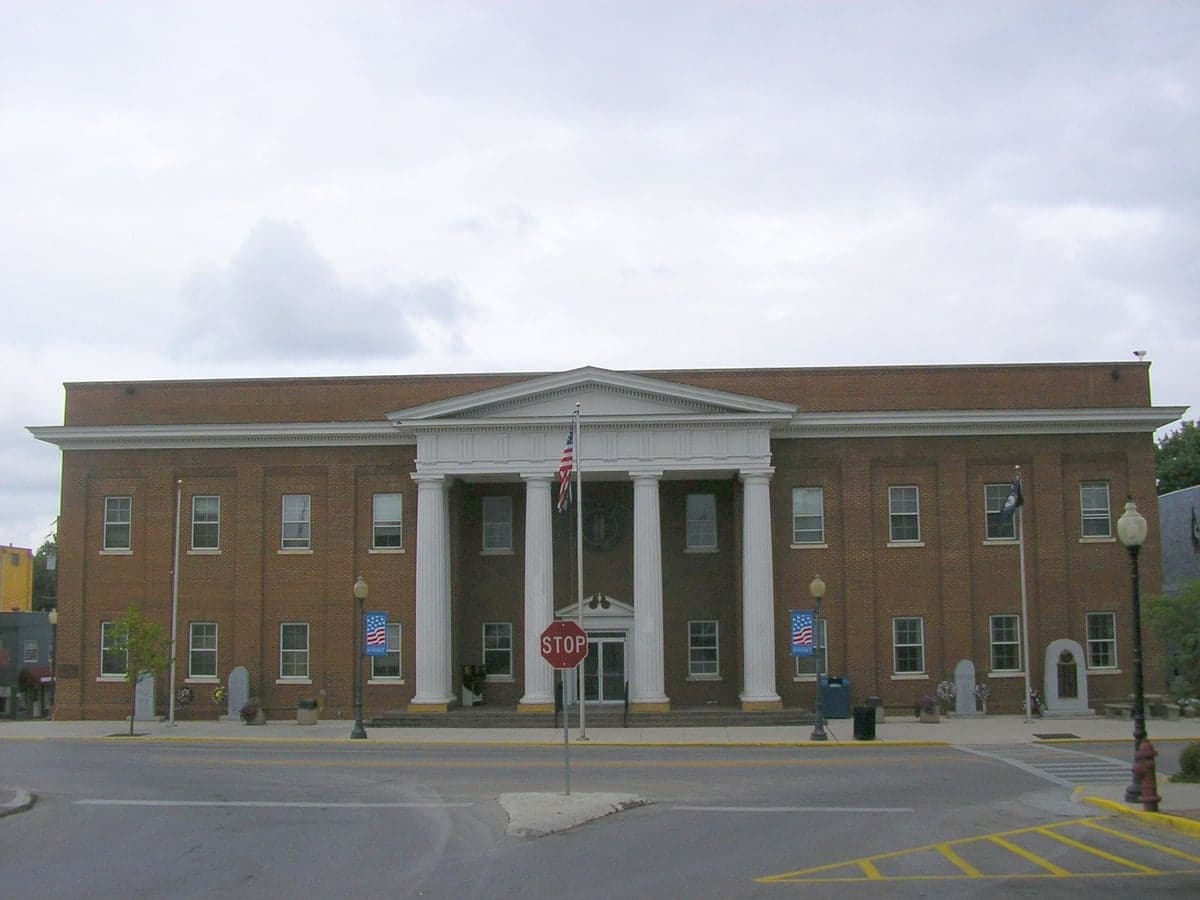
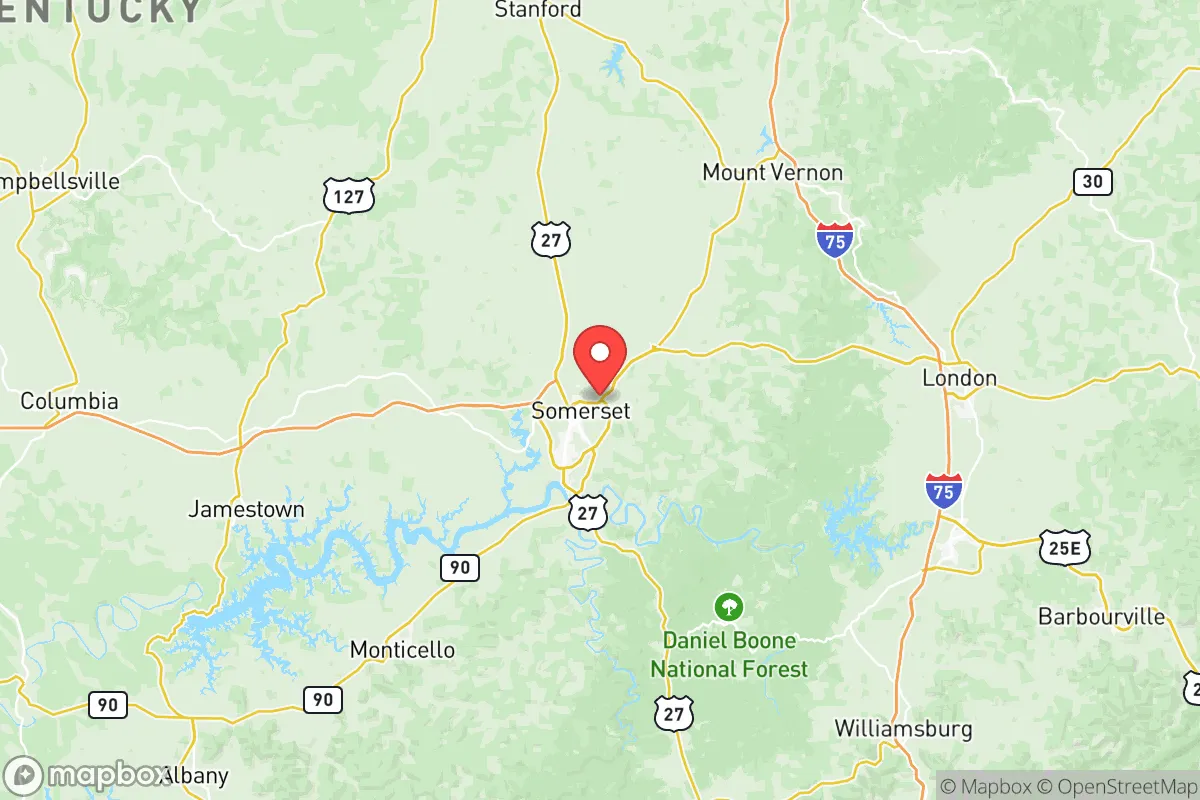
Photo: Wikipedia
Personal Sovereignty in Pulaski County
Viable for self-reliance. Generally workable, though some barriers may limit total independence.
What does Personal Sovereignty tell us?
Personal Sovereignty measures your capacity for self-reliance and independence with minimal government friction. Higher scores mean fewer barriers between you and the way you want to live... but it assumes you have the space you need and good neighbors.
What does this tell us?
Personal Sovereignty measures your capacity for self-reliance and independence with minimal government friction. Higher scores mean fewer barriers between you and the way you want to live... but it assumes you have the space you need and good neighbors.
State Policy
Energy independence: Importer (60% of energy produced in-state)
Personal Liberty
Homesteading

Personal Liberty Analysis
Pulaski County, Kentucky, offers a notably high degree of personal sovereignty, grounded in Kentucky’s strong constitutional protections for gun rights, property rights, and limited government. The county’s regulatory environment is light-touch, with no county-wide zoning in unincorporated areas, and the tax burden is among the lowest in the nation. For individuals and families prioritizing autonomy, self-reliance, and minimal government interference, Pulaski County presents a compelling option, particularly when compared to more regulated urban centers in the state like Lexington or Louisville.
Tax burden and regulatory posture in Pulaski County
Kentucky’s state-level tax structure is generally favorable for personal sovereignty, and Pulaski County amplifies this. The state has a flat income tax rate of 4.5% (as of 2026, down from 5% in 2023), with a scheduled phase-down to 4% by 2028. Property taxes are exceptionally low: the county’s real property tax rate is approximately $0.12 per $100 of assessed value, and the state rate adds only about $0.05. Combined, a home valued at $200,000 carries an annual property tax bill of roughly $340. Sales tax is a flat 6% on most goods, with groceries and prescription drugs exempt. The regulatory posture is decidedly light-touch. Pulaski County has no county-wide zoning ordinance for unincorporated areas, meaning property owners in places like Nancy, Science Hill, and Eubank can build, operate home businesses, and keep livestock with minimal permitting. The city of Somerset does have zoning and building codes, but they are relatively modest compared to larger Kentucky cities. Business licensing is straightforward: no county-level business license is required for most sole proprietorships, and the state’s “one-stop” business portal streamlines registration. This regulatory environment is a key draw for those seeking to minimize bureaucratic entanglements.
Self-defense and gun law specifics in Pulaski County
Kentucky is a “constitutional carry” state, meaning no permit is required to carry a concealed firearm for any law-abiding adult 21 or older. Pulaski County’s culture strongly reinforces this right. The county sheriff’s office is known for issuing concealed carry permits (still useful for reciprocity in other states) with minimal delay, typically within 30 days. Stand-your-ground laws are in full effect, with no duty to retreat in any place where a person has a legal right to be. Castle doctrine protections extend to occupied vehicles and workplaces. Local gun culture is robust: Somerset hosts multiple gun shops and indoor ranges, and the annual “Gun and Knife Show” at the Pulaski County Park Expo Center draws regional crowds. There are no county-level restrictions on magazine capacity, firearm types, or ammunition sales. The only notable local nuance is that discharging a firearm within Somerset city limits is prohibited except at approved ranges, but in unincorporated areas like Burnside or Ferguson, target shooting on private property is common and legally protected. For a reader prioritizing self-defense autonomy, Pulaski County offers one of the most permissive legal environments in the eastern United States.
Self-reliance and homesteading viability across Pulaski County
Homesteading and off-grid living are highly viable in Pulaski County, particularly in its rural stretches. The absence of county-wide zoning means property owners in areas like Nancy and Science Hill can raise chickens, goats, and even cattle without special permits. Lot sizes vary widely: parcels under 1 acre are common near Somerset, but 5- to 20-acre tracts are readily available in the county’s eastern and southern sections, with prices averaging $4,000–$8,000 per acre as of 2026. Off-grid feasibility is strong. Kentucky has no state law prohibiting rainwater collection, and Pulaski County does not restrict it. Solar panel installation is unregulated at the county level, though net metering is available through the local electric cooperative, South Kentucky RECC. Septic systems require a permit from the county health department (typically $200–$400), but composting toilets are legal. The county’s building code applies only to new construction in floodplains or near public water systems; otherwise, owner-built structures are permitted as long as they meet basic state electrical and plumbing codes. Burnside, on the shores of Lake Cumberland, has slightly more restrictive shoreline development rules, but inland areas like Eubank and Ferguson offer near-total freedom for self-reliant living. The main practical constraint is access to broadband internet, which remains spotty in the most remote parts of the county, though Starlink satellite service is increasingly common.
Personal liberties in Pulaski County: parental rights, medical autonomy, and property
Kentucky law provides strong protections for parental rights, and Pulaski County’s school system and local government generally defer to family decisions. The state’s “Parental Rights” statute (KRS 158.183) explicitly affirms parents’ authority over their children’s education, healthcare, and religious upbringing. Homeschooling is straightforward: parents need only submit a notice of intent and maintain a portfolio of work, with no standardized testing requirement. The county’s public school system, Pulaski County Schools, is known for accommodating parental requests regarding curriculum opt-outs and extracurricular participation. Medical autonomy is more nuanced. Kentucky has not expanded Medicaid under the Affordable Care Act, and the state’s medical freedom laws are moderate: there is no state-level vaccine mandate for adults, but some employers and healthcare facilities may require them. The county’s health department does not enforce any local mandates beyond state requirements. Property rights are robust. Kentucky is a “right-to-farm” state, protecting agricultural operations from nuisance lawsuits, and Pulaski County’s planning commission rarely intervenes in land-use disputes. The county’s tax assessor is known for reasonable valuations, and property tax appeals are straightforward. Free speech is protected under both the U.S. and Kentucky constitutions, and the county has no local ordinances restricting signage, political expression, or public assembly. The only notable limitation is that Somerset’s city council has enacted a noise ordinance that can be used to restrict amplified speech after 10 p.m., but this is rarely enforced.
Overall, Pulaski County ranks among the most sovereignty-friendly areas in Kentucky, comparable to rural counties in the western part of the state like Graves or Livingston. Its combination of low taxes, minimal regulation, strong gun rights, and permissive homesteading laws creates an environment where personal autonomy is the default, not the exception. For a reader weighing relocation, the county offers a clear trade-off: maximum personal freedom in exchange for limited public services and infrastructure in the most rural areas. The key differentiator is the absence of county-wide zoning, which allows for a level of self-reliance that is increasingly rare in the United States. Whether you are a homesteader in Nancy, a small business owner in Science Hill, or a retiree seeking low taxes in Burnside, Pulaski County delivers a consistently high degree of personal sovereignty.

* Values derived from national, state, county, city and local statistics and may differ in a specific area. Last updated: 2026-07-18T12:23:37.000Z
Narrative content on this page is AI-generated and may contain mistakes. Verify any details that matter before acting on them.
ReloMaps may earn a commission from affiliate links at no extra cost to you.

