Photo: Wikipedia
Demographics of Pulaski County
Affluence Level in Pulaski County
A below-average socioeconomic profile. Incomes, home values, and educational attainment trail the U.S., with higher poverty and unemployment.
People of Pulaski County
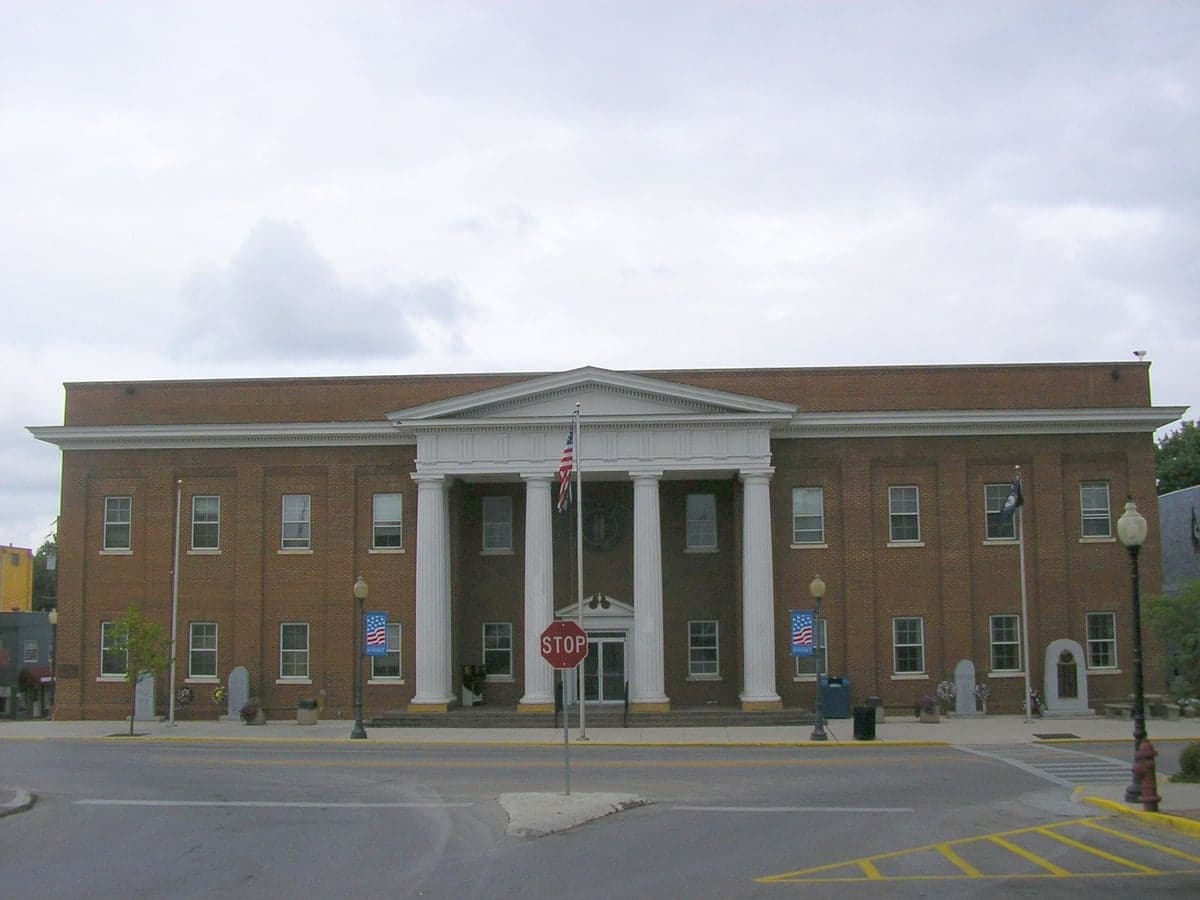
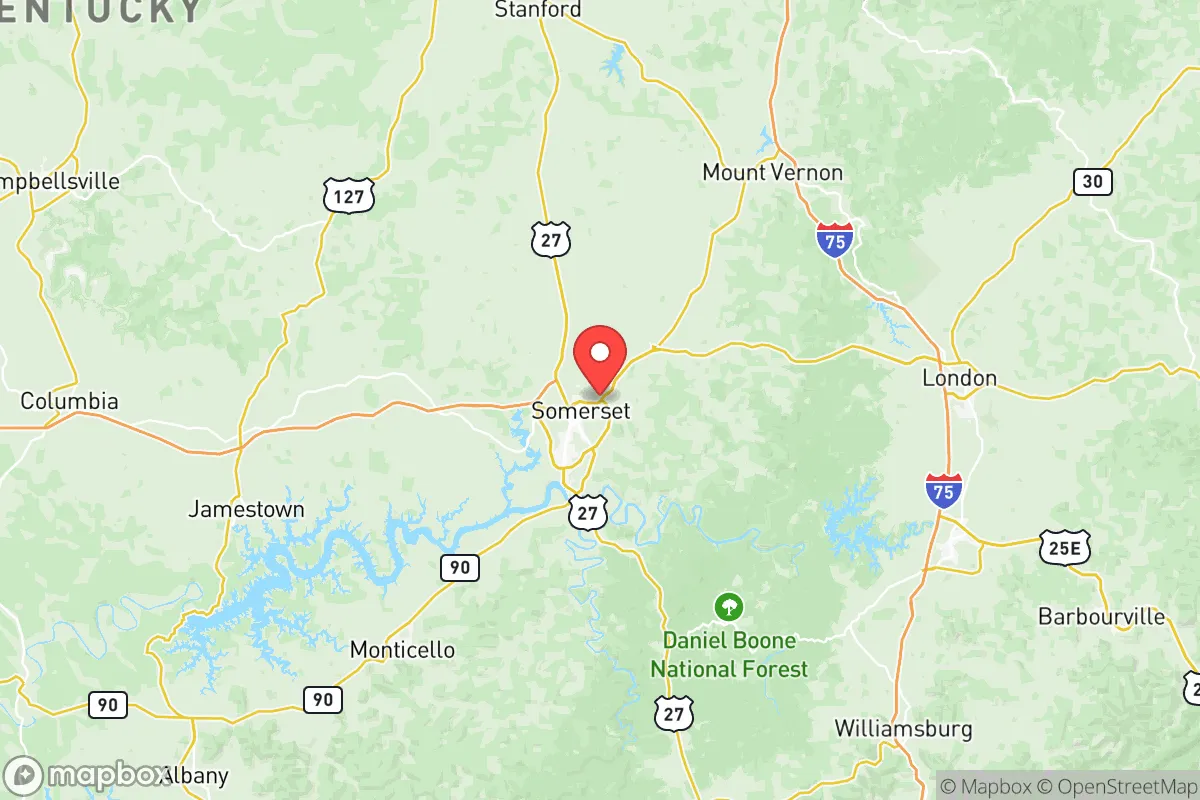
Pulaski County, Kentucky, is home to 65,503 residents who form one of the state’s most culturally and politically conservative communities, with a population that is 92.7% White and only 1.0% foreign-born. The county seat of Somerset anchors a region where family ties to the land run deep, and where the population’s character is defined by a strong sense of local identity, religious observance, and a self-reliant, rural lifestyle. Unlike many parts of Kentucky that have seen rapid suburbanization, Pulaski County retains a distinctly small-town, agrarian feel, with a population density of roughly 80 people per square mile and a median age that skews older than the national average.
Settlement & growth (pre-1960)
Before European settlement, the area now known as Pulaski County was part of the vast hunting grounds of the Cherokee and Shawnee nations, who used the region’s abundant game and the Cumberland River for travel and trade. No permanent Native American villages existed within the county’s modern borders, but the land was crisscrossed by warpaths and buffalo traces that later became early settler routes. The first European Americans to arrive were primarily of Scots-Irish and English descent, migrating from Virginia and North Carolina through the Cumberland Gap in the late 18th and early 19th centuries. These pioneers were drawn by the promise of cheap, fertile land under the Virginia Land Laws, and they established small farms along the creeks and rivers that feed the Cumberland.
The county was formally created in 1798 from a portion of Lincoln County, and the town of Somerset was laid out in 1801 as the county seat. The early economy was subsistence agriculture—corn, tobacco, and livestock—with a few gristmills and sawmills along the waterways. A significant wave of settlement came in the 1830s and 1840s when the Cumberland River was improved for steamboat navigation, making Burnside a bustling river port. Burnside became a key shipping point for tobacco and timber, and its population swelled with river workers, merchants, and craftsmen. The arrival of the Louisville and Nashville Railroad in the 1870s further transformed the county, connecting Somerset and Burnside to national markets and spurring the growth of smaller communities like Science Hill and Ferguson.
The Civil War deeply divided Pulaski County, with many residents supporting the Union due to the region’s limited reliance on enslaved labor—only about 12% of families owned slaves in 1860—while others, particularly in the more affluent southern part of the county, sided with the Confederacy. After the war, the county’s Black population, which had never exceeded 10%, declined sharply as freedmen left for urban centers in the North and Midwest. The post-Reconstruction era saw the rise of the timber and coal industries, with the Eubank area becoming a center for railroad tie production and the Tateville area for coal mining. These industries attracted a small number of German and Irish immigrants, but the county remained overwhelmingly native-born and White. By 1900, the population had reached 20,000, and it grew slowly but steadily through the first half of the 20th century, driven by agriculture and the establishment of manufacturing plants like the Somerset Shirt Company in the 1930s.
Modern era (post-1965)
The 1965 Hart-Cellar Act had virtually no impact on Pulaski County’s demographics. The foreign-born population remains at just 1.0%, and the county has not seen the formation of any immigrant enclaves. Instead, the modern era has been shaped by domestic migration patterns. The construction of Lake Cumberland in the 1950s, completed by the U.S. Army Corps of Engineers, created a massive recreational reservoir that began attracting retirees and second-home buyers from the Midwest and Florida in the 1970s and 1980s. This tourism-driven growth spurred development along the lake’s shoreline, particularly around Nancy and Bronston, where vacation homes and marinas now dot the landscape.
The 1990s and 2000s saw a modest influx of domestic migrants from the Rust Belt—Ohio, Indiana, and Michigan—seeking lower housing costs and a slower pace of life. These newcomers tended to settle in the suburban fringe of Somerset, in subdivisions like those off Ky. 80 and Ky. 1247, rather than in the historic downtown. The county’s Hispanic population, now at 3.0%, began to grow in the 2000s, driven by work in the region’s poultry processing plants and construction industry. This community is small and dispersed, with no single ethnic neighborhood, but a concentration of Hispanic-owned businesses can be found along U.S. 27 in Somerset. The Black population remains at 0.9%, and East/Southeast Asian communities at 0.3%, while the Indian subcontinent population is 0.5%, largely composed of professionals working in healthcare at Lake Cumberland Regional Hospital.
Suburbanization has been limited compared to Kentucky’s larger metro areas. Somerset has grown outward, but the county’s rural character remains intact. The population has aged significantly, with a median age of 43.5 years, as younger residents often leave for college or jobs in Lexington and Louisville. The college-educated share is just 17.9%, well below the national average, reflecting the county’s reliance on manufacturing, healthcare, and tourism rather than knowledge-economy jobs.
The future
Pulaski County is projected to see slow, steady population growth of roughly 0.5% per year through 2040, driven primarily by domestic in-migration of retirees and remote workers from higher-cost states. The county is becoming slightly more diverse, with the Hispanic share expected to rise to 4-5% by 2035, but it will remain overwhelmingly White and native-born. New residential development is concentrating in the Somerset outskirts and along the Lake Cumberland shoreline, while the county’s more remote areas, such as Delmer and Faubush, are likely to see population decline as younger generations move away. The cultural identity of the county is evolving slowly, with the influx of out-of-state retirees bringing more moderate political views to some precincts, but the overall conservative character is expected to persist. For someone moving in now, Pulaski County offers a stable, family-oriented community with low crime, strong churches, and access to outdoor recreation, but with limited economic opportunity for those without a pre-existing job or remote income.
Pulaski County is becoming a place where the old agrarian Kentucky identity meets a new wave of lake-centric, retirement-oriented living. For a family or individual seeking a quiet, safe, and deeply rooted community with a conservative ethos, it remains a strong choice—but one where the population is aging, diversity is minimal, and the economic future depends on sustaining tourism and healthcare rather than attracting new industries.

* Values derived from national, state, county, city and local statistics and may differ in a specific area. Last updated: 2026-07-18T12:23:37.000Z
Narrative content on this page is AI-generated and may contain mistakes. Verify any details that matter before acting on them.
ReloMaps may earn a commission from affiliate links at no extra cost to you.

