
Photo: Wikipedia
Personal Sovereignty in Madison County
Viable for self-reliance. Generally workable, though some barriers may limit total independence.
What does Personal Sovereignty tell us?
Personal Sovereignty measures your capacity for self-reliance and independence with minimal government friction. Higher scores mean fewer barriers between you and the way you want to live... but it assumes you have the space you need and good neighbors.
What does this tell us?
Personal Sovereignty measures your capacity for self-reliance and independence with minimal government friction. Higher scores mean fewer barriers between you and the way you want to live... but it assumes you have the space you need and good neighbors.
State Policy
Energy independence: Importer (60% of energy produced in-state)
Personal Liberty
Homesteading

Personal Liberty Analysis
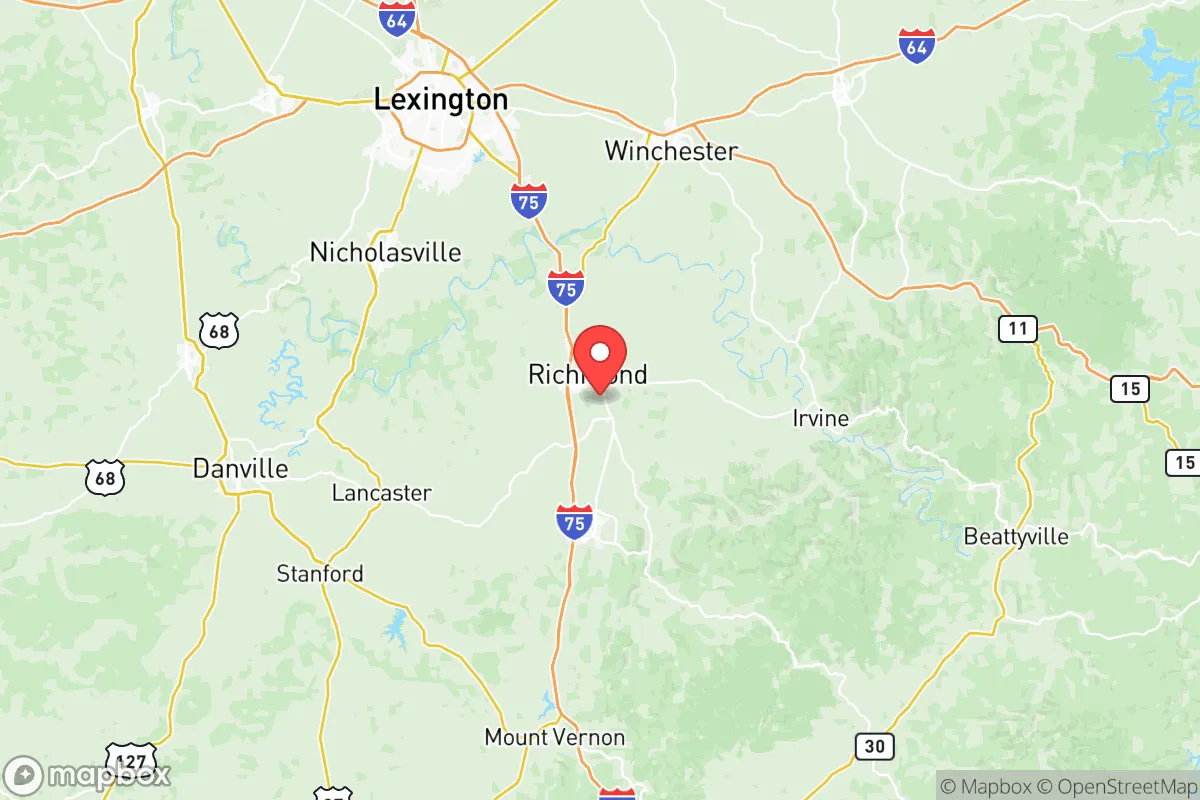
Madison County, Kentucky, offers a notably high degree of personal sovereignty, blending a low-tax, limited-government state framework with a local culture that values self-reliance and individual liberty. For a relocation-minded individual or family with a conservative leaning, the area presents a regulatory environment that is generally light-touch, particularly when compared to urban centers in states with more expansive government oversight. The county’s autonomy profile is shaped by Kentucky’s constitutional carry laws, minimal property tax rates, and a rural-to-suburban landscape that accommodates a range of independent lifestyles, from homesteading in the outskirts of Berea to suburban living in Richmond.
Tax burden and regulatory posture: How Kentucky’s low-tax framework affects daily life
Kentucky’s overall tax burden is among the lowest in the nation, and Madison County residents benefit directly from this. The state’s flat income tax rate of 4.5% (as of 2026, with a scheduled phase-down to 4.0% by 2028) and a sales tax of 6% on most goods (excluding groceries and prescription drugs) keep the cost of living manageable. Property taxes in Madison County are particularly favorable: the county’s real property tax rate is approximately $0.12 per $100 of assessed value, and the city of Richmond adds roughly $0.22 per $100, while Berea’s rate is slightly higher at about $0.27 per $100. Combined with school district levies, the total effective rate typically lands between 0.7% and 0.9% of market value—well below the national average. Regulatory posture is equally restrained. Kentucky is a right-to-work state, and Madison County has no local business licensing requirements beyond basic state-level permits. Zoning is minimal outside the incorporated cities of Richmond, Berea, and the smaller town of Kirksville; unincorporated areas allow for a wide range of land uses without heavy county oversight. This means a resident in the rural stretches near Waco or Kingston can operate a small workshop, keep livestock, or run a home-based business with far fewer bureaucratic hurdles than in more regulated counties.
Self-defense and gun law specifics: Constitutional carry and local culture
Madison County is deeply embedded in Kentucky’s strong gun-rights culture. The state has permitted constitutional carry (permitless carry) for both open and concealed handguns since 2019, and Madison County’s local sheriff’s office—led by Sheriff Mike Coyle—is known for a pro-Second Amendment stance. No permit is required to purchase a firearm from a private seller, and background checks are only mandated for purchases from federally licensed dealers. The county has no local ordinances restricting magazine capacity, firearm types, or storage requirements. In Richmond, the largest city, gun ownership is common and openly practiced; the Richmond Police Department does not enforce any additional restrictions beyond state law. Berea, while slightly more progressive in its municipal politics, still operates under the same state preemption laws, meaning no city-level gun bans are enforceable. For residents in the unincorporated areas around Berea, Kirksville, and Waco, the ability to carry a firearm for self-defense is essentially unrestricted. Stand-your-ground laws apply statewide, and Kentucky’s Castle Doctrine provides a strong legal presumption that a homeowner using deadly force against an intruder acted in self-defense. The practical effect is that a Madison County resident can legally carry a firearm in most public spaces, including parks and businesses that do not post signage, without any government-issued permission slip.
Self-reliance and homesteading viability: Lot sizes, zoning, and off-grid feasibility
Madison County’s land-use regulations make it one of the more homestead-friendly areas in central Kentucky. In unincorporated areas, there is no minimum lot size for agricultural use, though a typical residential parcel in the county’s rural zones is at least 1 to 5 acres to avoid septic system complications. The county’s zoning code explicitly permits livestock, poultry, and beekeeping on parcels of 3 acres or more in agricultural districts, and on smaller lots with a conditional use permit. Off-grid living is feasible but requires attention to state and local health codes. Kentucky has no state-level ban on rainwater collection, and Madison County does not restrict it. Solar panels are permitted without special permits in unincorporated areas, though Richmond and Berea require standard building permits for rooftop installations. Composting toilets are allowed under Kentucky’s alternative sanitation system regulations, but a permit from the Madison County Health Department is required. The county’s soil is generally suitable for private wells, and many rural properties near Kingston, Waco, and Kirksville rely on them. The biggest regulatory hurdle for full off-grid living is the requirement for a septic system that meets state standards; a simple outhouse is not permitted. However, for those willing to install a compliant system, the county’s enforcement is minimal once the system is approved. The area around Berea is particularly attractive for homesteaders due to its mix of affordable land (often $3,000–$6,000 per acre) and proximity to the Berea Farmers Market, which supports local food producers.
Personal liberties: Parental rights, medical autonomy, speech, and property
Kentucky law provides strong protections for parental rights, and Madison County’s school districts—Madison County Schools and Berea Independent Schools—generally defer to parents on educational and medical decisions. The state’s parental bill of rights (enacted in 2022) guarantees parents the right to direct their child’s upbringing, education, and healthcare, and to review all instructional materials. Homeschooling is straightforward: parents must file a notice of intent with the local school district and provide 175 days of instruction annually, but no standardized testing is required. Medical autonomy is more limited by state law than by local culture. Kentucky has not expanded Medicaid under the Affordable Care Act, and the state’s vaccine mandate for schoolchildren is standard (MMR, DTaP, polio, varicella), though religious exemptions are available. Madison County’s health department does not enforce any additional local mandates. Free speech is robustly protected; the county has no local hate speech ordinances or restrictions on political expression. Property rights are strong, with Kentucky’s private property rights protection act limiting eminent domain to public uses like roads and utilities. The county’s planning commission rarely exercises eminent domain for private development. For residents in Richmond, Berea, and Kirksville, the ability to modify one’s property—whether building a fence, adding a shed, or starting a small business—is subject only to basic building codes and setback requirements, with no homeowner association overlays in most areas.
Overall, Madison County ranks among the more sovereignty-friendly areas in Kentucky, offering a regulatory environment that is light on taxes, permissive on self-defense, and accommodating to self-reliant lifestyles. While it does not match the extreme libertarian posture of some rural western counties, its combination of constitutional carry, low property taxes, minimal zoning outside city limits, and strong parental rights protections places it well above the national median for personal freedom. For a conservative-leaning individual or family seeking a balance of autonomy and access to amenities—with Richmond providing healthcare, retail, and Eastern Kentucky University’s resources, and Berea offering a smaller, arts-oriented community—Madison County delivers a practical, high-sovereignty living environment without the isolation of more remote areas.

* Values derived from national, state, county, city and local statistics and may differ in a specific area. Last updated: 2026-07-23T04:02:29.000Z
Narrative content on this page is AI-generated and may contain mistakes. Verify any details that matter before acting on them.
ReloMaps may earn a commission from affiliate links at no extra cost to you.

