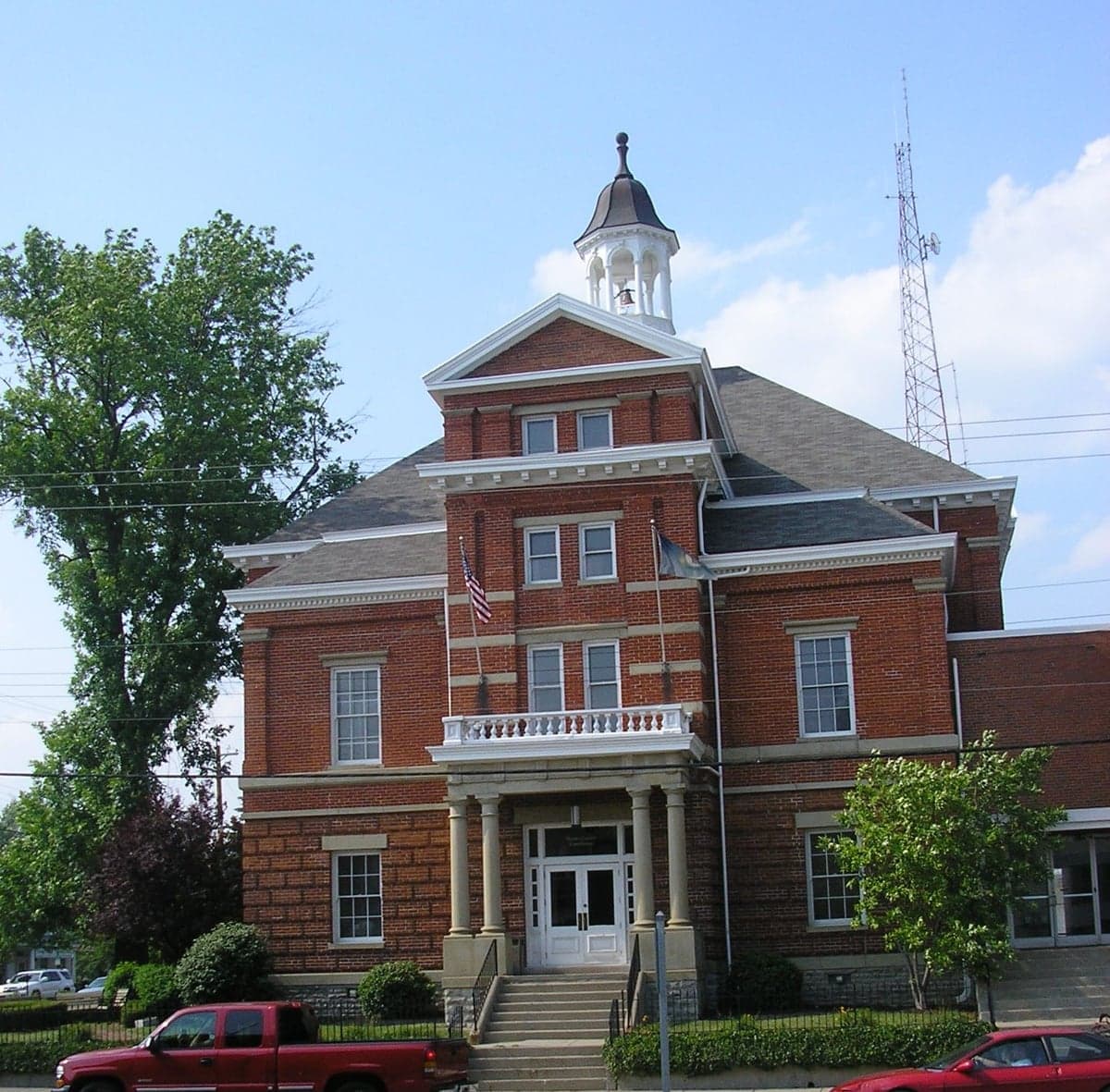
Photo: Wikipedia
Political ClimatePolitical Climate in Boone County
Showing district-level results — no local-only data available.
Local Political AnalysisPolitical Analysis of Boone County
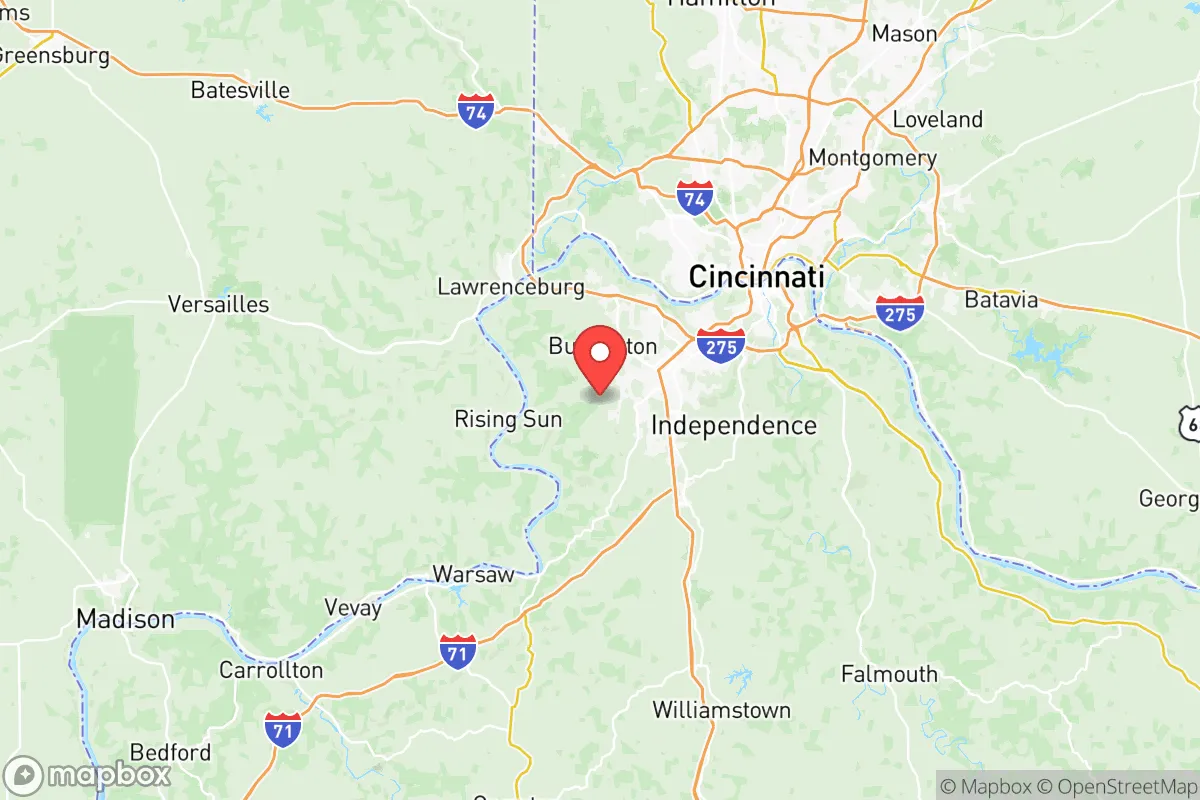
Boone County, Kentucky, is a reliably Republican stronghold with a Cook Partisan Voting Index (PVI) of R+18, making it three points more conservative than the state of Kentucky as a whole (R+15). This isn't a new development; the county has been trending red for decades, but the shift has accelerated noticeably since the early 2000s. While the county as a whole votes solidly Republican, there are real pockets of variation—Florence and parts of Burlington have shown more competitive tendencies in local races, while the more rural and exurban areas like Union, Hebron, and Verona are deeply conservative. If you're looking at a precinct map, the areas closest to the Ohio River and the Cincinnati metro tend to be a bit more purple, but the interior of the county is deep red.
How it compares
Compared to Kentucky as a whole, Boone County is not just more Republican—it's more consistently Republican. The state of Kentucky has a PVI of R+15, but that number masks a huge urban-rural split: Jefferson County (Louisville) and Fayette County (Lexington) are reliably blue, while the rest of the state is overwhelmingly red. Boone County, by contrast, has no major Democratic stronghold within its borders. The closest thing to a liberal-leaning area is the city of Florence, which has a slightly higher share of younger, more diverse residents and has occasionally voted for Democratic candidates in local races, but it still leans Republican overall. In the 2020 presidential election, Boone County gave Donald Trump 65% of the vote, while Kentucky as a whole gave him 62%. That three-point gap is consistent with the PVI difference. The county's growth—it's one of the fastest-growing in the state—has been driven largely by families moving from Cincinnati and Northern Kentucky suburbs, and those newcomers tend to be moderate to conservative, reinforcing the existing lean.
What this means for residents
For conservative residents, Boone County feels like a natural fit. Local government, school boards, and law enforcement tend to reflect conservative values, and you'll find plenty of churches, gun shops, and "Support Our Troops" signs. The county commission and fiscal court are reliably Republican, and tax policy is generally business-friendly. For liberal residents, the reality is more nuanced. You won't be ostracized, but you'll be in the minority. There are active Democratic clubs in Florence and Burlington, and the county has a growing number of younger professionals who lean left, but they don't have much electoral influence. Socially, the area is polite but not particularly progressive—LGBTQ+ visibility is lower than in Cincinnati proper, and conversations about politics at a cookout can get tense. That said, the proximity to Cincinnati (a 15-minute drive from Florence) means that liberal residents can easily access the cultural and political amenities of a blue city without living in it.
Culturally, Boone County is distinct from the rest of Kentucky in a few ways. It's part of the Cincinnati metro area, so residents identify more with Ohio River Valley culture than with the Bluegrass region. You'll hear more Bengals talk than Wildcats talk, and the local economy is tied to logistics, manufacturing, and healthcare rather than bourbon or horse racing. The county's rapid growth—population up nearly 20% since 2010—has brought new subdivisions, strip malls, and traffic, but it's also brought diversity and a more suburban feel. The biggest policy distinction is that Boone County has been aggressive in courting business development, with low property taxes and a pro-growth zoning code, which has attracted companies like Amazon, DHL, and Fidelity Investments. This has kept the local economy strong, but it's also led to debates about school funding, infrastructure, and sprawl. In the near future, expect the county to stay red, but with a growing moderate wing that could shift local primaries toward more pragmatic candidates. The long-term trajectory depends on whether the new residents—many from Ohio and Indiana—continue to vote like their neighbors or bring more independent tendencies.

State Political ClimatePolitical Climate in Kentucky
State Political AnalysisPolitical Environment in the State
Kentucky is a deeply Republican state with a Cook PVI of R+15, meaning it votes about 15 points more Republican than the national average in presidential elections. The state has undergone a dramatic political realignment over the past 20 years: as recently as 2000, Kentucky was a competitive swing state that voted for Al Gore, but by 2024, Donald Trump carried it by over 30 points. The dominant coalition is a mix of rural and small-town conservatives, evangelical Christians, and working-class voters who have shifted sharply rightward on cultural and economic issues, while the Democratic stronghold has shrunk to Louisville, Lexington, and a handful of college towns.
Urban vs. rural divide
The political map of Kentucky is starkly divided. Louisville (Jefferson County) and Lexington (Fayette County) are the only reliably Democratic metros, with Louisville voting about 60% Democratic in recent presidential cycles and Lexington around 55%. These cities drive the state's remaining blue vote, buoyed by younger professionals, university faculty, and minority populations. In contrast, the rest of the state is overwhelmingly Republican. The suburban ring around Louisville—places like Oldham County and Shelby County—has moved from purple to solid red over the past decade. Eastern Kentucky's coal country, once a Democratic stronghold under the "Yellow Dog Democrat" tradition, is now among the most Republican regions in the nation; Pike County, which voted for Bill Clinton in 1996, gave Trump over 80% in 2024. Northern Kentucky suburbs like Covington and Florence lean Republican but are more moderate, often splitting tickets in state races. The Jackson Purchase region in the far west, including Paducah and Murray, is reliably red, though Murray State University introduces a small liberal pocket.
Policy environment
Kentucky's policy environment is solidly conservative. The state has a flat income tax that was cut from 5% to 4% in 2023, with a scheduled phase-down to 3.5% by 2026, and no inheritance tax. Sales tax is 6% on most goods, but groceries are exempt. The state is a right-to-work state with no union shop requirements, and it passed a near-total abortion ban in 2019 (triggered by Dobbs) with no exceptions for rape or incest. Education policy includes a robust school choice program: the 2021 "Education Opportunity Account Act" created tax-credit scholarships for private school tuition, though it was struck down by the state Supreme Court in 2022; a revised version passed in 2024. Kentucky does not have a state-level universal background check law for firearms, and it permits permitless concealed carry (constitutional carry) as of 2019. Election laws require a photo ID to vote, and early voting was expanded in 2020 to three weeks, including two Saturdays, but no-excuse absentee voting was rolled back after the pandemic.
Recent policy direction
The recent legislative direction has been aggressively conservative across multiple fronts. On gun and self-defense law, Kentucky passed a "stand your ground" law in 2022, removing the duty to retreat in public spaces. On parental and education rights, the 2022 "Parents' Bill of Rights" (SB 150) requires schools to notify parents of any curriculum involving human sexuality and prohibits instruction on sexual orientation or gender identity in grades K-5; it also bans transgender girls from participating in female sports. On speech and privacy, the state passed a law in 2023 requiring public libraries to create policies for removing "obscene" materials, with potential criminal penalties for librarians. On medical and bodily autonomy, the abortion ban is total, with no exceptions for lethal fetal anomalies; a 2023 law also banned gender-affirming care for minors, overriding parental consent. On property rights, Kentucky is a "Dillon's Rule" state, meaning local governments have only powers explicitly granted by the state, but a 2024 law preempted local rent control ordinances. On taxation, the flat tax phase-down is locked in, and the state has no estate tax. On voting and ballot access, a 2021 law tightened voter ID requirements and limited drop boxes to one per county, though early voting was expanded.
Civil unrest & political movements
Kentucky has seen notable political flashpoints. The 2020 protests in Louisville over the death of Breonna Taylor led to months of demonstrations, a state of emergency, and the eventual passage of "Breonna's Law" banning no-knock warrants, though police reform efforts stalled in the legislature. The state has a visible but small "constitutional sheriff" movement, particularly in rural counties like Casey and Adair, where sheriffs have declared they will not enforce federal gun laws. Immigration politics are less heated than in border states, but a 2024 law (HB 268) requires local law enforcement to cooperate with federal immigration authorities and penalizes "sanctuary" policies. Election integrity remains a live issue: the 2020 election saw Trump's campaign challenge Kentucky's results (though Biden won the state by 26 points), and the legislature has since passed laws banning private funding of election administration and requiring hand-counted audits in some precincts. There is no serious secessionist movement, but "state sovereignty" rhetoric appears in rural county resolutions against federal vaccine mandates and gun restrictions.
Projection
Over the next 5-10 years, Kentucky is likely to remain solidly Republican, but the margins may narrow slightly in suburban areas. In-migration is modest compared to Sun Belt states, but northern Kentucky (especially Boone County) is seeing growth from Cincinnati spillover, bringing a slightly more moderate electorate. The Democratic base in Louisville and Lexington is aging and not growing fast enough to offset rural losses. The flat tax phase-down will continue to attract retirees and remote workers from higher-tax states like Illinois and California, but these newcomers tend to be fiscally conservative and socially moderate, which could soften the state's culture-war edge. The biggest wildcard is the coal transition: as eastern Kentucky's economy diversifies into tourism and remote work, younger residents may shift the region from deep red to competitive red. A relocator moving in now should expect the state to remain a Republican stronghold with a conservative policy environment, but with growing internal tension between the rural hard-right and the suburban center-right.
For a new resident, the bottom line is this: Kentucky offers a low-tax, culturally conservative environment where gun rights are broad, abortion is banned, and school choice is expanding. A conservative family will find the state's laws and social norms deeply aligned with their values, especially in the suburbs of Louisville or Lexington or in smaller cities like Bowling Green or Richmond. A liberal resident will find Louisville and Lexington to be welcoming blue islands, but will face a state government that is actively hostile to their policy preferences on abortion, LGBTQ rights, and public education. The political climate is stable and predictable—no one is flipping Kentucky blue anytime soon—but the specific flavor of conservatism is evolving from the old "Blue Dog" moderation to a more assertive, culturally focused Republicanism. If you're moving for the low taxes and rural pace, you'll fit right in; if you're moving for progressive politics, you'll need to live in the right zip code and accept that the state legislature will not be on your side.
* Values derived from national, state, county, city and local statistics and may differ in a specific area. Last updated: 2026-09-30T22:40:01.000Z
Narrative content on this page is AI-generated and may contain mistakes. Verify any details that matter before acting on them.
ReloMaps may earn a commission from affiliate links at no extra cost to you.

