
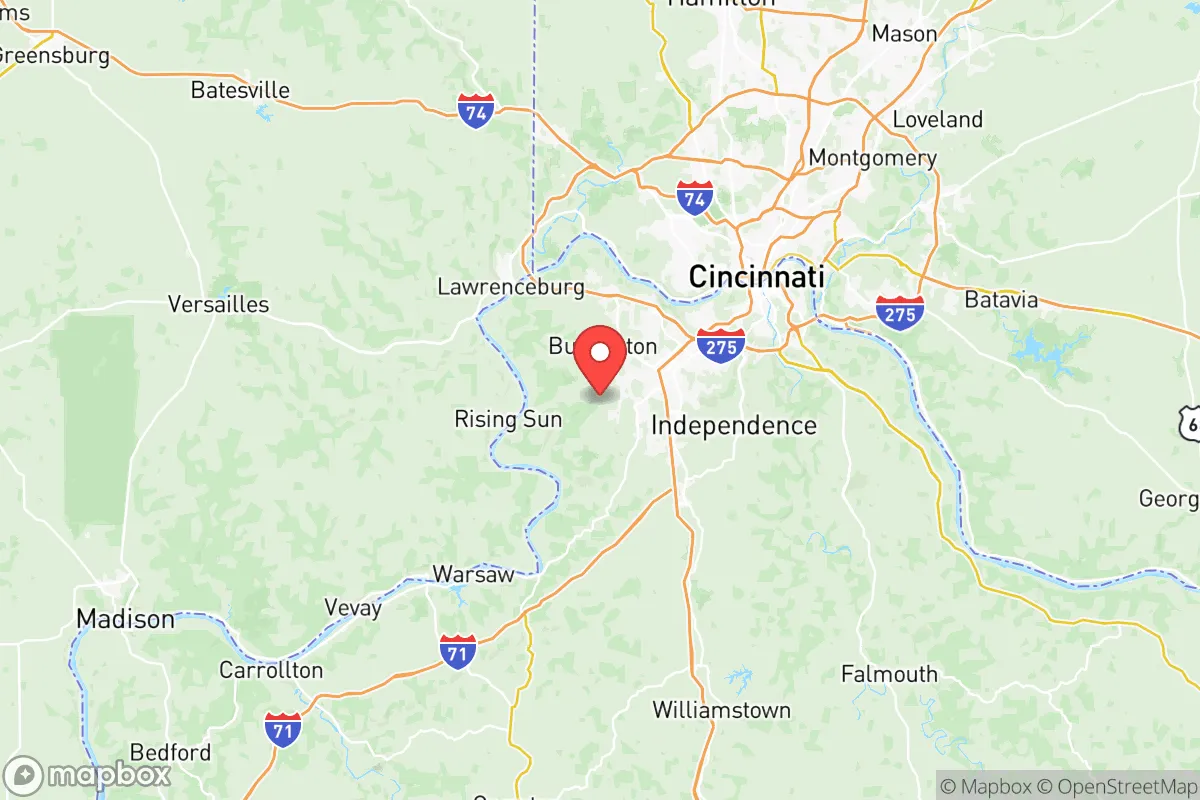
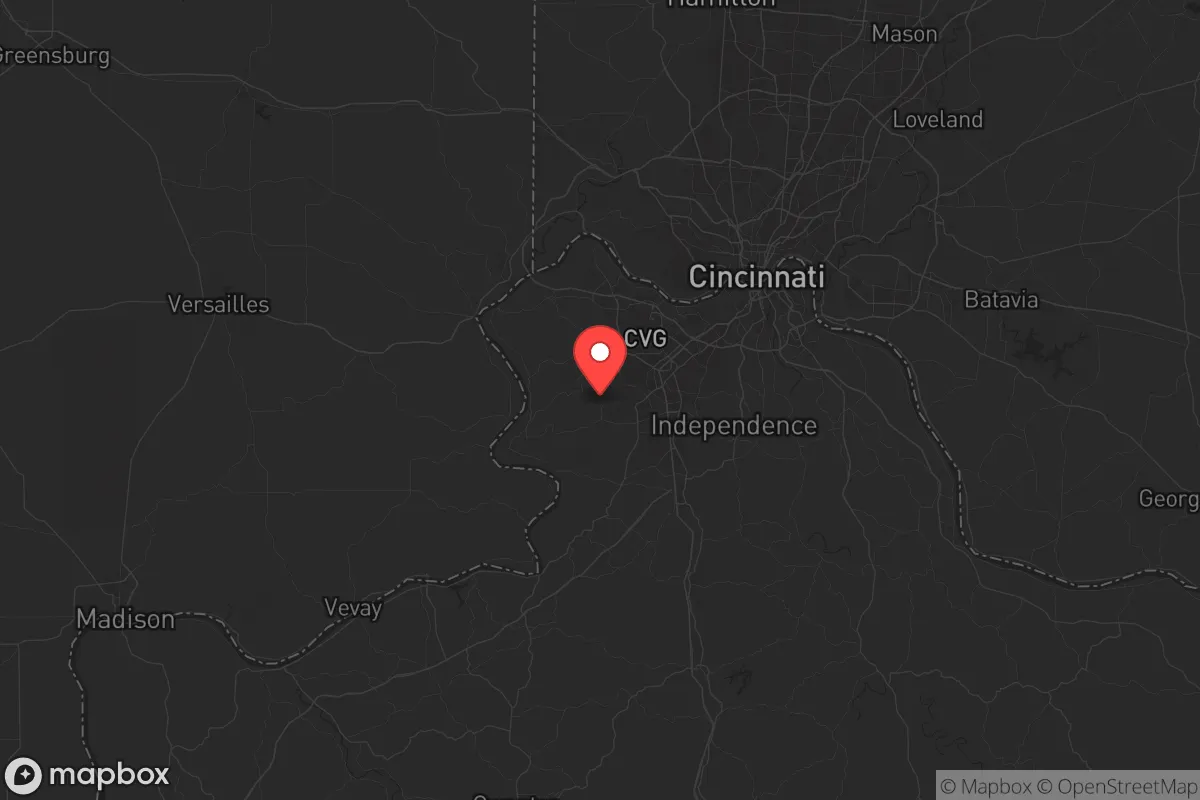
Photo: Wikipedia
Personal Sovereignty in Boone County
Viable for self-reliance. Generally workable, though some barriers may limit total independence.
What does Personal Sovereignty tell us?
Personal Sovereignty measures your capacity for self-reliance and independence with minimal government friction. Higher scores mean fewer barriers between you and the way you want to live... but it assumes you have the space you need and good neighbors.
What does this tell us?
Personal Sovereignty measures your capacity for self-reliance and independence with minimal government friction. Higher scores mean fewer barriers between you and the way you want to live... but it assumes you have the space you need and good neighbors.
State Policy
Energy independence: Importer (60% of energy produced in-state)
Personal Liberty
Homesteading

Personal Liberty Analysis
Boone County, Kentucky, offers a notably high degree of personal sovereignty compared to many suburban counties in the Midwest, driven by Kentucky’s strong state-level preemption laws, a low tax burden, and a regulatory environment that generally favors individual choice. For a relocation audience prioritizing autonomy—whether in self-defense, homesteading, or family decisions—the county provides a legal framework where the default is permission rather than restriction, though specific local ordinances in its more developed cities create meaningful variation. The county’s blend of rural towns and growing suburbs means that personal freedom often depends on exactly where you plant your flag, from the more permissive outskirts of Burlington to the denser, more regulated zones of Florence and Union.
Tax burden and regulatory posture: How Kentucky’s low-tax, light-touch framework applies locally
Kentucky’s state-level policies set a foundation for personal financial sovereignty that Boone County largely amplifies. The state imposes a flat 4.5% individual income tax (down from 5% in 2024, with a scheduled phase-out to 3.5% by 2028), and Boone County itself adds no county-level income tax—a significant advantage over neighboring Ohio (which levies city income taxes) or Indiana (which has county income taxes). Property taxes are among the lowest in the region: the county’s effective rate hovers around 0.85% of assessed value, with no school district tax overlay beyond the state-mandated minimum, keeping annual costs on a $350,000 home near $3,000. Sales tax is a flat 6% statewide, with no local add-ons. Regulatory posture is equally light: Boone County has no countywide zoning in unincorporated areas, meaning that in towns like Hebron and Verona, residents can operate home-based businesses, keep livestock, or build accessory structures without the permitting delays common in more regulated suburbs. However, the incorporated cities—Florence, Union, and Burlington—each have their own zoning codes. Florence, the county’s commercial hub, enforces stricter setback requirements and business licensing, while Union’s newer subdivisions often mandate HOA covenants that restrict everything from fence height to vehicle storage. For a reader seeking maximum financial and regulatory autonomy, the unincorporated areas near Petersburg or along the Ohio River in Constance offer the lightest touch, with no city permits needed for most residential improvements.
Self-defense and gun law specifics: Constitutional carry, stand your ground, and local nuance
Boone County sits firmly within Kentucky’s robust self-defense legal framework, which is among the most permissive in the nation. Kentucky is a constitutional carry state—no permit required for open or concealed carry for anyone 21 or older who can legally possess a firearm—and has a pure “stand your ground” statute with no duty to retreat in any place where a person has a right to be. This applies uniformly across Boone County, including in its cities. The county sheriff’s office, led by Sheriff Michael Helmig, is known for issuing concealed carry permits (still available for reciprocity in other states) with minimal wait times, typically under 30 days. Local gun culture is strong: the Boone County Gun Club in Burlington offers a 300-yard rifle range and hosts regular training events, and the Kentucky State Rifle and Pistol Association is active in the area. There are no county-level magazine capacity restrictions, no assault weapon bans, and no waiting periods beyond the federal NICS check. The only notable local nuance is that Florence and Union have ordinances prohibiting discharge of firearms within city limits (except on licensed ranges), so rural property owners in Verona or Hebron have far more freedom to shoot on their own land. For a reader prioritizing self-defense autonomy, Boone County offers a legal environment where the right to carry and use force is broadly protected, with the main variable being where you can practice.
Self-reliance and homesteading viability: Lot sizes, zoning, and off-grid feasibility across the county
Boone County’s homesteading potential varies dramatically by location, driven by lot size minimums and utility requirements. In unincorporated areas, the county imposes no minimum lot size for agricultural use, meaning that in Verona and Petersburg, residents can purchase 1- to 5-acre parcels and keep chickens, goats, or even a single cow without special permits. The county’s building code does not require connection to municipal water or sewer if a private well and septic system are installed—a key factor for off-grid feasibility. Solar panels are permitted without restriction, and rainwater collection is legal (though not incentivized). However, the incorporated cities are far more restrictive: Florence requires minimum 0.25-acre lots for single-family homes and mandates connection to city water and sewer, effectively prohibiting off-grid setups. Union’s newer subdivisions often have HOAs that ban livestock, limit garden size, and require manicured lawns. For serious homesteaders, the rural northern and western edges of the county—particularly along the Ohio River near Constance and the farmland around Hebron—offer the best combination of large parcels (5-20 acres common), no HOA restrictions, and county-level tolerance for alternative energy and waste systems. The county’s agricultural extension office in Burlington provides soil testing and livestock resources, but does not enforce any “right to farm” ordinance that would protect against nuisance complaints from new suburban neighbors—a risk in areas experiencing rapid development.
Personal liberties: Parental rights, medical autonomy, speech, and property protections
Kentucky law provides strong protections for personal liberties that directly affect Boone County residents. Parental rights are explicitly protected under state statute (KRS 158.183), which requires schools to notify parents of any medical or mental health services offered to minors and to obtain parental consent for most non-emergency care. Boone County Schools, the district serving Burlington, Florence, and Union, follows this policy strictly, with no opt-out programs for sex education or LGBTQ+ content without parental sign-off. Medical autonomy is similarly robust: Kentucky has no vaccine mandate for adults, and while school vaccine requirements exist, medical and religious exemptions are available with minimal paperwork. The county’s health department in Florence does not enforce any local mandates beyond state law. Free speech protections are standard under the First Amendment, but Boone County has no local noise ordinances that restrict amplified speech beyond reasonable hours, and no permit is required for leafleting or public assembly on county property. Property rights are strongly protected: Kentucky’s eminent domain law restricts takings to strictly public uses (no economic development seizures), and Boone County’s planning commission rarely approves variances that would infringe on existing property use. The main constraint on personal liberty comes from HOAs in subdivisions like those in Union and Florence, which can restrict everything from holiday decorations to vehicle parking—a factor that makes unincorporated areas more attractive for those prioritizing absolute autonomy.
Overall, Boone County ranks among the top 20% of U.S. counties for personal sovereignty, offering a legal environment where state-level protections for gun rights, parental authority, and property use are not undermined by heavy local regulation. The key trade-off is geographic: the unincorporated towns of Verona, Hebron, and Petersburg provide near-maximum autonomy for homesteaders and self-reliance advocates, while the incorporated cities of Florence and Union impose moderate restrictions typical of suburban growth. For a reader comparing regions, Boone County’s sovereignty profile is stronger than most of the Ohio suburbs across the river (which face city income taxes and stricter gun laws) and comparable to rural Indiana counties, but with better access to Cincinnati’s job market. The county’s trajectory—growing population, increasing development pressure—suggests that the window for acquiring large, unrestricted parcels in its rural pockets is narrowing, making now a strategic time for those prioritizing long-term personal freedom.

* Values derived from national, state, county, city and local statistics and may differ in a specific area. Last updated: 2026-09-30T22:40:01.000Z
Narrative content on this page is AI-generated and may contain mistakes. Verify any details that matter before acting on them.
ReloMaps may earn a commission from affiliate links at no extra cost to you.

