Photo: Wikipedia
Demographics of Boone County
Affluence Level in Boone County
A middle-class area roughly in line with national averages across income, home values, education, and employment.
People of Boone County
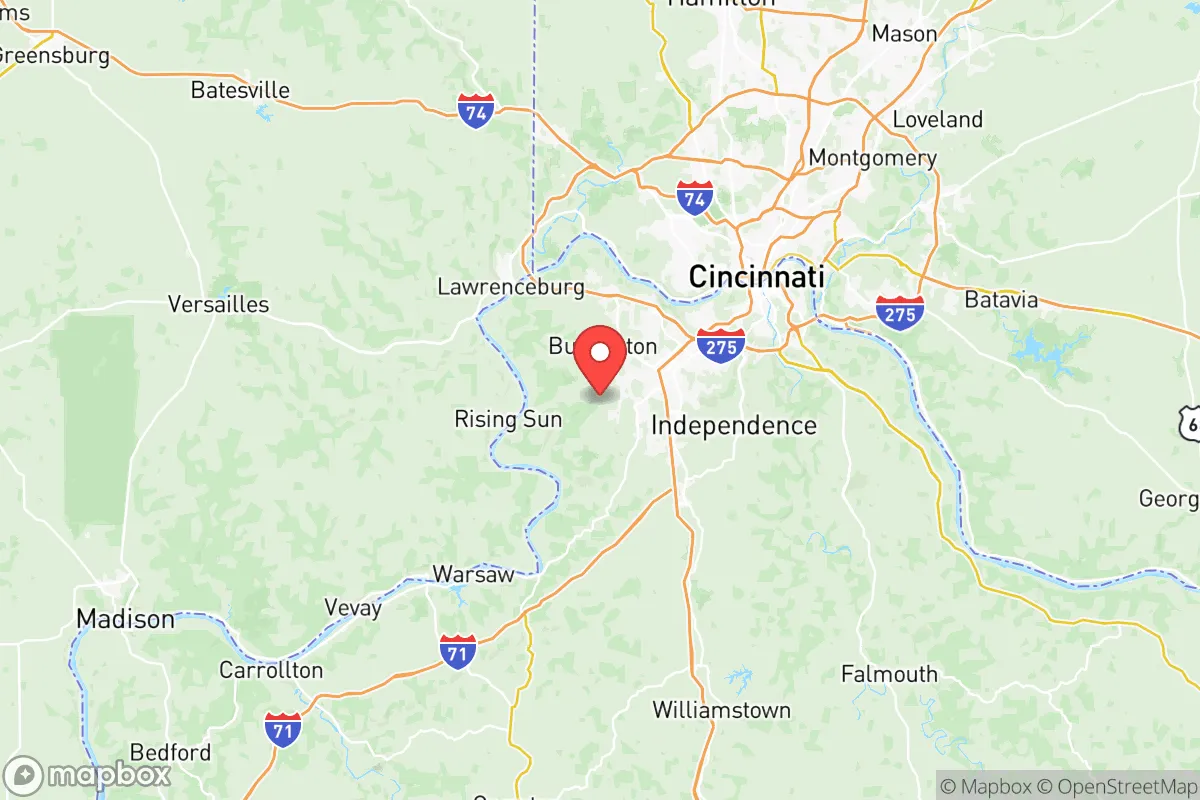
Boone County, Kentucky, is a rapidly growing suburban powerhouse of 137,676 residents, characterized by a predominantly white (83.6%) and college-educated (35.4%) population that leans conservative. Its people are a blend of long-standing Appalachian and German heritage families, newer domestic migrants from the Rust Belt and Midwest, and a small but growing Hispanic and Asian community. The county’s identity is shaped by its position as a northern Kentucky bedroom community for Cincinnati, its strong Catholic and Protestant religious roots, and a culture that prizes family, fiscal conservatism, and local governance.
Settlement & growth (pre-1960)
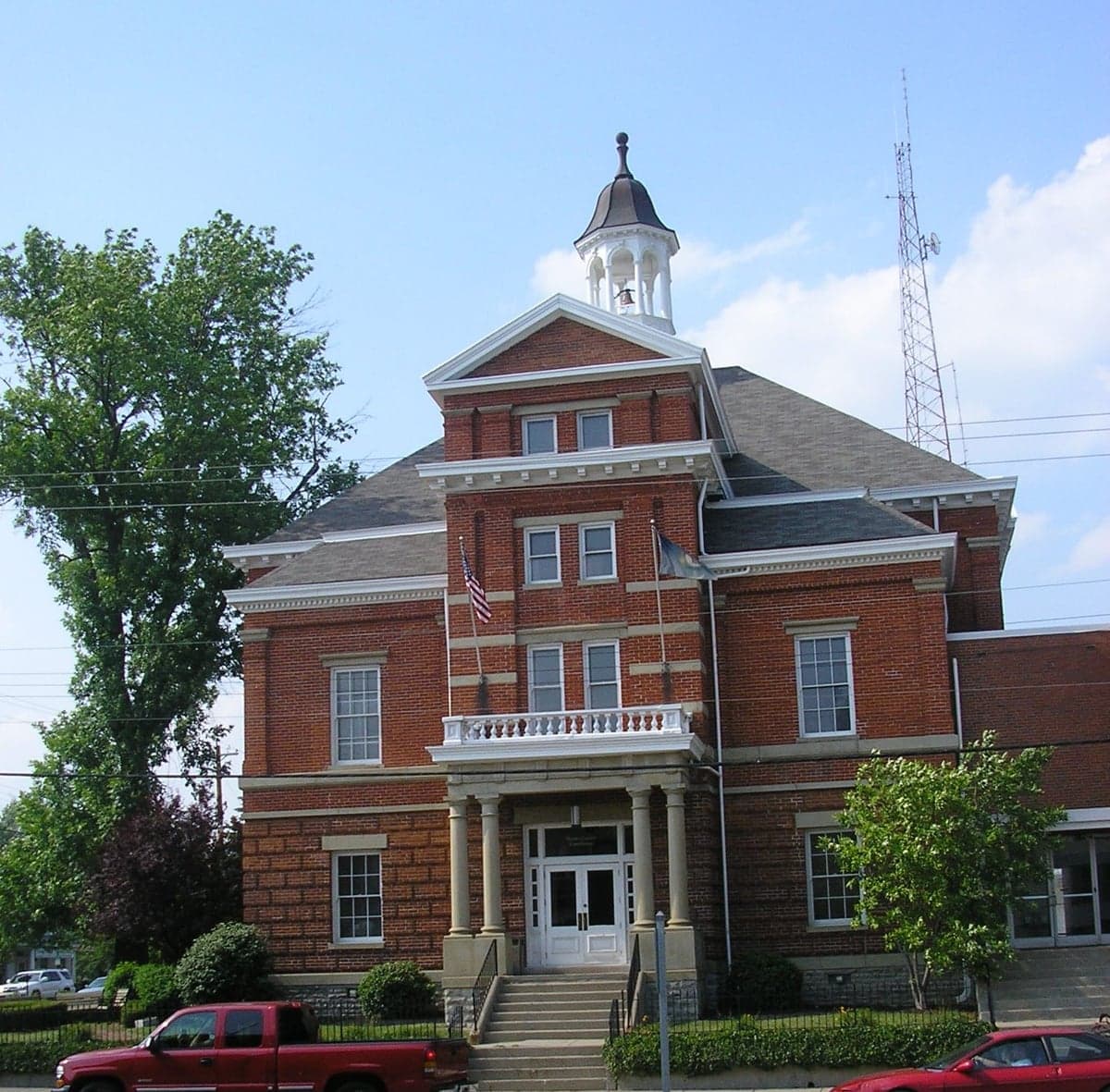
Before European settlement, the area now known as Boone County was part of the hunting grounds of the Shawnee and Miami nations, who used the Ohio River corridor for travel and trade. The first permanent white settlers arrived in the late 18th century, primarily of Scots-Irish and English descent, drawn by the promise of fertile land under Virginia’s military land grants. These early families, such as the Taylors and the Boones (after whom the county is named), established small farming communities along the Ohio River, including Burlington (the county seat since 1799) and Florence, which began as a stagecoach stop.
The 19th century saw a steady influx of German Catholic immigrants, who arrived in the 1830s-1850s seeking farmland and religious freedom. They settled heavily in the northern part of the county, founding the towns of Petersburg and Verona, where German remained a spoken language in churches and homes well into the early 1900s. These German families, along with a smaller number of Irish laborers who worked on the railroad and riverboats, established a deeply Catholic and agrarian culture that persisted for generations. The county remained overwhelmingly rural and white through the early 20th century, with tobacco and corn farming as the economic backbone.
World War II and the post-war boom brought the first major shift. The construction of Interstate 75 in the 1950s and the expansion of the Greater Cincinnati/Northern Kentucky International Airport (located in Boone County) transformed the region. Domestic migrants from the Appalachian coalfields of eastern Kentucky and West Virginia arrived in the 1940s-1960s, seeking industrial jobs at plants like the General Electric plant in nearby Evendale, Ohio. These Appalachian families settled primarily in Florence and Hebron, creating a distinct cultural layer of Southern Baptist and Methodist churches, country music traditions, and a strong work ethic. By 1960, the county’s population had reached roughly 15,000, still overwhelmingly white and native-born.
Modern era (post-1965)
The 1965 Hart-Cellar Act had a limited direct impact on Boone County compared to coastal regions, but it set the stage for the county’s modern demographic trajectory. The most transformative force since the 1970s has been domestic migration—specifically, the suburbanization of Cincinnati’s white middle class. As Cincinnati’s urban core experienced white flight and deindustrialization, families moved south across the Ohio River into Boone County, drawn by lower taxes, newer housing stock, and highly rated public schools. This wave concentrated in Florence, which exploded from a village of 2,000 in 1970 to a city of over 30,000 by 2020, and in the master-planned community of Union, which grew from farmland into a suburb of 25,000.
International immigration has been modest but noticeable. The county’s foreign-born population stands at 3.6%, with the largest groups being Hispanic (5.7% of total population) and East/Southeast Asian (1.3%). Hispanic residents, primarily of Mexican and Guatemalan origin, began arriving in the 1990s to work in construction, landscaping, and the logistics sector around the airport. They have formed a small but visible community in Florence, where several Hispanic grocery stores and churches now operate. The East/Southeast Asian community—largely Vietnamese and Korean families—arrived in the 2000s, many as professionals in engineering and healthcare, and are dispersed rather than clustered in a single enclave. The Indian-subcontinent population (1.1%) is similarly professional and scattered, with many working at the Toyota Motor Manufacturing plant in nearby Georgetown or in Cincinnati’s hospital systems.
Black residents (3.8%) are a relatively new presence, with most arriving since 2000 as part of a broader suburbanization of African Americans from Cincinnati’s urban core. They are concentrated in Florence and Elsmere, where more affordable housing and lower crime rates have attracted families. The county remains less diverse than the national average, but the Hispanic and Asian shares have doubled since 2010, driven by both immigration and higher birth rates among these groups.
The future
Boone County is projected to continue growing, with the population expected to reach 160,000-170,000 by 2040. The county is becoming slightly more diverse, but the pace is slow. The Hispanic share is likely to rise to 8-10% over the next decade, driven by continued immigration and natural increase, while the East/Southeast Asian and Indian populations will grow modestly as professionals are drawn to the region’s expanding healthcare and logistics sectors. The white share will decline gradually but will remain above 75% for the foreseeable future.
New residential development is pushing south and west, away from the congested I-75 corridor. The towns of Walton and Richwood are seeing the fastest growth, attracting younger families priced out of Florence and Union. These areas are likely to remain culturally conservative and family-oriented, with a strong emphasis on local schools and churches. The county’s political character—solidly Republican in every presidential election since 2000—is unlikely to shift dramatically, though the growing Hispanic population may introduce more nuanced political views over time.
For someone moving in now, Boone County offers a stable, safe, and growing community with good schools and a strong local economy. The trade-off is a relatively homogeneous social environment and a long commute for those working in Cincinnati’s urban core. The county is becoming more diverse, but slowly, and its cultural identity remains rooted in its Appalachian and German heritage, suburban values, and a deep skepticism of rapid change.

* Values derived from national, state, county, city and local statistics and may differ in a specific area. Last updated: 2026-09-30T22:40:01.000Z
Narrative content on this page is AI-generated and may contain mistakes. Verify any details that matter before acting on them.
ReloMaps may earn a commission from affiliate links at no extra cost to you.

