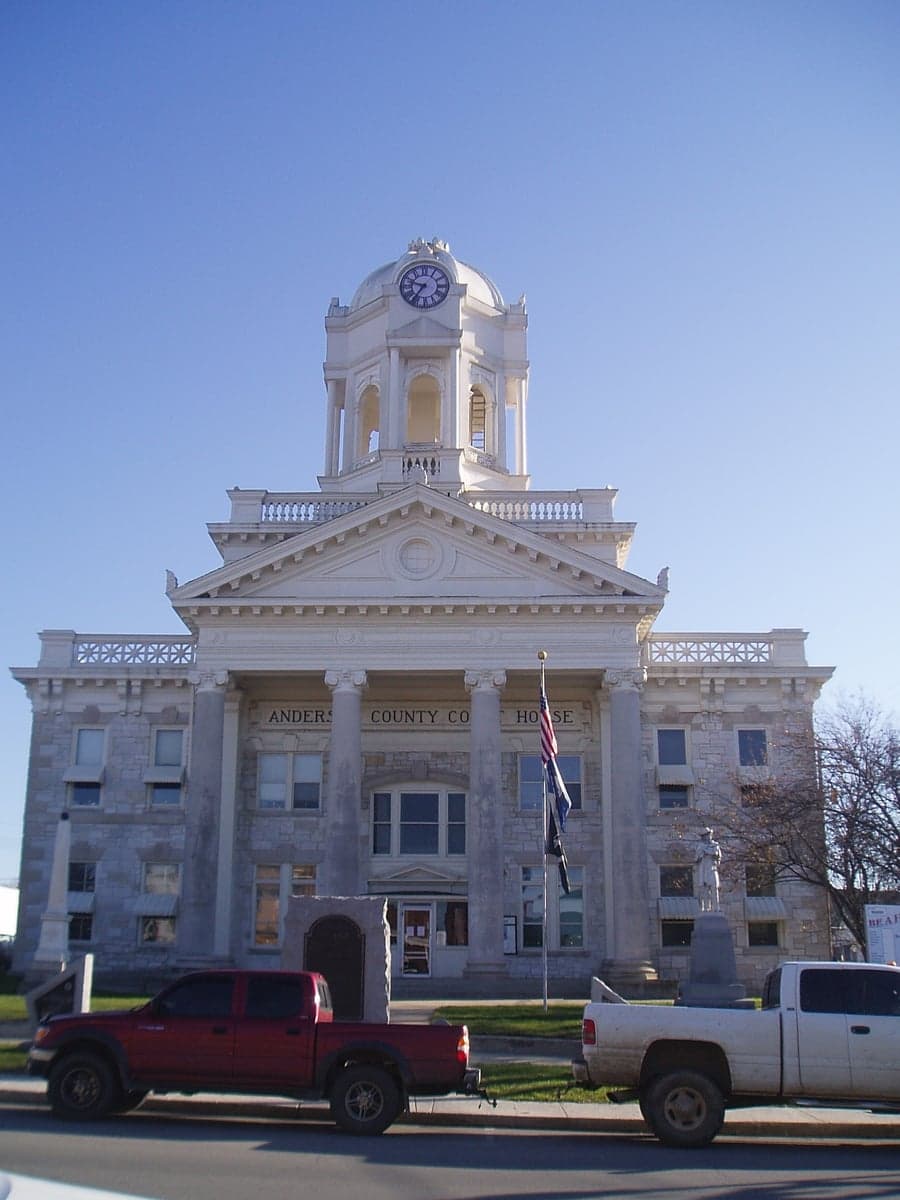
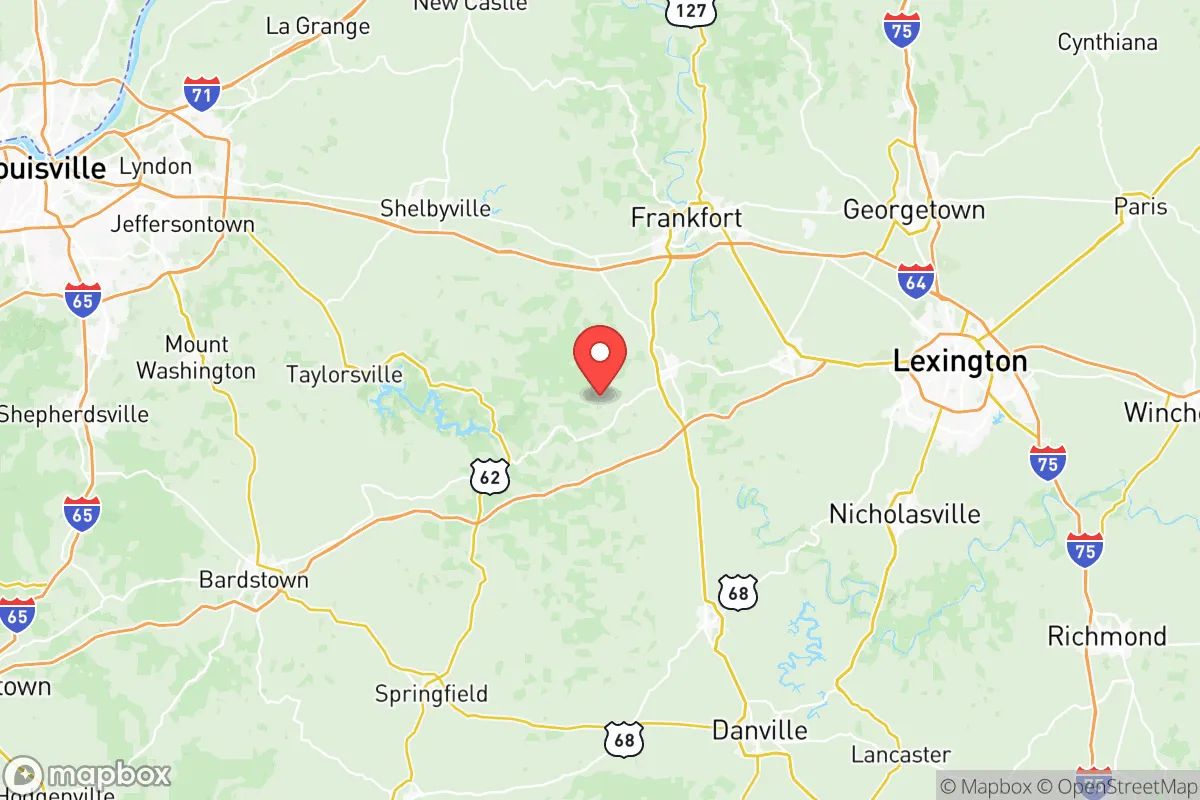
Photo: Wikipedia
Quality of Life in Anderson County
A livable area that tracks near national norms for affordability, walkability, and neighborhood health.
What does Quality of Life tell us?
Quality of Life measures an area by evaluating factors like cost of living, nearby amenities, country club access, airport proximity, socioeconomic signals and neighborhood character. For large states, this is a general average — quality of life can vary dramatically between metro areas, suburbs, and rural communities within the same state.
What does this tell us?
Quality of Life measures an area by evaluating factors like cost of living, nearby amenities, country club access, airport proximity, socioeconomic signals and neighborhood character. For large states, this is a general average — quality of life can vary dramatically between metro areas, suburbs, and rural communities within the same state.
Cost of Living
25% below national average
118%
The Real Cost of Living in Anderson County for 2026
| Tier | Individual | Family (4) |
|---|---|---|
| Survival | $14k | $26k |
| Comfortable | $41k | $61k |
| Luxury | $109k+ | $168k+ |
| Elite (Top 5%) | $128k+ | $198k+ |
Quality-of-Life Analysis
Anderson County, Kentucky, offers a distinct quality-of-life spectrum that ranges from the walkable, historic county seat of Lawrenceburg to deeply rural farmlands and unincorporated crossroads, attracting everyone from Frankfort and Lexington commuters to agricultural families and small-town entrepreneurs. With a cost of living index of 75 (25% below the U.S. average), a median home value of $213,200, and a median rent of $870, the county provides tangible affordability across its varied communities, though the trade-off is an average commute of 29.2 minutes as many residents drive to jobs in the state capital or the Lexington metro.
Largest town(s) & population centers
Lawrenceburg is the county’s sole incorporated city and undisputed hub, home to roughly 12,000 of the county’s 24,000 residents. Daily life here centers on the compact downtown along Main Street, where local restaurants, the historic Anderson County Courthouse, and seasonal events like the Anderson County Fair create a traditional small-town rhythm. The town is also the site of the Four Roses Bourbon distillery, a major employer and tourist draw that anchors a modest but growing hospitality sector. Housing in Lawrenceburg itself leans toward older single-family homes on tree-lined streets, with prices often below the county median, while newer subdivisions on the town’s outskirts push toward the $250,000–$300,000 range. For daily errands, residents rely on a full-service grocery, a Walmart, and a handful of chain retailers; for more extensive shopping or entertainment, most drive 20–30 minutes to Frankfort or 40 minutes to Lexington.
Smaller towns & rural pockets
Outside Lawrenceburg, the county is dotted with unincorporated communities that offer a quieter, more land-based lifestyle. Alton, a few miles south of Lawrenceburg along U.S. 127, is a loose collection of homes, a post office, and farmland, popular with families who want a rural address but a short drive to town. Glensboro, in the county’s southeastern corner near the Mercer County line, is even more sparsely populated, with rolling pastures and horse farms defining the landscape. Ninevah, in the northern part of the county, is a historic crossroads with a handful of homes and a volunteer fire department, appealing to those seeking maximum privacy and acreage. These areas lack municipal services like public water or sewer in many spots, and residents rely on wells and septic systems. The trade-off is land: a 5–10 acre parcel with a modest house in Alton or Glensboro can often be found for $150,000–$200,000, well below the county median.
Cost & lifestyle range
The cost-of-life spread across Anderson County is driven primarily by housing type and location. At the lower end, a small rental in rural Ninevah or a fixer-upper in Alton can run $700–$800 per month in rent or a purchase price under $150,000, reflecting the county’s overall median rent of $870. At the upper end, newer construction in Lawrenceburg’s Fox Creek or Hunter’s Ridge subdivisions can exceed $350,000, offering 3–4 bedrooms, attached garages, and neighborhood amenities like sidewalks and playgrounds. Lifestyle differences are equally stark: a family in a Lawrenceburg subdivision can walk to the public library and a city park, while a household on a 10-acre tract in Glensboro may drive 15 minutes for a gallon of milk. The county’s average commute of 29.2 minutes is a key factor for many—those living in the rural pockets often face longer drives to Lawrenceburg or to jobs in Frankfort (home to state government) or the Toyota plant in Georgetown, while Lawrenceburg residents can reach those same employers in 20–25 minutes.
Anderson County is best suited for people who value genuine affordability and a slower pace but are willing to trade urban amenities and short commutes for space and lower costs. Commuters who work in Frankfort or Lexington find the county a budget-friendly alternative to those pricier metros, while families and retirees drawn to the bourbon-country landscape and the tight-knit feel of Lawrenceburg will find a stable, low-stress environment. Those seeking nightlife, dense cultural offerings, or a walkable urban core should look elsewhere—but for anyone who prioritizes a low cost of living, a quiet home base, and a 30-minute drive to a state capital, Anderson County delivers a clear and practical fit.

Crime in Anderson County
Generally safer than 62% of comparable U.S. locations.
Violent CrimeViolent Crime Analysis
Property CrimeProperty Crime Analysis
Crime Analysis
Anderson County, Kentucky, presents a mixed safety profile that is heavily influenced by its proximity to the larger, more liberal-leaning metro area of Lexington-Fayette. The county’s overall violent crime rate of 212.6 per 100,000 residents is notably lower than the national average, but its property crime rate of 1,275.5 per 100,000 is a significant concern, particularly in the county seat of Lawrenceburg. Residents and potential movers should be aware that while the county is not a high-crime hotspot, the influence of progressive judicial policies from nearby urban centers can create a revolving-door justice system that undermines public safety.
Crime in context
When compared to both state and national benchmarks, Anderson County’s violent crime rate of 212.6 per 100,000 is roughly 40% lower than the national average of 366.7 per 100,000. This places the county in a relatively safe category for violent offenses like murder, rape, robbery, and aggravated assault. However, the property crime rate of 1,275.5 per 100,000 is approximately 15% higher than the national average of 1,100 per 100,000, and significantly above the Kentucky state average of around 1,100. This disparity is driven largely by thefts and burglaries in unincorporated areas and the town of Alton. The contrast is stark: while a resident in the more rural parts of the county near Fox Creek may feel safe from violent crime, they face a higher-than-average risk of having their home or vehicle broken into. The data suggests that property crime is the primary safety challenge, not violent crime.
What residents experience
Daily life in Anderson County is generally quiet, but the property crime rate creates a tangible sense of unease. In Lawrenceburg, the county’s primary population center, residents frequently report thefts from vehicles and unlocked outbuildings. The situation is exacerbated by the county’s location along the Bluegrass Parkway, which provides easy access for transient criminals from larger cities like Lexington and Frankfort. Many residents express frustration that the local judicial system, while not as progressive as in Lexington, still leans toward leniency for non-violent property offenders. This is a common complaint in the 53rd Judicial District, which covers Anderson, Shelby, and Spencer counties. The district attorney’s office has been criticized by some residents for offering plea deals that result in minimal jail time for repeat property offenders, a pattern that directly contributes to the elevated property crime numbers. For families, the practical impact means investing in security systems, neighborhood watch programs, and being vigilant about locking doors and vehicles—a reality that is less common in safer, more conservative rural counties to the west.
Neighborhood-level variation
Safety in Anderson County is not uniform. The most significant variation exists between the incorporated town of Lawrenceburg and the surrounding rural communities. Lawrenceburg itself sees the bulk of the county’s reported crime, particularly along the US-127 corridor and near the industrial parks. In contrast, the small community of Alton has a reputation for being a quieter, safer pocket, though its proximity to the county line means it still experiences occasional property crime. The most rural areas, such as those around Fox Creek and Ninevah, report the lowest crime rates in the county, with violent crime being virtually non-existent. However, these areas are also the most vulnerable to isolated thefts from farms and hunting camps. For those considering a move, the safest bet is to look at properties on the eastern side of the county, away from the main highway corridors and closer to the Spencer County line. The key takeaway is that while Anderson County is not a dangerous place by national standards, the progressive-leaning policies of the broader judicial district create a permissive environment for property crime that residents must actively manage.
* Values derived from national, state, county, city and local statistics and may differ in a specific area. Last updated: 2026-06-28T00:06:06.000Z
Narrative content on this page is AI-generated and may contain mistakes. Verify any details that matter before acting on them.
ReloMaps may earn a commission from affiliate links at no extra cost to you.

