Photo: Wikipedia
Demographics of Anderson County
Affluence Level in Anderson County
A middle-class area roughly in line with national averages across income, home values, education, and employment.
People of Anderson County
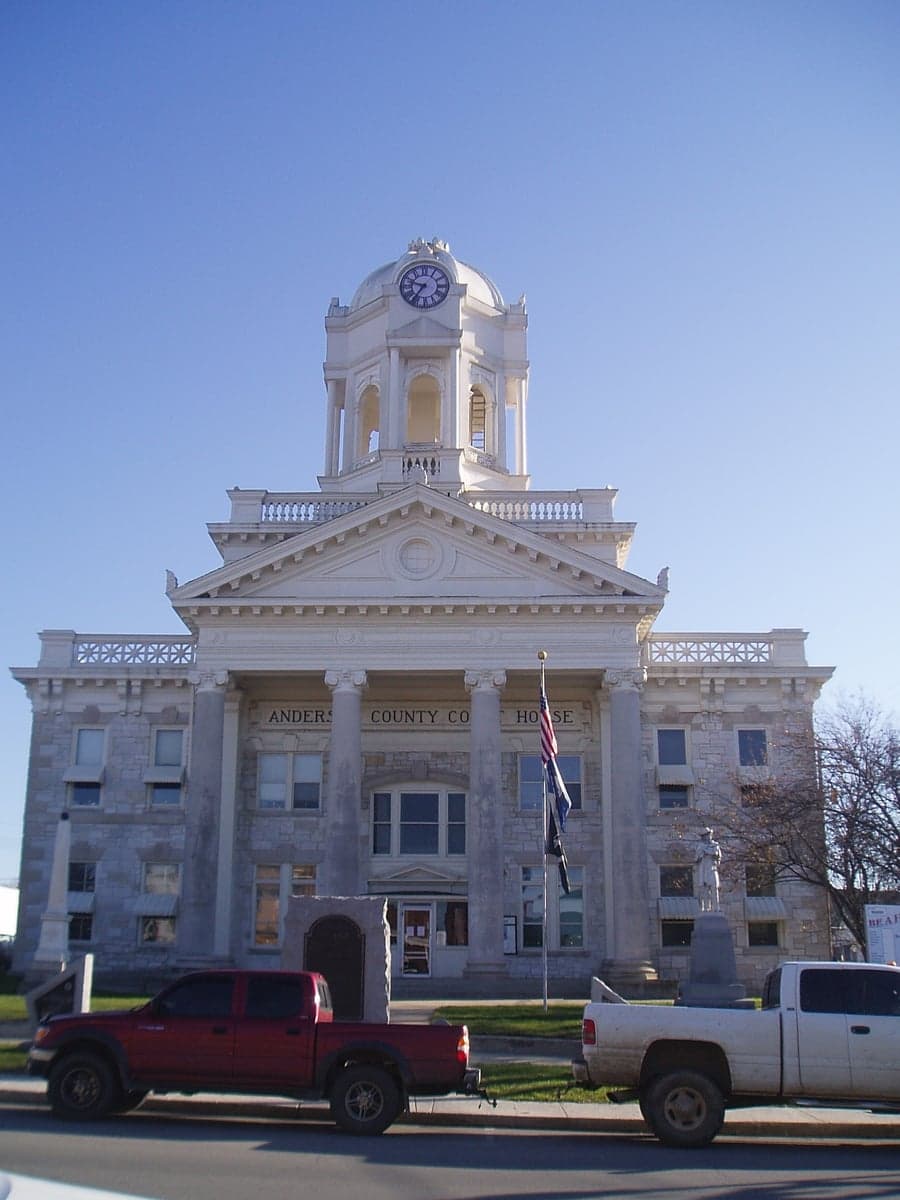
Anderson County, Kentucky, is a predominantly white, rural community of just over 24,000 residents, characterized by its deep agricultural roots and a strong sense of local identity centered on the county seat of Lawrenceburg. With a population that is 92.2% white and a foreign-born share of only 0.6%, the county remains one of the least ethnically diverse in the Bluegrass region, a direct reflection of its settlement history and limited immigration since the mid-20th century. The people here are largely native-born Kentuckians, with a cultural fabric woven from Scots-Irish and English pioneer stock, and the county's slow, steady growth is driven more by domestic migration from nearby metropolitan areas than by international arrivals.
Settlement & growth (pre-1960)
The land that is now Anderson County was originally inhabited by the Shawnee and Cherokee peoples, who used the Kentucky River and its tributaries for hunting and travel. European exploration was sparse until after the American Revolution, when the first permanent white settlers—primarily of Scots-Irish and English descent—began arriving in the late 1770s and early 1780s. These pioneers came over the Wilderness Road or down the Ohio River, drawn by the promise of fertile, inexpensive land in the Kentucky Bluegrass region. They established small farms and hamlets, with the town of Lawrenceburg, founded in 1786, quickly becoming the county's commercial and social hub after Anderson County was formally created from parts of Franklin, Mercer, and Washington counties in 1827.
Throughout the 19th century, the population grew slowly but steadily, fueled by natural increase and the arrival of additional Anglo-American settlers from Virginia, North Carolina, and Tennessee. The county's economy was almost entirely agricultural, with tobacco, corn, and livestock as the mainstays. Unlike many parts of Kentucky, Anderson County saw very little German or Irish Catholic immigration during the mid-1800s; the population remained overwhelmingly native-born and Protestant. The small community of Alton, located along the Kentucky River, developed as a river landing and milling center, while the unincorporated settlement of Ninevah served as a crossroads for local farmers. By 1900, the county's population had reached roughly 13,000, and it would remain relatively stable for the next half-century.
The 20th century brought modest industrial development, most notably the establishment of the Lawrenceburg Distillery (now part of the Wild Turkey brand) in the 1930s, which provided steady employment and helped anchor the local economy. However, Anderson County did not experience the large-scale immigration waves that transformed many American cities during the early 1900s. The African American population, which had been present since the antebellum period as enslaved laborers on tobacco farms, declined significantly after the Great Migration (roughly 1910–1970), as many Black families left for industrial jobs in Louisville, Lexington, and northern cities. By 1960, the county's population was approximately 12,000, and its racial composition was already overwhelmingly white.
Modern era (post-1965)
The 1965 Hart-Cellar Act, which dramatically reshaped U.S. immigration policy, had virtually no impact on Anderson County. Unlike urban centers or Sun Belt boomtowns that saw surges of new arrivals from Asia, Latin America, and Africa, Anderson County remained demographically static. The foreign-born population today stands at just 0.6%, and the county's Hispanic share (2.4%) and Black share (2.8%) are both well below state and national averages. The East/Southeast Asian population is negligible at 0.1%, and there is no measurable Indian-subcontinent community. This lack of diversity is not due to any single policy or event but rather reflects the county's geographic isolation from major immigration gateways and its limited economic pull for newcomers.
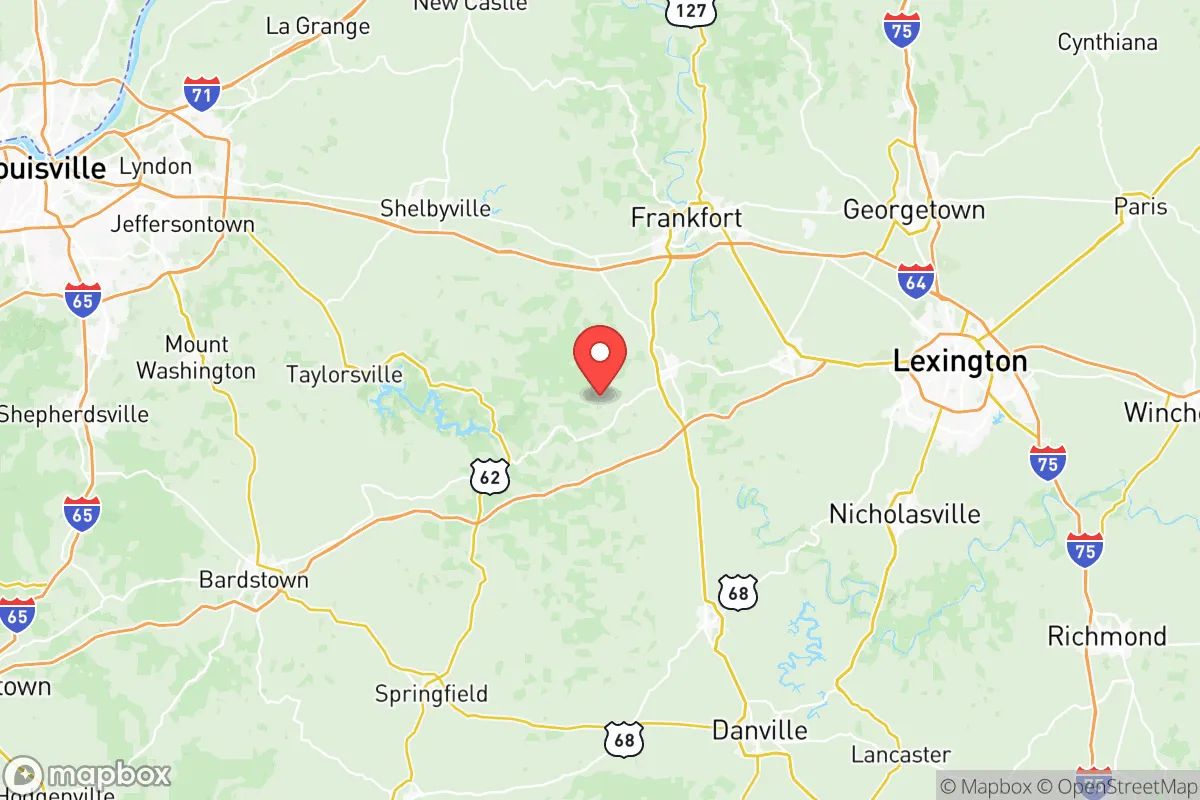
Domestic migration has been the primary driver of population change since the 1970s. Anderson County has experienced slow but consistent growth, rising from about 14,000 in 1970 to over 24,000 today. Much of this growth comes from families and individuals moving outward from the Lexington-Fayette metropolitan area, which lies just to the east. These domestic migrants are overwhelmingly white and native-born, often seeking lower housing costs, a slower pace of life, and proximity to both Lexington's jobs and the rural landscape. The town of Lawrenceburg has absorbed most of this new development, with new subdivisions and retail corridors appearing along U.S. Route 127 and Kentucky Route 44. Smaller communities like Glensboro and Stringtown remain largely unchanged, functioning as rural crossroads rather than growing suburbs.
Suburbanization has been modest compared to the explosive growth seen in counties closer to Lexington. Anderson County's character remains distinctly rural, with a population density of roughly 65 people per square mile. The county has not attracted significant new industry or large employers beyond the Wild Turkey distillery and a few manufacturing plants, which limits its appeal to job-seeking migrants. As a result, the population has aged slightly, with a median age around 40, and the share of college-educated residents (25.7%) is below the national average, reflecting the county's blue-collar and agricultural economic base.
The future
Anderson County's demographic trajectory points toward continued slow growth, modest aging, and persistent racial and ethnic homogeneity. The county is unlikely to experience a sudden influx of international immigrants, given its lack of established ethnic enclaves, limited public transportation, and an economy that does not offer the low-skilled service jobs that often attract newcomers. The Hispanic population may grow slightly, as it has in many rural Kentucky counties, but from a very low base (2.4%), it will remain a small minority for the foreseeable future. The Black population, which has held steady at around 2.8% for decades, is not expected to increase significantly without a major employer or institutional anchor drawing new residents.
The most likely source of future growth is continued domestic migration from Lexington and other parts of central Kentucky, as housing costs in the urban core push families outward. This will gradually increase the county's population, perhaps reaching 28,000–30,000 by 2040, but it will also bring pressure for more suburban-style development along the main commuter corridors. The cultural identity of Anderson County will likely remain rooted in its agricultural heritage, conservative social values, and local traditions, even as it becomes more closely tied to the Lexington economy. For someone moving in now, the county offers a stable, safe, and affordable environment where the population is neither shrinking nor transforming dramatically—a place where the people look much like they did a generation ago, and are likely to for the next one.
In short, Anderson County is becoming a slightly more populous, slightly more suburban version of its rural self, but it is not becoming a diverse or cosmopolitan community. For families and individuals seeking a quiet, low-cost, and culturally familiar environment within commuting distance of a mid-sized city, it remains a reliable choice. Those looking for ethnic diversity, rapid growth, or a dynamic urban scene will find the county's demographic stability a limitation rather than an asset.

* Values derived from national, state, county, city and local statistics and may differ in a specific area. Last updated: 2026-06-28T00:06:06.000Z
Narrative content on this page is AI-generated and may contain mistakes. Verify any details that matter before acting on them.
ReloMaps may earn a commission from affiliate links at no extra cost to you.

