
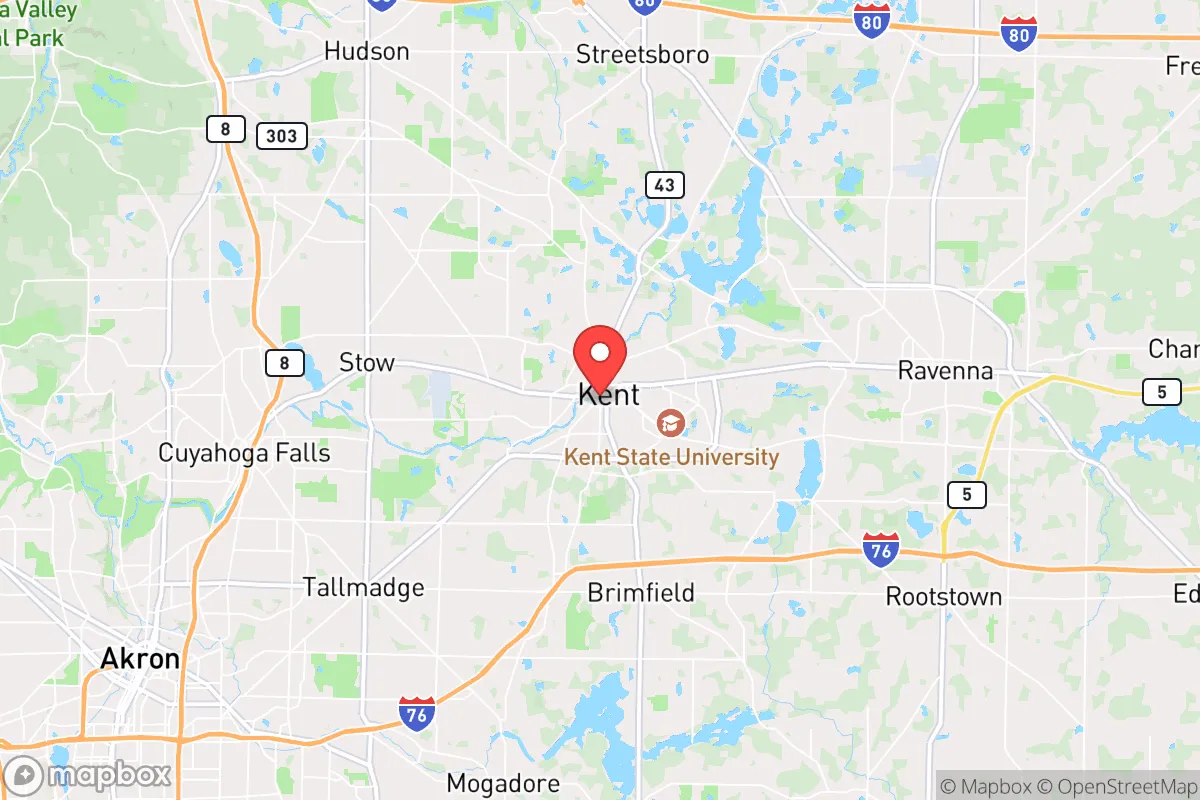
Photo: Wikipedia
Quality of Life in Kent, OH
A high quality of life with strong walkability, manageable living costs, healthy neighborhood signals, and solid amenity access.
What does Quality of Life tell us?
Quality of Life blends cost of living, nearby amenities, socioeconomic signals, and neighborhood character. City-level scores represent the whole municipality; individual neighborhoods can differ.
What does this tell us?
Quality of Life blends cost of living, nearby amenities, socioeconomic signals, and neighborhood character. City-level scores represent the whole municipality; individual neighborhoods can differ.
Cost of Living
19% below national average
The Real Cost of Living in Kent, OH for 2026
| Tier | Individual | Family (4) |
|---|---|---|
| Survival | $16k | $29k |
| Comfortable | $41k | $60k |
| Luxury | $77k+ | $119k+ |
| Elite (Top 5%) | $121k+ | $188k+ |
71%
The Area Signal
A metric tracking the socioeconomic signals of the area.
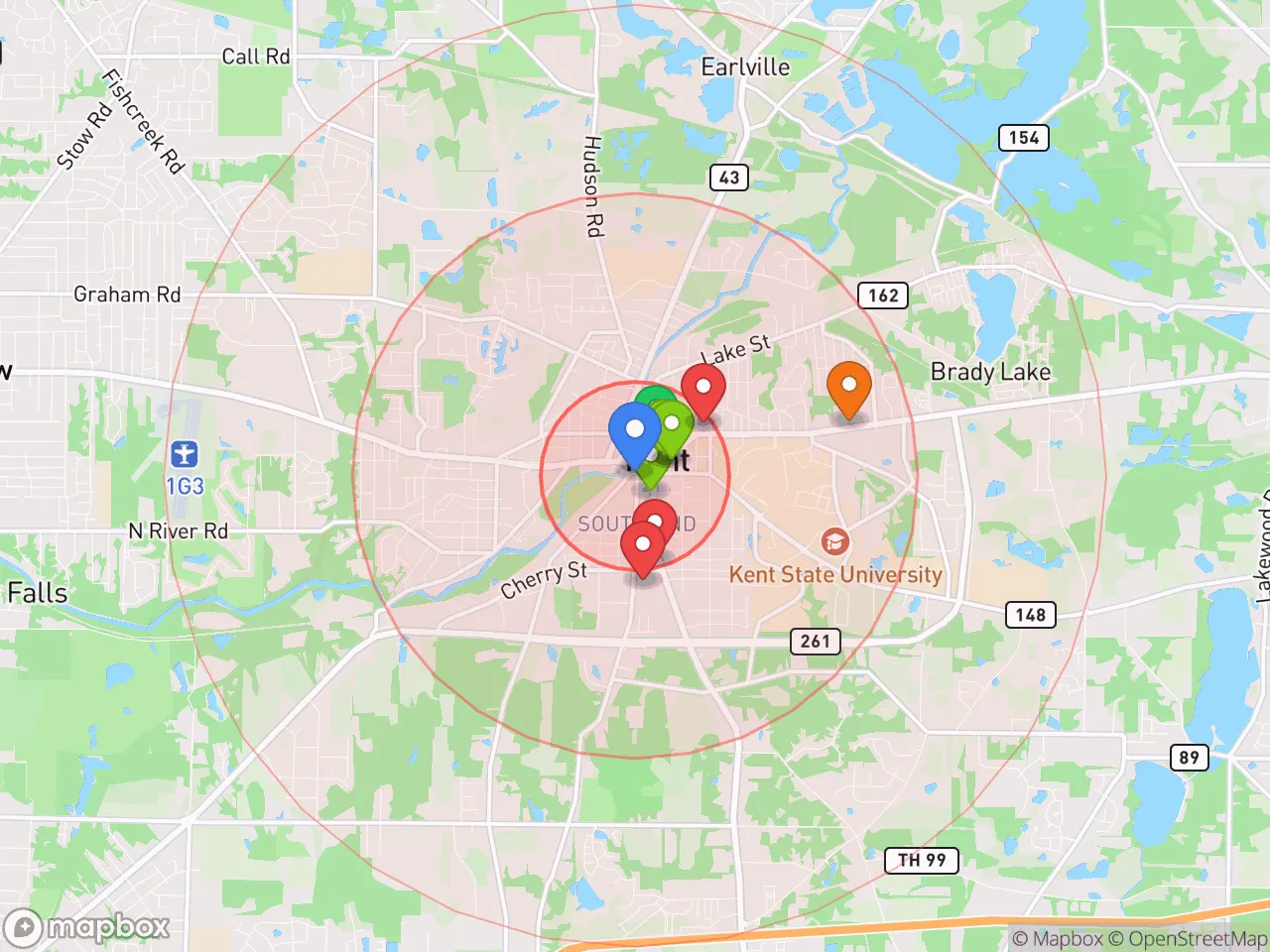

Hobbies
Explore the areaGroceries
6 within 10 miles
Gas
20 within 10 miles
Hospital
20 within 20 miles
Airport
Pittsburgh International Airport
Post Office
USPS — Kent, OH
Critical Amenities
Quality-of-Life Analysis
Kent, Ohio, offers a notably affordable quality of life that attracts a mix of university-affiliated residents, young professionals, and families seeking a walkable, culturally engaged small city. With a cost of living index of 81 (19% below the U.S. average), the city provides a financial buffer rarely found in Northeast Ohio’s larger urban centers, while its median home value of $210,700 and median rent of $983 make it one of the more accessible housing markets in Portage County. The population skews younger and more educated than the regional average, driven by Kent State University’s 28,000 students and faculty, creating a town-gown dynamic that shapes everything from local politics to the restaurant scene.
Cost of living, housing affordability, and how Kent compares to nearby cities
Kent’s cost of living index of 81 places it well below the national baseline and significantly cheaper than nearby Hudson (index ~105) or Cleveland’s eastern suburbs (index ~95–100). The median home value of $210,700 is roughly 30% lower than the national median, and the median rent of $983 undercuts both the Ohio average ($1,050) and the national average ($1,200). For context, a two-bedroom apartment in Kent typically rents for $850–$1,100, while comparable units in Akron (15 minutes south) run $950–$1,300. The average commute of 21.6 minutes is shorter than the national average of 26 minutes, and most residents drive to work via State Route 43 or I-76, with a notable minority biking or walking to the university campus. Property taxes in Portage County hover around 1.8% of assessed value, slightly below the Ohio median, which further stretches housing dollars for first-time buyers.
What daily life is like for families, students, and professionals in Kent
Daily life in Kent revolves around the university calendar and the walkable downtown corridor along Water Street. The city’s Kent Free Library and the Kent State University Museum anchor cultural programming, while the Portage Park District maintains over 20 miles of multi-use trails, including the popular Portage Hike and Bike Trail that connects to the Cuyahoga Valley National Park. The Kent City School District serves roughly 3,500 students and includes Stanton Middle School and Theodore Roosevelt High School, both rated above average on state report cards, though some families opt for private options like St. Patrick School. The restaurant scene punches above its size, with local staples like Ray’s Place (a 1937-era pub) and Bricco (upscale Italian) drawing from both student and resident clienteles. The Kent Stage hosts live music and comedy acts, and the Haymaker Farmers’ Market runs year-round on Saturdays. The city’s crime rate is roughly 20% below the national average, with property crime concentrated near campus rental zones and violent crime remaining rare.
Kent is best suited for people who value walkability, cultural amenities, and a strong sense of community without paying a premium for it. University employees and students naturally fit here, but the affordability also attracts remote workers and creative professionals priced out of Cleveland or Akron. Families with school-age children will find solid public schools and ample parks, though those seeking elite suburban districts may prefer Hudson or Aurora. Retirees on fixed incomes benefit from the low cost of living and proximity to Cleveland Clinic Akron General and University Hospitals Portage Medical Center. Anyone who dislikes the cyclical rhythm of a college town—quiet summers, crowded fall semesters, and occasional late-night noise near campus—should look elsewhere. For those who embrace it, Kent offers a rare combination of economic accessibility and cultural vitality in Northeast Ohio.

Crime in Kent, OH
Lower crime rates than 77% of comparable U.S. locations.
Violent CrimeViolent Crime Analysis
Property CrimeProperty Crime Analysis
Crime Analysis
Kent, Ohio, presents a mixed safety profile for potential residents. The city’s violent crime rate of 187.8 per 100,000 residents is notably lower than the national average, but its property crime rate of 790.8 per 100,000 is a significant concern, particularly given the area’s proximity to the larger, more crime-prone Akron and Cleveland metros. As a college town with a progressive local government and judicial philosophy, Kent faces unique public safety challenges that warrant careful consideration.
Crime in context
Kent’s violent crime rate is roughly half the national average, making incidents like robbery and aggravated assault relatively uncommon. However, the property crime rate is elevated, sitting above both the Ohio state average and the national median. This is typical for cities with a large student population and transient renters, where thefts from vehicles and bicycles are frequent. The city’s location within the broader Northeast Ohio metro area means it is not insulated from regional crime trends, and the presence of a liberal-leaning Portage County court system has been cited by some residents as a factor in lower conviction rates for property offenses, potentially emboldening repeat offenders.
What residents experience
Daily life in Kent for most residents involves standard urban precautions: locking car doors, securing bicycles, and avoiding poorly lit areas near campus late at night. The Kent State University Police Department and the Kent City Police Department maintain a visible presence, particularly during the academic year. However, the progressive judicial environment in Portage County, which emphasizes rehabilitation over incarceration, has led to frustration among victims of property crime who report that offenders often receive light sentences or diversion programs. This approach, while well-intentioned, can result in a revolving-door effect for chronic property criminals, directly impacting residents’ sense of security and the community’s overall quality of life.
Neighborhood-level variation is significant. The area immediately surrounding the Kent State campus, including the downtown district, sees the highest concentration of property crimes, especially during the fall and spring semesters. In contrast, established residential neighborhoods like Franklin Township and the Lake Rockwell area report far fewer incidents, with violent crime being almost nonexistent. Families and long-term residents often gravitate toward these quieter pockets, but they remain subject to the same county-wide judicial policies that critics argue prioritize offender rights over public safety. For those considering a move, a thorough review of block-level crime maps and conversations with local neighborhood associations are strongly recommended.
* Values derived from national, state, county, city and local statistics and may differ in a specific area. Last updated: 2026-10-14T09:25:06.000Z
Narrative content on this page is AI-generated and may contain mistakes. Verify any details that matter before acting on them.
ReloMaps may earn a commission from affiliate links at no extra cost to you.

