
Photo: Wikipedia
Personal Sovereignty in Kent, OH
Viable for self-reliance. Generally workable, though some barriers may limit total independence.
What does Personal Sovereignty tell us?
Personal Sovereignty measures your capacity for self-reliance and independence with minimal government friction. Higher scores mean fewer barriers between you and the way you want to live... but it assumes you have the space you need and good neighbors.
What does this tell us?
Personal Sovereignty measures your capacity for self-reliance and independence with minimal government friction. Higher scores mean fewer barriers between you and the way you want to live... but it assumes you have the space you need and good neighbors.
State Policy
Energy independence: Importer (40% of energy produced in-state)
Personal Liberty
Homesteading

Personal Liberty Analysis
Kent, Ohio, offers a mixed personal sovereignty environment shaped by the state’s relatively light-touch legal framework and the city’s own local ordinances. While Ohio provides a solid baseline for self-defense rights, low property taxes, and limited zoning restrictions in outlying areas, Kent’s municipal code adds layers of regulation that moderate the autonomy a resident would experience compared to more rural parts of Portage County. For a relocation-minded reader who values independence, the key trade-off is between access to a university town’s amenities and the tighter leash that comes with city governance.
Tax burden and regulatory posture in Kent and Portage County
Ohio’s state-level tax burden is moderate compared to the national average, and Portage County keeps local levies reasonable. The state income tax is a flat 2.75% on most earned income (as of 2026), and Kent’s municipal income tax is 2.0% for residents who work in the city, with a 0.5% credit for taxes paid to other municipalities. Property taxes in Portage County average about 1.5% of assessed home value, which is below the national median. For a $250,000 home, that’s roughly $3,750 annually. The city’s regulatory posture is typical for a college town: building permits are required for most structural changes, and the city enforces a rental registration program that adds a $50 annual fee per unit. Zoning is moderately restrictive within city limits—R-1 districts require minimum lot sizes of 7,500 square feet, and accessory dwelling units are permitted only by conditional use permit. Outside the city, in townships like Franklin or Brimfield, zoning is looser, with no municipal income tax and fewer permit requirements for outbuildings. The overall regulatory burden is not oppressive, but it is noticeably heavier than in unincorporated areas of the county.
Self-defense and gun law specifics in Kent and Ohio
Ohio is a constitutional carry state as of 2022, meaning no permit is required to carry a concealed handgun for anyone 21 or older who is legally allowed to possess a firearm. Kent does not have its own gun ordinances beyond state law, so the city’s parks and public buildings are subject to the same restrictions as the rest of Ohio: concealed carry is prohibited in courthouses, schools, and government buildings with security checkpoints. Open carry is legal without a permit, but in practice, it draws police attention in a college town environment. Stand-your-ground laws apply statewide—there is no duty to retreat in any place where a person is lawfully present. The state also has a “castle doctrine” that creates a presumption of reasonable fear of death or great bodily harm if an intruder unlawfully enters an occupied home or vehicle. Magazine capacity and firearm types are not restricted by state law, and private sales between individuals do not require a background check. For a self-defense-minded resident, Kent offers the same legal protections as the rest of Ohio, though the local culture is less gun-friendly than rural areas—you’ll find fewer gun shops and ranges within city limits. The nearest indoor range is about 15 minutes south in Rootstown.
Self-reliance and homesteading viability: lot sizes, zoning, and off-grid feasibility
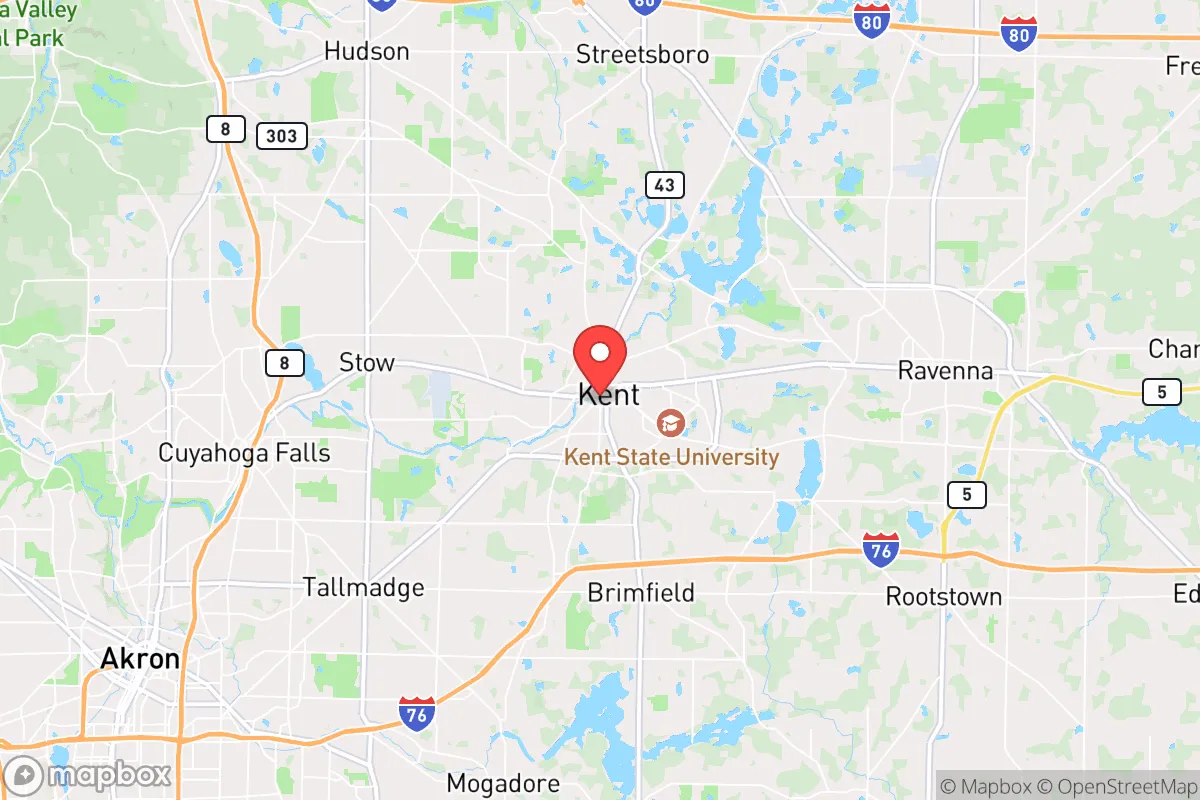
Within Kent’s city limits, homesteading is constrained by lot sizes and zoning rules. Minimum lot sizes in single-family districts are 7,500 square feet, which is enough for a substantial garden but not for keeping livestock—chickens are allowed only with a conditional use permit and a minimum lot size of one acre. Beekeeping is permitted but requires registration with the city. Off-grid living is effectively impossible within city limits: the city requires connection to municipal water and sewer for any habitable structure, and solar panels are allowed only as an accessory use, not as a primary power source. Rainwater collection is not prohibited but is limited by Ohio’s water rights laws, which generally favor groundwater access over surface capture. For a more self-reliant lifestyle, the viable option is to look outside Kent in the surrounding townships. In Franklin Township, for example, lot sizes can be as small as one acre for agricultural use, and there are no municipal water or sewer hookup requirements—wells and septic systems are standard. Off-grid solar is permitted without special permits, and chickens, goats, and even small livestock are allowed by right on parcels of two acres or more. The trade-off is a 10- to 20-minute drive to Kent’s grocery stores and services. For a family wanting a balance of autonomy and access, the unincorporated areas just east of Kent along State Route 59 offer the best compromise.
Personal liberties: parental rights, medical autonomy, speech, and property
Ohio law provides a strong baseline for parental rights. The state’s “Parents’ Bill of Rights” (enacted in 2023) gives parents the right to direct their child’s education, medical care, and religious upbringing, and requires schools to notify parents of any changes in a student’s services or mental health. Kent City Schools generally comply with these requirements, though the district has a more progressive culture than rural districts—parents should expect some pushback on opt-out requests for certain health curricula. Medical autonomy is moderate: Ohio does not have a state-level vaccine mandate for adults, and the state’s COVID-19 emergency orders were lifted in 2021. However, the state does require certain vaccines for school attendance (with medical and religious exemptions available). Kent’s hospital, University Hospitals Portage Medical Center, is a standard community hospital with no notable restrictions on patient choice. Free speech is protected under the First Amendment, and Kent’s public spaces—especially the downtown area and the Kent State campus—are historically active for political expression. Property rights are generally strong: Ohio has no statewide rent control, and Kent does not impose rent stabilization. Eminent domain is rarely used for private development in Portage County. The city does enforce a property maintenance code that can be a nuisance for homeowners who prefer a more rustic appearance—grass over 8 inches, inoperable vehicles visible from the street, and unapproved sheds can all trigger citations. For a property owner who values aesthetic freedom, the townships again offer more latitude.
Overall, Kent’s personal sovereignty environment is best described as a moderate compromise. The state provides a solid foundation for self-defense, low taxes, and parental rights, but the city’s municipal code adds friction for those who want to live off-grid, keep livestock, or maintain a property without interference. For a conservative-leaning individual or family who values autonomy, the smartest move is to live just outside the city limits—in Franklin or Brimfield Township—while still commuting into Kent for work or university access. Compared to similar college towns in the Midwest (like Oxford, Ohio, or Mount Pleasant, Michigan), Kent offers a lighter regulatory touch and lower taxes, but it is not a sovereignty haven like rural Ohio counties to the south. The area is a viable option for someone who wants the benefits of a small city without surrendering most of their personal freedoms, provided they are willing to navigate a few local ordinances.

* Values derived from national, state, county, city and local statistics and may differ in a specific area. Last updated: 2026-10-14T09:25:06.000Z
Narrative content on this page is AI-generated and may contain mistakes. Verify any details that matter before acting on them.
ReloMaps may earn a commission from affiliate links at no extra cost to you.

