Photo: Wikipedia
Political ClimatePolitical Climate in Saline County
Showing district-level results — no local-only data available.
Local Political AnalysisPolitical Analysis of Saline County
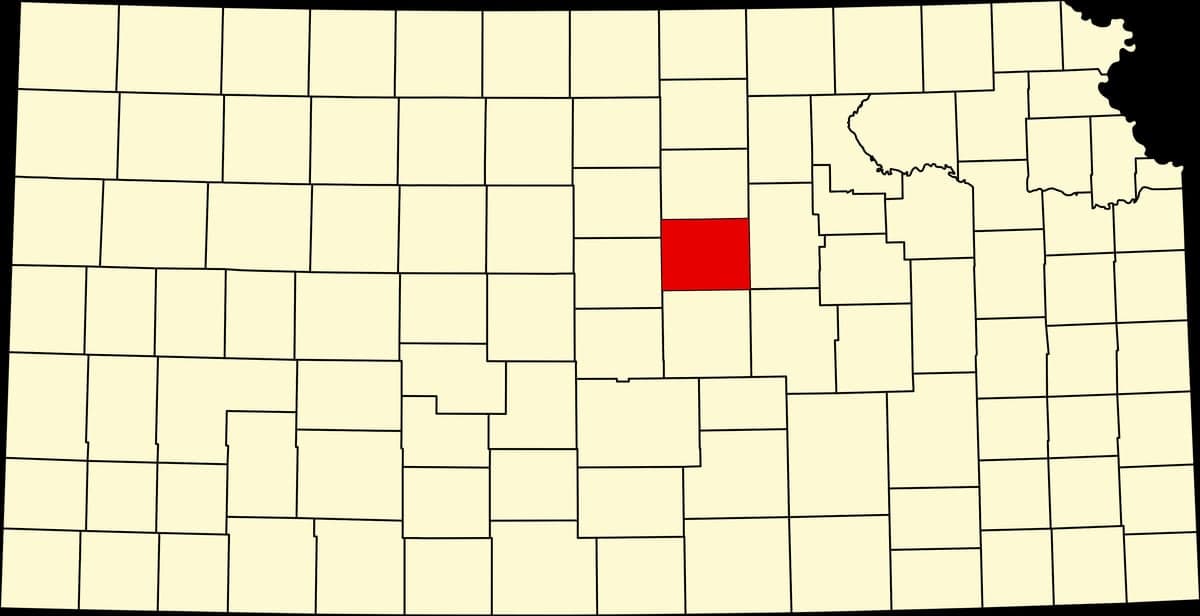
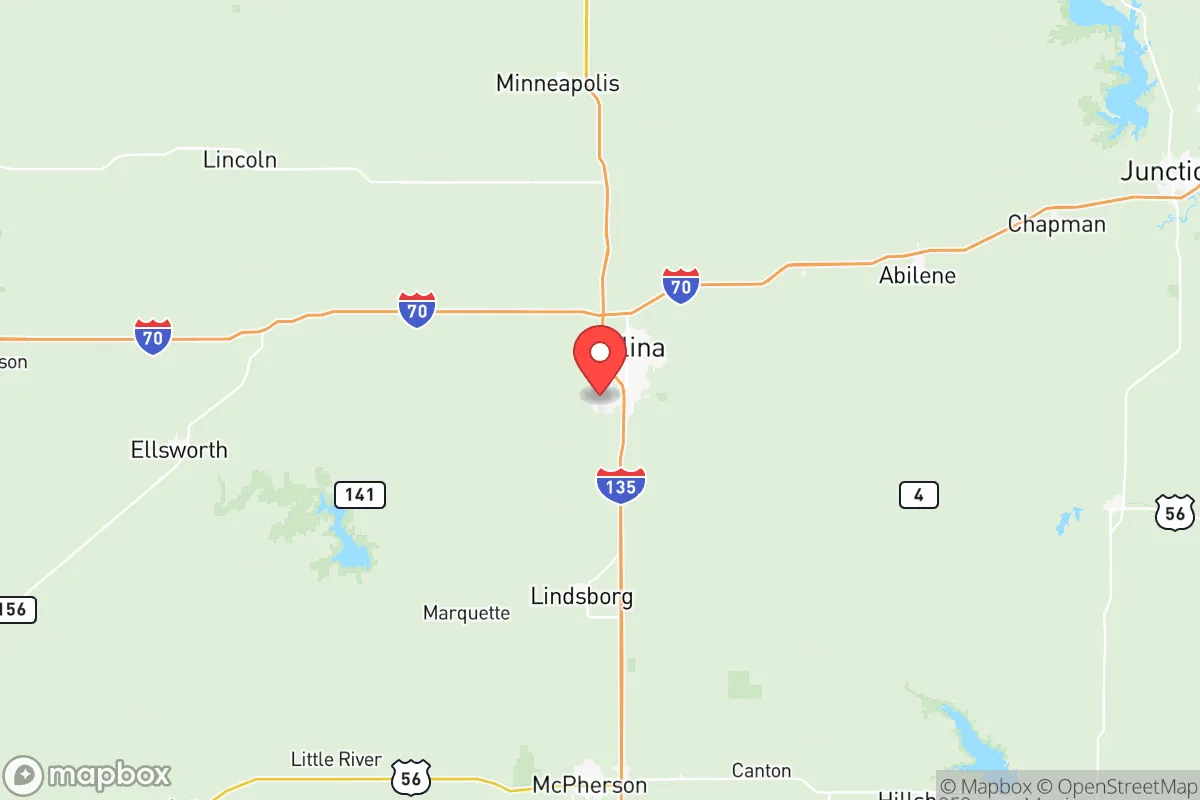
Saline County, anchored by the city of Salina, is a reliably Republican area with a Cook Partisan Voting Index (PVI) of R+16, making it significantly more conservative than Kansas as a whole, which sits at R+9. This isn't a new development; the county has voted for the GOP presidential candidate in every election this century, but the margin has widened noticeably since 2016. While the state has trended rightward, Saline County has moved faster and further, creating a political environment where conservative candidates routinely win by double digits, even in races that are competitive statewide.
How it compares
The R+7 gap between Saline County and the state average is substantial. To put it in practical terms, a Republican running for statewide office can expect to outperform their statewide margin by roughly 7 points in Saline County. This is a sharper rightward tilt than you see in neighboring counties like Dickinson (R+18) or Ottawa (R+20), but it's a far cry from the deep-blue islands of Lawrence or Wyandotte County. The political geography within Saline County itself is not monolithic. The city of Salina, particularly its older, established neighborhoods near the Kansas Wesleyan University campus and the downtown core, shows the most Democratic-leaning precincts in the county. These areas can occasionally vote blue in local races, especially for school board or city commission seats. In contrast, the rural townships surrounding Salina—places like Brookville, Gypsum, and New Cambria—are deeply red, often voting 75-80% Republican. The swing precincts, where races are genuinely competitive, are found in Salina's newer suburban developments on the city's south and east sides, areas like the neighborhoods around South High School and the Indian Rock subdivision. These voters tend to be more moderate, fiscally conservative but socially pragmatic, and they often decide the outcome of local bond issues and city council races.
What this means for residents
For conservative residents, the political climate is comfortable and affirming. Local elected offices, from the county commission to the sheriff, are held by Republicans, and policy debates tend to center on tax rates, economic development, and infrastructure rather than social issues. Conservative viewpoints are the default in most public forums. For liberal and moderate residents, the reality is more nuanced. While they are a clear minority, they are not without influence. The city of Salina itself has a history of pragmatic, non-partisan governance, and progressive voices are regularly heard on the city council and in school board discussions. The key is that liberal residents often find more traction on local, quality-of-life issues—like funding for parks, library services, or affordable housing—than on broader partisan battles. Statewide, Saline County's conservative lean means that Democratic candidates for governor or Senate often write off the county, focusing their limited resources on more competitive areas like Johnson County or the Kansas City metro. This can leave some residents feeling politically isolated, but it also means that local Republican primaries are often the decisive elections for county-level positions.
Culturally, the area's conservatism is of a practical, Midwestern variety. It's less about culture war flashpoints and more about a deep-seated belief in self-reliance, limited government, and community responsibility. You'll see this reflected in the county's approach to taxation—property tax rates are a perennial hot-button issue—and in the strong support for local law enforcement and the agricultural economy. There is a palpable sense of civic pride that transcends party lines, particularly around Salina's robust arts scene and the annual Smoky Hill River Festival. The political divide is real, but it rarely feels hostile. Neighbors might disagree on national politics, but they'll still show up for the same church potluck or high school football game. The trajectory suggests the county will continue to drift rightward, driven by the rural townships, but the city of Salina's moderate core will ensure that local politics remain a genuine, if lopsided, contest for the foreseeable future.

State Political ClimatePolitical Climate in Kansas
State Political AnalysisPolitical Environment in the State
Kansas is a solidly Republican state with a Cook PVI of R+9, meaning it typically votes about nine points more Republican than the national average in presidential elections. Over the past 10-20 years, the state has shifted rightward on cultural and economic issues, driven by a growing rural-urban divide and an increasingly conservative legislature, though a resilient Democratic coalition in the Kansas City suburbs and Lawrence keeps the state from being a total lock for the GOP. The dominant coalition is a mix of rural conservatives, suburban moderates, and a small but vocal libertarian-leaning faction, with the state’s trajectory reflecting a tug-of-war between tax-cutting impulses and the practical needs of a largely agricultural and suburban population.
Urban vs. rural divide
The political map of Kansas is starkly divided. The Kansas City metro area, anchored by Johnson County (Overland Park, Olathe, Lenexa) and Wyandotte County (Kansas City, Kansas), is the state’s Democratic stronghold. Johnson County, once a Republican bastion, has trended blue in presidential races since 2016, driven by suburban professionals and growing diversity. Wyandotte County is reliably Democratic, with large minority and union populations. Lawrence, home to the University of Kansas, is a deep-blue college town. In contrast, rural and small-town Kansas—places like Dodge City, Garden City, and Hays—vote overwhelmingly Republican, often by 70-80% margins. The Wichita metro area (Sedgwick County) is a bellwether: it leans Republican but has a sizable moderate and Democratic base, especially in the city proper. The Manhattan area (Riley County), home to Kansas State University, is more competitive, with a mix of conservative students and faculty. The divide is so sharp that in 2020, Donald Trump won 98 of Kansas’s 105 counties, but Joe Biden won the four most populous ones (Johnson, Wyandotte, Douglas, and Shawnee), which together cast over 40% of the vote.
Policy environment
Kansas’s policy environment is defined by a low-tax, limited-government ethos, but with notable exceptions. The state has a flat income tax rate of 5.7% (as of 2025), down from a progressive structure after the infamous “Brownback tax cuts” experiment (2012-2017), which slashed rates and eliminated taxes on non-wage business income, leading to budget crises. The legislature has since partially reversed those cuts, but the state remains a low-tax environment compared to neighbors like Missouri. There is no state tax on Social Security benefits, and property taxes are moderate, though local levies vary. The regulatory posture is business-friendly, with few environmental or labor regulations. Education policy is a flashpoint: the state has a school choice program (tax-credit scholarships) and a growing charter school sector, but public school funding has been a perennial legal battle, with the Kansas Supreme Court repeatedly ordering the legislature to increase aid. Healthcare policy is conservative: Kansas did not expand Medicaid under the Affordable Care Act, leaving roughly 150,000 low-income adults in a coverage gap. Election laws are moderately restrictive: the state requires a photo ID to vote and has a voter registration deadline 21 days before an election, but same-day registration is not allowed. The state also has a “no-excuse” absentee voting law, though it was tightened in 2021 to require a witness signature or notarization.
Recent policy direction
Recent legislation in Kansas reflects a clear conservative shift, especially on cultural and liberty issues. In 2023, the legislature passed a near-total abortion ban (the “Value Them Both” amendment was rejected by voters in 2022, but lawmakers responded with a ban at 22 weeks and strict clinic regulations). Gun laws are permissive: Kansas is a constitutional carry state (no permit needed to carry concealed), and it has a “Stand Your Ground” law. In 2024, the legislature passed a law banning gender-affirming care for minors, overriding the governor’s veto. On education, the state enacted a Parents’ Bill of Rights in 2023, requiring schools to notify parents about curriculum and medical decisions. Property rights are strong, with no statewide rent control and a low property tax cap. Privacy and surveillance laws are minimal; Kansas has no comprehensive data privacy law, and law enforcement can access cell phone location data without a warrant in some cases. Voting access has been a battleground: in 2021, the legislature passed a law requiring a witness signature or notarization for absentee ballots, and it banned the mass mailing of ballot applications. The state also has a strict voter ID law. On the tax front, the legislature passed a flat income tax in 2024, replacing the progressive brackets, and has been cutting property taxes for seniors. The overall direction is toward lower taxes, fewer regulations, and more cultural conservatism, but with a pragmatic streak—the state has not followed Texas or Florida on issues like banning mask mandates or restricting LGBTQ+ rights in the workplace.
Civil unrest & political movements
Kansas has seen relatively low levels of civil unrest compared to coastal states, but there have been notable flashpoints. The 2022 abortion amendment vote drew massive protests and counter-protests, with both sides mobilizing heavily in Johnson County and Wichita. The state has a small but active anti-government movement, particularly in rural areas, with some counties passing “Second Amendment sanctuary” resolutions. Immigration politics are less heated than in border states, but there have been tensions in southwest Kansas (Dodge City, Garden City) over meatpacking plant workers and immigration enforcement. The state has no sanctuary city policies, and local law enforcement generally cooperates with federal immigration authorities. Election integrity controversies flared after 2020, with some Republican legislators pushing for a forensic audit of the 2020 election (which was not conducted), and a handful of counties have considered hand-counting ballots. The most visible political movement in recent years has been the “Moms for Liberty” chapter in Johnson County, which has been active in school board races and library book challenges. On the left, the Kansas Democratic Socialists of America has a small but vocal presence in Lawrence and Kansas City. Overall, the political climate is stable but polarized, with most activism happening around specific issues rather than broad unrest.
Projection
Over the next 5-10 years, Kansas is likely to remain solidly Republican, but the margins may narrow slightly due to demographic shifts. The Kansas City suburbs (Johnson County) are becoming more diverse and Democratic, driven by an influx of professionals from out of state and a growing Asian and Hispanic population. The rural population is aging and shrinking, which could reduce the GOP’s rural advantage. However, the state’s in-migration is modest compared to Sun Belt states, and the legislature is likely to continue gerrymandering to protect Republican majorities. The flat tax and business-friendly policies may attract some remote workers and small businesses, but the lack of Medicaid expansion and cultural conservatism could deter younger, more liberal relocators. The biggest wildcard is the state’s education funding crisis: if the courts force a major increase in school spending, it could trigger a tax increase that alienates the GOP base. Expect the state to remain a red state with a blue-ish urban corridor, with policy battles centered on abortion, education, and tax cuts. A new resident moving in now should expect a state that is politically stable but increasingly polarized, with a government that is conservative but not extreme, and a quality of life that depends heavily on where you live.
For a new resident, the bottom line is this: Kansas offers a low-tax, business-friendly environment with strong gun rights and a conservative cultural tilt, but it’s not a monolith. If you’re a conservative, you’ll find a welcoming political climate in most of the state, especially in rural areas and Wichita. If you’re a liberal, you’ll find a comfortable home in Johnson County, Lawrence, or parts of Kansas City, but you’ll be in the minority statewide. The state’s politics are pragmatic enough that you won’t face daily culture war battles, but the policy direction is clearly conservative. The key is to choose your location carefully—the difference between Overland Park and Dodge City is as stark as the difference between two different states.
* Values derived from national, state, county, city and local statistics and may differ in a specific area. Last updated: 2026-07-12T12:41:03.000Z
Narrative content on this page is AI-generated and may contain mistakes. Verify any details that matter before acting on them.
ReloMaps may earn a commission from affiliate links at no extra cost to you.

