Quality of Life in Mcpherson County
A livable area that tracks near national norms for affordability, walkability, and neighborhood health.
What does Quality of Life tell us?
Quality of Life measures an area by evaluating factors like cost of living, nearby amenities, country club access, airport proximity, socioeconomic signals and neighborhood character. For large states, this is a general average — quality of life can vary dramatically between metro areas, suburbs, and rural communities within the same state.
What does this tell us?
Quality of Life measures an area by evaluating factors like cost of living, nearby amenities, country club access, airport proximity, socioeconomic signals and neighborhood character. For large states, this is a general average — quality of life can vary dramatically between metro areas, suburbs, and rural communities within the same state.
Cost of Living
26% below national average
137%
The Real Cost of Living in Mcpherson County for 2026
| Tier | Individual | Family (4) |
|---|---|---|
| Survival | $14k | $27k |
| Comfortable | $39k | $57k |
| Luxury | $105k+ | $163k+ |
| Elite (Top 5%) | $123k+ | $191k+ |
Quality-of-Life Analysis
McPherson County, Kansas, offers a spectrum of living environments that range from the full-service amenities of its county seat to the quiet, land-based lifestyle of its smallest unincorporated communities. With a cost of living index of 74 — well below the national average of 100 — the county attracts a mix of manufacturing professionals, agricultural families, and retirees seeking affordability without sacrificing access to healthcare and retail. The character of daily life shifts noticeably depending on whether one lives in the primary population center, a smaller town, or the open countryside.
Largest town(s) & population centers
McPherson, the county seat and largest city, is the clear hub of activity. Home to roughly 13,000 residents, it anchors the county's economy with major employers such as Great Plains Manufacturing (agricultural equipment) and Parker Hannifin (hydraulics). Daily life here is suburban in feel but compact: residents have access to a regional hospital, a public golf course, a performing arts center at McPherson College, and a full slate of big-box and specialty retail along Kansas Highway 61. The average commute of just 14.5 minutes is among the shortest in the state, meaning most workers can get across town or to the industrial parks in under 15 minutes. Housing is affordable by national standards — the median home value sits at $198,400 and median rent at $889 — but prices in McPherson proper tend to run 10–15% higher than in the county's smaller towns due to demand and proximity to services.
Smaller towns & rural pockets
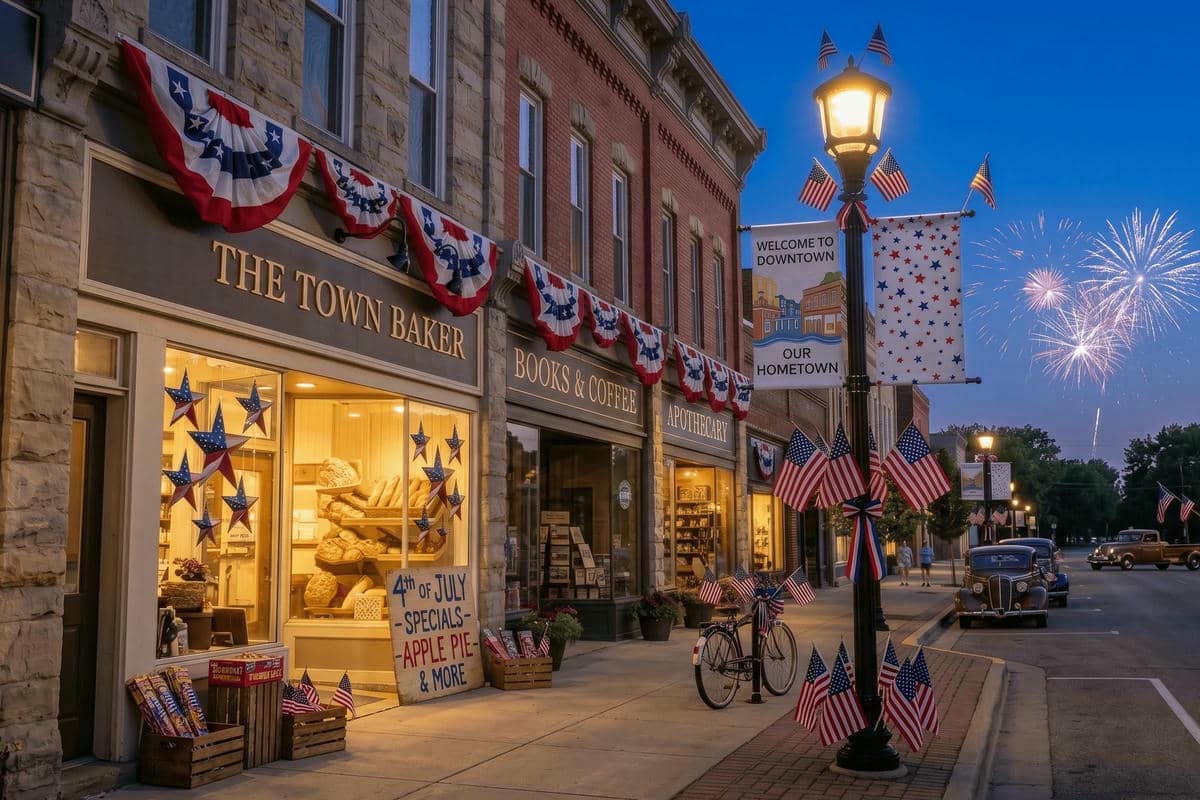
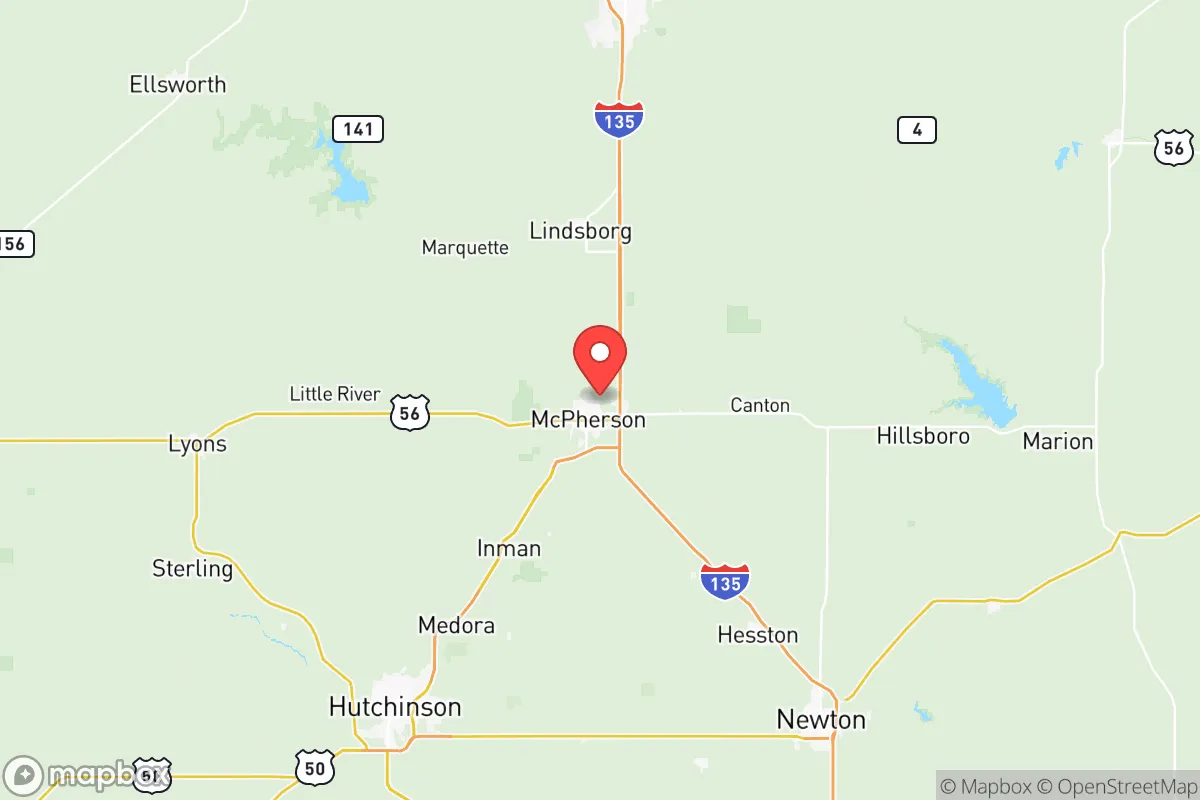
Outside the county seat, a ring of smaller communities offers a quieter, more agrarian pace. Lindsborg (pop. ~3,500), known as "Little Sweden, USA," blends a strong arts scene and Bethany College with a walkable downtown of galleries and bakeries — a distinct niche within the county. Marquette (pop. ~600) sits along the Smoky Hill River and is a base for outdoor recreation, including the nearby Kanopolis State Park. Galva (pop. ~900) and Inman (pop. ~1,300) are classic farming communities where grain elevators and local co-ops define the skyline. The unincorporated area of Roxbury is little more than a crossroads, representing the most rural end of the spectrum — residents there typically commute 20–30 minutes to McPherson or Salina for work and groceries. These smaller towns generally offer lower home prices than McPherson city, with fixer-upper houses occasionally available below $100,000, though the trade-off is fewer on-site amenities and longer drives for specialized services.
Cost & lifestyle range
The cost spread across McPherson County is modest but meaningful. At the higher end, McPherson and Lindsborg command premium prices for their housing stock and amenity density — a newer 3-bedroom home in McPherson might list near $280,000, while a comparable property in Lindsborg's historic district could approach $250,000. At the lower end, Marquette and Galva offer median home values closer to $120,000–$150,000, with rental units often available for $600–$750 per month. The county's overall COL index of 74 means even the priciest areas are cheaper than most of the U.S. Lifestyle differences are more pronounced than cost differences: McPherson residents have walkable access to a hospital, multiple grocery stores, and chain dining, while those in Roxbury or rural Inman rely on well water, septic systems, and a 15- to 20-minute drive for a gallon of milk. Property taxes in Kansas are relatively high (roughly 1.2–1.4% of assessed value), but the absence of a state income tax on Social Security benefits is a draw for retirees settling in the smaller towns.
The county best suits people who value short commutes, low housing costs, and a clear choice between small-city convenience and genuine rural quiet. Manufacturing workers and McPherson College faculty tend to cluster in the county seat, while farmers, remote workers, and retirees seeking acreage gravitate toward Lindsborg's cultural scene or the open land around Marquette and Galva. For anyone who finds the suburbs of Wichita or Kansas City too expensive or congested, McPherson County offers a viable, lower-stress alternative with a distinct community identity at every stop along the spectrum.

Crime in Mcpherson County
Crime rates similar to the national median for U.S. locations.
Violent CrimeViolent Crime Analysis
Property CrimeProperty Crime Analysis
Crime Analysis
McPherson County, Kansas, presents a mixed safety profile that demands careful attention from potential residents. With a violent crime rate of 448.9 per 100,000 residents and a property crime rate of 1,811.9 per 100,000, the county's overall numbers are elevated compared to the safest rural Kansas communities. However, these figures are heavily influenced by conditions in specific towns, with the county seat of McPherson and the smaller communities of Lindsborg, Marquette, and Inman showing markedly different safety profiles. Understanding where these crime incidents concentrate is essential for anyone evaluating relocation options in the region.
Crime in context
McPherson County's violent crime rate of 448.9 per 100,000 is approximately 30% higher than the Kansas state average of roughly 350 per 100,000 and significantly exceeds the national average of about 380 per 100,000. The property crime rate of 1,811.9 per 100,000 also runs above the state average of approximately 1,700 per 100,000. These figures place McPherson County in a less favorable position compared to neighboring jurisdictions like Saline County (Salina) and Harvey County (Newton), which report lower per-capita crime rates. The county's crime data is notably driven by incidents in the city of McPherson, which, as the largest population center and a regional economic hub, experiences a disproportionate share of both violent and property offenses. In contrast, the smaller towns of Lindsborg and Marquette typically report far fewer incidents, making them statistically safer options within the county.
What residents experience
Residents in the city of McPherson are more likely to encounter property crimes such as theft, burglary, and vehicle break-ins, which constitute the bulk of the county's elevated property crime rate. The violent crime category includes aggravated assault as the most common offense, with robbery and rape occurring less frequently but still at rates that warrant concern. The local justice system, operating under the Eighth Judicial District which covers Dickinson, Geary, Marion, and Morris counties alongside McPherson, has historically maintained a more traditional approach to prosecution. This is a meaningful consideration: unlike some larger metropolitan areas where progressive district attorneys have implemented policies that reduce incarceration rates and prioritize diversion programs, the judicial philosophy in this district tends to emphasize accountability and public safety. Residents in Inman and Canton report a notably different daily experience, with lower crime volumes and a stronger sense of neighborhood security, though they still travel into McPherson for shopping and services where property crime risks are higher.
Neighborhood-level variation within McPherson County is significant and should guide relocation decisions. The city of McPherson itself shows a clear divide: areas near the central business district and along major thoroughfares like Main Street and Kansas Highway 56 experience higher rates of property crime, while the residential neighborhoods on the city's north and west sides report fewer incidents. The college area near McPherson College sees occasional petty theft and vandalism. For those seeking the lowest crime exposure, the small towns of Lindsborg (known for its strong community policing and low incident counts), Marquette, and Inman offer substantially safer environments. The county's rural farmsteads and unincorporated areas experience very low crime rates, though response times from law enforcement can be longer. Prospective residents should prioritize properties in the smaller communities or the quieter residential edges of McPherson city to minimize their risk exposure.
* Values derived from national, state, county, city and local statistics and may differ in a specific area. Last updated: 2026-06-16T13:25:13.000Z
Narrative content on this page is AI-generated and may contain mistakes. Verify any details that matter before acting on them.
ReloMaps may earn a commission from affiliate links at no extra cost to you.

