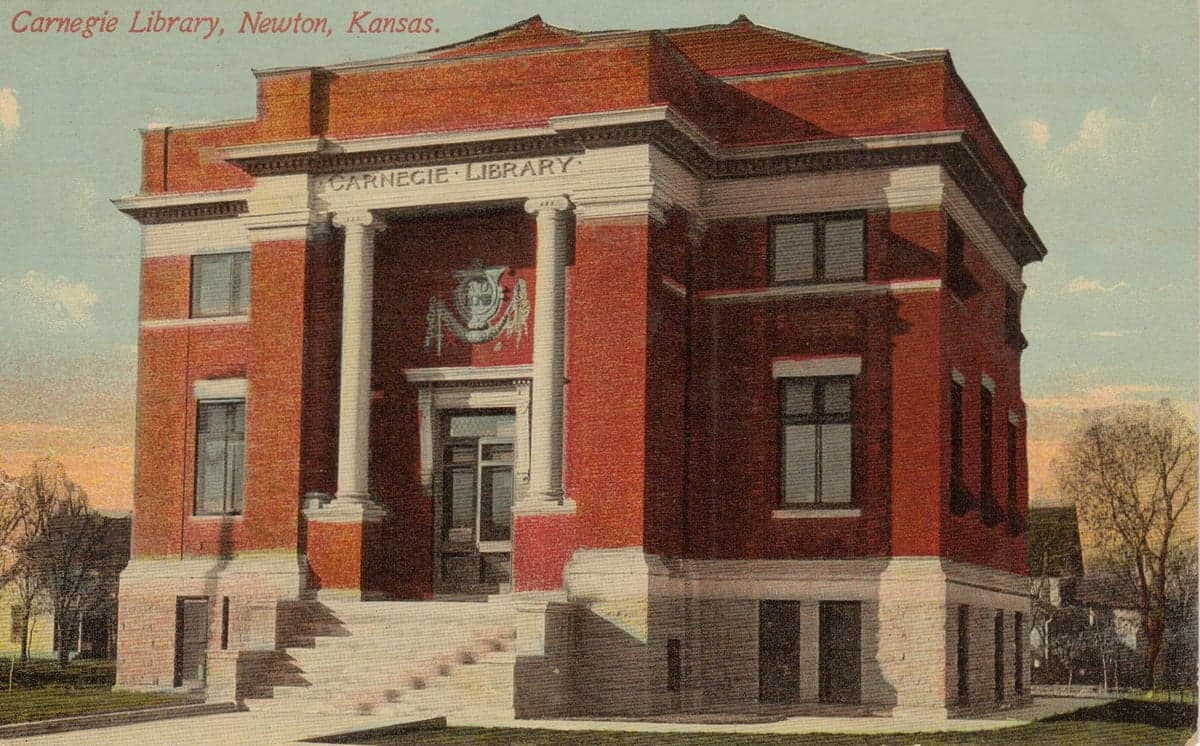
Photo: Wikipedia
Strategic Assessment of Harvey County
Workable tactical position. Some exposure to population density or targets, but generally defensible in a crisis.
What does the Strategic Assessment tell us?
Our Strategic Assessment grades tactical survivability of an area. Major population centers, military targets, fallout zones, natural disasters, and border exposure all drive risk — lower exposure means a more defensible position in a crisis.
This is heavily inspired by Joel Skousen's Strategic Relocation book. Highly recommended you checkout the book ($)What does this tell us?
Our Strategic Assessment grades tactical survivability of an area. Major population centers, military targets, fallout zones, natural disasters, and border exposure all drive risk — lower exposure means a more defensible position in a crisis.
This is heavily inspired by Joel Skousen's Strategic Relocation book. Highly recommended you checkout the book ($)Strategic Pillars

Key Distances
Strategic Assessment Analysis
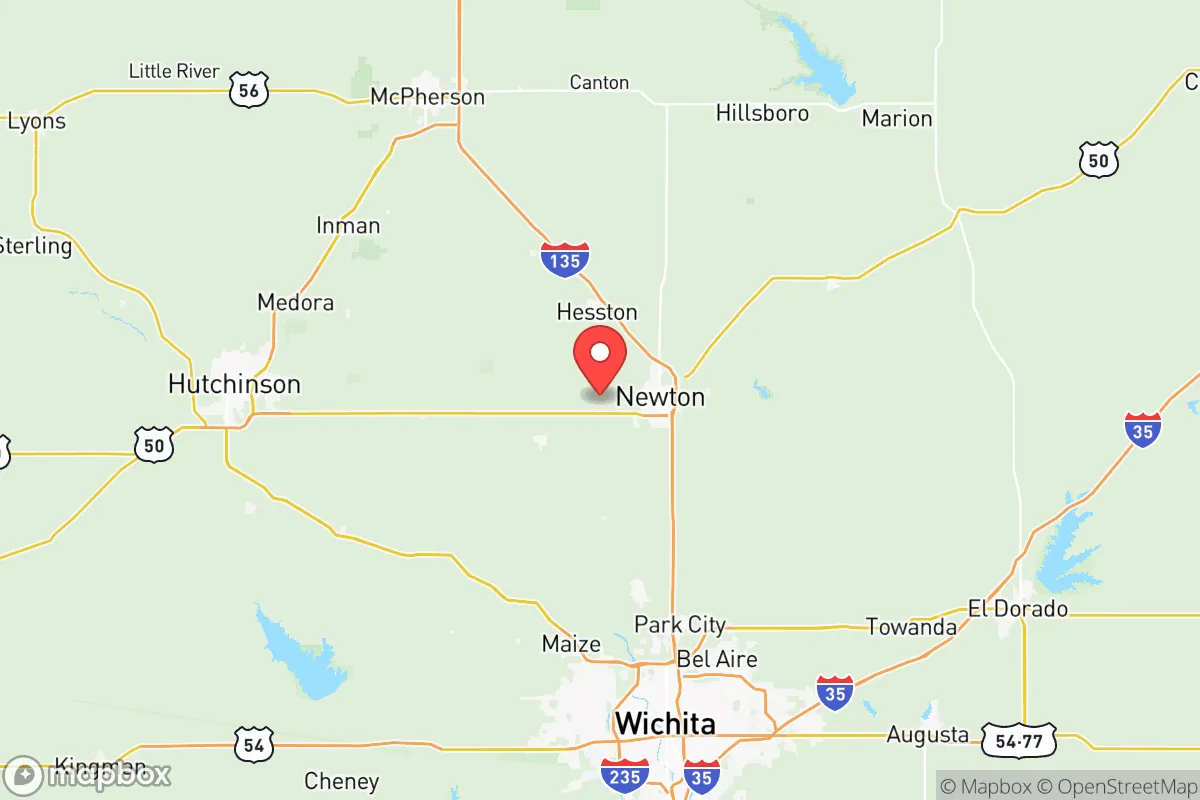
Harvey County, Kansas, anchored by the city of Newton and the county seat of Halstead, offers a strategic balance of rural self-sufficiency and practical access to regional resources that appeals to relocation-minded individuals and families with a conservative, preparedness-oriented outlook. Its position in the central part of the state, roughly 25 miles north of Wichita and 50 miles south of the Kansas City metro area, places it outside the immediate blast and fallout zones of major population centers while still providing proximity to supply chains, medical care, and transportation hubs. The county’s agricultural foundation, low population density (about 34,000 residents across 540 square miles), and established infrastructure make it a credible option for those prioritizing resilience, food security, and a slower pace of life without complete isolation.
Geographic position and natural advantages for long-term stability
Harvey County sits in the Flint Hills region, a landscape of rolling prairies and limestone bedrock that offers several inherent advantages for a relocator. The area’s elevation—roughly 1,400 feet above sea level—and inland location mean it is not subject to hurricanes, storm surges, or significant flood risks from coastal weather events. The county’s primary water source is the Equus Beds Aquifer, a large underground reservoir that also supplies Wichita; this aquifer is replenished by the Little Arkansas River, which runs through the county near Halstead and Sedgwick. For a family looking at long-term water security, this groundwater access is a tangible asset—wells are common in rural parts of the county, and the aquifer’s depth (typically 50–150 feet) makes drilling feasible for private use. The flat to gently rolling terrain also simplifies construction, road maintenance, and potential off-grid energy setups like solar panels, which receive an average of 4.5–5.0 peak sun hours per day—adequate for a well-sized system. Winters are cold but manageable (average January highs around 40°F), and summers are hot and dry, reducing mold and pest issues common in more humid regions.
Risk exposure: natural hazards, man-made threats, and proximity to fallout-relevant landmarks
While Harvey County avoids coastal and seismic extremes, it is not without risks. The primary natural hazard is severe weather, particularly tornadoes, as the county lies within the heart of Tornado Alley. Newton and Halstead have both experienced direct hits in the past—a notable EF-3 tornado struck Newton in 2008, causing significant damage. For a relocator, this means a basement or storm shelter is not optional but a baseline requirement. The county’s flat landscape offers little natural shielding from storm systems, so early warning systems and community preparedness are essential. On the man-made risk side, the county’s proximity to Wichita (home to McConnell Air Force Base and a major aircraft manufacturing hub for Spirit AeroSystems and Textron Aviation) introduces a moderate risk profile. While Wichita is not a primary nuclear target like a major ICBM field or command center, it houses defense-related industry and a military airfield, which could be a secondary target in a large-scale conflict. More directly, Harvey County itself contains no major military bases, refineries, or nuclear facilities, which is a positive for those seeking to avoid high-value target zones. The nearest significant fallout-relevant landmarks are the Kansas City metro area (about 170 miles northeast) and the Wichita industrial corridor (25 miles south). Fallout from a Wichita strike would likely drift east-northeast with prevailing winds, meaning Harvey County’s position west of Wichita offers a slight advantage—prevailing winds would carry contamination away from the county in most scenarios. However, a strike on the Kansas City area could deposit fallout across eastern Kansas, so a relocator should consider prevailing wind patterns and have a plan for sheltering in place for 48–72 hours if needed.
Practical resilience for a relocator: food, water, energy, and defensibility
Harvey County’s agricultural base is its strongest resilience asset. The county is one of the top wheat-producing areas in Kansas, with extensive corn, soybean, and sorghum fields, plus a significant cattle and dairy presence. For a family seeking food security, this means local sourcing is viable—farmers’ markets in Newton and Halstead operate seasonally, and bulk grain purchases from cooperatives like the Mid Kansas Cooperative (based in Moundridge, just north of the county) are accessible. The county also has a strong network of small-scale livestock operations, making it feasible to raise chickens, goats, or even a family cow on a few acres. Water resilience is solid: the Equus Beds Aquifer provides reliable groundwater, and the Little Arkansas River offers a surface water backup, though treatment would be necessary for drinking. For energy, the county is served by Evergy (formerly Westar Energy), which maintains a stable grid, but natural gas and propane are common for heating and cooking. Solar adoption is growing, with several local installers serving the area, and the county’s zoning is generally permissive for off-grid systems. Defensibility is a mixed picture: the county’s low population density and open terrain make it difficult to approach unnoticed, but also offer little natural cover. The small towns of Newton (population ~19,000), Halstead (~2,000), and Sedgwick (~1,700) are tight-knit communities where neighbors know each other, which can be a social resilience asset—but also means newcomers should invest time in building relationships. The county’s law enforcement presence is modest (Harvey County Sheriff’s Office and local police departments), so self-defense and community watch models are more realistic than relying on rapid response in a crisis.
The overall strategic picture for Harvey County is one of moderate-to-strong resilience with clear trade-offs. Its inland location, agricultural abundance, and groundwater access provide a solid foundation for a self-sufficient lifestyle, while its distance from major target zones and lack of high-value industrial infrastructure reduce the likelihood of being directly affected by man-made disasters. The primary vulnerabilities are weather-related—tornadoes and severe storms are a recurring threat that require proactive mitigation—and the county’s proximity to Wichita introduces a secondary risk that is manageable with basic preparedness measures. For a family or individual with a conservative, self-reliant mindset, Harvey County offers a realistic middle ground: not a remote bunker location, but a functioning community with the land, water, and social fabric to sustain itself through disruptions. The key is to arrive with a plan for storm sheltering, a well or water storage system, and a willingness to engage with the local agricultural economy. In the calculus of strategic relocation, Harvey County scores well on the fundamentals that matter most for long-term stability.

* Values derived from national, state, county, city and local statistics and may differ in a specific area. Last updated: 2026-06-19T16:15:37.000Z
Narrative content on this page is AI-generated and may contain mistakes. Verify any details that matter before acting on them.
ReloMaps may earn a commission from affiliate links at no extra cost to you.

