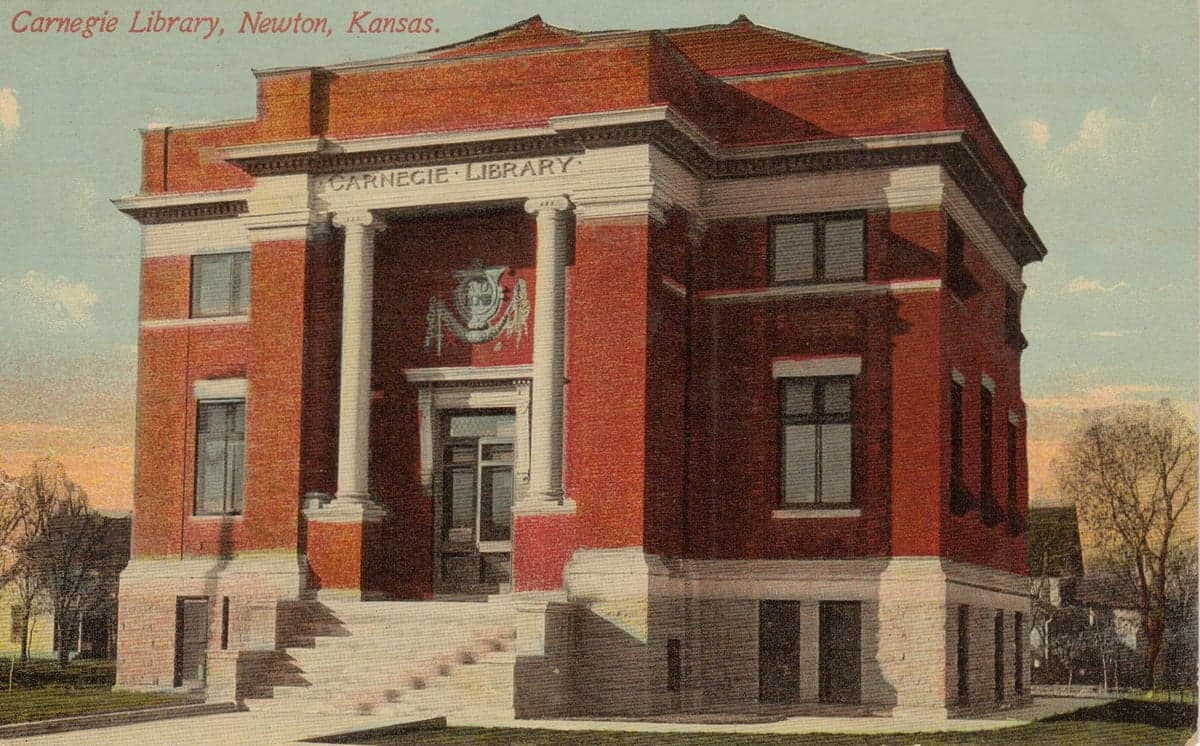
Photo: Wikipedia
Quality of Life in Harvey County
A livable area that tracks near national norms for affordability, walkability, and neighborhood health.
What does Quality of Life tell us?
Quality of Life measures an area by evaluating factors like cost of living, nearby amenities, country club access, airport proximity, socioeconomic signals and neighborhood character. For large states, this is a general average — quality of life can vary dramatically between metro areas, suburbs, and rural communities within the same state.
What does this tell us?
Quality of Life measures an area by evaluating factors like cost of living, nearby amenities, country club access, airport proximity, socioeconomic signals and neighborhood character. For large states, this is a general average — quality of life can vary dramatically between metro areas, suburbs, and rural communities within the same state.
Cost of Living
29% below national average
148%
The Real Cost of Living in Harvey County for 2026
| Tier | Individual | Family (4) |
|---|---|---|
| Survival | $14k | $27k |
| Comfortable | $34k | $49k |
| Luxury | $105k+ | $163k+ |
| Elite (Top 5%) | $124k+ | $192k+ |
Quality-of-Life Analysis
Harvey County, Kansas offers a distinct quality-of-life spectrum that ranges from the walkable, amenity-rich environment of its largest city, Newton, to the quiet, agricultural rhythms of smaller communities like Halstead, Hesston, and rural townships. The county’s character is shaped by its central location within the broader Wichita metro area, drawing residents who seek a lower cost of living—the county’s cost-of-living index sits at 71, well below the national average of 100—without sacrificing access to employment hubs. Families, retirees, and agricultural workers each find a niche depending on whether they prioritize urban convenience, small-town schools, or wide-open space.
Largest town(s) & population centers
Newton is the county seat and the primary population center, home to roughly 19,000 residents. Daily life here centers around a compact, historic downtown along Main Street, which hosts local restaurants, the Carriage Factory Art Gallery, and the Kauffman Museum. Newton offers the most diverse set of amenities in the county, including a regional hospital (NMC Health), a community college (Bethel College), and direct access to Interstate 135 for a roughly 25-minute commute to Wichita. The average commute county-wide is just over 20 minutes, and Newton residents typically fall at the lower end of that range. Housing in Newton is affordable, with a median home value of $173,300 and median rent of $891, making it a practical choice for first-time homebuyers and renters alike. The city also hosts the annual Newton Fall Festival and is a hub for the county’s growing Hispanic and Mennonite communities, giving it a noticeably more diverse social fabric than the smaller towns.
Smaller towns & rural pockets
Hesston (pop. ~3,700) is the county’s second-largest town and is defined by its strong local school system and the presence of Hesston College, a two-year Mennonite institution. It offers a quieter, family-oriented lifestyle with a small downtown and easy access to Newton and Wichita via US-81. Halstead (pop. ~2,100) sits along the Little Arkansas River and is known for its historic downtown and the Halstead Hospital. It attracts residents who want a small-town feel with a slightly more rural edge. Burrton (pop. ~900) and Sedgwick (pop. ~1,700) are smaller communities that serve as bedroom towns for workers commuting to Newton or Wichita. Beyond these incorporated towns, the county’s rural townships—such as Alta, Darlington, and Pleasant—are sparsely populated, with large agricultural tracts and grain elevators marking the landscape. These areas appeal to those working in farming or seeking acreage at prices far below national norms.
Cost & lifestyle range
The cost-of-living spread across Harvey County is narrow by national standards, but meaningful differences exist. At the higher end, Hesston and parts of Newton near Bethel College command slightly higher home values, often in the $180,000–$220,000 range, reflecting demand for newer construction and proximity to schools. At the lower end, Burrton and rural townships offer home values frequently below $130,000, with some older farmhouses available for under $100,000. Rent follows a similar pattern: Newton’s average rent of $891 is the county’s highest, while smaller towns like Halstead and Sedgwick see rents closer to $700–$800. Amenities scale with population: Newton has grocery chains, a Walmart Supercenter, and multiple dining options, while Hesston and Halstead offer only basic retail and require a short drive for major shopping. For outdoor recreation, Newton’s Athletic Park and the Harvey County East Park provide sports fields and walking trails, whereas rural residents rely on private land or county roads for recreation. The trade-off is clear: Newton offers convenience and diversity, while the smaller towns and rural areas deliver lower costs, quieter streets, and a tighter-knit community feel.
Harvey County is best suited for people who value affordability and a central Kansas location over coastal amenities or urban nightlife. Families drawn to strong school districts—particularly in Hesston and Newton—will find a supportive environment, while agricultural workers and those seeking land will gravitate toward the rural townships. Retirees on fixed incomes benefit from the low cost of living, and remote workers can leverage the short commute times and reliable internet in the larger towns. The county’s range of options ensures that whether a person wants a walkable small city or a quiet farmhouse, there is a place for them within its borders.

Crime in Harvey County
Crime rates similar to the national median for U.S. locations.
Violent CrimeViolent Crime Analysis
Property CrimeProperty Crime Analysis
Crime Analysis
Harvey County, Kansas, presents a mixed safety profile for potential residents. With a violent crime rate of 448.9 per 100,000 residents and a property crime rate of 1,811.9 per 100,000, the county sits above both state and national averages, a reality shaped significantly by the policies of the 9th Judicial District and the progressive-leaning district attorney's office in Newton. While the county's smaller towns offer relative tranquility, the overall data signals a need for careful neighborhood selection and heightened awareness, particularly in the more urbanized areas.
Crime in context
Harvey County's violent crime rate of 448.9 per 100,000 is substantially higher than the Kansas state average of roughly 390 per 100,000 and well above the national rate of approximately 380 per 100,000. The property crime rate of 1,811.9 per 100,000 also exceeds the Kansas average of about 1,700 per 100,000 and the national figure near 1,950 per 100,000. These elevated numbers are not uniform across the county. The city of Newton, the county seat and largest municipality, bears the brunt of the crime burden, with its rates significantly pulling the county average upward. In contrast, smaller communities like Hesston, Halstead, and Sedgwick report far lower incident rates, often aligning more closely with safer rural Kansas norms. The disparity is largely attributable to the 9th Judicial District's approach, which has prioritized diversion programs and reduced sentencing for non-violent offenders, a philosophy that critics argue has eroded deterrence and contributed to repeat offenses in Newton.
What residents experience
Daily life in Harvey County varies dramatically by location. In Newton, residents frequently report property crimes such as vehicle break-ins, theft from porches, and occasional burglaries, with the downtown area and neighborhoods near the railroad tracks seeing the highest activity. The violent crime rate, driven by aggravated assaults and robberies, is a tangible concern, particularly after dark in certain parts of the city. The progressive policies of the district attorney's office, which emphasize rehabilitation over incarceration, have led to a perception among many residents that the justice system is lenient, resulting in a higher number of offenders cycling back onto the streets. This has created a climate of unease, especially for families and elderly residents. Conversely, in Hesston and Halstead, residents experience a much quieter reality, with crime largely limited to minor theft and occasional vandalism. These communities benefit from strong local policing and a more conservative judicial environment, where offenders face more certain consequences. The contrast is stark: a resident of Hesston can leave doors unlocked without fear, while a Newton resident is advised to invest in security systems and remain vigilant.
Neighborhood-level variation is pronounced. In Newton, the safest areas are generally the newer subdivisions on the west and south sides, while older, denser neighborhoods near the city center and the industrial corridors along the railroad see elevated crime. The city's proximity to Interstate 135 also contributes to transient crime, with drug trafficking and related offenses flowing between Wichita and Salina. For those considering a move to Harvey County, the choice is clear: the smaller towns of Hesston, Halstead, and Sedgwick offer a markedly safer, more predictable environment, while Newton requires a more cautious approach, with its crime statistics reflecting the broader challenges of a progressive justice system that prioritizes offender outcomes over public safety.
* Values derived from national, state, county, city and local statistics and may differ in a specific area. Last updated: 2026-06-19T16:15:37.000Z
Narrative content on this page is AI-generated and may contain mistakes. Verify any details that matter before acting on them.
ReloMaps may earn a commission from affiliate links at no extra cost to you.

