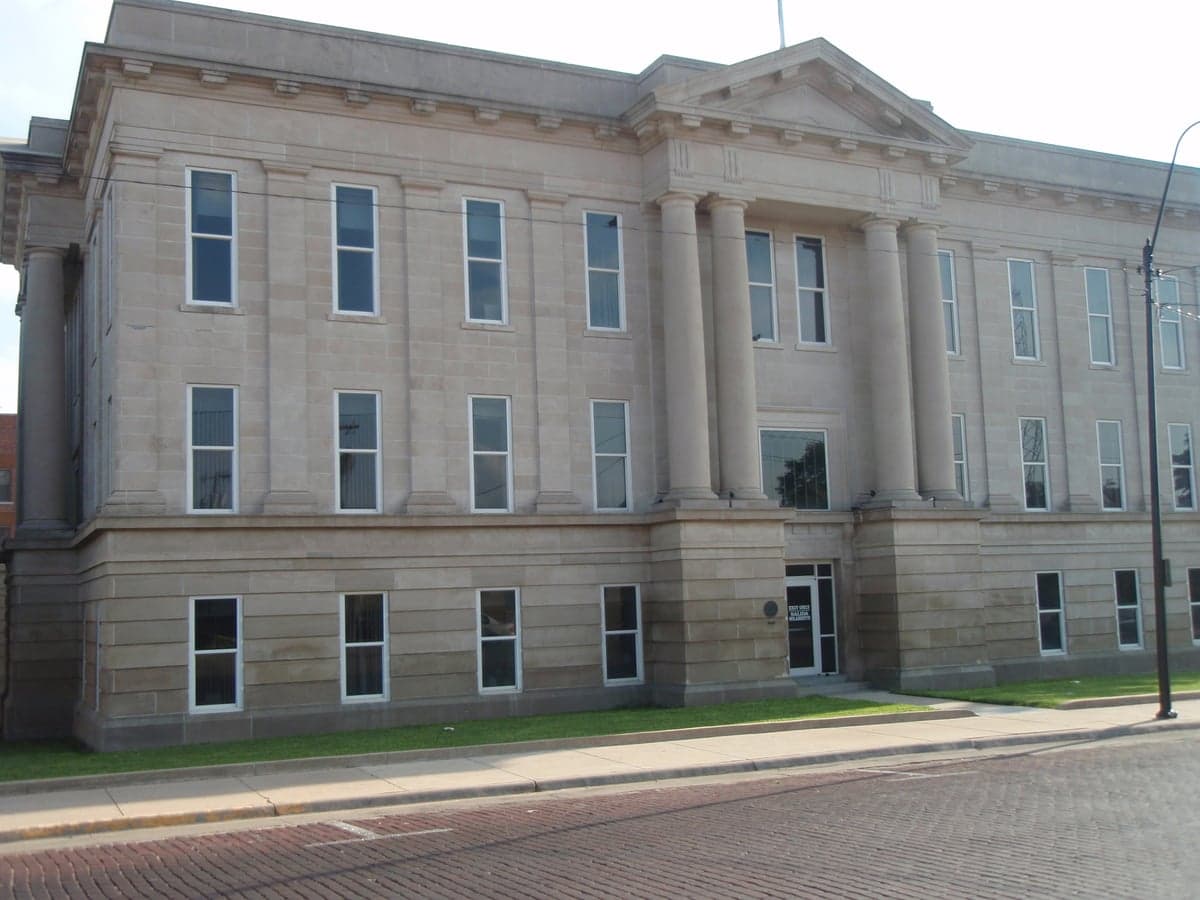
Photo: Wikipedia
Political ClimatePolitical Climate in Ford County
Showing district-level results — no local-only data available.
Local Political AnalysisPolitical Analysis of Ford County
Ford County, Kansas, is a reliably Republican stronghold with a Cook Partisan Voting Index (PVI) of R+16, making it significantly more conservative than the state of Kansas as a whole, which sits at R+9. This isn't a new development—the county has voted Republican in every presidential election since at least 2000, and the margin has only widened in recent cycles. The real story, though, is the internal variation: Dodge City, the county seat and largest town, is a fascinating microcosm where a growing Hispanic population has created pockets of Democratic-leaning precincts, while the rural areas and smaller towns like Spearville, Bucklin, and Minneola remain deeply red. The county's trajectory is a slow, steady march rightward in the countryside, even as Dodge City itself becomes more politically competitive.
How it compares
Compared to Kansas as a whole, Ford County is about 7 points more conservative on the Cook PVI scale, which is a meaningful gap. Statewide, Kansas has a mix of deep-red rural areas, competitive suburbs (like Johnson County), and blue urban centers (Lawrence, Kansas City). Ford County lacks that blue anchor—there's no major liberal city to offset the rural vote. In the 2024 presidential election, Ford County voted for Donald Trump by a margin of roughly 68% to 30%, while Kansas statewide went about 57% to 40%. The difference is driven by the county's agricultural base and its lack of a large, educated, white-collar workforce that tends to moderate politics elsewhere. Dodge City's precincts near the meatpacking plants and the downtown core can swing 10-15 points more Democratic than the county average, but those are still minority precincts. If you're a liberal living in Ford County, you're in a much smaller pond than you'd be in, say, Lawrence or even Wichita.
What this means for residents
For conservative residents, Ford County feels like home—locally elected officials, from the county commission to the school board, are almost universally Republican, and policy debates tend to center on tax cuts, agricultural regulations, and Second Amendment rights. You'll find strong support for the local gun culture and a general skepticism of federal oversight. For liberal residents, the reality is more about finding community in specific spaces—the Dodge City Democratic Party chapter is active but small, and progressive causes like environmental regulations or expanded social services often face an uphill battle. The county's politics are not hostile in a personal sense—people are neighborly—but the policy landscape is undeniably conservative. One practical distinction: Ford County has a lower property tax rate than many eastern Kansas counties, a point of pride locally, but it also means fewer public services, particularly in rural areas where road maintenance can be a recurring issue.
Culturally, Ford County's politics are intertwined with its agricultural and meatpacking economy. The county is a major beef processing hub, and immigration policy is a live wire—many residents support stricter enforcement, even as the local economy depends on immigrant labor. This creates a nuanced, sometimes contradictory political reality that doesn't always align with national party lines. In the near term, expect the county to stay R+16 or even drift slightly redder as rural depopulation continues, but Dodge City's growing diversity could make the county a more interesting battleground in local races over the next decade.

State Political ClimatePolitical Climate in Kansas
State Political AnalysisPolitical Environment in the State
Kansas is a solidly Republican state with a Cook PVI of R+9, but that label hides a more complicated reality than the raw number suggests. The state has been drifting rightward over the past decade, driven largely by rural consolidation and a shrinking moderate wing in the suburbs, though the old "moderate Republican" tradition still has a pulse in places like Johnson County. Over the last 20 years, Kansas has gone from a competitive swing state that voted for Obama in 2008 to a safe red state where Trump won by 15 points in 2020 and 16 points in 2024, a shift that reflects both national sorting and local dynamics.
Urban vs. rural divide
The political map of Kansas is a textbook example of the urban-rural split. The eastern third of the state, anchored by the Kansas City metro area, is the only real source of Democratic votes. Johnson County, the wealthiest and most populous county in the state, has been trending blue for years — it voted for Biden in 2020 and Harris in 2024, a dramatic shift from 2004 when it went for Bush by 20 points. Wyandotte County (Kansas City, KS) and Douglas County (Lawrence, home to the University of Kansas) are deep blue, with Lawrence being the most reliably progressive city in the state. Wichita, the largest city, is a mixed bag — Sedgwick County leans Republican but not overwhelmingly, and the city itself has a competitive local politics scene where Democrats can win mayoral and city council races. The rest of the state — the vast rural and small-town expanse from the Flint Hills to the High Plains — is deeply Republican. Counties like Wallace, Greeley, and Grant routinely vote 85-90% Republican. The divide isn't just geographic; it's cultural and economic, with rural voters feeling increasingly alienated from the priorities of the urban core.
Policy environment
Kansas has a low-tax, low-regulation posture that has been a defining feature of state policy for over a decade. The state income tax has a top rate of 5.7%, and the sales tax is 6.5% at the state level, with local add-ons that can push it over 10% in some cities. Property taxes are moderate but have been a persistent source of local frustration, especially in growing suburbs where valuations have risen fast. The state is a "right-to-work" state, meaning union membership is optional even in unionized workplaces. Education policy has been a battleground: the state constitution requires adequate funding for schools, and the Kansas Supreme Court has repeatedly ordered the legislature to increase spending, leading to ongoing tension between the judicial and legislative branches. On election law, Kansas requires a photo ID to vote and has voter registration deadlines, but same-day registration is not available. The state has not adopted the kind of restrictive voting laws seen in Texas or Georgia, but it also hasn't expanded access significantly. Healthcare policy is mixed — the state expanded Medicaid under the Affordable Care Act in 2020 after years of legislative resistance, a move that was driven by a bipartisan coalition and a ballot initiative push.
Recent policy direction
The last five years have seen Kansas move decisively in a conservative direction on several fronts. In 2022, voters overwhelmingly rejected a proposed constitutional amendment that would have removed the right to abortion from the state constitution, a result that shocked many observers and showed that even in a red state, abortion rights have broad support. Despite that, the legislature has passed restrictions like a 24-hour waiting period and mandatory ultrasound requirements. On gun policy, Kansas is a permitless carry state — no license required to carry a concealed firearm in public — and has a "Stand Your Ground" law. The state also passed a Second Amendment Preservation Act in 2021 that purports to nullify federal gun laws, though it has not been tested in court. On education, the legislature passed a school choice expansion in 2024 that created education savings accounts for families, allowing public funds to follow students to private or homeschool settings. Parental rights in education have been a focus, with laws requiring schools to notify parents about curriculum changes and allowing parents to opt their children out of certain materials. On property rights, Kansas has strong eminent domain protections and does not have a statewide rent control ban, though local rent control is rare. The state has no personal data privacy law comparable to California or Virginia, and surveillance law is generally permissive. Voting access has been stable — no major restrictions or expansions in recent years, though the state did pass a law requiring proof of citizenship for voter registration, which was struck down by federal courts.
Civil unrest & political movements
Kansas is not a state known for frequent political protests or civil unrest, but there have been notable flashpoints. The 2022 abortion amendment vote sparked large rallies in Lawrence, Kansas City, and Wichita, with both sides turning out heavily. The "Summer of Mercy" protests at abortion clinics in Wichita in the 1990s were a national story, but that level of activism has not recurred. Immigration politics are relatively low-key compared to border states — Kansas does not have any sanctuary city policies, and local law enforcement generally cooperates with federal immigration authorities. There have been periodic controversies over election integrity, particularly after the 2020 election, but no major fraud cases have been substantiated. The state did see a brief secessionist movement in 2020 when a few rural counties passed symbolic resolutions to join Texas or form a new state, but it was more a protest gesture than a serious political effort. Organized activist groups on both sides are present but not dominant — the Kansas Republican Party is split between a more pragmatic wing and a more populist, Trump-aligned wing, while the Kansas Democratic Party is small but energized in the urban core.
Projection
Over the next 5-10 years, Kansas is likely to remain a solidly Republican state, but the margins could narrow slightly as Johnson County continues to trend blue and the Kansas City suburbs grow. The rural population is shrinking, and the urban and suburban population is growing, which will slowly shift the political center of gravity. However, the state's Republican lean is deeply entrenched in the legislature, which is heavily gerrymandered to favor rural areas, so even if statewide races become more competitive, the legislature will remain firmly Republican. The biggest wildcard is the ongoing tension between the moderate and conservative wings of the state GOP — if the party continues to move right on social issues, it could alienate suburban voters in Johnson County and make statewide races more competitive. In-migration is modest compared to Texas or Florida, but the Kansas City suburbs are attracting new residents from both coasts, which could accelerate the blue shift in the eastern part of the state. A new resident moving in now should expect a state that is reliably conservative on fiscal and regulatory issues, with a growing cultural divide between the urban east and the rural west, and a political landscape where the most consequential fights will be over education funding, abortion access, and the balance of power between the legislature and the courts.
For a new resident, the bottom line is that Kansas offers a low-tax, low-regulation environment with a conservative political culture that is stable but not static. If you lean conservative, you will find a state where your values are broadly reflected in state policy, especially on gun rights, school choice, and fiscal matters. If you lean liberal, you will find a state where your vote matters most in Johnson County, Lawrence, and Wichita, and where statewide policy will often be at odds with your views, but where local control in the cities gives you room to shape your immediate community. The political climate is not as intense or polarized as in some other states — Kansans tend to be polite about their disagreements — but the underlying divisions are real and growing. Choose your county carefully, because the experience of living in Overland Park, Lawrence, or rural Ellis County will be very different politically, even though they share the same state government.
* Values derived from national, state, county, city and local statistics and may differ in a specific area. Last updated: 2026-07-15T06:29:06.000Z
Narrative content on this page is AI-generated and may contain mistakes. Verify any details that matter before acting on them.
ReloMaps may earn a commission from affiliate links at no extra cost to you.

