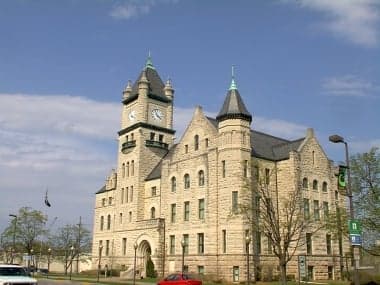
Photo: Wikipedia
Quality of Life in Douglas County
A livable area that tracks near national norms for affordability, walkability, and neighborhood health.
What does Quality of Life tell us?
Quality of Life measures an area by evaluating factors like cost of living, nearby amenities, country club access, airport proximity, socioeconomic signals and neighborhood character. For large states, this is a general average — quality of life can vary dramatically between metro areas, suburbs, and rural communities within the same state.
What does this tell us?
Quality of Life measures an area by evaluating factors like cost of living, nearby amenities, country club access, airport proximity, socioeconomic signals and neighborhood character. For large states, this is a general average — quality of life can vary dramatically between metro areas, suburbs, and rural communities within the same state.
Cost of Living
5% below national average
85%
The Real Cost of Living in Douglas County for 2026
| Tier | Individual | Family (4) |
|---|---|---|
| Survival | $17k | $32k |
| Comfortable | $55k | $80k |
| Luxury | $124k+ | $193k+ |
| Elite (Top 5%) | $149k+ | $231k+ |
Quality-of-Life Analysis
Douglas County, Kansas, offers a broad quality-of-life spectrum that ranges from the college-town energy of Lawrence to the quiet, agricultural rhythms of smaller communities like Baldwin City and Lecompton. This diversity attracts a mix of university faculty, students, remote workers, and families seeking either walkable urban amenities or affordable rural acreage. With a cost-of-living index of 95 (100 being the U.S. average), the county provides a tangible financial advantage over the national norm, though lifestyle costs and amenities shift noticeably depending on which part of the county you choose.
Largest town(s) & population centers
Lawrence is the county seat and by far the largest population center, home to the University of Kansas and roughly 95,000 residents. Daily life here is defined by a dense mix of cultural amenities—live music venues, the Lawrence Arts Center, and a walkable downtown along Massachusetts Street—alongside a robust local food scene and frequent university events. The median home value in Douglas County is $281,600, and the median rent is $1,066, figures heavily influenced by Lawrence’s housing market, which includes historic bungalows near campus, newer subdivisions in west Lawrence, and student-oriented apartments. Commute times average just over 20 minutes countywide, but within Lawrence many residents bike or walk to work or class. The city also hosts major employers like the university, Lawrence Memorial Hospital, and Berry Plastics, giving it an economic anchor that smaller towns lack.
Smaller towns & rural pockets
Outside Lawrence, the county’s smaller communities offer a markedly different pace. Baldwin City (pop. ~4,800) is home to Baker University and retains a small-college-town feel, with a historic downtown and easy access to the Prairie Spirit Rail Trail. Eudora (pop. ~6,400) sits along the Wakarusa River and has grown as a bedroom community for Lawrence and Kansas City commuters, offering newer subdivisions and a quieter, family-oriented atmosphere. Lecompton (pop. ~600) is a historic river town known as the "Birthplace of the Civil War" for its pre-war territorial politics; today it is a tiny, rural community with a handful of homes and a strong sense of local history. Unincorporated areas like Stull and Vinland are essentially crossroads with scattered farmsteads, where residents trade proximity to services for larger land parcels and lower property taxes.
Cost & lifestyle range
The cost-of-living spread across Douglas County is significant. At the higher end, Lawrence’s west side and the Clinton Lake area command premium prices for lakefront homes and newer construction, with some properties exceeding $500,000. At the lower end, older homes in central Lawrence near campus or in the East Lawrence neighborhood can be found for under $200,000, while rural properties in Lecompton or Vinland often sell for $150,000–$250,000 with several acres. Renters see a similar gradient: a one-bedroom in downtown Lawrence averages $1,100–$1,300, while a comparable unit in Eudora or Baldwin City might run $800–$950. Amenities follow the same pattern—Lawrence offers multiple grocery chains, specialty shops, and healthcare options, while smaller towns rely on a single grocery store or a short drive to Lawrence for most services. The average commute of 20.6 minutes reflects the county’s compact geography, but residents in rural pockets may drive 30–40 minutes to reach a full-service hospital or major retail.
Douglas County best suits people who value choice in their daily environment. University affiliates and creative professionals often thrive in Lawrence’s walkable, culturally rich core. Families seeking good schools and lower housing costs gravitate to Eudora or Baldwin City. Rural homesteaders and history enthusiasts find Lecompton and the unincorporated areas appealing for their low density and land availability. The county’s key strength is that no single lifestyle dominates—residents can shift from a downtown loft to a farmhouse without leaving the county lines.

Crime in Douglas County
Crime rates similar to the national median for U.S. locations.
Violent CrimeViolent Crime Analysis
Property CrimeProperty Crime Analysis
Crime Analysis
Douglas County, Kansas, presents a mixed safety profile for potential residents. The county’s violent crime rate of 448.9 per 100,000 residents and property crime rate of 1,811.9 per 100,000 are both notably higher than the national averages, placing it among the less safe counties in the state. While the city of Lawrence, the county seat and home to the University of Kansas, drives much of this crime data, surrounding communities like Eudora, Baldwin City, and Lecompton offer significantly different safety experiences.
Crime in context
Douglas County’s violent crime rate is roughly 25% higher than the national average and significantly exceeds the Kansas state average of approximately 395 per 100,000. Property crime in the county is also elevated, with the 1,811.9 per 100,000 rate outpacing both the national and state benchmarks. The vast majority of these incidents are concentrated in Lawrence, particularly in areas near downtown, the Kansas University campus, and along the 23rd Street corridor. By contrast, Baldwin City and Eudora report violent crime rates roughly 60-70% lower than the county average, while Lecompton, a small town of fewer than 700 residents, typically records fewer than a handful of property crimes annually. The county’s overall numbers are heavily skewed by Lawrence’s student population, transient residents, and the associated alcohol-fueled incidents and thefts common in college towns.
What residents experience
For those living in Lawrence, the most common safety concerns are property-related: vehicle break-ins, bicycle thefts, and package thefts are frequent, especially near campus and in the Oread neighborhood. Violent crime, while less common, is not rare — aggravated assaults make up the bulk of the violent crime category, often tied to domestic disputes or bar fights. Residents in Baldwin City and Eudora report a much quieter experience, with police logs dominated by traffic stops and occasional vandalism rather than serious offenses. The Douglas County Sheriff’s Office patrols unincorporated areas and the smaller towns, and their response times are generally faster than Lawrence’s police department, which can be stretched thin during peak university events like football games and move-in weekends.
A critical factor for safety-conscious readers is the political and judicial environment. Douglas County is a progressive stronghold in Kansas, consistently voting Democratic by wide margins. The District Attorney’s office and local judges have adopted policies that prioritize diversion programs, reduced sentences for nonviolent offenders, and alternatives to incarceration. While these measures aim to reduce recidivism, critics argue they result in more repeat offenders on the streets and a revolving-door justice system that undermines public safety. In practice, this means that even those arrested for theft or burglary in Lawrence often face minimal consequences, and property crime offenders are frequently released quickly. This progressive approach stands in stark contrast to neighboring counties like Jefferson or Franklin, where prosecutors take a harder line, and residents there often express greater confidence in their local justice systems.
Neighborhood-level variation
Within Lawrence, safety varies dramatically by neighborhood. The areas west of Iowa Street, including the Deerfield and Alvamar neighborhoods, report crime rates comparable to the safest suburbs in Johnson County. East Lawrence, particularly near the railroad tracks and the downtown core, sees higher rates of both property and violent crime. The student-heavy areas around 19th and Iowa, as well as the apartment complexes near 31st and Louisiana, are hotspots for theft and noise complaints. For families seeking the safest environment, Baldwin City and Eudora are the clear choices, with crime rates that are a fraction of Lawrence’s and a community-oriented policing approach that keeps residents informed and engaged. Lecompton, while quiet, offers very limited amenities and is essentially a bedroom community with minimal services. Anyone considering a move to Douglas County should weigh the cultural and economic benefits of Lawrence against the elevated crime rates and the permissive local justice system that many residents feel does not adequately protect victims or deter offenders.
* Values derived from national, state, county, city and local statistics and may differ in a specific area. Last updated: 2026-07-07T06:07:47.000Z
Narrative content on this page is AI-generated and may contain mistakes. Verify any details that matter before acting on them.
ReloMaps may earn a commission from affiliate links at no extra cost to you.

