Photo: Wikipedia
Personal Sovereignty in Jim Thorpe, PA
Strong independent fundamentals that actively favor personal liberty and low regulation.
What does Personal Sovereignty tell us?
Personal Sovereignty measures your capacity for self-reliance and independence with minimal government friction. Higher scores mean fewer barriers between you and the way you want to live... but it assumes you have the space you need and good neighbors.
What does this tell us?
Personal Sovereignty measures your capacity for self-reliance and independence with minimal government friction. Higher scores mean fewer barriers between you and the way you want to live... but it assumes you have the space you need and good neighbors.
State Policy
Energy independence: Net exporter (150% of energy produced in-state)
Personal Liberty
Homesteading

Personal Liberty Analysis
Jim Thorpe, Pennsylvania, offers a personal sovereignty environment shaped by the tension between a historically hands-off state regulatory framework and the practical realities of living in a small, tourist-heavy Carbon County borough. For individuals and families prioritizing autonomy, the area provides a relatively light-touch baseline in areas like property rights and self-defense, but the local zoning and tax structures require careful navigation. The broader Pennsylvania context—a state with no income tax on retirement distributions, a preemption law for firearms, and a strong tradition of local control—creates a foundation where personal freedom is generally respected, though not without specific constraints tied to the borough's historic district status and its reliance on tourism revenue.
Tax burden and regulatory posture in Carbon County
Pennsylvania's tax structure is generally favorable for those seeking to minimize government overhead on personal income. The state levies a flat 3.07% personal income tax on all earned income, with no separate tax on wages or salaries, and importantly, no tax on 401(k), IRA, or pension distributions—a significant advantage for retirees or those planning for financial independence. Sales tax is a modest 6%, with no local add-ons in Carbon County. Property taxes in Jim Thorpe are levied by the borough, the Jim Thorpe Area School District, and Carbon County; the combined millage rate typically falls around 30-35 mills, translating to roughly $3,000-$4,000 annually on a median-valued home of $200,000. This is moderate for Pennsylvania but higher than some rural counties due to the school district's funding needs. The regulatory posture in Jim Thorpe is a mixed bag. The borough operates under a home rule charter, giving it local control over zoning and land use, which can be a double-edged sword. While the state does not impose a blanket property tax on vehicles or business inventory, the borough's historic district overlay—covering much of the downtown and surrounding residential areas—subjects exterior modifications to review by the Historic Architectural Review Board (HARB). This means painting your house a non-historic color or replacing windows without approval can trigger fines, a clear constraint on personal property autonomy. Outside the historic district, however, zoning is more permissive, with no county-level building codes beyond state-mandated Uniform Construction Code enforcement for new structures.
Self-defense and gun law specifics in Pennsylvania
Pennsylvania is a shall-issue state for concealed carry permits, meaning the Carbon County Sheriff's Office must issue a License to Carry Firearms (LTCF) to any applicant who is not prohibited by law, with no requirement to demonstrate a specific need. The process is straightforward: applicants must be 21, pass a background check, and pay a fee (typically $20-$25 for a five-year license). Open carry is legal without a permit for anyone who can legally possess a firearm, though it is prohibited in Philadelphia and during declared states of emergency. Jim Thorpe itself has no local ordinances restricting open carry, but practical considerations—such as the borough's dense pedestrian traffic and tourist-heavy events—may influence personal choices. The state has a strong preemption law (18 Pa.C.S. § 6120) that prevents municipalities from enacting their own firearm regulations, so you won't find local bans on magazine capacity or specific firearm types. Stand-your-ground laws do not exist in Pennsylvania; instead, the state follows a Castle Doctrine (18 Pa.C.S. § 505) that presumes a reasonable fear of death or serious bodily injury when an intruder unlawfully enters your home or occupied vehicle, removing the duty to retreat in those specific contexts. Outside the home, there is a duty to retreat if safely possible before using deadly force. Use of force for self-defense is governed by the "reasonable person" standard, and civil immunity is granted for justified use of force. For those prioritizing self-defense autonomy, Pennsylvania's legal framework is among the more permissive in the Northeast, though it stops short of the constitutional carry found in some states.
Self-reliance and homesteading viability: lot sizes, zoning, and off-grid feasibility
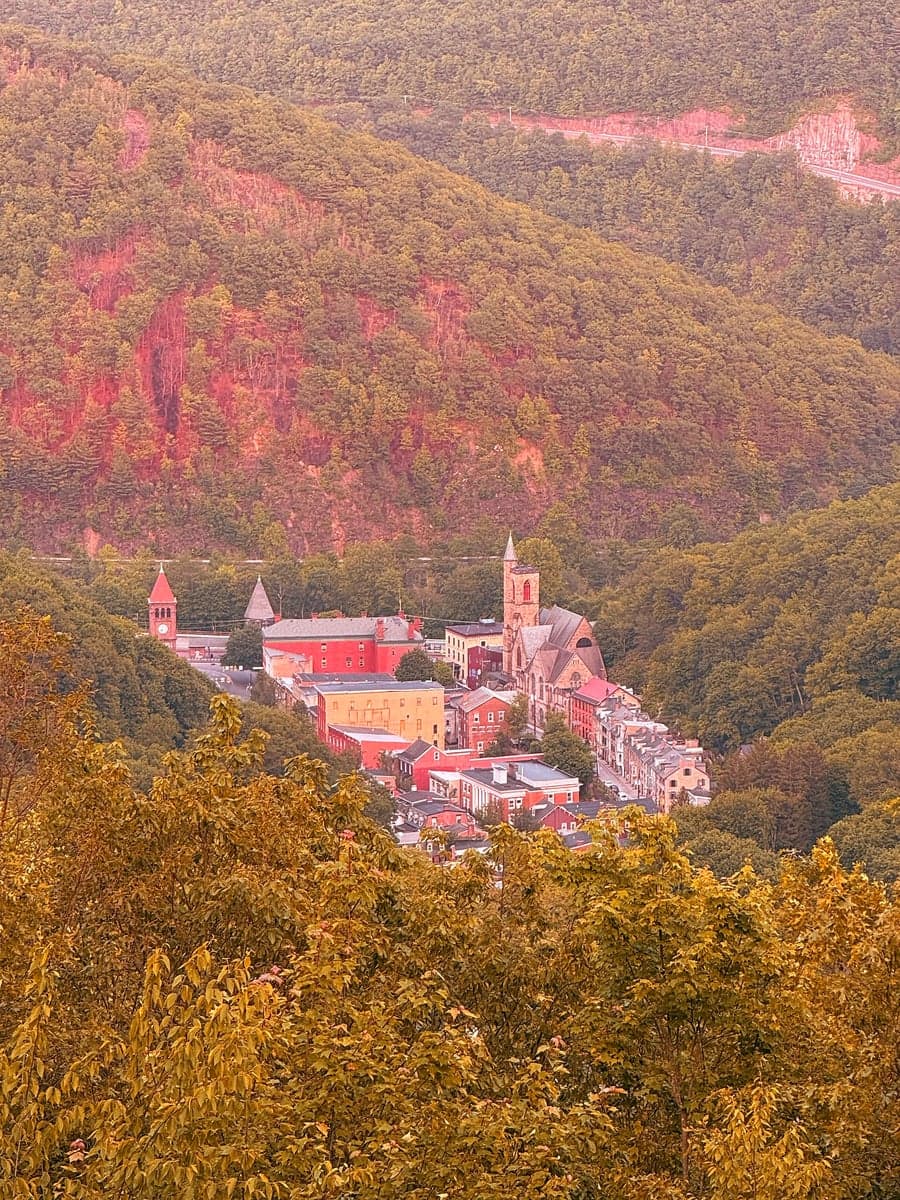
Jim Thorpe's geography—nestled in the Lehigh Gorge with steep hillsides and narrow valley floors—limits the availability of large, affordable parcels for serious homesteading within the borough limits. Most residential lots in the borough are 0.1 to 0.5 acres, typical of a historic town, with zoning that generally requires connection to public water and sewer. Raising livestock (chickens, goats) is not explicitly prohibited in all residential zones, but the borough's zoning code restricts "farm animals" to agricultural districts, which are virtually nonexistent within the borough. For those seeking true self-reliance, the surrounding townships—such as Penn Forest Township, Kidder Township, and East Side Borough—offer more flexibility. Five- to ten-acre parcels are common in these areas, often with no public sewer hookup required, allowing for septic systems and private wells. Off-grid feasibility is mixed: Pennsylvania has no state-level ban on solar panels, but net metering policies require interconnection with the grid for credits, and some townships have restrictive covenants or zoning that limit visible solar arrays. Rainwater collection for outdoor use is generally unregulated, but using it as a primary water source for drinking requires a permit from the Department of Environmental Protection. Wood heating is common and legal, with no statewide bans on outdoor wood boilers, though local ordinances may impose setback requirements. For those willing to live outside the borough's historic core, the regulatory burden on self-reliant living is light, but the mountainous terrain and shallow, rocky soils make large-scale gardening or livestock operations challenging without significant investment in terracing or soil amendment.
Personal liberties: parental rights, medical autonomy, speech, and property
Pennsylvania generally respects parental rights in education and healthcare decisions. The state does not mandate COVID-19 vaccines for school attendance, and parents can opt children out of any required vaccinations for medical, religious, or philosophical reasons (though a written exemption form is needed). Homeschooling is legal and regulated under Act 169, requiring a notarized affidavit, an annual evaluation, and a portfolio of student work—a moderate regulatory burden compared to states with no oversight, but far lighter than New York or Massachusetts. Medical autonomy is bolstered by the state's lack of a prescription drug monitoring program mandate for all prescribers, and there is no state-level mandate for employers to require COVID-19 vaccines. However, Pennsylvania does have a medical marijuana program (legal since 2016) but no recreational cannabis, and possession of small amounts remains a misdemeanor. Free speech protections are robust under the state constitution, which has its own free expression clause, and there are no local ordinances in Jim Thorpe restricting political signage beyond standard size and placement rules. Property rights are generally strong, with no state-level rent control and no county-wide inclusionary zoning mandates. The biggest constraint on property autonomy in Jim Thorpe is the historic district overlay, which can delay or deny changes to exterior appearances, including fencing, roofing materials, and even paint colors. For those who value the ability to modify their home without government approval, purchasing outside the historic district—or in the surrounding townships—is strongly recommended.
Overall, Jim Thorpe offers a personal sovereignty profile that is moderately high for the Northeast, with Pennsylvania's favorable tax treatment of retirement income, strong firearm preemption, and light-touch homeschooling laws providing a solid baseline. The primary friction points are the historic district's aesthetic controls and the borough's limited land availability for homesteading. For a conservative-leaning individual or family who values self-reliance and minimal government interference, the broader Carbon County area—particularly the surrounding townships—provides a more permissive environment than the borough itself. Compared to neighboring states like New York or New Jersey, Jim Thorpe and its region represent a clear step toward greater personal autonomy, though it falls short of the regulatory freedom found in states like Texas or New Hampshire. The key is location within the area: choose the borough for walkability and historic charm with some regulatory strings attached, or choose the outlying townships for maximum personal sovereignty on larger parcels.

* Values derived from national, state, county, city and local statistics and may differ in a specific area. Last updated: 2026-10-15T00:20:08.000Z
Narrative content on this page is AI-generated and may contain mistakes. Verify any details that matter before acting on them.
ReloMaps may earn a commission from affiliate links at no extra cost to you.

