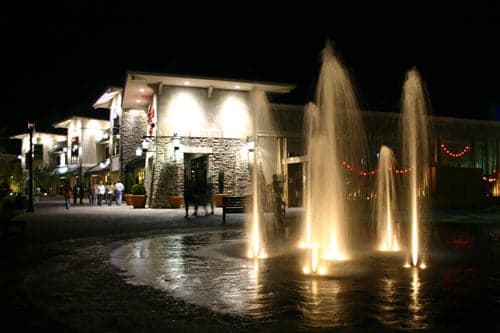
Photo: Wikipedia
Political ClimatePolitical Climate in Jenks, OK
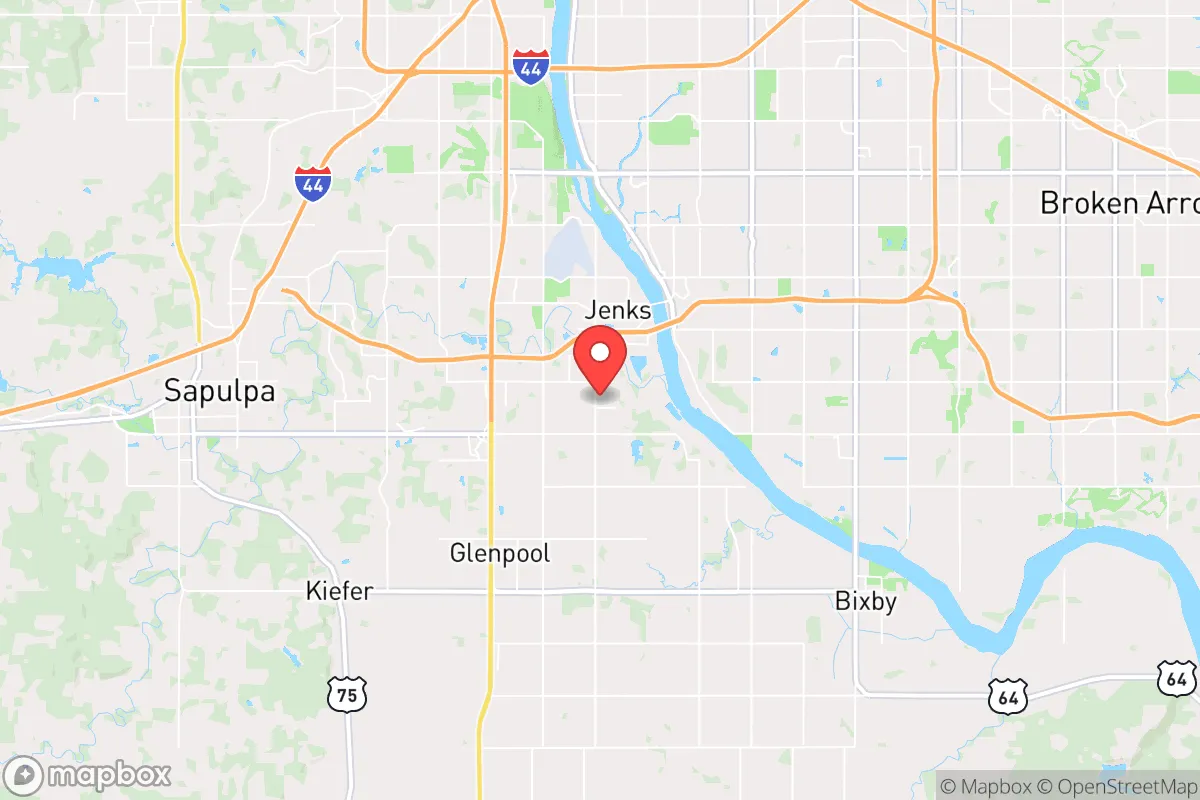
District shown is the primary district for this city’s centroid. Cities may span multiple districts.
Local Political AnalysisPolitical Analysis of Jenks, OK
Jenks, Oklahoma, sits solidly in conservative territory, with a Cook PVI of R+11 that reflects decades of consistent Republican voting in local, state, and federal elections. The city itself leans a bit more moderate than the surrounding rural areas, but the overall political climate remains reliably red — think of it as a quiet, family-oriented suburb where folks generally want lower taxes, fewer regulations, and a government that stays out of their personal lives. Over the last ten years, you’ve seen a slow but noticeable shift: the old-school fiscal conservatism is still the backbone, but there’s a growing unease about creeping progressive influence from Tulsa, just across the river, and from national trends that feel like they’re trying to tell you how to live.
How it compares
Jenks is politically distinct from its bigger neighbor, Tulsa, which has a more mixed voting record — Tulsa County as a whole went for Trump in 2024, but the city itself has pockets of progressive activism, especially around downtown and the arts district. Drive south to Glenpool or Bixby, and you’ll find a similar conservative vibe, though Bixby has a slightly more affluent, business-friendly tilt. The real contrast is with Norman or Oklahoma City, where you’ll see more Democratic-leaning precincts near the universities. In Jenks, the local school board and city council races are almost always won by candidates who emphasize limited government, parental rights in education, and a hands-off approach to property and business. The state-level politics here are deeply red — the Oklahoma legislature has passed some of the strongest Second Amendment protections and abortion restrictions in the country, and Jenks residents largely support that direction. But there’s a quiet worry: the national Democratic Party’s push on climate regulations, gun control, and DEI mandates feels like it’s trying to override local values, and some folks are starting to wonder how long the state can hold the line against federal overreach.
What this means for residents
For the average Jenks family, the political climate translates into a few concrete realities. Property taxes are low compared to national averages, and there’s no state income tax on retirement income, which keeps more money in your pocket. The city’s zoning laws are relatively permissive — you can run a small business from your home without jumping through endless bureaucratic hoops, and there’s no heavy-handed HOA-style oversight on how you maintain your yard or park your vehicles. Schools in Jenks are well-regarded, but the curriculum is still grounded in traditional values, with parental notification policies on sensitive topics and a focus on core academics rather than social engineering. The downside? If you’re hoping for more progressive policies — say, expanded public transit, bike lanes, or affordable housing mandates — you won’t find much traction here. The local government’s philosophy is basically: “We’ll keep the roads paved and the cops funded, and otherwise leave you alone.” That’s a feature, not a bug, for most residents.
Culturally, Jenks is the kind of place where the Fourth of July parade is a big deal, church attendance is still high, and people wave at neighbors they don’t even know. There’s a strong sense of community self-reliance — when the ice storm hit in 2021, neighbors fired up generators and checked on each other before the city even got crews out. The biggest policy distinction from more progressive suburbs is the absence of any “sanctuary city” or environmental zoning overreach; Jenks hasn’t adopted any climate action plans or diversity equity initiatives that would impose costs on businesses or homeowners. Looking ahead, the long-term concern is that as Tulsa expands and younger, more transient populations move in, the political balance could shift. But for now, Jenks remains a place where you can still raise a family without feeling like the government is watching over your shoulder or telling you what to think.

State Political ClimatePolitical Climate in Oklahoma
State Political AnalysisPolitical Environment in the State
Oklahoma has long been one of the most reliably conservative states in the nation, with a deep-rooted Republican lean that has only intensified over the past two decades. The state hasn’t voted for a Democratic presidential candidate since 1964, and as of 2024, every statewide elected office is held by a Republican. The dominant coalition is a blend of evangelical Christians, rural ranchers, oil-and-gas workers, and increasingly, conservative transplants from bluer states. Over the last 10-20 years, the trajectory has been a steady march rightward, with the GOP supermajority in the legislature pushing through some of the most aggressive conservative policies in the country—from near-total abortion bans to permitless carry of firearms. However, there are subtle undercurrents worth watching, especially in the growing suburbs around Oklahoma City and Tulsa.
Urban vs. rural divide
The political map of Oklahoma is a textbook study in the urban-rural split. The two major metros—Oklahoma City and Tulsa—are the only places where Democrats can still field competitive races, though even these cities have shifted right. Oklahoma County (Oklahoma City) voted for Trump in 2020 by about 10 points, while Tulsa County went for him by 15. The real action is in the rural and exurban counties. Places like Texas County in the Panhandle and Roger Mills County in the west routinely deliver 85-90% Republican margins. A notable trend is the suburban ring around Oklahoma City—Edmond, Yukon, and Mustang—which have become some of the most reliably conservative suburbs in the country, often voting 70%+ Republican. Meanwhile, the southeastern corner of the state, including McCurtain County and Pushmataha County, remains deeply conservative but with a distinct populist streak that sometimes bucks the establishment. The only blue dot of note is Norman, home to the University of Oklahoma, which consistently votes Democratic but is surrounded by a sea of red.
Policy environment
Oklahoma’s policy environment is a conservative’s dream, at least on paper. The state has a flat income tax rate of 4.75% (down from 6% in 2014), and there’s a serious push to eliminate the income tax entirely—a bill to do so passed the House in 2025 but stalled in the Senate. Sales taxes are high, often over 10% in cities like Broken Arrow and Lawton, but there’s no tax on groceries. The regulatory posture is aggressively pro-business, with right-to-work laws and a tort reform system that caps non-economic damages. On education, the state has embraced school choice in a big way: the Oklahoma Parental Choice Tax Credit Act (2023) provides up to $7,500 per child for private school expenses, and the state has one of the highest charter school densities in the region. Healthcare is a mixed bag—Oklahoma expanded Medicaid in 2021 via a ballot initiative, but the legislature has since added work requirements and premiums for able-bodied adults. Election laws are strict: voter ID is required, and the state purges inactive voters regularly. The 2024 legislative session saw a bill banning ranked-choice voting and another requiring hand-counting of ballots in all precincts by 2026, a move that has drawn both praise and legal challenges.
Trajectory & freedom
On the freedom front, Oklahoma has been on a clear expansionary trajectory for conservative liberties, but there are warning signs. The biggest win for personal freedom was the 2019 passage of permitless carry (Constitutional Carry), allowing any adult who can legally own a firearm to carry it openly or concealed without a license. In 2022, the state passed the Oklahoma Second Amendment Protection Act, which nullifies any federal gun laws deemed unconstitutional by the state. Parental rights got a boost with the 2023 Parents’ Bill of Rights, which requires schools to notify parents of any medical or mental health services offered to their children and bans classroom instruction on sexual orientation or gender identity in grades K-5. On medical autonomy, the state passed a near-total abortion ban in 2022 (SB 612) with no exceptions for rape or incest, only to save the mother’s life. However, there’s a growing concern about government overreach in the name of “protecting children”—the 2024 law requiring all public school bathrooms to be designated by biological sex at birth, while popular with conservatives, represents a significant expansion of state power into private spaces. Property rights are generally strong, with no state-level rent control and a 2023 law limiting homeowners’ association authority to ban solar panels or rain barrels.
Civil unrest & political movements
Oklahoma has seen its share of political flashpoints, though they tend to be more localized than in coastal states. The most visible movement in recent years has been the rise of the “Oklahoma Freedom Caucus,” a hardline group within the state legislature that has successfully pushed for audits of the 2020 election (which found no widespread fraud but did recommend tighter security), and has introduced articles of impeachment against the state superintendent for allegedly overstepping on curriculum mandates. On the left, the 2022 teacher walkout in Oklahoma City and Tulsa drew thousands to the capitol, demanding higher pay and more school funding—a rare show of labor power in a right-to-work state. Immigration politics are heated but not chaotic; the 2024 law making it a state crime to be in Oklahoma illegally (SB 123) is currently tied up in federal court, but it has energized both sides. There’s no sanctuary city movement to speak of—Oklahoma City explicitly prohibits sanctuary policies. Election integrity remains a hot-button issue: the 2024 hand-counting law has led to protests from county election boards, particularly in Oklahoma County, where officials warn it will slow results and increase costs. A new resident would notice the prevalence of “Don’t Tread on Me” flags and “Let’s Go Brandon” bumper stickers, but actual civil unrest is rare—the most dramatic event in recent memory was the 2023 protest at the capitol over the transgender bathroom bill, which drew about 200 people on each side.
Projection
Looking ahead 5-10 years, Oklahoma is likely to become even more conservative, but with a twist. The in-migration pattern is heavily skewed toward conservative-leaning families from California, Colorado, and Illinois, drawn by low housing costs and the state’s cultural alignment. This is already shifting the suburbs—places like Edmond and Mustang are growing fast, and they’re voting even redder than the state average. However, the urban cores of Oklahoma City and Tulsa are seeing a slow but steady influx of younger, more diverse residents, which could make those counties more competitive in a decade. The biggest wildcard is the state’s budget: if the income tax is eliminated, the state will become heavily reliant on sales and oil-and-gas taxes, which could lead to boom-and-bust cycles that strain services. The school choice expansion is likely to continue, potentially leading to a full voucher system by 2030. On personal freedom, expect more preemption laws—the state is already moving to ban local ordinances on plastic bags, minimum wage, and paid leave, which is great for uniformity but limits local control. A new resident moving in now should expect a state that is doubling down on its conservative identity, with a government that is increasingly willing to use its power to enforce that vision. The trade-off is clear: you get low taxes, strong gun rights, and school choice, but you also get a state that is not shy about telling you how to live, especially on cultural issues.
For a conservative individual or family considering relocation, Oklahoma offers a rare combination of affordability and ideological alignment that is hard to find elsewhere. The practical takeaway is this: you will feel politically at home in most of the state, especially in the suburbs and rural areas. The schools are increasingly choice-friendly, the tax burden is low and falling, and the Second Amendment is treated as a fundamental right. But don’t expect a libertarian paradise—the state government is active and interventionist on social issues, and the local politics in the cities can still be a fight. If you’re looking for a place where your values are the majority and your dollar goes further, Oklahoma is a solid bet. Just know that the culture wars are alive and well here, and you’ll be expected to pick a side.
* Values derived from national, state, county, city and local statistics and may differ in a specific area. Last updated: 2026-04-21T09:12:05.000Z
Narrative content on this page is AI-generated and may contain mistakes. Verify any details that matter before acting on them.
ReloMaps may earn a commission from affiliate links at no extra cost to you.

