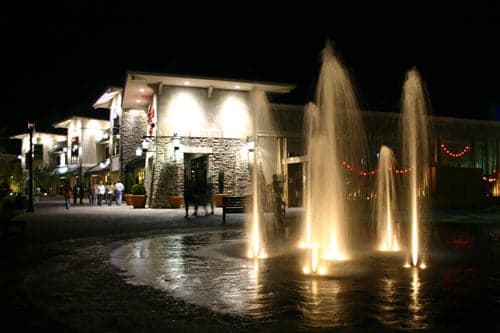
Photo: Wikipedia
Strategic Assessment of Jenks, OK
Meaningful friction. Expect exposure to either population pressure, blast zones, or natural disaster risk. Consider buying a retreat property.
What does the Strategic Assessment tell us?
Our Strategic Assessment grades tactical survivability of an area. Major population centers, military targets, fallout zones, natural disasters, and border exposure all drive risk — lower exposure means a more defensible position in a crisis.
This is heavily inspired by Joel Skousen's Strategic Relocation book. Highly recommended you checkout the book ($)What does this tell us?
Our Strategic Assessment grades tactical survivability of an area. Major population centers, military targets, fallout zones, natural disasters, and border exposure all drive risk — lower exposure means a more defensible position in a crisis.
This is heavily inspired by Joel Skousen's Strategic Relocation book. Highly recommended you checkout the book ($)Strategic Pillars

Key Distances
Regional Safe Places
Below is our recommended "safe zones" in Oklahoma and the surrounding area based on our strategic heuristics. For most people, it's unrealistic to live in a “safe zone” full-time due to work, family or other personal reasons. They tend to be more rural. However, many of these areas are perfect for second homes and retreat properties that double as a vacation home or even a short-term rental.
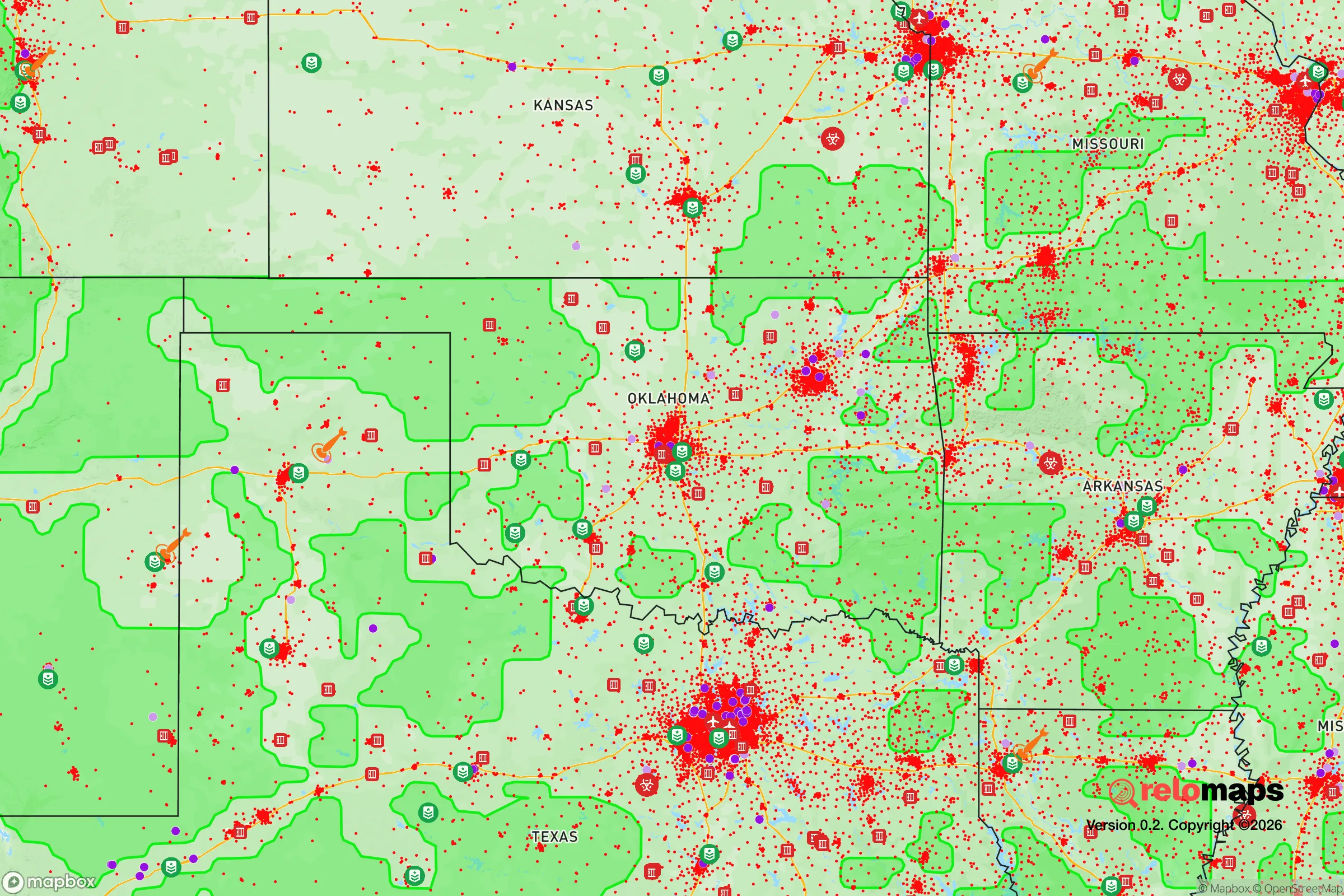
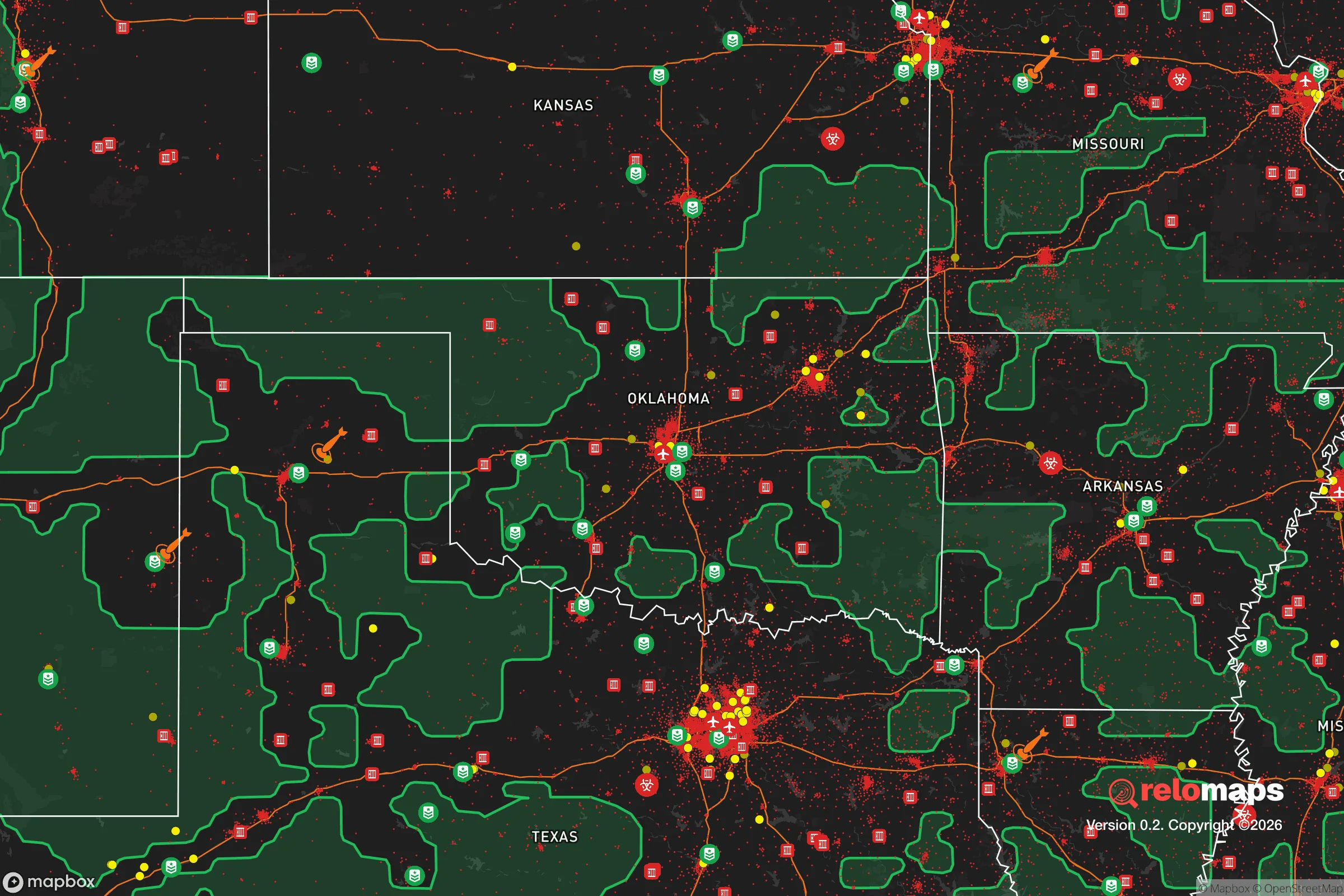


Important Note: For informational purposes only. This does not mean nothing bad ever happens in the green zones. Please use common sense. This is based on public data and modeled with AI. We tried to take a conservative approach but mistakes happen. We update this regularly as new information becomes available.
Solar Generator Recommendations
Backup power matters more here than in safer locations. We've picked three solar generators across budgets and capacity tiers — start with the budget unit if you only need a few essentials, or step up if you want to run a fridge and HVAC for days at a time.

Jackery Portable Power Station Explorer 300
Budget OptionPower on the Go: Weighing only 11 lbs, it's convenient to set up and store with book-sized foldable solar panels

BLUETTI Portable Power Station AC180
Designed for both indoor and outdoor scenarios, AC180 is highly capable as it has a robost capacity and continuous output power.

EF ECOFLOW DELTA Pro Ultra Power Station
Upgraded PickEcoFlow DELTA Pro Ultra is a whole-home energy system designed to grow with your family. Integrated with the Smart Home Panel 2, it scales to meet your evolving energy needs — keeping your home powered, intelligent, and secure through every stage of life.
We earn a commission, at no additional cost to you.
Strategic Assessment Analysis
Jenks, Oklahoma, sits in a geographic sweet spot that offers genuine strategic depth for those thinking about long-term resilience, but it also carries real exposure risks that demand clear-eyed assessment. Nestled along the Arkansas River and positioned just south of Tulsa, Jenks benefits from the economic and infrastructure buffers of a mid-sized metro while avoiding the direct blast zones and immediate chaos corridors of a major urban center. For a relocator weighing civic stability, resource access, and defensibility, Jenks presents a mixed but workable picture — provided you understand exactly where the vulnerabilities lie and plan accordingly.
Geographic position and natural buffers: why Jenks holds up better than most
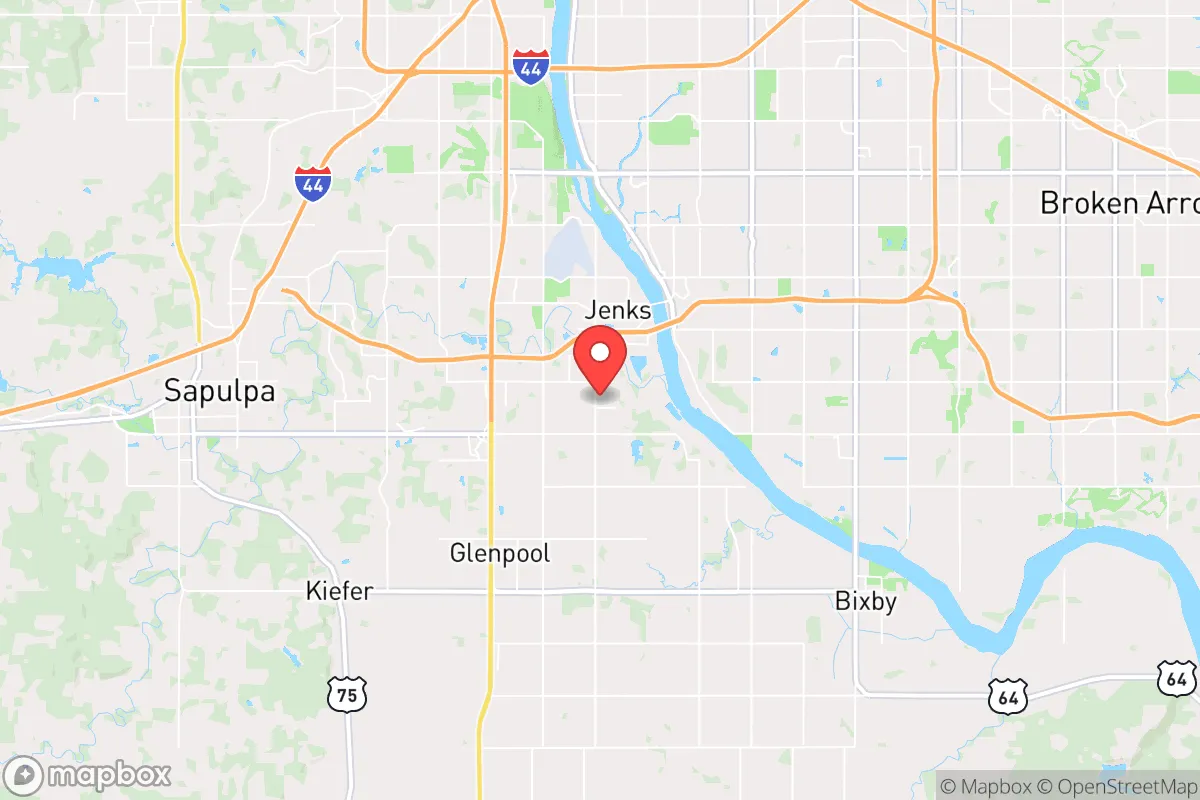
Jenks occupies a bend in the Arkansas River roughly 15 miles southwest of downtown Tulsa, placing it outside the likely concentric rings of a major urban disaster — whether that’s a grid-down event, civil unrest, or a coordinated attack on critical infrastructure. The river itself provides a natural barrier to the south and east, and the surrounding terrain is gently rolling prairie and woodland, not flat open ground that offers no cover. The area sits in Green Country, a region with decent rainfall averages around 40 inches per year, which supports local agriculture and private well potential — both serious advantages if supply chains falter. Jenks is also far enough from the major fault lines of the New Madrid Seismic Zone (roughly 400 miles west) to avoid catastrophic shaking, though it would feel moderate tremors. The city’s elevation around 620 feet above sea level means flooding is a localized concern near the river, not a regional wipeout. For a relocator, the key takeaway is that Jenks offers a layered buffer: close enough to Tulsa’s hospitals, supply depots, and transport hubs to draw on them in normal times, but far enough that you’re not in the immediate blast radius of a refinery, military base, or major government target.
Risks, exposures, and proximity to fallout-relevant landmarks
No honest strategic assessment can ignore the liabilities. Jenks sits within 20 miles of Tulsa International Airport, a major air freight hub, and within 30 miles of the Port of Catoosa, one of the nation’s largest inland ports and a key node for fuel and chemical transport. Both are plausible targets for sabotage or kinetic attack in a serious conflict scenario. The area is also ringed by oil and gas infrastructure — refineries, pipelines, and storage facilities in and around Tulsa — that could become secondary hazards if struck. On the civil unrest front, Tulsa itself has a history of racial and political tension, and a major disruption could send destabilizing waves south into Jenks. The city’s population has grown rapidly — from roughly 18,000 in 2010 to over 26,000 by 2025 — which means suburban sprawl is eating into the very buffers that make Jenks attractive. More rooftops mean more people competing for the same limited resources in a crisis. Additionally, the Arkansas River, while a water source, is also a flood risk: the 2019 floods caused significant damage in low-lying parts of Jenks, and climate models suggest heavier rain events are becoming more common. For the prepper, the calculus is that Jenks is not a hardened redoubt — it’s a suburban community with real exposure to secondary effects from a Tulsa-area event. You need to plan for evacuation routes that avoid the river crossings and the I-44 corridor, which will clog fast.
Practical resilience for a relocator: food, water, energy, and defensibility
On the practical side, Jenks offers several concrete advantages for someone serious about self-sufficiency. The local water table is accessible — many rural properties just outside city limits have private wells, and the Arkansas River is a viable backup source with proper filtration. The region’s growing season runs roughly from April to October, long enough for meaningful vegetable production, and the soil in the river valley is fertile. Local farmers’ markets and co-ops exist, but in a crisis, you’ll want your own garden and seed stock. Energy resilience is mixed: Jenks is on the Public Service Company of Oklahoma grid, which is reasonably stable but vulnerable to ice storms and summer thunderstorm outages. Solar potential is decent — the area averages about 220 sunny days per year — and many newer homes are built with south-facing roofs that can accommodate panels. Natural gas is widely available, which is a plus for backup heating and cooking if the grid goes down but the gas lines stay pressurized. Defensibility is the weakest link. Jenks is a typical suburban layout: cul-de-sacs, strip malls, and a dense residential core. There is no natural chokepoint or high ground that gives a small group a tactical advantage. Your best bet is a property on the outskirts, ideally with tree cover and a single access road. The city’s police force is small — around 40 officers — and would be overwhelmed in a widespread event. You are largely on your own for security, which means building relationships with like-minded neighbors is not optional; it’s the foundation of any realistic plan.
The overall strategic picture for Jenks is one of conditional viability. It is not a survivalist paradise — it lacks the remoteness, the defensible terrain, and the isolation that a true bug-out location would offer. But for someone who needs to stay within commuting distance of a job or family obligations in the Tulsa metro, it is one of the better suburban options in the region. The key is to treat Jenks as a base of operations, not a fortress. Stockpile supplies for 90 days minimum, secure a reliable water source, establish a network of trusted contacts, and have a secondary location identified farther south or east — toward the Ouachita Mountains or the Ozarks — if the situation deteriorates beyond what a suburban perimeter can handle. Jenks gives you time and options, but only if you use that time to prepare before the window closes.

* Values derived from national, state, county, city and local statistics and may differ in a specific area. Last updated: 2026-04-21T09:12:05.000Z
Narrative content on this page is AI-generated and may contain mistakes. Verify any details that matter before acting on them.
ReloMaps may earn a commission from affiliate links at no extra cost to you.

