
Photo: Wikipedia
Quality of Life in Woodbury County
A livable area that tracks near national norms for affordability, walkability, and neighborhood health.
What does Quality of Life tell us?
Quality of Life measures an area by evaluating factors like cost of living, nearby amenities, country club access, airport proximity, socioeconomic signals and neighborhood character. For large states, this is a general average — quality of life can vary dramatically between metro areas, suburbs, and rural communities within the same state.
What does this tell us?
Quality of Life measures an area by evaluating factors like cost of living, nearby amenities, country club access, airport proximity, socioeconomic signals and neighborhood character. For large states, this is a general average — quality of life can vary dramatically between metro areas, suburbs, and rural communities within the same state.
Cost of Living
27% below national average
143%
The Real Cost of Living in Woodbury County for 2026
| Tier | Individual | Family (4) |
|---|---|---|
| Survival | $15k | $28k |
| Comfortable | $33k | $49k |
| Luxury | $113k+ | $175k+ |
| Elite (Top 5%) | $133k+ | $206k+ |
Quality-of-Life Analysis
Woodbury County, Iowa, offers a broad quality-of-life spectrum that ranges from the urban core of Sioux City to quiet unincorporated crossroads, attracting everyone from young professionals and college students to retirees and agricultural workers. The county’s overall cost of living index sits at 73 (27% below the U.S. average), with a median home value of $172,000 and median rent of $946, making it one of the more affordable regions in the Upper Midwest. The average commute of just under 18 minutes is notably short, which means residents in outlying areas can still access jobs and amenities in the county seat without spending hours on the road.
Largest town(s) & population centers
Sioux City is the county’s dominant population center and economic engine, home to roughly 85,000 residents. Daily life here is defined by a mix of industrial employment (Tyson Foods, Seaboard Triumph Foods), healthcare (UnityPoint Health – St. Luke’s, MercyOne), and a growing downtown dining and arts scene along the Missouri River. The city also hosts Morningside University and Western Iowa Tech Community College, giving it a youthful, transient population. Housing options range from historic Victorian homes in the Morningside neighborhood to newer subdivisions on the city’s north and south sides. While Sioux City offers the county’s widest array of retail, entertainment, and public transit, it also has higher crime rates than the county average, particularly in central and eastern districts. The Sergeant Bluff area, technically a separate city of about 5,000 just south of Sioux City, functions as a bedroom community with newer construction and a more suburban feel, often chosen by families seeking proximity to the city but quieter streets.
Smaller towns & rural pockets
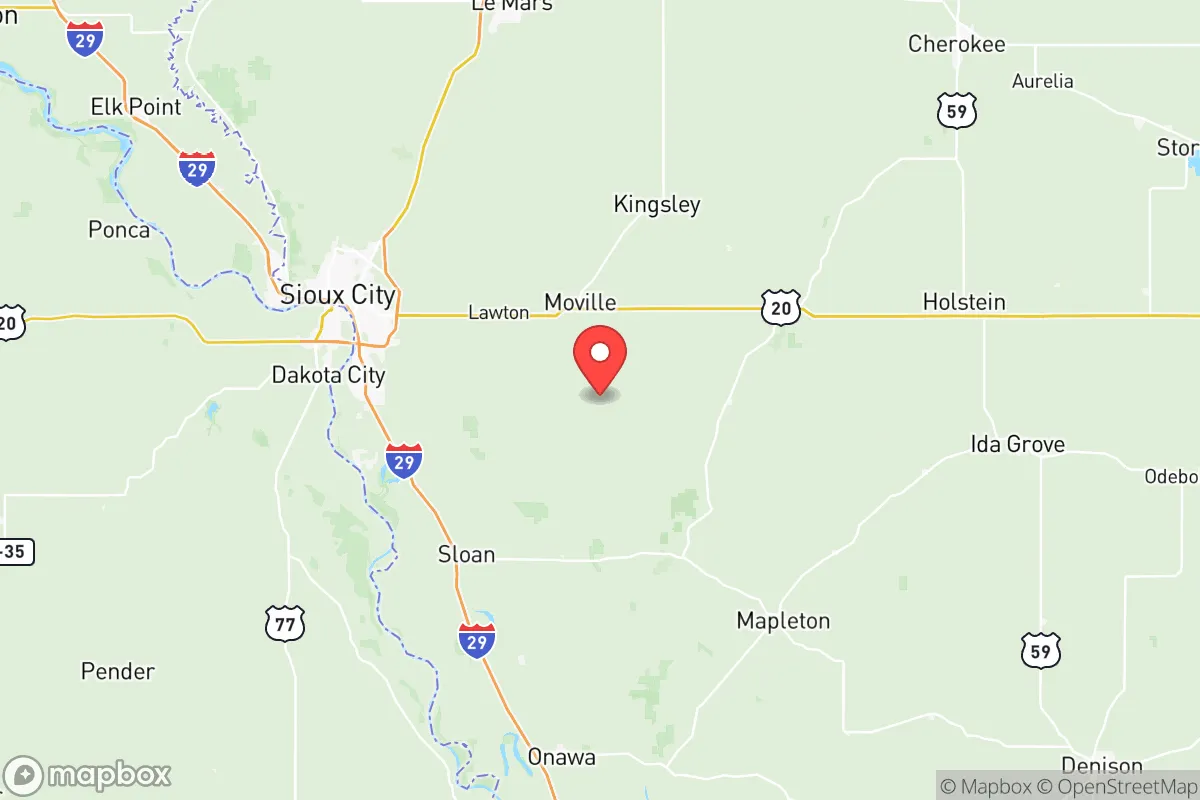
Beyond the urban core, Woodbury County contains a ring of smaller incorporated towns that each offer distinct lifestyles. Moville (pop. ~1,600) sits along U.S. Highway 20 and provides a classic small-town Main Street with a grocery store, bank, and a strong school system; it is a common choice for commuters who want a 15-minute drive to Sioux City jobs. Lawton (pop. ~900) and Hinton (pop. ~900) are similarly positioned, each with their own K–12 districts and active volunteer fire departments. Anthon (pop. ~550) and Oto (pop. ~100) lie farther west, closer to the Loess Hills, and attract residents who prioritize land and privacy over proximity to services. Unincorporated areas such as Climbing Hill and Lakeside offer true rural living with acreages and farmsteads, though residents must travel 20–30 minutes for groceries or medical care. The county’s rural pockets are dominated by row-crop agriculture (corn and soybeans) and a handful of livestock operations, giving the landscape a working-farm character rather than a recreational one.
Cost & lifestyle range
The cost spread across Woodbury County is relatively narrow but meaningful. At the low end, Sioux City’s older neighborhoods (e.g., the Riverside area) offer homes under $100,000 and rents below $700, making them accessible to entry-level workers and students. At the high end, Sergeant Bluff and the North Sioux City exurban fringe feature new-construction homes in the $250,000–$400,000 range, with larger lots and lower property tax rates than the city core. The median home value of $172,000 places the county well below the national median, and even the priciest subdivisions remain affordable by national standards. Amenities follow a similar gradient: Sioux City has multiple grocery chains, a regional mall, and a hospital, while towns like Moville and Lawton have only a single grocery store and a gas station. Rural residents rely on Sioux City for most shopping and healthcare, though the county’s short commute times make that trade-off manageable. Property taxes in Woodbury County average about 1.5% of assessed value, slightly above the Iowa state average, but the low home prices keep annual bills modest.
This county works best for people who value affordability and short commutes over dense urban amenities or coastal scenery. Young families can buy a starter home in Sioux City or a small town for well under $200,000, while retirees on fixed incomes find the low cost of living and access to healthcare appealing. Agricultural workers and rural landowners appreciate the proximity to a full-service city without the sprawl of a major metro. Those seeking nightlife, walkable neighborhoods, or a robust public transit system will find Woodbury County limited, but for anyone prioritizing financial breathing room and a 17-minute average commute, it is a practical and stable choice.

Crime in Woodbury County
Generally safer than 69% of comparable U.S. locations.
Violent CrimeViolent Crime Analysis
Property CrimeProperty Crime Analysis
Crime Analysis
Woodbury County, anchored by the city of Sioux City, presents a mixed public safety profile that residents and prospective movers should evaluate carefully. The county’s violent crime rate of 230.5 incidents per 100,000 people sits slightly below the national average, but its property crime rate of 1,167.7 per 100,000 significantly exceeds both state and national benchmarks. These figures, drawn from the most recent FBI Uniform Crime Reporting data, indicate that while the risk of violent confrontation is moderate, theft and property-related offenses are a more pressing daily concern across the county’s urban and suburban communities.
Crime in context
When compared to Iowa’s statewide violent crime rate of roughly 280 per 100,000, Woodbury County’s 230.5 figure appears favorable, placing it among the safer counties for violent offenses in the state’s western region. However, the property crime rate tells a different story: at nearly 1,168 per 100,000, it runs well above the Iowa average of approximately 1,400 per 100,000 — though still below the national property crime rate of about 1,950 per 100,000. The gap between the county’s violent and property crime rates is notable; residents are roughly five times more likely to experience a property crime than a violent crime. This pattern is consistent with many Midwestern counties that have concentrated urban populations, where property offenses like larceny, burglary, and motor vehicle theft drive overall crime numbers upward. The data does not distinguish between jurisdictions within the county, but law enforcement officials in Sioux City, the county seat and largest municipality, acknowledge that the city accounts for the majority of reported incidents.
What residents experience
For those living in Woodbury County, the most tangible safety concern is property crime — particularly vehicle break-ins, package theft, and residential burglaries in neighborhoods near commercial corridors. Sioux City’s downtown and the areas around the Southern Hills Mall see elevated theft reports, while suburban communities such as Sergeant Bluff, Hinton, and Lawton report notably lower incident volumes. Violent crime, while less common, is not evenly distributed: the majority of aggravated assaults and robberies occur in specific Sioux City neighborhoods, particularly in the city’s central and west-side precincts. The Woodbury County Attorney’s Office, which prosecutes all felony cases in the county, operates under a conservative legal framework that emphasizes charging and sentencing guidelines aligned with Iowa’s relatively tough criminal code. This stands in contrast to more progressive prosecutorial policies seen in larger metropolitan areas like Des Moines or Johnson County, where district attorneys have adopted diversion-heavy approaches. In Woodbury County, the justice system’s focus on accountability means that offenders face more consistent consequences, which helps keep violent crime rates from rising further.
Neighborhood-level variation is significant across Woodbury County’s 38 incorporated communities. Sioux City’s east side and the suburbs of North Sioux City (technically in South Dakota but part of the metro area) experience the highest property crime densities, while rural towns like Moville, Pierson, and Correctionville report crime rates near zero for most years. Prospective residents should examine block-level data for specific Sioux City neighborhoods — particularly those near the Floyd Boulevard and Gordon Drive corridors — before making housing decisions. The county’s overall safety picture is one of manageable violent risk paired with persistent property crime, a balance that favors communities with strong neighborhood watch programs and proactive local policing.
* Values derived from national, state, county, city and local statistics and may differ in a specific area. Last updated: 2026-06-26T15:41:10.000Z
Narrative content on this page is AI-generated and may contain mistakes. Verify any details that matter before acting on them.
ReloMaps may earn a commission from affiliate links at no extra cost to you.

