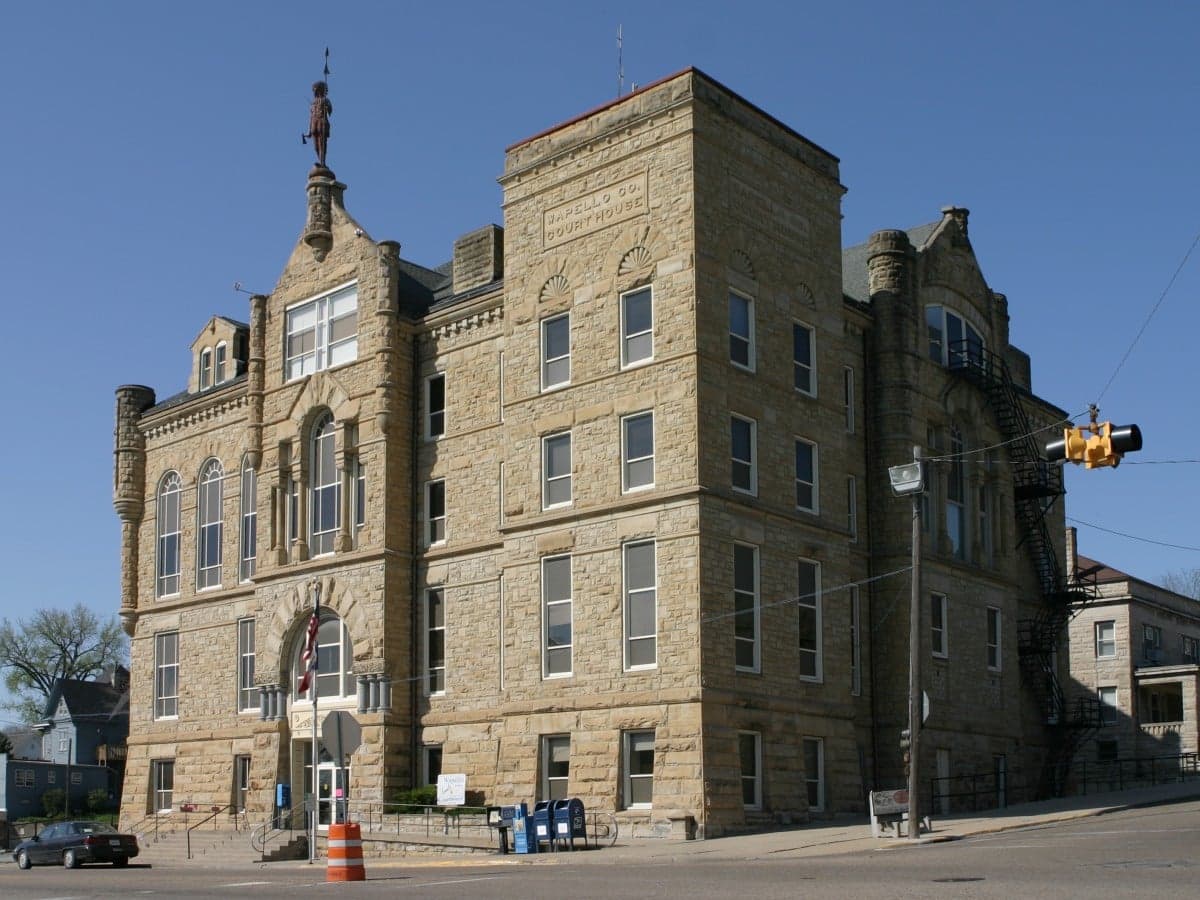
Photo: Wikipedia
Quality of Life in Wapello County
A livable area that tracks near national norms for affordability, walkability, and neighborhood health.
What does Quality of Life tell us?
Quality of Life measures an area by evaluating factors like cost of living, nearby amenities, country club access, airport proximity, socioeconomic signals and neighborhood character. For large states, this is a general average — quality of life can vary dramatically between metro areas, suburbs, and rural communities within the same state.
What does this tell us?
Quality of Life measures an area by evaluating factors like cost of living, nearby amenities, country club access, airport proximity, socioeconomic signals and neighborhood character. For large states, this is a general average — quality of life can vary dramatically between metro areas, suburbs, and rural communities within the same state.
Cost of Living
35% below national average
156%
The Real Cost of Living in Wapello County for 2026
| Tier | Individual | Family (4) |
|---|---|---|
| Survival | $15k | $29k |
| Comfortable | $26k | $39k |
| Luxury | $108k+ | $168k+ |
| Elite (Top 5%) | $129k+ | $200k+ |
Quality-of-Life Analysis
Wapello County, Iowa, offers a broad quality-of-life spectrum anchored by the regional hub of Ottumwa, then fanning out into smaller incorporated towns and open agricultural countryside. The county’s overall cost of living index sits at 65 (well below the U.S. average of 100), with a median home value of $112,900 and median rent of $950, making it one of the more affordable areas in southeastern Iowa. The average commute of roughly 19.6 minutes is short by national standards, meaning residents in any part of the county can reach Ottumwa’s jobs and services quickly. People drawn to the county tend to fall into two camps: those who want the convenience and amenities of a small city, and those who prioritize space, quiet, and lower land costs in the county’s smaller towns and rural townships.
Largest town & population centers
Ottumwa is the county seat and by far the largest population center, home to roughly 25,000 residents. Daily life here revolves around a mix of manufacturing, healthcare, and retail employment, with major employers including John Deere Ottumwa Works and Ottumwa Regional Health Center. The town offers a full set of amenities — a regional hospital, the Bridge View Center for events and hockey, Indian Hills Community College, and a walkable downtown with local restaurants and shops. Housing in Ottumwa is affordable, with many homes under $100,000, though the median home value of $112,900 reflects a mix of older fixer-uppers and well-maintained mid-century homes. Renters find the $950 median rent reasonable for the region. The trade-off is that Ottumwa has a higher crime rate than the county’s smaller towns, and some commercial corridors show signs of economic stagnation. For families and professionals who want a short commute, a grocery store within five minutes, and access to community college courses or a YMCA, Ottumwa is the logical choice.
Smaller towns & rural pockets
Outside Ottumwa, Wapello County contains several smaller incorporated towns that offer a quieter, more rural lifestyle. Agency (population ~600) sits just west of Ottumwa and feels like a bedroom community, with a few local businesses and quick access to the city. Eldon (population ~900), known as the setting for the iconic “American Gothic” house, has a slower pace, a small grocery store, and a strong sense of local history. Eddyville (population ~1,000) straddles the Wapello-Monroe county line and offers a compact downtown, a public library, and proximity to Lake Rathbun for recreation. Further out, Blakesburg (population ~300) and Kirkville (population ~200) are unincorporated or very small villages where residents often rely on Ottumwa for shopping and healthcare. The rural townships — such as Highland Township and Richland Township — consist of farmsteads and scattered homes on acreage, with no municipal services but very low property taxes and complete privacy. People choose these areas for the land, the quiet, and the ability to own a home on a larger lot for well under the county median.
Cost & lifestyle range
The cost spread across Wapello County is modest but real. At the low end, a two-bedroom rental in a rural township or a small town like Blakesburg can go for $600–$750, and a fixer-upper home in Eldon or Agency might sell for $60,000–$80,000. At the higher end, newer or fully renovated homes in Ottumwa’s North End or near the Ottumwa Country Club can reach $180,000–$220,000, still far below national averages. Amenities follow the same gradient: Ottumwa has chain grocery stores, urgent care, and a movie theater; Agency has a gas station and a post office; Blakesburg and Kirkville have no retail at all. The lifestyle trade-off is clear: Ottumwa offers convenience and community services, while the smaller towns and rural areas offer space, lower costs, and a slower rhythm. Commute times remain under 25 minutes from even the farthest corners of the county, so residents rarely feel isolated.
The people who thrive in Wapello County are those who value affordability and a short commute over urban density and nightlife. Young families and first-time homebuyers find the housing market accessible, especially in Ottumwa and Agency. Retirees and remote workers often gravitate toward Eldon or the rural townships for the lower cost and quieter environment. Agricultural workers and tradespeople appreciate the county’s central location within Iowa’s manufacturing and farming economy. For anyone seeking a low-cost, low-stress base in southeastern Iowa with a clear urban-rural spectrum to choose from, Wapello County delivers a practical range of options.

Crime in Wapello County
Generally safer than 69% of comparable U.S. locations.
Violent CrimeViolent Crime Analysis
Property CrimeProperty Crime Analysis
Crime Analysis
Wapello County, anchored by the city of Ottumwa, reports a violent crime rate of 230.9 per 100,000 residents and a property crime rate of 1,168.5 per 100,000. These figures place the county above the national average for property crime but near the national average for violent offenses, creating a mixed safety picture that varies significantly between Ottumwa and the county's smaller communities. Residents in outlying areas like Agency, Eldon, and Blakesburg generally experience fewer incidents, while the bulk of reported crime concentrates in Ottumwa's core neighborhoods.
Crime in context
Wapello County's violent crime rate of 230.9 per 100,000 is roughly 35% below the national average of about 380 per 100,000, but it is elevated compared to the statewide Iowa average of approximately 280 per 100,000. The property crime rate of 1,168.5 per 100,000 is notably higher than both the national average (around 1,954 per 100,000) and the Iowa state average (roughly 1,500 per 100,000). This means a resident is statistically more likely to experience a theft or burglary in Wapello County than in many other parts of Iowa, though violent encounters remain less common than in the typical U.S. county. The Eighth Judicial District, which covers Wapello County, has seen shifting prosecution policies in recent years, and critics point to progressive-leaning sentencing reforms in the district as a factor that may reduce deterrent effects for repeat property offenders. When comparing to nearby counties, Jefferson County (Fairfield) and Davis County (Bloomfield) report lower overall crime rates, while Des Moines County (Burlington) shows similar property crime numbers.
What residents experience
In Ottumwa, the county seat and largest city, residents frequently cite property crime — particularly vehicle break-ins, shed burglaries, and package theft — as the most common safety concern. The Ottumwa Police Department has responded with targeted patrols in the areas around the Ottumwa Regional Airport and the Quincy Place Mall corridor, where theft reports have historically clustered. Violent crime in Wapello County is largely non-random; the majority of aggravated assaults and robberies occur between individuals who know each other, often tied to domestic disputes or drug-related conflicts. The county's methamphetamine and opioid problems, while declining from peaks in the 2010s, still drive a significant portion of both property and violent offenses. Residents in the smaller towns of Agency and Eldon report feeling safer, with neighborhood watch programs and closer community ties acting as informal deterrents. However, the rural nature of these areas means law enforcement response times can exceed 20 minutes, a trade-off that residents accept for lower incident rates.
Neighborhood-level variation within Ottumwa is pronounced. The area south of the Des Moines River, particularly around the downtown district and the former John Deere Ottumwa Works site, sees higher concentrations of police calls for service. In contrast, the residential neighborhoods north of Highway 34 and west of the Ottumwa Country Club consistently report fewer incidents. For families considering relocation, the safest housing options in the county are typically found in the outlying towns of Blakesburg and Chillicothe, where violent crime is rare and property crime rates are a fraction of Ottumwa's. Prospective residents should also note that the Wapello County Attorney's Office has maintained a moderately conservative charging policy compared to some urban Iowa counties, which may influence recidivism rates among local offenders.
* Values derived from national, state, county, city and local statistics and may differ in a specific area. Last updated: 2026-07-16T18:25:32.000Z
Narrative content on this page is AI-generated and may contain mistakes. Verify any details that matter before acting on them.
ReloMaps may earn a commission from affiliate links at no extra cost to you.

