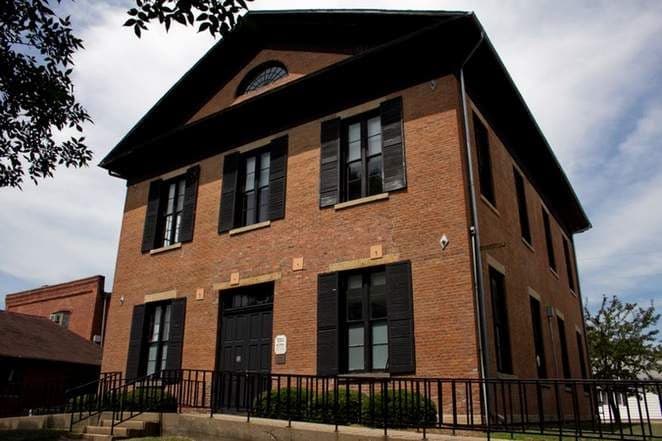
Photo: Wikipedia
Political ClimatePolitical Climate in Van Buren County
Showing district-level results — no local-only data available.
Local Political AnalysisPolitical Analysis of Van Buren County
Van Buren County, Iowa, leans reliably Republican, but it's a softer shade of red than the state as a whole. The county's Cook Partisan Voting Index (PVI) of R+4 means it votes about four points more Republican than the national average, while the state of Iowa sits at R+6. That two-point gap is the key story here: Van Buren County is conservative, but it's not as deeply red as much of the surrounding rural landscape, and that subtle difference shapes local politics in noticeable ways.
How it compares
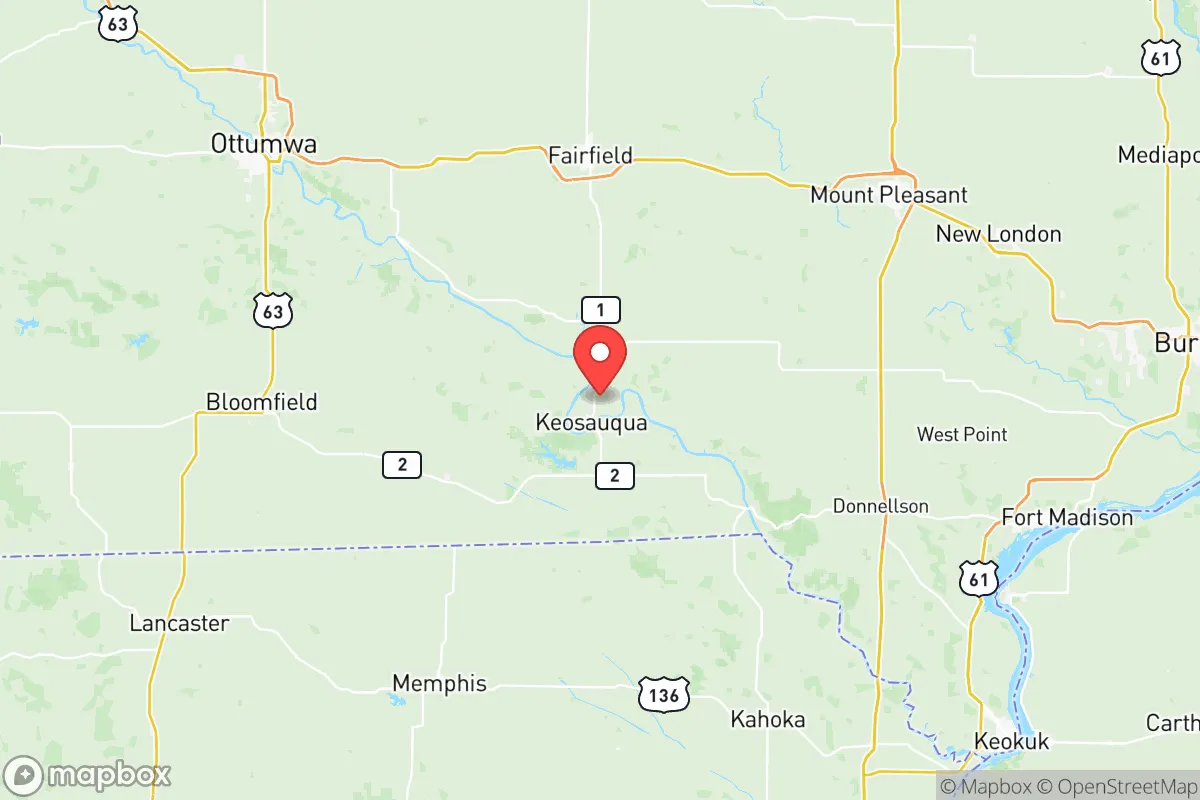
The R+4 vs. R+6 split isn't huge on paper, but it reflects real variation on the ground. The county seat, Keosauqua, tends to be the most moderate area, often swinging closer to the national average in statewide races. In contrast, smaller towns like Birmingham and Stockport lean more heavily Republican, routinely delivering margins that push the county's overall PVI to the right. The southern part of the county, near the Missouri border, shows the strongest GOP performance, while precincts around Farmington and the Des Moines River corridor occasionally produce more competitive results, especially in local races. Statewide, Iowa's R+6 is driven by the deep-red rural west and north, plus the increasingly conservative exurbs of Des Moines. Van Buren County's R+4 reflects a more mixed tradition — it's a place where a strong Democratic candidate for county office can still be competitive, even if the presidential vote has trended rightward over the last decade.
What this means for residents
For conservative residents, the county's lean means their values are broadly reflected in local governance — school board, county commission, and law enforcement leadership typically align with Republican priorities. Tax policy and Second Amendment issues are generally handled in a way that satisfies the majority. For liberal residents, the situation is more nuanced. They are a clear minority, but not an invisible one. In Keosauqua and Farmington, Democratic voters can find like-minded neighbors, and local Democratic Party organizing, while small, is active and respected. The practical reality is that most political conversations remain civil, partly because the county's R+4 lean doesn't create the kind of deep partisan chasm seen in R+10 or R+12 counties. People know each other personally, and that tends to soften ideological edges.
Culturally, Van Buren County stands apart from the broader Iowa trend in a few ways. The county has a stronger tradition of conservation-minded politics, thanks to the Des Moines River and Lacey-Keosauqua State Park, which draw outdoor enthusiasts who sometimes vote differently than the typical ag-focused rural Iowan. There's also a noticeable independent streak — voters here are more willing to split their tickets than in many other parts of the state. A county supervisor race or a school board election can flip unexpectedly, because personal relationships and local issues often outweigh party labels. Looking ahead, the trajectory is likely to follow the state's slow rightward drift, but the county's geographic and cultural anchors — the river, the state park, the small-town independence — will probably keep it a couple points bluer than Iowa as a whole for the foreseeable future.

State Political ClimatePolitical Climate in Iowa
State Political AnalysisPolitical Environment in the State
Iowa is a solidly Republican state with a Cook PVI of R+6, but that number only tells part of the story. Over the past 20 years, the state has shifted from a classic purple battleground — it went for Obama in 2008 and 2012 — to a reliably red state in presidential elections, with Trump winning it by 8-9 points in both 2016 and 2020. The dominant coalition is a mix of rural and small-town voters, evangelical Christians, and older working-class voters, but the state still has significant Democratic strongholds in its urban centers and a growing suburban independent vote that keeps things from being a total lock for either party.
Urban vs. rural divide
The political map of Iowa is a textbook case of the urban-rural split. The Democratic base is concentrated in the state's three major metros: Des Moines (Polk County), Iowa City (Johnson County), and the Quad Cities (Scott County). Johnson County is the bluest in the state, routinely voting 65-70% Democratic, driven by the University of Iowa and its academic and healthcare workforce. Polk County, home to the state capital and largest city, has been trending blue but is more moderate — it went for Biden by about 12 points in 2020, down from Obama's 18-point margin there in 2012. Meanwhile, the rural and exurban counties that make up the rest of the state are deeply red. Counties like Plymouth (northwest), Sioux (northwest, heavily Dutch Reformed), and Grundy (central) routinely vote 70-80% Republican. The suburbs around Des Moines, like Ankeny and Waukee, have been a key battleground — they're growing fast with young families and have shifted from reliably red to more competitive, often splitting tickets between GOP state candidates and moderate Democrats in local races.
Policy environment
Iowa's policy environment is unmistakably conservative, but with a pragmatic, Midwestern bent. The state has a flat income tax of 3.8% as of 2025, down from a progressive top rate of nearly 9% a decade ago, and the legislature is phasing it down further toward 3.5%. Property taxes are moderate, and there is no estate tax. The state is a right-to-work state and has a strong regulatory posture favoring business, particularly in agriculture and manufacturing. On education, Iowa has a robust school choice program: the state's Education Savings Account (ESA) law, passed in 2023, allows any family to use public funds for private school tuition, with no income cap. Healthcare policy is more mixed — Iowa expanded Medicaid under the ACA, but the state also has a strict 72-hour waiting period for abortions and a six-week "heartbeat" ban that took effect in 2023. Election laws have tightened: the state now requires voter ID, limits absentee ballot drop boxes, and shortened the early voting window. There is no state-level universal background check law for firearms, and Iowa is a shall-issue state for concealed carry permits, with permitless carry (constitutional carry) enacted in 2021.
Recent policy direction
The last five years have seen a sharp conservative turn across multiple fronts. On gun and self-defense law, Iowa passed permitless carry in 2021 and a "stand your ground" law in 2022, removing the duty to retreat in public spaces. On parental and education rights, the 2023 ESA law is the biggest shift — it effectively created a universal school voucher system, and the state also passed a law requiring schools to notify parents if a student requests a change in gender identity or pronouns. On speech and privacy, Iowa passed a law in 2024 banning TikTok on state devices and restricting certain types of online data collection by tech platforms, but has not gone as far as some states on content moderation regulation. On medical and bodily autonomy, the six-week abortion ban is the headline — it has no exceptions for rape or incest, only for medical emergencies, and has led to a sharp drop in in-state procedures. On property rights, Iowa has strong eminent domain protections for landowners, particularly against carbon pipeline projects, which have become a major flashpoint. On taxation, the flat tax phase-down is the centerpiece, with the goal of reaching 3.5% by 2027. On voting and ballot access, the 2021 election law (SF 413) shortened early voting from 29 to 20 days, closed polls at 8 p.m. instead of 9, and banned county auditors from sending out absentee ballot request forms unless requested.
Civil unrest & political movements
Iowa has seen its share of political flashpoints, but they tend to be more orderly than in coastal states. The most visible recent movement has been the carbon pipeline protests, where landowners and environmental activists — an unusual coalition of rural conservatives and left-leaning environmentalists — have fought against eminent domain for CO2 pipelines proposed by Summit Carbon Solutions and others. These protests have included tractor blockades, county-level ordinance battles, and lawsuits, and have become a major issue in local elections. On the left, the Iowa City and Des Moines areas have seen periodic protests over abortion rights, particularly after the 2023 ban, with large marches and some civil disobedience at the state capitol. Immigration politics are less heated than in border states, but there have been flashpoints over a 2024 law that allows state law enforcement to arrest and deport undocumented immigrants — a law that has been challenged in court. Election integrity controversies have been relatively muted compared to states like Arizona or Georgia, though the 2021 voting law was passed amid Republican claims of fraud in the 2020 election. There is no serious secession or nullification movement in Iowa.
Projection
Over the next 5-10 years, Iowa is likely to remain Republican-leaning but could see a slight softening of the red margin. The key demographic trend is the growth of the Des Moines metro, particularly the suburbs of Ankeny, Waukee, and Johnston, which are attracting younger, college-educated families from other states. These voters tend to be fiscally conservative but socially moderate, and they could push the state toward a more libertarian-leaning Republicanism rather than the culturally conservative version dominant in rural areas. The rural population is aging and shrinking, which will slowly erode the GOP's base. However, in-migration from blue states like California and Illinois is not large enough to flip the state — most newcomers are moving for jobs in insurance, finance, and agriculture, and they tend to be moderate or conservative. The flat tax and school choice policies are likely to stay and may deepen, making Iowa more attractive to conservative families. The abortion ban could become a political liability if it drives suburban women to vote Democratic in state races, but the GOP's structural advantages in the state legislature (due to gerrymandering and rural overrepresentation) make a Democratic takeover unlikely before 2030.
For a new resident, the bottom line is this: Iowa is a safe, stable, and increasingly conservative state where your day-to-day life will be shaped more by local school boards and county supervisors than by national politics. If you're a conservative, you'll find a state that has delivered on tax cuts, school choice, and gun rights, and where your values are reflected in state law. If you're a liberal, you'll find strong communities in Des Moines, Iowa City, and the Quad Cities where you can live comfortably, but you'll need to accept that state-level policy will often run against your preferences — particularly on abortion, education, and voting access. Either way, the politics here are less intense than in many states — Iowans tend to be civil, neighborly, and focused on practical concerns like weather, farming, and the cost of living.
* Values derived from national, state, county, city and local statistics and may differ in a specific area. Last updated: 2026-10-17T20:20:16.000Z
Narrative content on this page is AI-generated and may contain mistakes. Verify any details that matter before acting on them.
ReloMaps may earn a commission from affiliate links at no extra cost to you.

