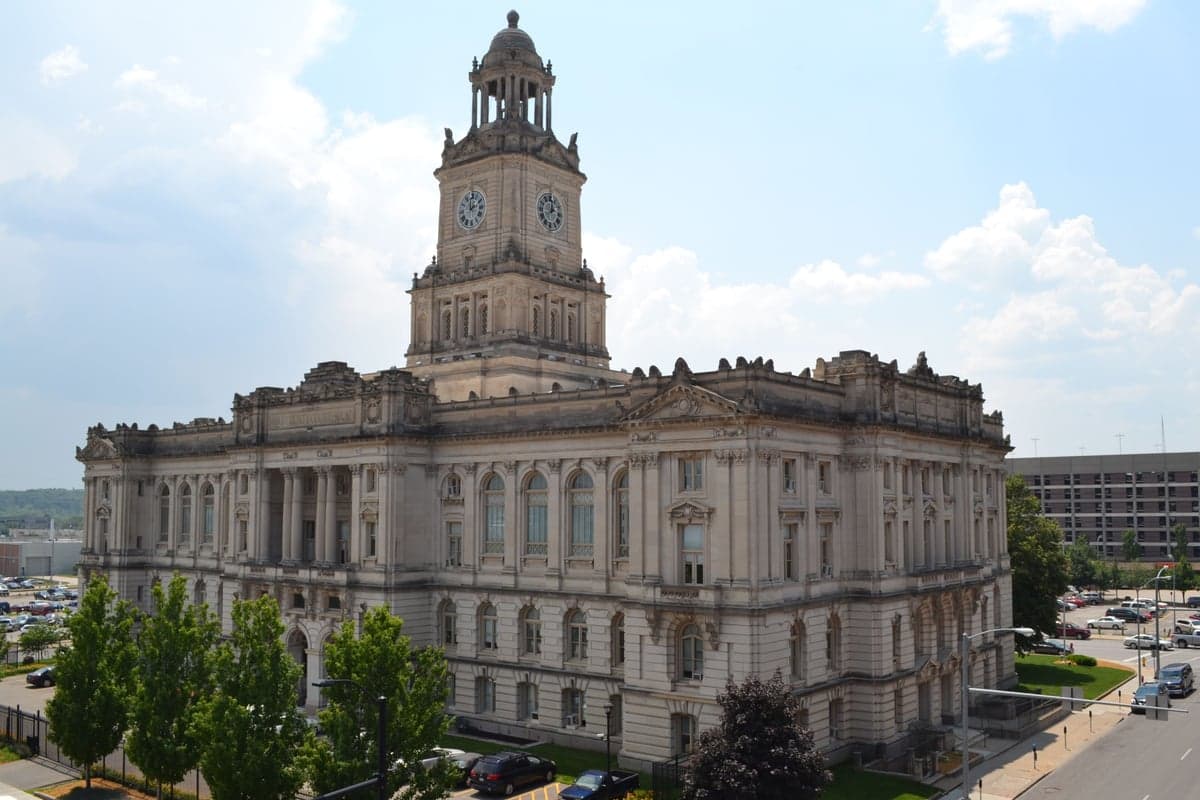
Photo: Wikipedia
Strategic Assessment of Polk County
Meaningful friction. Expect exposure to either population pressure, blast zones, or natural disaster risk. Consider buying a retreat property.
What does the Strategic Assessment tell us?
Our Strategic Assessment grades tactical survivability of an area. Major population centers, military targets, fallout zones, natural disasters, and border exposure all drive risk — lower exposure means a more defensible position in a crisis.
This is heavily inspired by Joel Skousen's Strategic Relocation book. Highly recommended you checkout the book ($)What does this tell us?
Our Strategic Assessment grades tactical survivability of an area. Major population centers, military targets, fallout zones, natural disasters, and border exposure all drive risk — lower exposure means a more defensible position in a crisis.
This is heavily inspired by Joel Skousen's Strategic Relocation book. Highly recommended you checkout the book ($)Strategic Pillars

Key Distances
Strategic Assessment Analysis
Polk County, Iowa, centered on Des Moines, presents a mixed strategic picture for the conservative prepper. Its core advantage is geographic insulation—it sits far from any coastline, major fault line, or international border—but its status as the state’s political and economic hub introduces specific vulnerabilities. For a relocator weighing resilience against risk, the county offers solid food and water security, but its proximity to critical infrastructure and a growing urban core demands careful, scenario-based planning.
Geographic position and natural advantages for long-term security
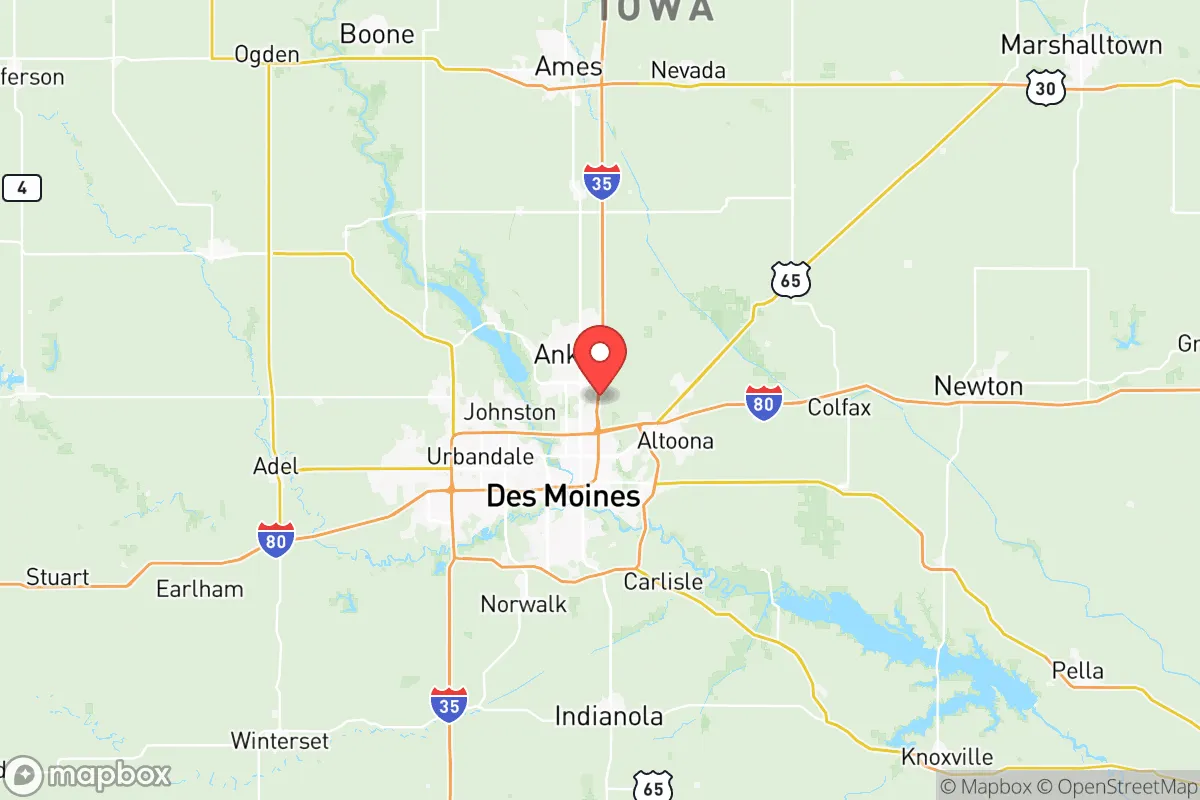
Polk County’s location in central Iowa is its strongest card. It’s roughly equidistant from the Mississippi River to the east and the Missouri River to the west, placing it outside the immediate blast or fallout zones of any coastal port, refinery corridor, or major military installation. The nearest strategic target of note is Offutt Air Force Base near Omaha, Nebraska, about 130 miles to the west—far enough to avoid direct effects but close enough that a major exchange could still produce fallout patterns depending on wind. The county itself is not home to any nuclear power plants, major oil refineries, or large-scale ammunition depots. The terrain is gently rolling farmland, which offers decent line-of-sight defensibility for a rural homestead but limited natural cover in the more developed Des Moines metro area. The Des Moines River cuts through the county, providing a reliable surface water source, and the underlying Jordan Aquifer is one of the largest freshwater sources in the Midwest. For a relocator, this means water security is above average compared to the arid West or the over-drafted aquifers of the High Plains. Winters are harsh—average January lows near 14°F—which acts as a natural population filter and complicates any long-term bug-out on foot, but also reduces the viability of many biological threats that thrive in warm, humid climates.
Risks, exposures, and proximity to fallout-relevant landmarks
The primary risk in Polk County is its role as the seat of state government and the home of the Iowa State Capitol in Des Moines. In a scenario of civil unrest or a contested election, the Capitol complex and adjacent federal buildings become natural targets for protest, occupation, or worse. The Des Moines International Airport (DSM) is a secondary concern—not a major military hub, but a potential chokepoint for federal troop movements or a target for any adversary seeking to disrupt regional logistics. The county also hosts the John Deere Des Moines Works in Ankeny, a massive agricultural equipment plant. While not a direct fallout target, its destruction in a broader conflict would cripple regional food production capacity. More concerning is the Iowa Army Ammunition Plant in Middletown, about 30 miles southwest in adjacent Des Moines County. That facility produces small-arms and artillery propellants—a legitimate military target. Prevailing Target. Polk County sits outside its immediate blast radius, but prevailing winds from the southwest could carry fallout across the southern part of the county. The I-35 and I-80 interchange just west of downtown Des Moines is a critical national logistics node; in a crisis, it would become a chokepoint for both civilian evacuation and military resupply, meaning anyone living near that corridor faces a high risk of being trapped in gridlock or caught in a secondary attack. For the prepper, the takeaway is clear: avoid the urban core and the interstate corridors—the rural northern and eastern townships (e.g., near Elkhart or Bondurant) offer far better standoff distance from these fixed points.
Practical resilience for a relocator: food, water, energy, and defensibility
Polk County is a food-production powerhouse. The surrounding farmland grows corn and soybeans in abundance, and the county itself is home to dozens of small-scale livestock operations. For a relocator with land, self-sufficiency in calories is realistic within two growing seasons. The local food infrastructure is robust: the Des Moines Farmers’ Market is one of the largest in the Midwest, and smaller markets in towns like Altoona and Grimes provide direct farm-to-table access. Water is the bigger concern. While the Des Moines River and the Jordan Aquifer are plentiful, the municipal water treatment plant in Des Moines is a single point of failure. A cyberattack or physical strike on the Des Moines Water Works facility would leave the entire metro area without potable water. The prepper solution is a private well—permitted and common in rural Polk County—with a hand-pump backup. Energy is a mixed bag. MidAmerican Energy, the dominant utility, relies on a mix of coal, natural gas, and wind. The county has several large wind farms to the north and west, but these are vulnerable to grid-scale EMP or cyberattack. Solar with battery storage is viable, though winter cloud cover reduces output significantly. Defensibility is best in the rural fringe: properties along gravel roads with long sightlines, natural tree lines for cover, and neighbors who are likely armed and familiar with each other. The county’s sheriff’s office is well-funded and professional, but in a prolonged SHTF scenario, response times in the outer townships could stretch to 30 minutes or more. The best bet is a small acreage (5-20 acres) in the northeast quadrant, near Bondurant or Mitchellville, where you’re 20 minutes from Des Moines for supply runs but far enough to avoid the initial chaos.
The overall strategic picture for Polk County is one of calculated trade-offs. It offers excellent natural resources, a strong agricultural base, and a location far from the most obvious national targets. But it is not a remote redoubt—it is a working hub of government and industry that would see secondary effects from any major conflict or collapse. The conservative relocator should view it as a semi-rural buffer zone: close enough to a functional city for commerce and community, but far enough from the downtown core and the interstate chokepoints to ride out the first 72 hours of a crisis. If you can secure a well, a solar array, and a few acres of tillable land in the outer townships, Polk County offers a realistic path to long-term resilience without the extreme isolation of the Mountain West. Just don’t plan on bugging in near the Capitol or the airport—that’s where the trouble will start.

* Values derived from national, state, county, city and local statistics and may differ in a specific area. Last updated: 2026-05-19T05:11:42.000Z
Narrative content on this page is AI-generated and may contain mistakes. Verify any details that matter before acting on them.
ReloMaps may earn a commission from affiliate links at no extra cost to you.

