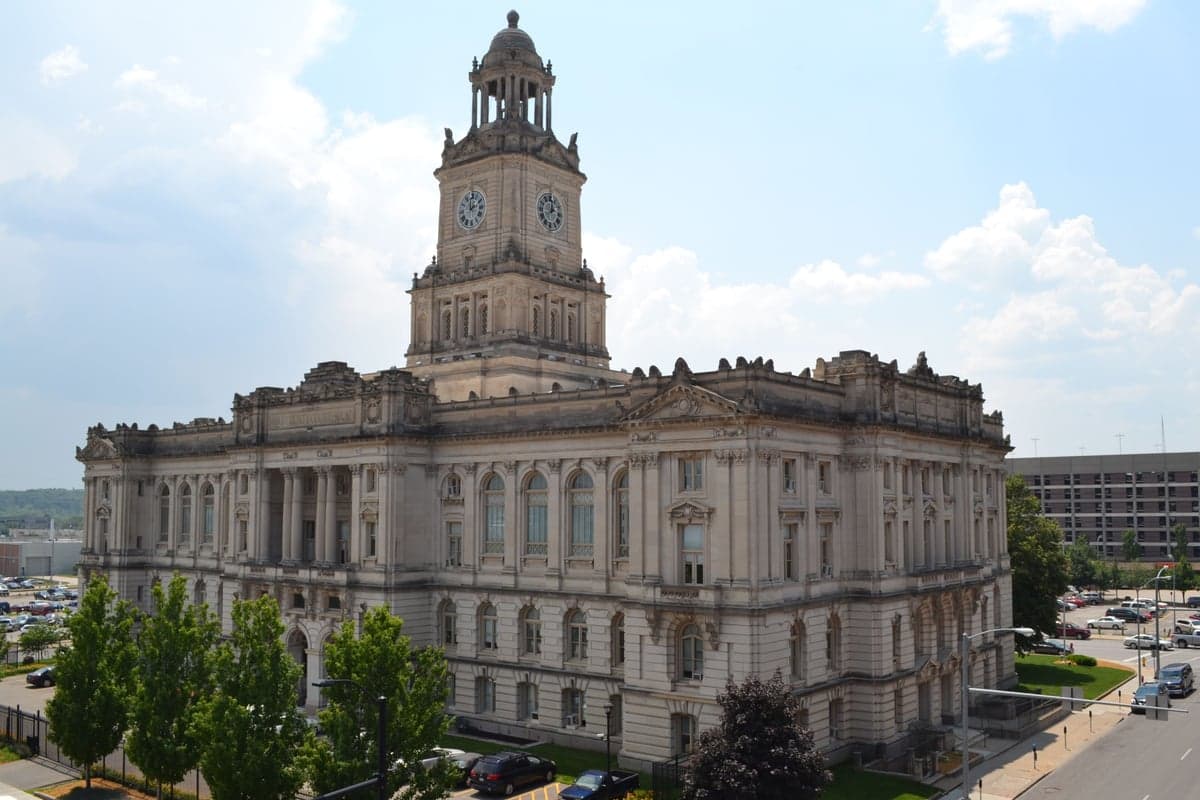
Photo: Wikipedia
Political ClimatePolitical Climate in Polk County
Showing district-level results — no local-only data available.
Local Political AnalysisPolitical Analysis of Polk County
Polk County, Iowa, sits at a fascinating political crossroads. While the county as a whole leans slightly Republican with a Cook PVI of R+2, that number masks a real tug-of-war happening on the ground. The truth is, the county has been shifting leftward for years, driven largely by the growth of Des Moines and its inner suburbs, while the more rural and exurban parts of the county have held firm or even moved right. If you’ve lived here as long as I have, you’ve watched the old, reliably red precincts in places like Altoona and Ankeny start to split their tickets, while the core of Des Moines itself has become a deep blue island. It’s a county that’s no longer a sure bet for either party, and the trajectory is something to keep a close eye on.
How it compares
To understand Polk County, you have to look at the rest of Iowa. The state as a whole carries a Cook PVI of R+6, meaning it’s a solid six points more Republican than the national average. Polk County, at R+2, is a full four points more liberal than the state. That gap is real and it’s growing. The rural counties surrounding Polk—like Dallas, Madison, and Warren—are deep red, often voting R+15 or more. So what you’ve got is a blue-ish urban core surrounded by a sea of red. The swing precincts are the ones that decide everything, and they’re mostly in the suburban donut around Des Moines: places like Grimes, Johnston, and parts of Ankeny. These are the areas where you’ll see a mix of “Keep Government Out of My Life” signs and the occasional “In This House We Believe” yard sign. It’s a real battleground, and the outcome of local school board and county supervisor races often comes down to a few hundred votes in these neighborhoods.
What this means for residents
For folks who value personal freedoms and limited government, the trend in Polk County is concerning. The Des Moines city council and county board have been pushing progressive policies—think mask mandates that lasted longer than most, zoning changes that favor high-density development over single-family homes, and a general attitude that government knows best. In the more conservative pockets like Pleasant Hill, Bondurant, and the rural parts of northern Polk County near Elkhart, you’ll find a different vibe: people who want lower taxes, fewer regulations, and the freedom to run their own lives without a bureaucrat in Des Moines telling them what to do. The tension is palpable. If you’re moving here, you need to know that your property taxes and local ordinances can vary wildly depending on which side of the county line you’re on. The city of Des Moines itself is increasingly activist, while the smaller towns are fighting to hold the line.
The cultural and policy distinctions are stark. In the blue parts of the county, you’ll see bike lanes, farmers markets, and a heavy emphasis on “climate action plan” that adds costs to new construction. In the red parts, you’ll see gun rights celebrated, school choice promoted, and a general skepticism of any new tax or regulation. The county’s future depends on which direction those swing precincts in Ankeny and Grimes break. If you value your personal liberties and want to keep government out of your business, you’ll want to pay close attention to local elections—because that’s where the real fight is happening. Polk County isn’t Iowa, and it’s not the same place it was twenty years ago. It’s ake a hard look at the local candidates before you buy a house.

State Political ClimatePolitical Climate in Iowa
State Political AnalysisPolitical Environment in the State
Iowa has been a reliably Republican state for over a decade, with a Cook PVI of R+6, but it wasn’t always this way. As recently as 2012, the state was a true swing state, splitting its tickets between presidential candidates and sending a mix of Democrats and Republicans to Congress. Over the last 10-15 years, a combination of rural realignment, suburban shifts, and a strong conservative policy record has pushed the state decisively red. The dominant coalition is now a blend of evangelical Christians, rural farmers, and working-class voters in small manufacturing towns, with the GOP holding trifecta control in Des Moines since 2017.
Urban vs. rural divide
The political map of Iowa is a textbook case of the urban-rural split. The state’s two major metros — Des Moines and Iowa City — are the blue islands in a red sea. Des Moines proper and its inner suburbs like West Des Moines and Urbandale lean Democratic, driven by a growing professional class and younger voters. Iowa City, home to the University of Iowa, is the most liberal city in the state, regularly electing progressive Democrats to the statehouse. But the real story is the rural and exurban areas. Counties like Sioux County in the northwest (home to Orange City and Sioux Center) are among the most Republican in the nation, often voting 80%+ for GOP candidates. The suburbs of Des Moines that were once swing areas — Ankeny, Waukee, and Johnston — have shifted right over the past two cycles, especially after the 2020 election and COVID-era school closures. Meanwhile, the state’s eastern industrial towns like Dubuque and Clinton have trended Republican as union Democrats aged out and cultural issues took priority. The 2022 midterms saw rural turnout surge, while Democratic margins in the cities softened, cementing the GOP’s grip.
Policy environment
Iowa’s policy environment is aggressively conservative by design. The state has a flat-taxed its income system in 2022, moving to a single rate of 3.9% by 2026, with a path to 3.5% — one of the lowest in the Midwest. Property taxes are locally controlled but generally low, and there is no inheritance tax. The regulatory posture is business-friendly, with right-to-work laws and minimal zoning restrictions outside of major cities. On education, Iowa passed a universal school choice program in 2023, allowing any family to use state funds for private or homeschool expenses — a major win for parental rights. The state also banned nearly all abortions after six weeks in 2023, with no exceptions for rape or incest, and has a permitless carry law for firearms. Election laws were tightened in 2021, requiring voter ID and reducing early voting days, which critics say suppresses turnout but supporters argue ensures integrity. Healthcare is a mixed bag: Iowa expanded Medicaid under the Affordable Care Act but has since privatized the system through managed-care organizations, leading to complaints about access in rural areas. Overall, the policy environment is designed to minimize government overreach into personal lives and maximize economic freedom.
Trajectory & freedom
Iowa is becoming more free in the conservative sense — meaning less government intrusion into economic and cultural matters. The 2023 school choice law (HF 68) is the biggest expansion of parental freedom in state history, allowing families to opt out of district schools without financial penalty. Gun rights expanded with permitless carry (SF 2379) in 2021, and the state passed a “stand your ground” law in 2017. On medical freedom, Iowa banned COVID-19 vaccine mandates for state employees and contractors in 2022, and a 2023 law prohibits mask and vaccine mandates in schools. Property rights were strengthened with a 2022 law limiting eminent domain for carbon pipelines, a hot-button issue in rural areas. However, there are concerning trends: the state’s medical cannabis program remains highly restrictive, with low THC caps and few qualifying conditions, limiting personal medical autonomy. Also, the state’s ban on gender-affirming care for minors (SF 538, 2023) is a double-edged sword — it protects children from irreversible procedures but represents government intervention in family medical decisions. On balance, the trajectory is toward greater personal liberty in most areas, especially education and self-defense.
Civil unrest & political movements
Iowa has seen relatively little civil unrest compared to coastal states, but there have been flashpoints. The 2020 Black Lives Matter protests in Des Moines and Iowa City were large but mostly peaceful, with some property damage downtown. More recently, the fight over carbon pipeline projects — Summit Carbon Solutions and Navigator CO2 — has sparked a grassroots movement of landowners and environmentalists (a rare left-right coalition) protesting eminent domain abuse. In 2023, hundreds of farmers and rural residents rallied at the state capitol against the pipelines, leading to the aforementioned property rights law. Immigration politics are muted but present: Iowa has a 2008 law requiring local law enforcement to cooperate with ICE, and there are no sanctuary cities. The state’s small but growing Latino population in towns like Storm Lake and Denison has not yet shifted the political balance. Election integrity controversies flared after 2020, with some GOP activists questioning the use of drop boxes, but no major fraud was found. The most visible political movement is the “Moms for Liberty” and school board activism, which has flipped several suburban boards in Ankeny and Waukee to conservative control. A new resident would notice a politically engaged but generally civil atmosphere, with the exception of pipeline protests and occasional abortion clinic demonstrations.
Projection
Over the next 5-10 years, Iowa will likely become more Republican, not less. In-migration is modest but tilting conservative: retirees from Illinois and Minnesota are moving to western Iowa for lower taxes and gun-friendly laws, while younger professionals are drawn to Des Moines’ low cost of living but may lean left. The rural population is aging and shrinking, but the GOP has successfully consolidated the exurbs and small towns. The biggest wildcard is the growing Hispanic population in meatpacking towns — if they vote as a bloc, they could shift some rural counties toward the center, but so far they’ve been a mixed bag. The state’s congressional map, drawn by the GOP in 2021, is solidly 3-1 Republican, and that’s unlikely to change. The 2024 presidential race will test whether Iowa remains a safe red state or drifts back to swing status, but the structural factors — the flat tax, school choice, and gun laws — are locking in a conservative base. A new resident moving in now should expect a state that is stable, predictable, and increasingly aligned with traditional values, with no major demographic shock on the horizon.
Bottom line for a new resident takeaway: If you’re looking for a state where your tax dollars aren’t wasted, your kids’ education is your choice, and your Second Amendment rights are respected, Iowa is a solid bet. The politics are serious but not toxic — you won’t see daily protests or government overreach in your face. The biggest practical concern is property taxes, which vary by county and can be high in desirable suburbs like Waukee. But overall, Iowa offers a stable, freedom-oriented environment that’s only trending in the right direction.
* Values derived from national, state, county, city and local statistics and may differ in a specific area. Last updated: 2026-05-19T05:11:42.000Z
Narrative content on this page is AI-generated and may contain mistakes. Verify any details that matter before acting on them.
ReloMaps may earn a commission from affiliate links at no extra cost to you.

