Photo: Wikipedia
Personal Sovereignty in Monroe County
Viable for self-reliance. Generally workable, though some barriers may limit total independence.
What does Personal Sovereignty tell us?
Personal Sovereignty measures your capacity for self-reliance and independence with minimal government friction. Higher scores mean fewer barriers between you and the way you want to live... but it assumes you have the space you need and good neighbors.
What does this tell us?
Personal Sovereignty measures your capacity for self-reliance and independence with minimal government friction. Higher scores mean fewer barriers between you and the way you want to live... but it assumes you have the space you need and good neighbors.
State Policy
Energy independence: Importer (50% of energy produced in-state)
Personal Liberty
Homesteading

Personal Liberty Analysis
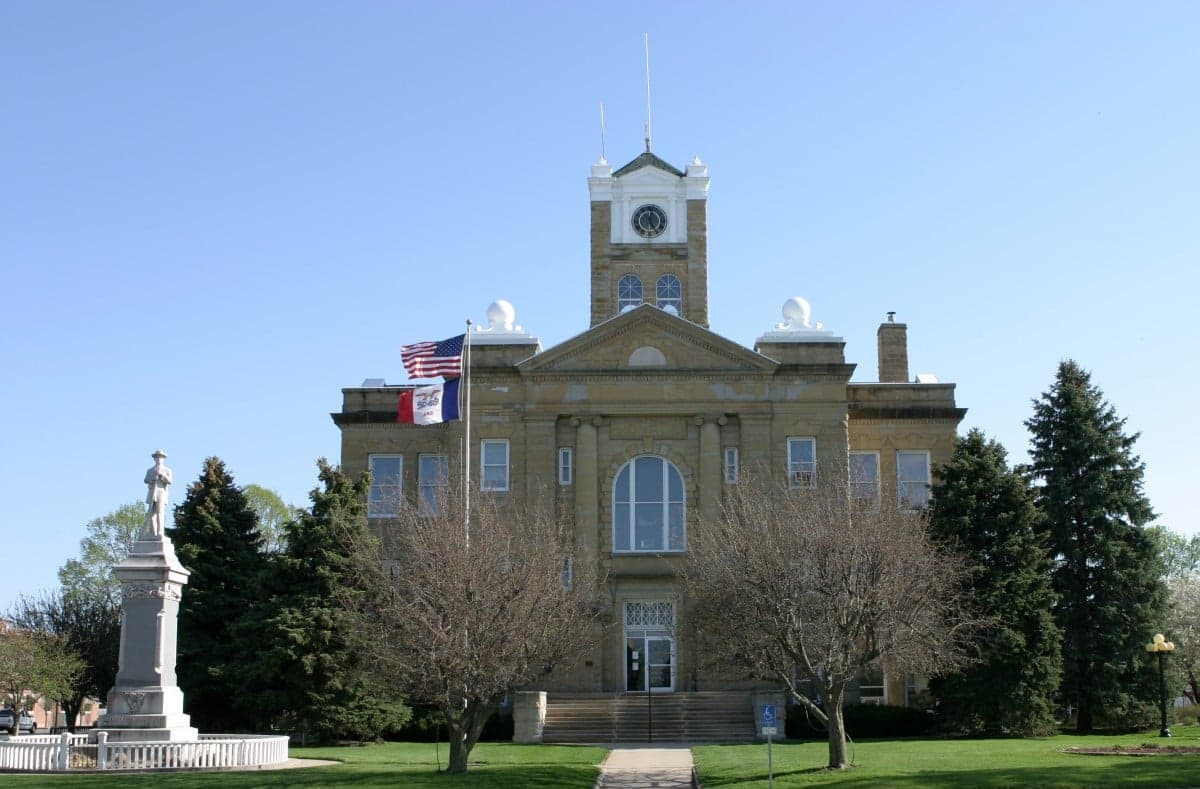
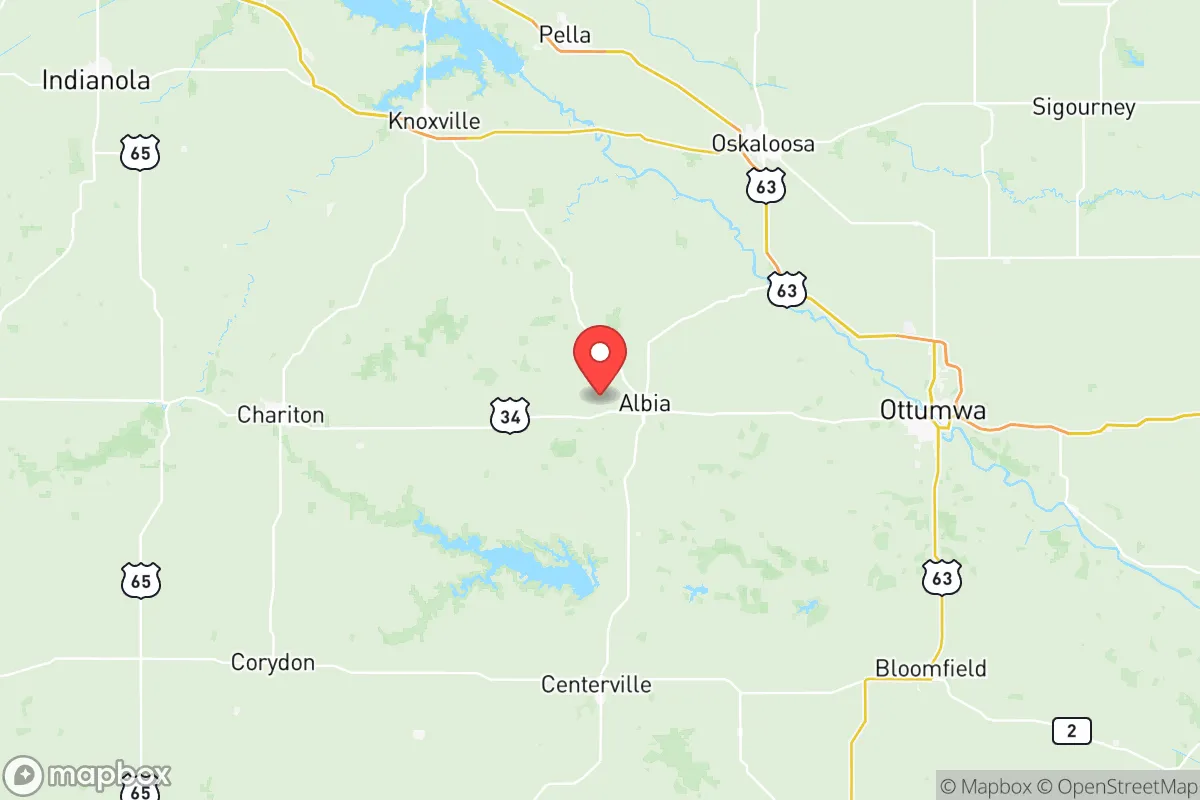
Monroe County, Iowa, offers a notably light-touch environment for personal sovereignty compared to the Des Moines metro or Johnson County, with a regulatory posture that leans heavily toward individual discretion. The county seat of Albia and the smaller communities of Lovilia, Melrose, and Eddyville all sit within a jurisdiction where county supervisors and local boards generally favor minimal interference in property use, firearm ownership, and family decisions. For a single individual or family weighing relocation on freedom-first criteria, this rural south-central Iowa county presents a coherent package of low taxes, permissive gun laws, and genuine off-grid feasibility — though the trade-offs of rural isolation and limited services are real.
Tax burden and regulatory posture: how light is the hand of government?
Iowa's statewide tax climate is among the most favorable in the Midwest for those prioritizing financial autonomy, and Monroe County operates well within that framework. The state's individual income tax is now a flat 3.8% rate (down from a progressive structure as recently as 2022), and the corporate rate sits at a flat 5.5%. Property taxes in Monroe County are comparatively modest — the average effective residential rate hovers around 1.1% of assessed value, which is below the national average and roughly on par with neighboring Appanoose and Wapello counties. There is no county-level sales tax beyond the state's 6% rate, and no local option tax has been adopted, keeping the combined burden at 6% — lower than the 7% or more found in many Iowa counties that have added local-option levies.
Regulatory posture at the county level is decidedly hands-off. Monroe County has no countywide zoning ordinance outside of the small incorporated cities; Albia, Lovilia, Melrose, and Eddyville each maintain modest municipal zoning, but the unincorporated areas that make up the vast majority of the county's 434 square miles are essentially free of land-use restrictions. Building permits are not required for most agricultural or residential structures in unincorporated areas, and there is no county-wide inspection regime for owner-built homes. The county's board of supervisors operates on a part-time basis, and the administrative staff is small — a structural feature that keeps the cost of government low and the friction of dealing with it minimal. For comparison, a resident in Johnson County (Iowa City) faces a county zoning code exceeding 200 pages, mandatory septic inspections, and a 1% local-option sales tax; Monroe County's entire regulatory apparatus is a fraction of that.
Self-defense and gun law specifics: what can you legally do here?
Iowa is a "shall-issue" state for permits to carry, but since 2021 it has also been a permitless carry state — any person 21 or older who can legally possess a firearm may carry it openly or concealed without a permit. Monroe County's sheriff's office issues permits to carry for those who want reciprocity with other states, and the process is straightforward: a background check and a $50 fee, with no training requirement for renewal. The county has no local ordinances restricting firearm possession in parks, public buildings, or businesses beyond what state law already provides, and there are no magazine capacity limits or assault weapon bans at any level of Iowa government.
Stand-your-ground protections are codified in Iowa Code 704.3, which removes any duty to retreat before using force, including deadly force, if a person reasonably believes it is necessary to prevent imminent death or great bodily harm. Castle doctrine protections extend to vehicles and places of business, not just dwellings. In Monroe County specifically, the sheriff's office is publicly supportive of Second Amendment rights; the county has been designated a "Second Amendment Sanctuary" by resolution of the board of supervisors, meaning local law enforcement has formally stated it will not enforce federal firearm regulations it deems unconstitutional. For a gun owner, the practical effect is that Albia's Main Street, the county fairgrounds, and the rural roads around Lovilia and Melrose all operate under a permissive legal regime with no local overlay of restrictions.
Self-reliance and homesteading viability: can you actually live off-grid here?
Monroe County is one of the more viable off-grid locations in Iowa, largely because of its low population density — roughly 7,000 residents in the entire county, or about 16 people per square mile — and the absence of countywide zoning. Unincorporated parcels outside Albia, Lovilia, Melrose, and Eddyville can be purchased in sizes ranging from 5 to 160 acres, with prices averaging $4,000–$6,000 per acre for tillable ground and significantly less for timber or pasture. There are no county minimum lot size requirements for rural residential use, no mandatory connection to municipal water or sewer, and no county building code enforcement for owner-occupied structures. A family can legally build a cabin, install a composting toilet, drill a well, and live without grid electricity on a rural parcel in Monroe County without obtaining a single county permit.
Practical considerations do apply. The county requires a private well permit through the Iowa Department of Natural Resources (a $100–$200 fee and water quality testing), and septic systems — if you choose a conventional one rather than a composting toilet — require a county environmental health inspection. Off-grid solar is fully legal, and net metering is available through Alliant Energy or Chariton Valley Electric Cooperative, the two utilities serving the county, though many residents simply disconnect entirely. The county's soil is a mix of prime farmland in the southern tier near Eddyville and more marginal, timbered ground in the northern sections around Melrose and Hiteman, so homesteaders should match their agricultural ambitions to the specific parcel. Eddyville, on the Des Moines River, offers the most affordable river-bottom land, while the rolling hills around Albia and Lovilia provide better drainage and more scenic building sites.
Personal liberties: parental rights, medical autonomy, speech, and property
Iowa has moved decisively in recent years toward expanding parental rights and medical autonomy, and Monroe County residents operate under those state-level protections. Iowa Code 280.20 requires school districts to notify parents of any curriculum involving human growth and development, and parental consent is mandatory before a minor can receive any health service, including mental health counseling, without parental involvement. The state's 2023 law prohibiting gender transition procedures for minors is in effect, and there is no county-level or municipal override. Medical freedom is further supported by Iowa's 2022 law protecting healthcare practitioners who decline to participate in procedures they object to on conscience grounds — a provision that applies in Albia's Monroe County Hospital and the clinics in Lovilia and Eddyville.
Speech and property rights are robust. Iowa is a right-to-work state, and Monroe County has no local ordinances restricting political speech, signage, or assembly beyond standard public safety rules. Property rights are protected by Iowa's "private property rights" statute, which requires government entities to demonstrate a compelling public interest before exercising eminent domain, and the county has not initiated a condemnation proceeding in over a decade. The county's rural character means that most residents own their land outright, with no homeowners' associations — a stark contrast to suburban developments in Polk or Dallas counties where HOAs routinely restrict everything from fence height to vehicle parking. In Monroe County, a resident can park a tractor in the front yard, build a pole barn, or raise livestock on a residential parcel without seeking permission from any board or association.
Overall, Monroe County ranks among the more sovereignty-friendly jurisdictions in Iowa, comparable to neighboring Appanoose and Wayne counties but with slightly better infrastructure and proximity to larger markets. The combination of no county zoning, permitless carry, a flat and declining income tax, and a county government that operates with minimal footprint makes it a practical choice for those who want to live largely unbothered by the state. The trade-offs are real — the nearest major hospital is in Ottumwa (20 miles north), and the county's school districts in Albia and Eddyville are small, with limited elective offerings — but for a relocation decision driven by personal autonomy, Monroe County delivers on nearly every metric that matters.

* Values derived from national, state, county, city and local statistics and may differ in a specific area. Last updated: 2026-10-16T00:50:11.000Z
Narrative content on this page is AI-generated and may contain mistakes. Verify any details that matter before acting on them.
ReloMaps may earn a commission from affiliate links at no extra cost to you.

