Photo: Wikipedia
Quality of Life in Mahaska County
A livable area that tracks near national norms for affordability, walkability, and neighborhood health.
What does Quality of Life tell us?
Quality of Life measures an area by evaluating factors like cost of living, nearby amenities, country club access, airport proximity, socioeconomic signals and neighborhood character. For large states, this is a general average — quality of life can vary dramatically between metro areas, suburbs, and rural communities within the same state.
What does this tell us?
Quality of Life measures an area by evaluating factors like cost of living, nearby amenities, country club access, airport proximity, socioeconomic signals and neighborhood character. For large states, this is a general average — quality of life can vary dramatically between metro areas, suburbs, and rural communities within the same state.
Cost of Living
38% below national average
172%
The Real Cost of Living in Mahaska County for 2026
| Tier | Individual | Family (4) |
|---|---|---|
| Survival | $13k | $25k |
| Comfortable | $27k | $40k |
| Luxury | $108k+ | $167k+ |
| Elite (Top 5%) | $127k+ | $196k+ |
Quality-of-Life Analysis
Mahaska County, Iowa, offers a spectrum of living environments that range from the walkable, amenity-rich county seat of Oskaloosa to quiet, unincorporated crossroads like Leighton and Rose Hill, attracting everyone from young families seeking affordable starter homes to retirees looking for low-crime, rural solitude. With a cost of living index of 62 (well below the U.S. average of 100), a median home value of $140,900, and a median rent of $821, the county provides significant financial breathing room, though the trade-off is a limited job market concentrated in manufacturing and agriculture. The county's character is defined by its blend of small-city convenience and deep rural roots, making it a practical choice for those who prioritize affordability and community over urban career diversity.
Largest town(s) & population centers
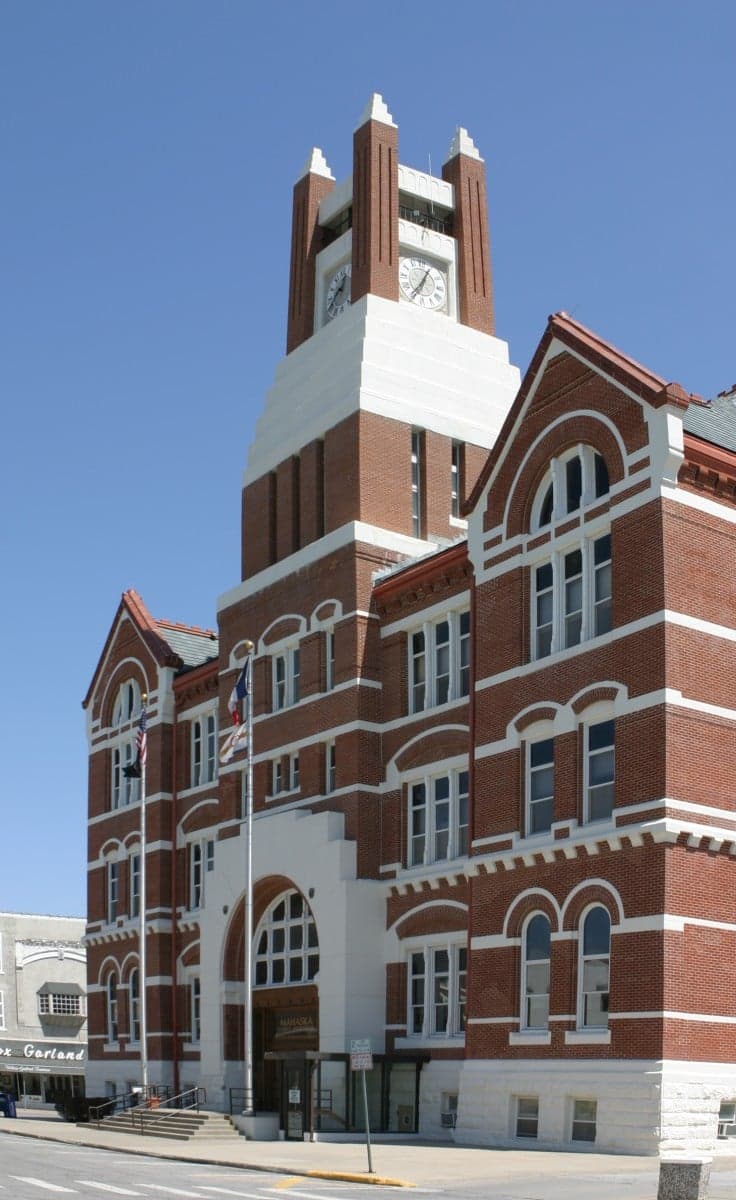
Oskaloosa, the county seat and home to roughly 11,500 residents, is the undisputed hub of Mahaska County. Daily life here centers around the historic downtown square, which hosts local restaurants, the Mahaska County Courthouse, and seasonal farmers markets. The town is anchored by William Penn University, a private liberal arts college that brings cultural events and a modest student population, and by major employers like Vermeer Corporation (a global manufacturer of agricultural and industrial equipment) and Musco Lighting. Housing options in Oskaloosa include well-maintained Victorian homes near the square, newer subdivisions on the outskirts, and affordable rental duplexes. The average commute of roughly 18 minutes means most residents can reach work, grocery stores, and the Mahaska Health Partnership hospital within a short drive. For families, the Oskaloosa Community School District offers a range of extracurriculars, while the nearby Lake Keomah State Park provides hiking, fishing, and camping just 10 minutes south of town.
Smaller towns & rural pockets
Outside Oskaloosa, the county's smaller communities offer a quieter, more agrarian pace. New Sharon (pop. ~1,300) is the second-largest town, with a small downtown, a K-12 school district, and easy access to Highway 163 for commuters heading toward Des Moines (about 45 minutes northwest). University Park, a tiny enclave adjacent to Oskaloosa, is essentially a residential bedroom community with few commercial services. Further out, Leighton (pop. ~160) and Rose Hill (pop. ~170) are unincorporated villages where life revolves around grain elevators, volunteer fire departments, and gravel roads. These pockets lack grocery stores and gas stations, so residents drive 15–20 minutes to Oskaloosa for most errands. The trade-off is extreme quiet, larger lots (often 1–5 acres), and property taxes that are among the lowest in the county. Barnes City and Fremont, both straddling county lines, offer similar rural living with populations under 200.
Cost & lifestyle range
The cost spread across Mahaska County is narrow by national standards but meaningful locally. At the low end, a fixer-upper home in Leighton or Rose Hill can sell for under $80,000, while rental rates in those areas are scarce but often below the county median of $821. At the higher end, newer construction homes in Oskaloosa's Northside Addition or near the golf course can reach $250,000–$300,000, still far below the national median. Renters in Oskaloosa pay a premium for proximity to downtown and employers, with two-bedroom apartments averaging $750–$900. The lifestyle range is similarly broad: a family in Oskaloosa can walk to the public library and the local YMCA, while a household in rural Fremont may rely on well water, septic systems, and a 25-minute drive to the nearest pharmacy. Utilities and transportation costs are slightly higher in rural pockets due to longer commutes and reliance on personal vehicles, but property taxes remain uniformly low across the county.
Mahaska County best suits people who value affordability, short commutes, and community connection over urban entertainment and career mobility. Young families and first-time homebuyers find the housing market exceptionally accessible, while retirees and remote workers are drawn to the quiet of rural towns like New Sharon or Leighton. Those needing specialized healthcare, frequent air travel, or diverse job options may find the county limiting, but for anyone seeking a low-stress, low-cost life in the Iowa heartland, Mahaska County delivers a clear and practical fit.

Crime in Mahaska County
Generally safer than 69% of comparable U.S. locations.
Violent CrimeViolent Crime Analysis
Property CrimeProperty Crime Analysis
Crime Analysis
Mahaska County, Iowa, reports a violent crime rate of 230.5 per 100,000 residents and a property crime rate of 1,167.7 per 100,000, placing it in a moderate safety tier relative to both state and national averages. The county’s overall safety picture is shaped by the contrast between its largest city, Oskaloosa, and the smaller, quieter communities of New Sharon, Beacon, and Leighton. While no area is crime-free, the data suggests that residents in the county’s rural towns experience significantly lower incident rates than those in the county seat.
Crime in context
Mahaska County’s violent crime rate of 230.5 per 100,000 is roughly 30% lower than the national average of 380 per 100,000, but it sits slightly above the Iowa state average of approximately 210 per 100,000. The property crime rate of 1,167.7 per 100,000 is about 20% below the national figure of 1,450 per 100,000 and aligns closely with the Iowa state average of 1,150 per 100,000. These figures place Mahaska County in a middle tier among Iowa’s 99 counties — safer than high-crime urban counties like Polk (Des Moines) or Scott (Davenport), but not as low as rural counties such as Adair or Ringgold. The county’s crime index is heavily influenced by Oskaloosa, which accounts for roughly 60% of the population and a disproportionate share of reported incidents. The judicial district covering Mahaska County (8th Judicial District) operates under a conservative-leaning prosecutorial philosophy, which generally prioritizes public safety and victim rights over progressive diversion programs, a factor that helps keep recidivism rates in check compared to more liberal jurisdictions in eastern Iowa.
What residents experience
For most residents, daily life in Mahaska County feels safe, particularly in the smaller towns. New Sharon (population ~1,300) and Beacon (population ~500) report near-zero violent crime in most years, with property crime limited to occasional thefts from unlocked vehicles or farm outbuildings. Leighton and Rose Hill similarly enjoy low incident rates, where neighbors know each other and informal watchfulness is the norm. In Oskaloosa, however, the experience differs. The city’s violent crime — primarily simple and aggravated assaults — clusters around the downtown core and certain rental-heavy neighborhoods near the William Penn University campus. Property crime in Oskaloosa includes vehicle break-ins and residential burglaries, often concentrated along the Highway 163 corridor. The Mahaska County Sheriff’s Office and Oskaloosa Police Department maintain a visible presence, and response times in the county’s rural areas average under 15 minutes, which is strong for a non-metropolitan jurisdiction. Residents in the county’s unincorporated areas rely more on neighborly vigilance and locking equipment, as farm theft — though rare — does occur.
Neighborhood-level variation is pronounced. Within Oskaloosa, the west side (roughly west of Market Street) and the area around the Mahaska County YMCA consistently report fewer incidents than the east side and the neighborhoods immediately surrounding the downtown square. The county’s rural townships — including Richland, Scott, and Spring Creek — are statistically the safest, with crime rates that approach zero. For prospective residents, the data supports a clear recommendation: choose a smaller town or a west-side Oskaloosa address if minimizing crime risk is a priority. The county’s conservative judicial approach and proactive policing mean that when crimes do occur, they are investigated and prosecuted with a focus on victim and community safety, rather than offender rehabilitation at the expense of public protection.
* Values derived from national, state, county, city and local statistics and may differ in a specific area. Last updated: 2026-06-17T19:31:43.000Z
Narrative content on this page is AI-generated and may contain mistakes. Verify any details that matter before acting on them.
ReloMaps may earn a commission from affiliate links at no extra cost to you.

