Photo: Wikipedia
Political ClimatePolitical Climate in Whitley County
Showing district-level results — no local-only data available.
Local Political AnalysisPolitical Analysis of Whitley County
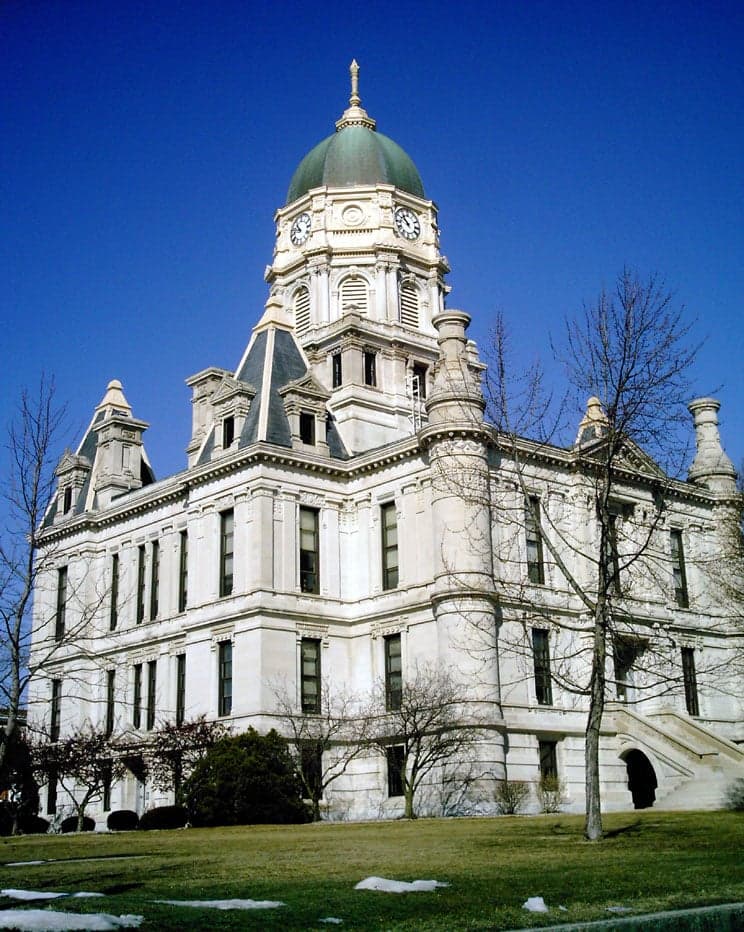
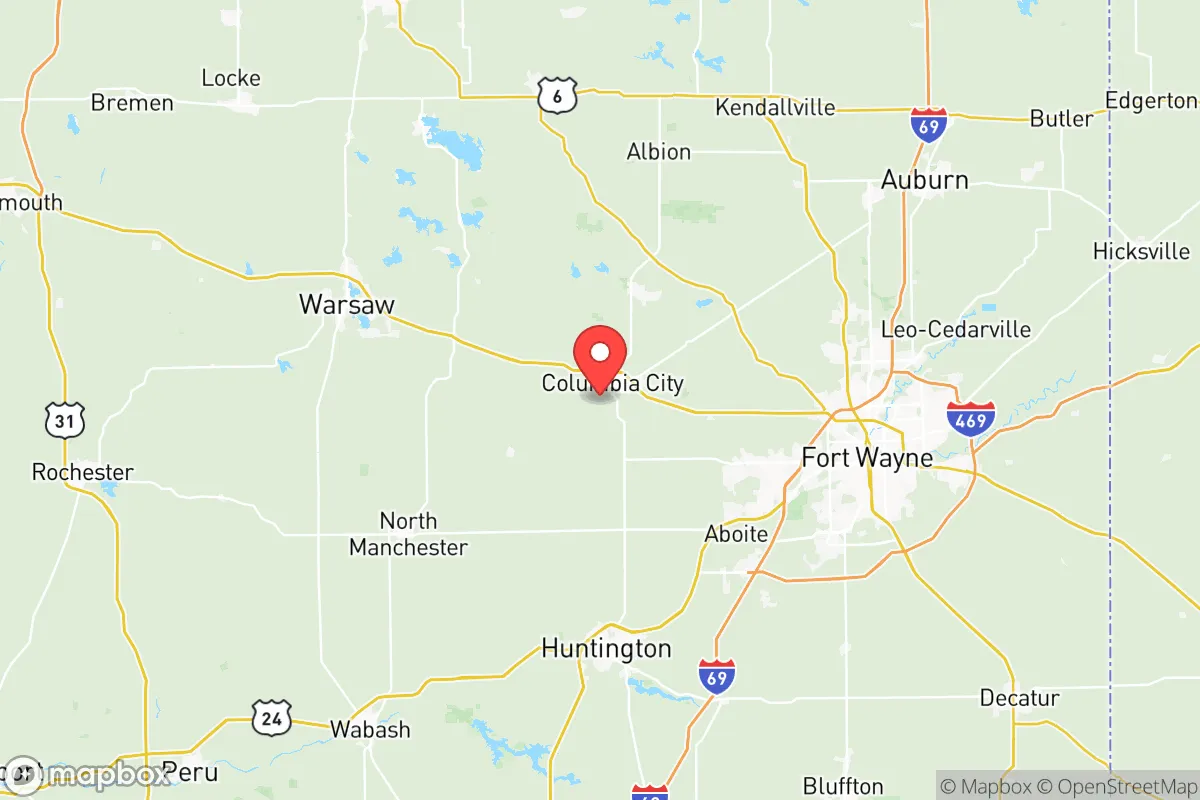
Whitley County is a solidly Republican corner of northeast Indiana, carrying a Cook PVI of R+16 — that’s a full seven points more conservative than the state of Indiana as a whole, which sits at R+9. In practice, that means Republicans routinely win countywide races by double digits, and the last time a Democrat carried Whitley County in a presidential race was back in 1964. The county seat, Columbia City, anchors the political center, but the real story is how the rural townships and the small cities diverge, and how the county’s trajectory is slowly shifting as it gets pulled into the orbit of Fort Wayne’s growing suburbs.
How it compares
Indiana’s R+9 rating already makes it a reliably red state, but Whitley County is a different animal entirely. The gap between R+16 and R+9 is roughly the same as the gap between Indiana and a true battleground like North Carolina. Within the county, the political map is not uniform. Columbia City and the southern townships bordering Allen County — particularly those near the I-69 corridor — are the most competitive areas, with precincts around the Jefferson Township and Union Township occasionally flirting with 40% Democratic votes. Meanwhile, the northern and western reaches, including the small towns of Churubusco, Larwill, and South Whitley, are deep red, often pushing 75-80% Republican. The swing precincts are almost entirely in the newer subdivisions south of Columbia City, where commuters to Fort Wayne have brought a slightly more moderate, suburban Republicanism that is less culturally conservative than the rural farm vote.
What this means for residents
For conservative residents, Whitley County is about as comfortable a political environment as exists in the Midwest. The county commissioners are reliably Republican, the school board races in Whitley County Consolidated Schools are rarely contested by Democrats, and the local GOP controls the levers of county government without much friction. Taxes stay low, and the county’s approach to growth is generally pro-development, especially along the US-30 and I-69 corridors. For liberal residents, the reality is more about finding your niche than winning elections. There is an active Democratic precinct organization in Columbia City, and the county’s small but vocal progressive community tends to cluster in the historic district near the courthouse square. They are not going to flip the county, but they do show up — typically pulling 35-40% in the Columbia City precincts during midterms, which is enough to keep the local GOP honest on issues like library funding and road maintenance.
What sets Whitley County apart from the rest of Indiana is its cultural conservatism, which is more small-town and church-centered than the libertarian-leaning conservatism found in central Indiana. The county is dry in several townships, and the local political discourse is heavily shaped by the agricultural community and the strong presence of the Church of Jesus Christ of Latter-day Saints in the Churubusco area. That said, the Fort Wayne spillover is real — the county has grown about 8% since 2020, and the new arrivals are younger, more educated, and slightly less partisan. Over the next decade, expect the southern tier of the county to keep drifting toward the R+12 to R+14 range, while the rural north stays as red as ever. It is still a Republican county, but it is becoming a more complicated one.

State Political ClimatePolitical Climate in Indiana
State Political AnalysisPolitical Environment in the State
Indiana is a solidly Republican state with a Cook PVI of R+9, meaning it votes about nine points more Republican than the nation as a whole. The GOP has controlled the governor’s mansion since 2005 and both chambers of the General Assembly for over a decade, but the state’s politics are more layered than the raw numbers suggest — a mix of conservative rural counties, a Democratic-leaning urban core in Indianapolis, and a growing suburban belt that has shifted rightward in recent cycles. Over the past 20 years, Indiana has moved from a competitive swing state (it went for Barack Obama in 2008) to a reliably red one, though the margins in the suburbs tell a more nuanced story than the statewide totals.
Urban vs. rural divide
The political map of Indiana breaks down along a familiar urban-rural axis, but with some local quirks. Marion County (Indianapolis) is the Democratic anchor, consistently delivering 60-65% of its vote to Democratic candidates, while the surrounding collar counties — Hamilton, Hendricks, and Johnson — have become the state’s most reliably Republican suburbs. Hamilton County, anchored by Carmel and Fishers, is the wealthiest and fastest-growing county in the state and votes about 60% Republican, a stark contrast to the urban core it borders. The state’s second-largest city, Fort Wayne (Allen County), is a Republican stronghold in the northeast, while Evansville (Vanderburgh County) in the southwest leans Republican but with a strong Democratic minority. The rural counties — think Greene, Daviess, and Jay — routinely vote 75-80% Republican. The notable exception to the urban-rural pattern is Bloomington (Monroe County), home to Indiana University, which votes Democratic by margins comparable to Indianapolis despite being a small college town. The 2008 Obama win was driven by a coalition of urban voters and rural counties that have since swung hard to the GOP, and that realignment has only accelerated since.
Policy environment
Indiana’s policy environment is defined by a low-tax, low-regulation posture that has been consistent for two decades. The state has a flat income tax rate of 3.05% (down from 3.23% in 2023, with a scheduled phase-down to 2.9% by 2027), and the sales tax sits at 7%. Property taxes are capped by the state constitution at 1% of assessed value for homesteads, 2% for rental properties, and 3% for commercial — a major selling point for homeowners. The regulatory climate is business-friendly, with no state-level minimum wage above the federal $7.25 and a right-to-work law on the books since 2012. Education policy has shifted toward school choice: Indiana has one of the nation’s largest voucher programs, with over 60,000 students using state-funded scholarships to attend private schools as of 2024. Healthcare is a mixed bag — the state expanded Medicaid under the Healthy Indiana Plan, but it has also imposed work requirements on able-bodied recipients. Election laws are moderately restrictive: voter ID is required, early voting is available for 28 days, and same-day registration is not permitted. The state has no sanctuary city policies, and local governments are prohibited by state law from adopting them.
Recent policy direction
The last five years have seen Indiana’s legislature push a distinctly conservative agenda across multiple fronts. On guns, Indiana became a constitutional carry state in 2022, eliminating the permit requirement for carrying a handgun in public. The same year, the legislature passed a “red flag” law allowing courts to temporarily seize firearms from individuals deemed dangerous — a rare compromise that drew support from both parties. On education, the 2023 session expanded the voucher program to universal eligibility, removing income caps entirely, and passed a law requiring schools to notify parents of curriculum changes involving sexuality. The state also banned gender-affirming care for minors in 2023, a law that was upheld by the Seventh Circuit Court of Appeals in 2024. On taxation, the flat income tax is scheduled to decline further, and the legislature eliminated the utility receipts tax in 2024. On voting, Indiana tightened absentee ballot rules in 2023, requiring a specific reason to vote by mail. Property rights have been strengthened with a 2021 law limiting local government’s ability to impose zoning restrictions on agricultural land. Privacy and surveillance are less developed — Indiana has no comprehensive data privacy law, and the state has been slow to regulate police use of facial recognition technology.
Civil unrest & political movements
Indiana’s political activism is visible but not chaotic. The most organized movements are on the right: the Indiana Family Institute and Hoosier Action have been effective at mobilizing around education and parental rights issues, particularly in suburban districts like Westfield and Noblesville, where school board races have become fiercely contested. On the left, the Indiana Democratic Party has struggled to maintain a presence outside of Indianapolis and Bloomington, though progressive groups have organized around abortion access since the 2022 near-total ban (which was later modified to allow exceptions for rape, incest, and fatal fetal anomalies). Immigration politics have been relatively quiet compared to border states, but the 2024 legislative session passed a law requiring local law enforcement to cooperate with federal immigration authorities. There have been no serious secession or nullification movements, though rural counties have occasionally floated the idea of forming a new state — a proposal that has never gained traction. Election integrity controversies have been minimal; the 2020 and 2024 elections in Indiana were conducted without major disputes, and the state’s voter ID law has been in place since 2005 without significant legal challenges.
Projection
Indiana’s political trajectory over the next decade points toward continued Republican dominance, but with a slowly shifting demographic undercurrent. The state’s population growth is concentrated in the Indianapolis suburbs — Hamilton County grew 18% between 2010 and 2020, and that growth is bringing in a mix of out-of-state transplants from blue states who tend to be more moderate on social issues. The rural counties are aging and losing population, which will gradually reduce their electoral weight. The Republican Party’s internal dynamics will be the key variable: if the legislature continues to push culturally conservative legislation, it risks alienating the suburban moderates who have been the GOP’s margin of victory in places like Zionsville and Greenwood. The Democratic Party’s best hope is to rebuild in the suburbs, but that will require a message that resonates with fiscally conservative, socially moderate voters — a tough sell in the current national environment. Expect the state to remain R+9 or slightly redder over the next five years, with the possibility of a narrow Democratic pickup in a gubernatorial race if the national environment shifts.
For a new resident, the bottom line is that Indiana offers a predictable, low-tax, business-friendly environment where conservative policies are the default. If you’re coming from a blue state, expect lower taxes, fewer regulations, and a political culture that is less contentious than the national headlines suggest. If you’re a liberal, you’ll find a welcoming community in Indianapolis or Bloomington, but you’ll be living in a state where your vote carries less weight and where the legislature will continue to pass laws you likely oppose. The practical takeaway: Indiana is a place where politics are stable, taxes are low, and the pace of change is slow — for better or worse, depending on your perspective.
* Values derived from national, state, county, city and local statistics and may differ in a specific area. Last updated: 2026-10-23T01:06:39.000Z
Narrative content on this page is AI-generated and may contain mistakes. Verify any details that matter before acting on them.
ReloMaps may earn a commission from affiliate links at no extra cost to you.

