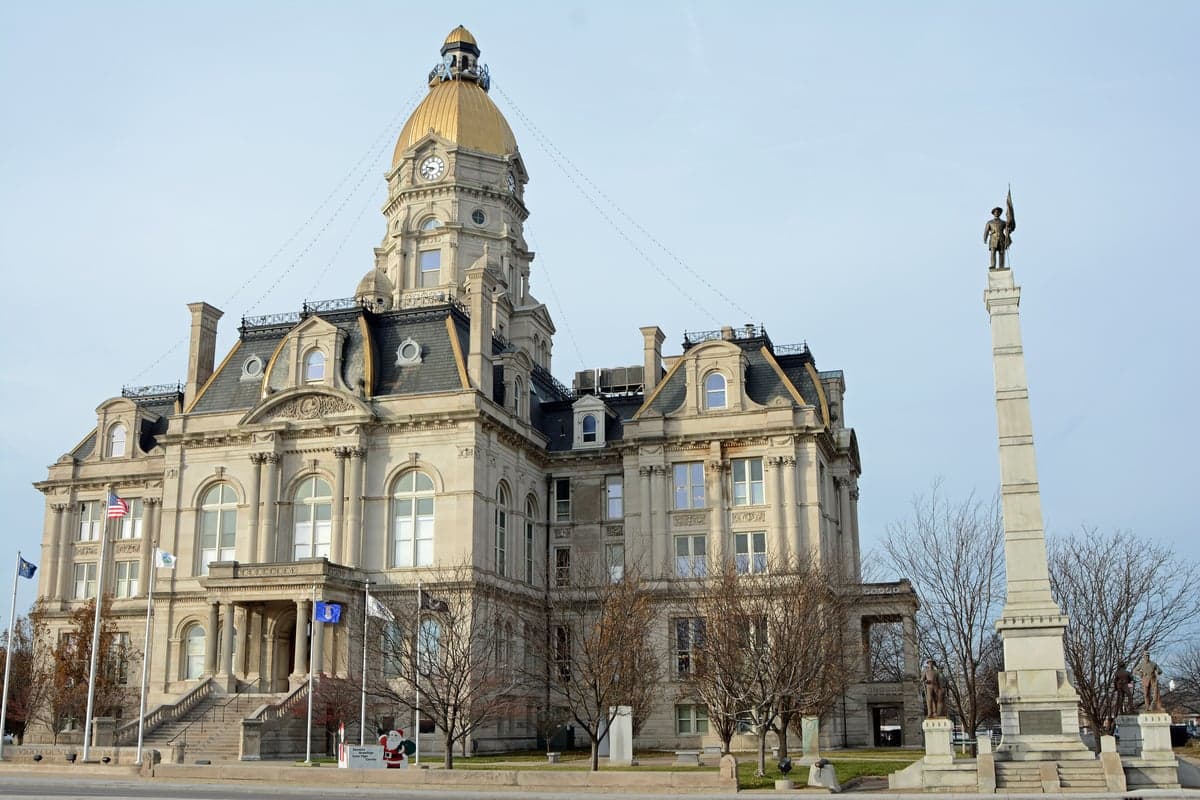
Photo: Wikipedia
Quality of Life in Vigo County
A livable area that tracks near national norms for affordability, walkability, and neighborhood health.
What does Quality of Life tell us?
Quality of Life measures an area by evaluating factors like cost of living, nearby amenities, country club access, airport proximity, socioeconomic signals and neighborhood character. For large states, this is a general average — quality of life can vary dramatically between metro areas, suburbs, and rural communities within the same state.
What does this tell us?
Quality of Life measures an area by evaluating factors like cost of living, nearby amenities, country club access, airport proximity, socioeconomic signals and neighborhood character. For large states, this is a general average — quality of life can vary dramatically between metro areas, suburbs, and rural communities within the same state.
Cost of Living
35% below national average
131%
The Real Cost of Living in Vigo County for 2026
| Tier | Individual | Family (4) |
|---|---|---|
| Survival | $14k | $26k |
| Comfortable | $27k | $40k |
| Luxury | $95k+ | $147k+ |
| Elite (Top 5%) | $122k+ | $189k+ |
Quality-of-Life Analysis
Vigo County, Indiana, offers a broad quality-of-life spectrum that ranges from the urban-oriented, walkable core of Terre Haute to quiet, unincorporated crossroads and working farmland, drawing everyone from university students and manufacturing workers to retirees seeking low property taxes and small-town pace. The county’s overall cost of living index of 65 (well below the U.S. average of 100) and a median home value of $140,400 make it one of the most affordable places in the Wabash Valley, but the experience of living here shifts dramatically depending on whether you choose a downtown Terre Haute loft, a family home in a bedroom community like West Terre Haute, or a farmhouse on a gravel road near Prairieton.
Largest town(s) & population centers
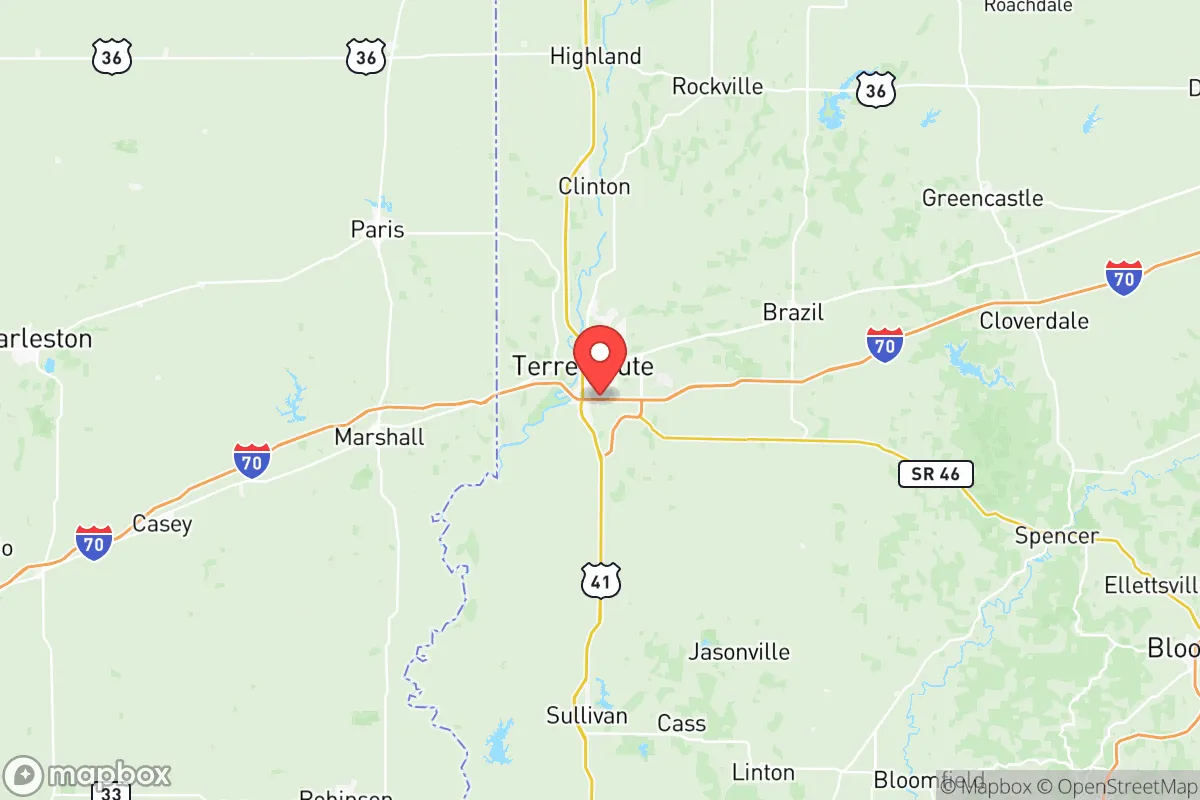
Terre Haute, the county seat and only city with a population above 10,000, anchors the county’s employment, education, and entertainment. Daily life here revolves around Indiana State University (roughly 8,000 students), the Union Hospital and Terre Haute Regional Hospital medical corridors, and a downtown that has seen reinvestment in the Wabash Riverfront District and the Clabber Girl bakery headquarters. Residents in Terre Haute’s central neighborhoods—such as the historic Farrington’s Grove district—can walk to coffee shops, the Vigo County Public Library, and the Terre Haute Symphony. The average commute of roughly 20 minutes is among the shortest in the state, meaning most workers can get from the city’s east side to the west-side industrial parks in under 15 minutes. Median rent in the county sits at $879, and in Terre Haute proper, a two-bedroom apartment typically ranges from $750 to $950, attracting young professionals and ISU faculty who want urban amenities without big-city prices.
Smaller towns & rural pockets
Outside Terre Haute, the county’s smaller communities offer a distinctly quieter, more land-based lifestyle. West Terre Haute (population roughly 2,200), just across the Wabash River, is a working-class village with a strong sense of local identity and lower home prices—often $80,000 to $110,000 for a single-family house—but fewer retail options; most residents commute back into Terre Haute for groceries and medical care. Seelyville (pop. ~1,000) and Riley (pop. ~160) are unincorporated hamlets surrounded by corn and soybean fields, where properties typically sit on half-acre to two-acre lots and the nearest gas station may be a 10-minute drive. Prairieton, a tiny crossroads near the Illinois line, is popular with horse owners and hobby farmers because of its cheap land (often under $4,000 per acre) and low property tax rates. These rural pockets have no public transit and limited internet options in some areas, but they offer the lowest housing costs in the county—some older homes sell for under $60,000—and a pace of life that appeals to people who want space and privacy.
Cost & lifestyle range
The cost spread across Vigo County is wide but consistently below national averages. At the higher end, newer subdivisions on Terre Haute’s far south side—such as those near Honey Creek Mall and Woodgate—see home values between $200,000 and $280,000, with HOAs and sidewalks, and a commute of 10–12 minutes to downtown. At the lower end, rural properties in Lewis or Fayette townships can be had for $50,000 to $80,000, though buyers should budget for well and septic maintenance and longer drives (20–25 minutes) to Terre Haute for work or shopping. Renters see a similar spread: a modern one-bedroom near ISU’s campus goes for $850–$950, while a farmhouse rental in Seelyville might rent for $600–$700. The county’s overall COL index of 65 means a household earning $40,000 here has roughly the same purchasing power as a household earning $61,500 in the average U.S. metro, making the entire county attractive to cost-conscious movers, but the trade-off is that rural areas lack the dining, entertainment, and healthcare density that Terre Haute provides.
People who thrive in Vigo County are typically those who value low housing costs and short commutes over dense urban amenities, or who want a mix of small-city convenience and immediate access to farmland. The county works well for ISU students and staff, manufacturing workers at plants like Honeywell and Pfizer, and retirees on fixed incomes who can stretch a Social Security check further here than in most of the Midwest. It is less suited to someone seeking a vibrant nightlife, extensive public transit, or high-end retail—those expectations are better met in Indianapolis, about 70 miles east. For the price-conscious mover who wants a real choice between a walkable historic neighborhood and a quiet rural acreage, Vigo County delivers a genuine spectrum of options at a fraction of the national cost.

Crime in Vigo County
Generally safer than 59% of comparable U.S. locations.
Violent CrimeViolent Crime Analysis
Property CrimeProperty Crime Analysis
Crime Analysis
Vigo County, Indiana, reports a violent crime rate of 263 incidents per 100,000 residents and a property crime rate of 1,093.6 per 100,000, placing it in a moderate risk category relative to national averages. While the county is not among the most dangerous in the state, specific areas—particularly the city of Terre Haute—concentrate the majority of reported offenses, while outlying communities like West Terre Haute, Seelyville, and Riley tend to experience lower crime volumes. The county’s overall safety picture is shaped by a mix of urban density in the county seat and rural isolation elsewhere, with property crime being the more prevalent concern for most residents.
Crime in context
Vigo County’s violent crime rate of 263 per 100,000 is slightly below the national average of roughly 380 per 100,000 but above the Indiana state average of about 240 per 100,000. Property crime in the county, at 1,093.6 per 100,000, is notably higher than both the state average (approximately 1,000 per 100,000) and the national average (around 1,050 per 100,000). The disparity is driven largely by incidents in Terre Haute, where thefts, burglaries, and motor vehicle thefts are concentrated near commercial corridors like US-41 and the downtown district. By contrast, smaller towns such as Riley and Seelyville report property crime rates that are a fraction of the countywide figure, often below 200 per 100,000. The county’s crime index is comparable to other mid-sized Indiana counties such as Vigo’s neighbor, Clay County, but is significantly lower than urban centers like Marion County (Indianapolis).
What residents experience
For most Vigo County residents, property crime is the most likely safety concern, particularly in Terre Haute’s central neighborhoods and near the Indiana State University campus. Larceny-theft accounts for roughly 70% of all property crime in the county, with vehicle break-ins and package thefts being common complaints in areas like the Farrington’s Grove historic district and the 12 Points commercial area. Violent crime, while less frequent, is not evenly distributed: aggravated assault makes up the majority of violent incidents, and most occur within a few blocks of downtown Terre Haute or in the Deming Park vicinity. Residents in West Terre Haute and Prairie Creek report far fewer encounters with violent crime, though property crime still occurs at a modest rate. The Vigo County Sheriff’s Office and Terre Haute Police Department both maintain publicly accessible crime maps, which show that the vast majority of calls for service originate within Terre Haute city limits rather than the unincorporated areas.
Neighborhood-level variation in Vigo County is pronounced. The safest areas by crime rate per capita are generally the small towns and rural townships: Riley, Seelyville, and St. Mary-of-the-Woods consistently report the lowest crime numbers, often with violent crime rates below 50 per 100,000. In contrast, central Terre Haute and the area around Honey Creek Mall see property crime rates that can exceed 2,000 per 100,000. Prospective residents should also be aware that the judicial climate in Vigo County, like many counties with a sizable urban population, has shifted in recent years. The Terre Haute-based Vigo Superior Court system has seen an increase in progressive sentencing practices, including diversion programs and reduced bond amounts for repeat property offenders. While these policies aim to reduce incarceration rates, critics argue they contribute to higher recidivism and a perception that property crime carries minimal consequences. For those prioritizing safety, choosing a home in the outlying towns or the northern and eastern townships—where police response times are faster and community watch programs are active—can significantly reduce exposure to both violent and property crime.
* Values derived from national, state, county, city and local statistics and may differ in a specific area. Last updated: 2026-07-09T14:48:37.000Z
Narrative content on this page is AI-generated and may contain mistakes. Verify any details that matter before acting on them.
ReloMaps may earn a commission from affiliate links at no extra cost to you.

