Photo: Wikipedia
Political ClimatePolitical Climate in Vanderburgh County
Showing district-level results — no local-only data available.
Local Political AnalysisPolitical Analysis of Vanderburgh County
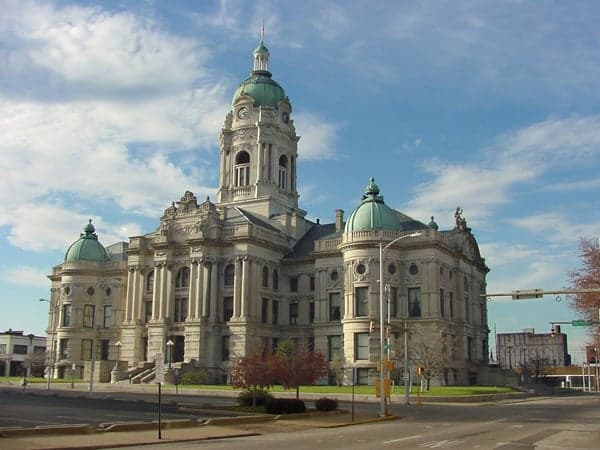
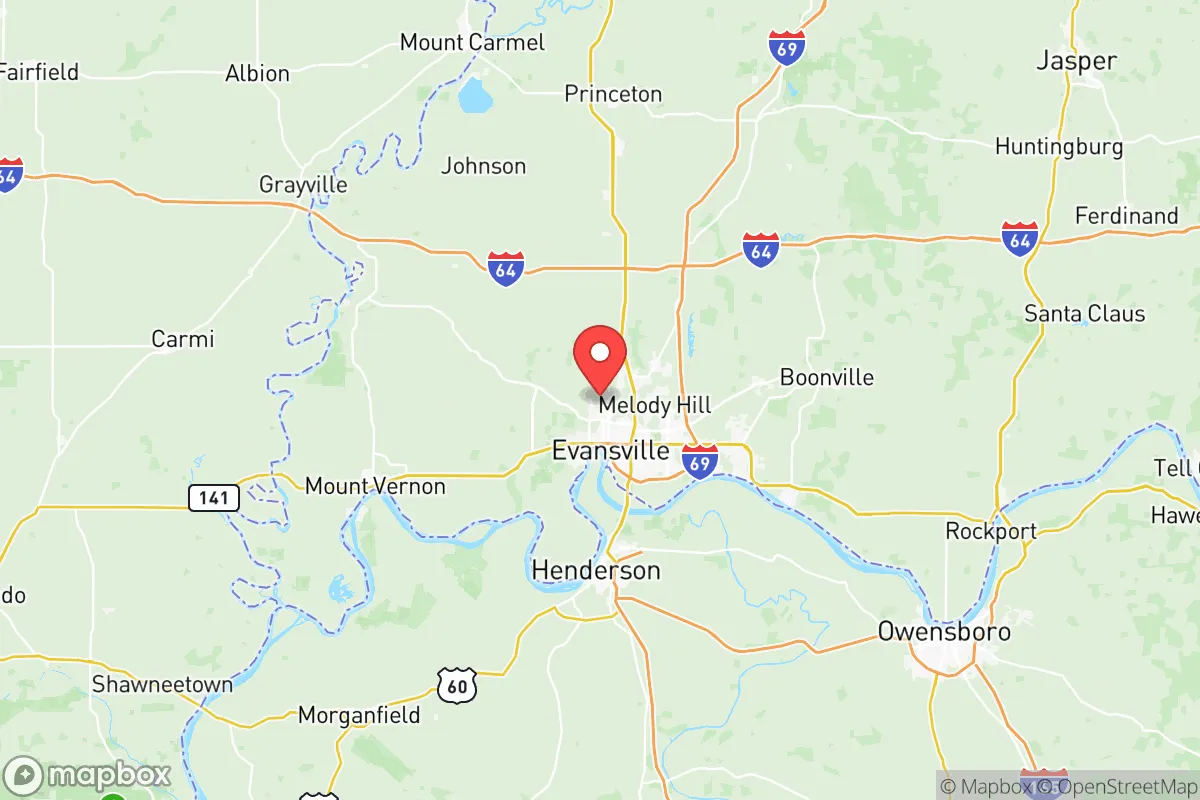
Vanderburgh County, anchored by Evansville, is a reliably Republican stronghold with a Cook PVI of R+18, making it significantly more conservative than Indiana as a whole, which sits at R+9. This isn't a recent shift; the county has voted Republican in every presidential election since 2000, though the margins have widened over time. The 2020 election saw Donald Trump carry the county by roughly 20 points, a reflection of the area's deep-rooted conservative lean that shows no signs of softening in the near future.
How it compares
Vanderburgh County's R+18 rating is exactly double the state's R+9, placing it among the more conservative urban counties in Indiana. For context, while Indiana as a whole is reliably red, Vanderburgh is noticeably redder than the state average. This gap is driven by the county's rural and suburban precincts, which vote overwhelmingly Republican, while the city of Evansville itself provides a modest Democratic counterweight. Within the county, the political geography is clear: Evansville's urban core, particularly precincts around the University of Evansville and downtown, lean blue, with some precincts voting Democratic by 10-15 points in recent cycles. In contrast, the suburban towns of Newburgh and Chandler are deeply red, often voting Republican by 30 points or more. The swing precincts are found in the county's southern and eastern fringes, places like Boonville and Darmstadt, where the vote tends to track closer to the countywide average but still leans Republican by 15-20 points. This internal variation means that while the county is solidly red, a Democrat can still win local office in Evansville proper, but faces an uphill climb in countywide races.
What this means for residents
For conservative residents, Vanderburgh County's political climate means their values are broadly reflected in local governance. The county council and commission are reliably Republican, and the area's congressional representation, currently held by Republican Larry Bucshon, aligns with the district's conservative lean. This translates to lower taxes relative to blue areas of the state, a business-friendly regulatory environment, and a general cultural comfort for those who prioritize traditional values. For liberal residents, the reality is more nuanced. While they may feel politically isolated in the broader county, Evansville itself provides a more progressive enclave, with a Democratic mayor (Stephanie Terry, elected in 2023) and a city council that includes several Democrats. This means that while state and federal representation leans heavily right, local city-level policies can be more moderate. However, liberal residents should expect to be in the minority in countywide elections and may find that social issues like abortion access or LGBTQ+ rights are less of a priority for the county's leadership. The practical effect is that political engagement often requires navigating a split between city and county governance, with the city offering a more progressive space and the county reflecting the broader conservative trend.
Culturally, Vanderburgh County's conservatism is of a practical, Midwestern variety rather than a fiery, ideological one. There is a strong emphasis on community, church, and family, and political discussions tend to be civil, even when disagreements arise. The area's economy, heavily tied to manufacturing, healthcare, and logistics, means that policy debates often center on jobs and infrastructure rather than culture war issues. One notable distinction is the county's relationship with the Ohio River and its industrial heritage, which fosters a pragmatic, blue-collar conservatism that values hard work and self-reliance. For newcomers, the political climate is stable and predictable, with little of the volatility seen in swing states. Whether you lean left or right, you'll find a community that values neighborliness over partisanship, even if the voting booth tells a different story.

State Political ClimatePolitical Climate in Indiana
State Political AnalysisPolitical Environment in the State
Indiana is a solidly Republican state with a Cook PVI of R+9, meaning it typically votes about nine points more Republican than the national average in presidential elections. Over the past 20 years, the state has shifted rightward, driven by the continued dominance of its rural and suburban areas, even as the Indianapolis metro has become more competitive. While Democrats can win statewide in wave years (like Joe Donnelly’s 2012 Senate win), the GOP now holds every statewide office, supermajorities in both legislative chambers, and has carried the state in every presidential election since 2008.
Urban vs. rural divide
The political map of Indiana is a classic urban-rural split, but with a few twists. Indianapolis (Marion County) is the state’s Democratic stronghold, regularly delivering 60-65% of the vote to Democratic candidates. The city’s growth, driven by a mix of young professionals, minority communities, and a revitalized downtown, has made it the anchor of the blue vote. Lake County (Gary and the Chicago suburbs) is the other major Democratic bastion, with a heavily unionized and minority electorate. On the flip side, the rest of the state is overwhelmingly red. Hamilton County (Carmel, Fishers, Noblesville) is the crown jewel of the GOP — one of the most affluent and Republican suburban counties in the nation, routinely voting 60-70% Republican. Allen County (Fort Wayne) and St. Joseph County (South Bend) are more competitive but lean Republican in most cycles. The rural counties — think Greene, Daviess, and Jay — are deep red, often voting 75-80% Republican. The divide is stark: the three blue counties (Marion, Lake, Monroe) are islands in a sea of red, and their influence is diluted by the sheer number of rural and suburban counties that vote GOP.
Policy environment
Indiana’s policy environment is consistently conservative, with a focus on low taxes, limited regulation, and school choice. The state has a flat income tax rate of 3.05% (down from 3.23% in 2023, with a path to 2.9% by 2029), and a sales tax of 7% on most goods. Property taxes are relatively low, capped at 1% of assessed value for owner-occupied homes. The state is a right-to-work state (since 2012) and a “shall issue” state for concealed carry permits — and as of 2022, permitless carry is legal for adults 18 and older. Education policy is dominated by school choice: Indiana has one of the nation’s largest voucher programs, and charter schools are widely available. The state also passed a law in 2022 requiring schools to post curriculum materials online and notify parents of “instructional materials” involving human sexuality. On healthcare, Indiana expanded Medicaid under the Affordable Care Act in 2015 (via a conservative waiver program called HIP 2.0), but the state has not pursued a state-based exchange or other expansions. Election laws are moderately restrictive: voter ID is required, early voting is available (28 days before an election), and no-excuse absentee voting was made permanent in 2023 after a temporary expansion during COVID.
Recent policy direction
Over the past five years, Indiana has moved decisively to the right on several fronts. Gun and self-defense law: In 2022, the state passed permitless carry (HB 1296), allowing any adult 18 or older to carry a handgun without a license. The same year, a “stand your ground” law (SB 1) was enacted, removing the duty to retreat in any place where a person has a right to be. Parental and education rights: In 2023, the state passed a law (HEA 1608) requiring schools to adopt policies on “biological sex” in athletics and locker rooms, and another (SEA 480) allowing parents to opt their children out of any “sex education” or “human sexuality” instruction. Speech and privacy: Indiana has no broad anti-SLAPP law, but it does have a law (IC 34-7-7) protecting the right to record police in public. The state also passed a law in 2023 (SEA 5) restricting TikTok and other foreign-owned apps on government devices. Medical and bodily autonomy: In 2022, Indiana passed a near-total abortion ban (SEA 1), which was later blocked by the state Supreme Court but ultimately upheld in 2023. The ban allows exceptions for rape, incest (up to 10 weeks), and to save the mother’s life. Property rights: Indiana is a “Dillon’s Rule” state, meaning local governments have only the powers explicitly granted by the state. This has been used to preempt local ordinances on everything from plastic bag bans to rental registration. Taxation: The flat income tax is on a path to 2.9% by 2029, and the state has no estate or inheritance tax. Voting and ballot access: In 2023, the state made no-excuse absentee voting permanent (SEA 109), a rare bipartisan move. However, voter ID remains strict, and same-day registration is not allowed.
Civil unrest & political movements
Indiana has a relatively low profile for civil unrest, but there have been notable flashpoints. The 2020 George Floyd protests saw significant demonstrations in Indianapolis, including some property damage and clashes with police, but the state avoided the prolonged unrest seen in larger cities. On the right, the Indiana Second Amendment Alliance is a well-organized grassroots group that has been instrumental in pushing permitless carry and stand your ground laws. The state has also seen a rise in school board activism since 2021, with conservative parents groups (like Moms for Liberty, which has several chapters in Indiana) successfully pushing for curriculum transparency and parental rights policies. Immigration politics are less heated than in border states, but there have been controversies over sanctuary city policies: in 2019, the state passed a law (SEA 167) requiring local governments to cooperate with federal immigration enforcement, effectively banning sanctuary cities. There is no serious secession or nullification movement in Indiana, though some rural counties have passed symbolic “Second Amendment sanctuary” resolutions. Election integrity has been a minor issue: the 2020 election in Indiana was largely uncontroversial, with no major fraud allegations or audits, though some GOP activists have pushed for stricter ballot security measures.
Projection
Over the next 5-10 years, Indiana is likely to remain solidly Republican, but the margins may narrow slightly as the Indianapolis metro continues to grow and diversify. Hamilton County is becoming more moderate, with some suburban voters shifting left on social issues, but it will remain a GOP stronghold for the foreseeable future. The rural counties are aging and losing population, which could slowly erode the GOP’s base, but the state’s in-migration (mostly from Illinois and Michigan) tends to be conservative-leaning, offsetting some of that decline. The biggest wildcard is the Indianapolis metro: if it continues to grow at its current pace (adding about 10,000-15,000 people per year), it could eventually make statewide races more competitive, but that’s a 10-20 year horizon, not 5. For now, expect continued conservative governance on taxes, guns, and education, with occasional bipartisan deals on infrastructure or economic development. The abortion debate will remain a flashpoint, but the current ban is likely to stay in place barring a federal change.
For a new resident, the bottom line is this: if you’re conservative, you’ll find a state that largely aligns with your values on taxes, guns, and education, with a government that is responsive to conservative priorities. If you’re liberal, you’ll find a state where your vote matters most in Marion, Lake, or Monroe counties, and where state-level policy will often be at odds with your views. Either way, Indiana is a stable, low-cost state with a predictable political environment — you won’t find the wild swings of a swing state or the deep-blue dominance of a coastal state. It’s a place where politics is serious but not all-consuming, and where most people just want to live their lives without too much fuss.
* Values derived from national, state, county, city and local statistics and may differ in a specific area. Last updated: 2026-07-22T17:06:36.000Z
Narrative content on this page is AI-generated and may contain mistakes. Verify any details that matter before acting on them.
ReloMaps may earn a commission from affiliate links at no extra cost to you.

