
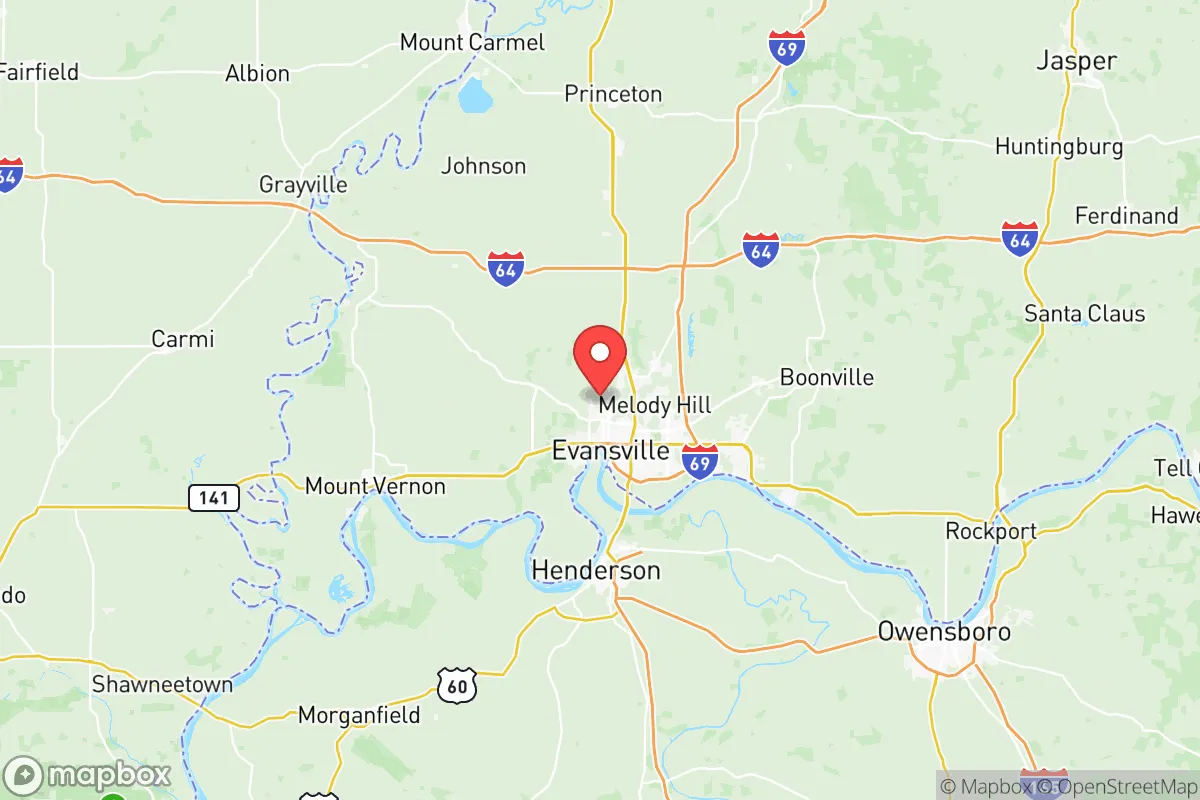
Photo: Wikipedia
Personal Sovereignty in Vanderburgh County
Viable for self-reliance. Generally workable, though some barriers may limit total independence.
What does Personal Sovereignty tell us?
Personal Sovereignty measures your capacity for self-reliance and independence with minimal government friction. Higher scores mean fewer barriers between you and the way you want to live... but it assumes you have the space you need and good neighbors.
What does this tell us?
Personal Sovereignty measures your capacity for self-reliance and independence with minimal government friction. Higher scores mean fewer barriers between you and the way you want to live... but it assumes you have the space you need and good neighbors.
State Policy
Energy independence: Importer (35% of energy produced in-state)
Personal Liberty
Homesteading

Personal Liberty Analysis
Vanderburgh County, anchored by Evansville, offers a personal sovereignty environment that is distinctly more permissive than Indiana’s urbanized northern counties, yet carries a regulatory baseline shaped by state preemption and local zoning codes. For individuals and families prioritizing autonomy, the county provides a relatively light-touch framework on taxes and self-defense, but the feasibility of off-grid living and homesteading varies sharply between the city of Evansville and the county’s rural townships. The overall sovereignty profile is moderate for the Midwest—stronger on gun rights and property use than Illinois or coastal states, but constrained by municipal ordinances in denser areas.
Tax burden and regulatory posture for residents and small businesses
Vanderburgh County’s tax burden is moderate by Indiana standards, with a combined state and local income tax rate of roughly 3.15% (state flat rate of 3.15% as of 2026, with no county-level income tax surcharge). Property taxes are assessed at about 1.1% of market value on average, which is below the national median but slightly above Indiana’s rural counties. The county’s regulatory posture is generally business-friendly, with no local minimum wage ordinances or paid leave mandates beyond state law. However, Evansville imposes stricter building codes and zoning overlays than unincorporated areas like Perry Township or German Township, where the county’s zoning is less prescriptive. For small businesses, the county’s permitting process for home-based enterprises is straightforward—no special use permits are required for low-impact operations in most residential zones—but Evansville’s city limits require a $150 home occupation permit and limit signage. The regulatory environment is lightest in Scott Township and Knight Township, where agricultural exemptions reduce property tax burdens and zoning allows for accessory structures without the city’s 10-foot setback minimums.
Self-defense rights and gun law specifics in Vanderburgh County
Indiana is a constitutional carry state, and Vanderburgh County fully reflects that posture. No permit is required to carry a handgun openly or concealed for anyone 18 or older who is legally allowed to possess a firearm. The county sheriff’s office issues lifetime handgun licenses for reciprocity purposes, with a processing time of roughly 30 days. There are no county-level restrictions on magazine capacity, firearm types, or ammunition—state preemption prohibits local ordinances that regulate firearms. The gun culture is strong in rural townships like Center Township and Union Township, where shooting ranges on private property are common and rarely subject to noise complaints. In Evansville, however, discharging a firearm within city limits is prohibited except at licensed ranges, and the city’s parks ban firearms despite state preemption—a policy that has not been legally challenged. For self-defense, the state’s Stand Your Ground law applies, with no duty to retreat in any place where the individual is lawfully present. Castle Doctrine protections extend to vehicles and workplaces. The practical takeaway: Vanderburgh County is among the most gun-friendly areas in the Midwest, but Evansville’s city ordinances create a slight friction point for those who carry in parks or want to shoot on their property within the urban core.
Self-reliance and homesteading viability across the county
Homesteading viability in Vanderburgh County is highly location-dependent. In unincorporated areas like Armstrong Township and Pigeon Township, minimum lot sizes are 1 acre in agricultural zones, and the county’s zoning code allows for livestock (chickens, goats, up to two horses) without a special permit. Off-grid feasibility is moderate: the county does not require connection to municipal water or sewer on parcels larger than 2 acres, and rainwater collection is legal without a permit. Solar panel installation is permitted by right in all zones, though Evansville’s historic districts require approval from the city’s preservation commission. The county’s soil quality is good for small-scale gardening, with loamy soils in the Ohio River floodplain. However, the county’s building code requires a septic system permit and a structural inspection for any dwelling over 200 square feet, which adds a $500–$1,000 cost to off-grid cabins. For those seeking maximum self-reliance, Perry Township and German Township offer the most permissive environment, with no HOA restrictions and minimal county oversight on accessory structures. In contrast, Evansville’s suburban subdivisions often have HOA covenants that prohibit front-yard gardens, clotheslines, and non-standard building materials. The county’s farmers market culture is strong—the Evansville Downtown Market operates year-round—but the regulatory burden on selling home-produced eggs, honey, or baked goods is light: Indiana’s cottage food law allows sales of up to $50,000 annually without a license, and Vanderburgh County does not impose additional health department inspections for low-risk items.
Personal liberties: parental rights, medical autonomy, speech, and property
Vanderburgh County’s personal liberties environment is shaped by Indiana’s state-level policies, which lean toward parental rights and medical autonomy. The state’s parental bill of rights, enacted in 2023, gives parents the authority to direct their child’s education and medical care, including the right to opt out of any school curriculum or health service. The county’s school districts—Evansville Vanderburgh School Corporation (EVSC) and the smaller Metropolitan School District of Mount Vernon—have not adopted local policies that conflict with state law. Medical autonomy is strong: Indiana does not require parental consent for minors to receive mental health counseling, but does require it for most medical procedures. The county has no local vaccine mandates beyond state requirements, and religious exemptions are honored for school immunizations. Speech protections are robust, with no county-level restrictions on political signage or public assembly. Property rights are well-protected: the county’s eminent domain use is rare, and the state’s right-to-farm law shields agricultural operations from nuisance lawsuits in unincorporated areas. However, Evansville’s rental inspection program—which requires annual inspections for rental properties—has been criticized by property rights advocates as an overreach. The county’s approach to short-term rentals (Airbnb/VRBO) is permissive in unincorporated townships, but Evansville requires a $250 permit and limits rentals to 90 days per year in residential zones. Overall, personal liberties in Vanderburgh County are above average for the Midwest, with the strongest protections in rural townships and the most friction in Evansville’s urban core.
Compared to neighboring counties in Illinois or Kentucky, Vanderburgh County offers a notably higher degree of personal sovereignty, particularly on gun rights, property use, and tax burden. The county’s regulatory environment is lighter than in Marion County (Indianapolis) or Lake County, but heavier than in wholly rural counties like Gibson or Posey. For a relocation-minded individual or family who values self-reliance and minimal government interference, the best fit is likely an unincorporated township like Perry or German, where zoning is minimal, homesteading is viable, and the gun culture is strong. Evansville itself provides urban amenities with moderate regulatory friction, but the county as a whole ranks among the top 20% of Indiana counties for personal freedom, according to local liberty indices. The key trade-off is between access to services and the degree of autonomy—a trade-off that Vanderburgh County manages better than most metro areas in the region.

* Values derived from national, state, county, city and local statistics and may differ in a specific area. Last updated: 2026-07-22T17:06:36.000Z
Narrative content on this page is AI-generated and may contain mistakes. Verify any details that matter before acting on them.
ReloMaps may earn a commission from affiliate links at no extra cost to you.

