Photo: Wikipedia
Demographics of St Joseph County
Affluence Level in St Joseph County
A middle-class area roughly in line with national averages across income, home values, education, and employment.
People of St Joseph County
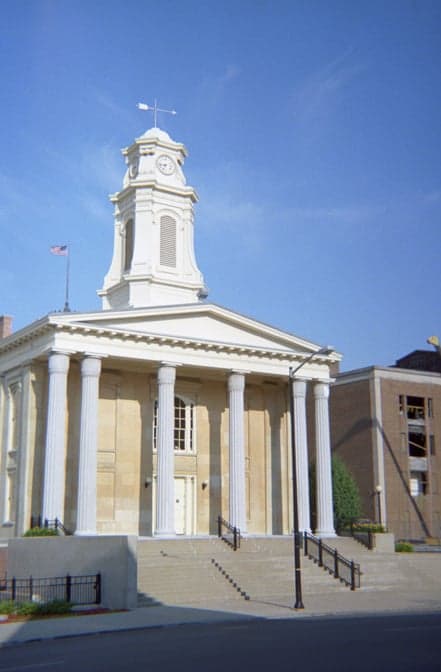
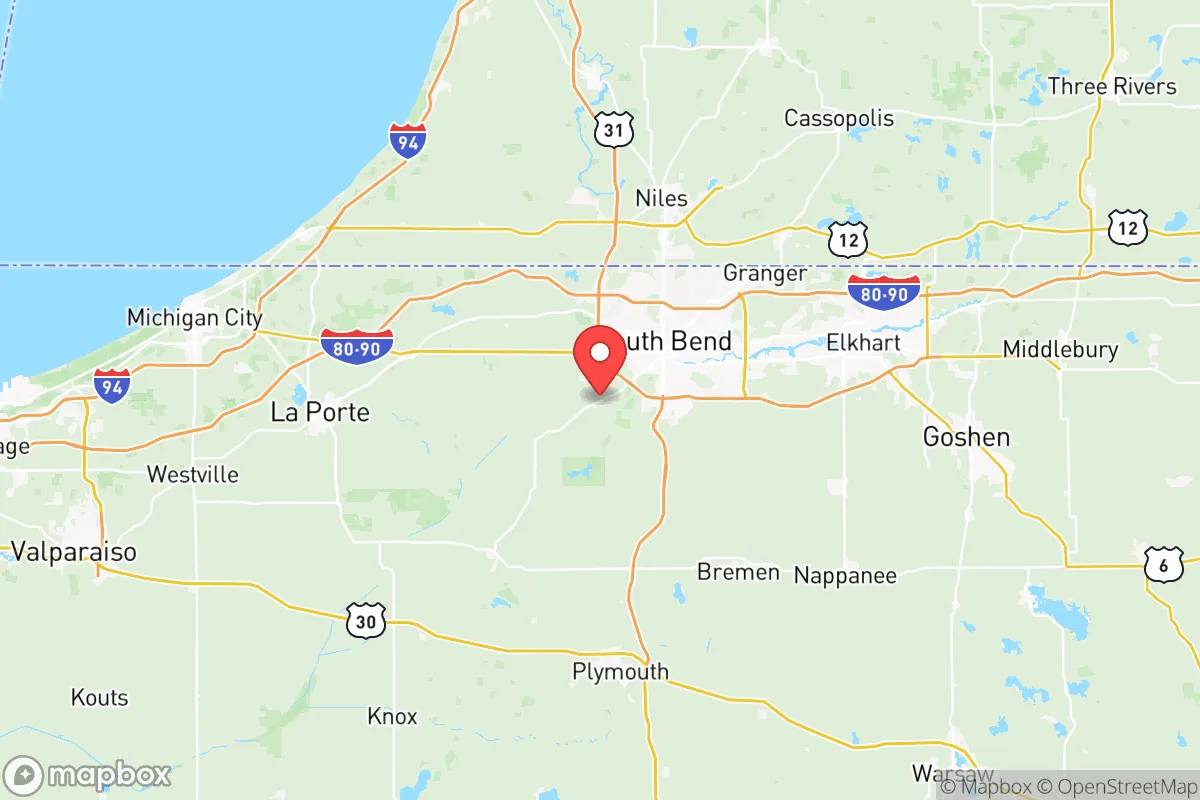
St Joseph County, Indiana, is home to 272,574 residents, anchored by the mid-sized city of South Bend and the smaller city of Mishawaka, forming a metropolitan area with a distinctively Midwestern, industrial-rooted character. The county’s population is predominantly White (69.6%), with a significant Black community (12.4%) and a growing Hispanic population (10.2%), reflecting a history shaped by successive waves of European immigration, the Great Migration, and more recent domestic and international arrivals. Foreign-born residents make up just 4.2% of the population, a figure below the national average, and the county’s overall density of roughly 550 people per square mile creates a mix of urban, suburban, and rural living. The people here carry a legacy of manufacturing and Catholic social institutions, giving the region a pragmatic, community-oriented identity that is both rooted in its past and slowly diversifying.
Settlement & growth (pre-1960)
Before American settlement, the area that is now St Joseph County was home to the Potawatomi people, who lived in villages along the St. Joseph River and used the land for hunting and agriculture. French fur traders and missionaries passed through in the 17th and 18th centuries, establishing small trading posts, but no permanent European settlement took hold until after the War of 1812. The 1820s and 1830s saw the forced removal of the Potawatomi via the Trail of Death in 1838, clearing the way for American settlers.
The first major wave of American settlers arrived in the 1830s and 1840s, primarily Yankees from New England and New York, drawn by the fertile soil and the promise of the Michigan Road, which connected the Ohio River to Lake Michigan. These early settlers founded the county seat of South Bend in 1831, naming it for the southernmost bend of the St. Joseph River. The town of Mishawaka was platted shortly after, in 1833, and quickly became a milling and manufacturing center thanks to its water power. Smaller settlements like Walkerton and New Carlisle emerged as farming communities, serving the agricultural economy that dominated the county through the mid-19th century.
The industrial transformation began in earnest after the Civil War, driven by the arrival of the railroad and the discovery of natural gas in the region. The Studebaker Corporation, founded in South Bend in 1852 as a blacksmith shop, grew into one of the world’s largest wagon and automobile manufacturers, pulling in thousands of workers. This industrial boom attracted a massive wave of European immigrants between 1880 and 1920. Polish immigrants were the largest group, settling heavily in South Bend’s west side and in Mishawaka, where they worked in factories and established dense ethnic neighborhoods centered around Catholic parishes like St. Stanislaus and St. Adalbert. German immigrants also arrived in large numbers, settling in South Bend and in rural areas around Lakeville and North Liberty, where they farmed and operated small businesses. Hungarian and Lithuanian communities formed smaller enclaves, particularly in South Bend’s near northwest side. By 1920, over 30% of the county’s population was foreign-born, a figure that would not be matched again.
The Great Migration brought a significant Black population to St Joseph County between 1915 and 1960. Black families moved from the rural South, particularly Mississippi and Alabama, seeking industrial jobs at Studebaker, Bendix, and other factories. They settled primarily in South Bend’s near west side and in the LaSalle Park neighborhood, forming a tight-knit community centered on churches like Olivet AME and the Booker T. Washington Center. By 1960, Black residents made up roughly 8% of the county’s population, a share that would continue to grow in the following decades.
Modern era (post-1965)
The post-1965 era brought profound demographic shifts to St Joseph County, driven by the decline of manufacturing and the opening of immigration under the Hart-Cellar Act. The collapse of Studebaker in 1963 and the subsequent loss of thousands of manufacturing jobs triggered a long period of population stagnation and out-migration. Between 1970 and 1990, the county’s population grew only modestly, from 245,000 to 247,000, as many White families left for the suburbs or for Sun Belt states. This domestic out-migration was partially offset by the continued growth of the Black population, which reached 12.4% by 2020, and by the arrival of new immigrant groups.
The Hispanic population began to grow noticeably in the 1990s and 2000s, driven by immigration from Mexico and Central America. These families settled primarily in South Bend’s west side and in Mishawaka, where they found work in light manufacturing, food processing, and construction. The Hispanic share of the county’s population rose from roughly 3% in 1990 to 10.2% today, making it the fastest-growing ethnic group. The East/Southeast Asian community, at 1.9% of the population, is smaller but established, with families of Vietnamese, Chinese, and Korean descent concentrated in South Bend and Mishawaka, often working in healthcare, education, and small business. The Indian subcontinent community (0.7%) is a more recent arrival, largely tied to professional jobs at the University of Notre Dame and area hospitals, and is more dispersed across the county.
Suburbanization reshaped the county’s geography in the post-1965 period. Granger, an unincorporated area in the northern part of the county, grew rapidly from the 1980s onward as a bedroom community for professionals working in South Bend and Elkhart. Mishawaka also expanded, annexing land to the east and south, while South Bend’s population declined from its 1960 peak of 132,000 to roughly 103,000 today. The county’s overall population has remained relatively flat since 2000, hovering around 270,000, as growth in the suburbs has been offset by continued losses in the urban core.
The future
The population of St Joseph County is projected to remain stable or decline slightly over the next 10-20 years, with modest growth in the Hispanic and Asian communities offsetting an aging and shrinking White population. The county’s foreign-born share, currently 4.2%, is likely to rise slowly as refugee resettlement programs and family reunification bring new arrivals from Central America, Southeast Asia, and Africa. The Black population is expected to hold steady or grow slightly, while the White population will continue to decline as older residents pass away and younger families move to larger metropolitan areas.
Geographically, growth will concentrate in the northern and eastern parts of the county, particularly in Granger and the Mishawaka area, where new housing developments and commercial corridors are attracting families. South Bend’s urban core will likely see continued population loss, though efforts to revitalize downtown and attract young professionals may slow the decline. The county’s cultural identity is evolving from a heavily Catholic, industrial, White-ethnic character toward a more diverse, service-oriented, and suburban one, though the pace of change is slow compared to the rest of the country.
For someone moving in now, St Joseph County offers a relatively affordable, stable, and community-oriented place to live, with a population that is becoming more diverse but remains predominantly White and native-born. The legacy of its industrial past is still visible in the neighborhoods and institutions of South Bend and Mishawaka, but the future lies in the suburbs and in the slow diversification of its people. The county is not a boomtown, but it is a place where families can put down roots in a community that values its history while gradually adapting to a changing America.

* Values derived from national, state, county, city and local statistics and may differ in a specific area. Last updated: 2026-06-29T01:30:02.000Z
Narrative content on this page is AI-generated and may contain mistakes. Verify any details that matter before acting on them.
ReloMaps may earn a commission from affiliate links at no extra cost to you.

