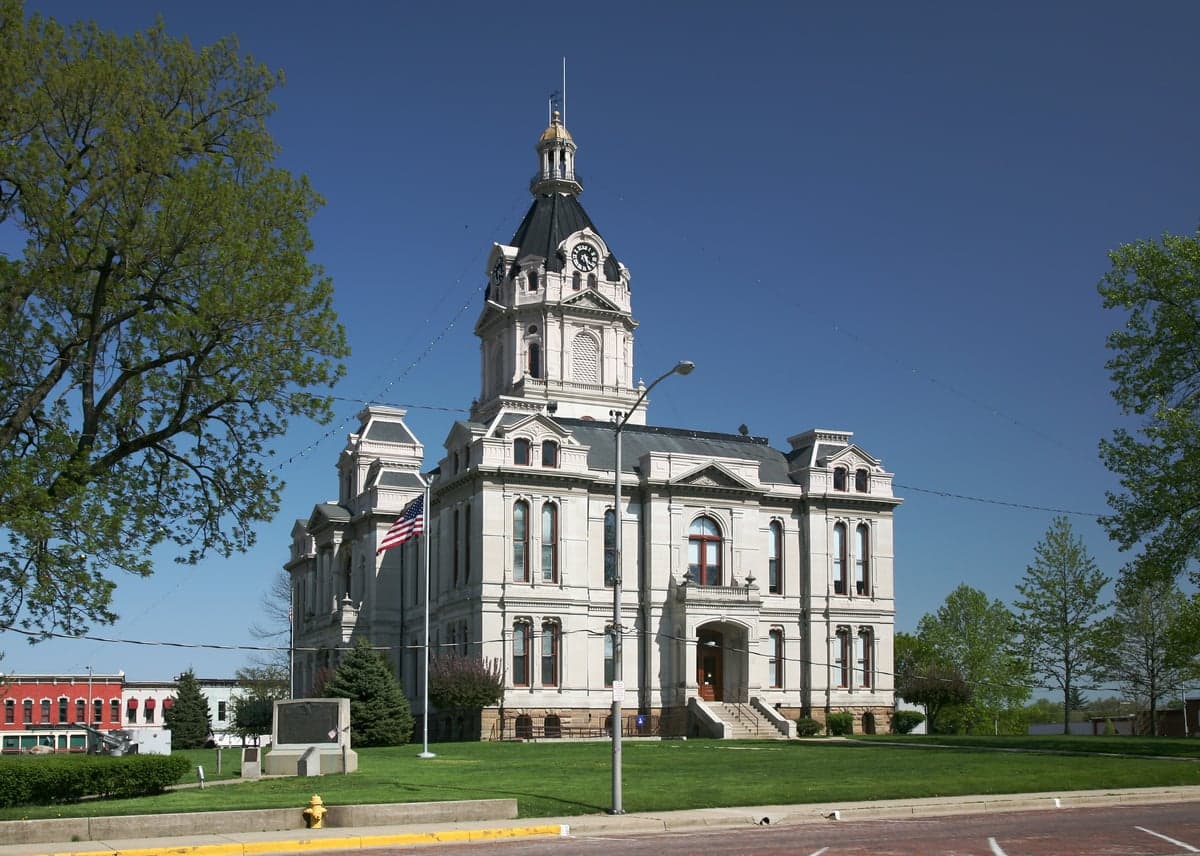
Photo: Wikipedia
Political ClimatePolitical Climate in Parke County
Showing district-level results — no local-only data available.
Local Political AnalysisPolitical Analysis of Parke County
Parke County, Indiana, is a reliably Republican corner of the Wabash Valley, carrying a Cook PVI of R+18 — that’s a full nine points more conservative than the state of Indiana as a whole, which sits at R+9. In practical terms, that means a Republican presidential candidate can expect to win the county by roughly 25 to 30 points in a typical cycle, while statewide races here are usually decided by double digits. The trajectory has been steady red for decades, though the margins have thickened since the early 2000s as rural areas across the Midwest have drifted further from the national Democratic Party.
How it compares
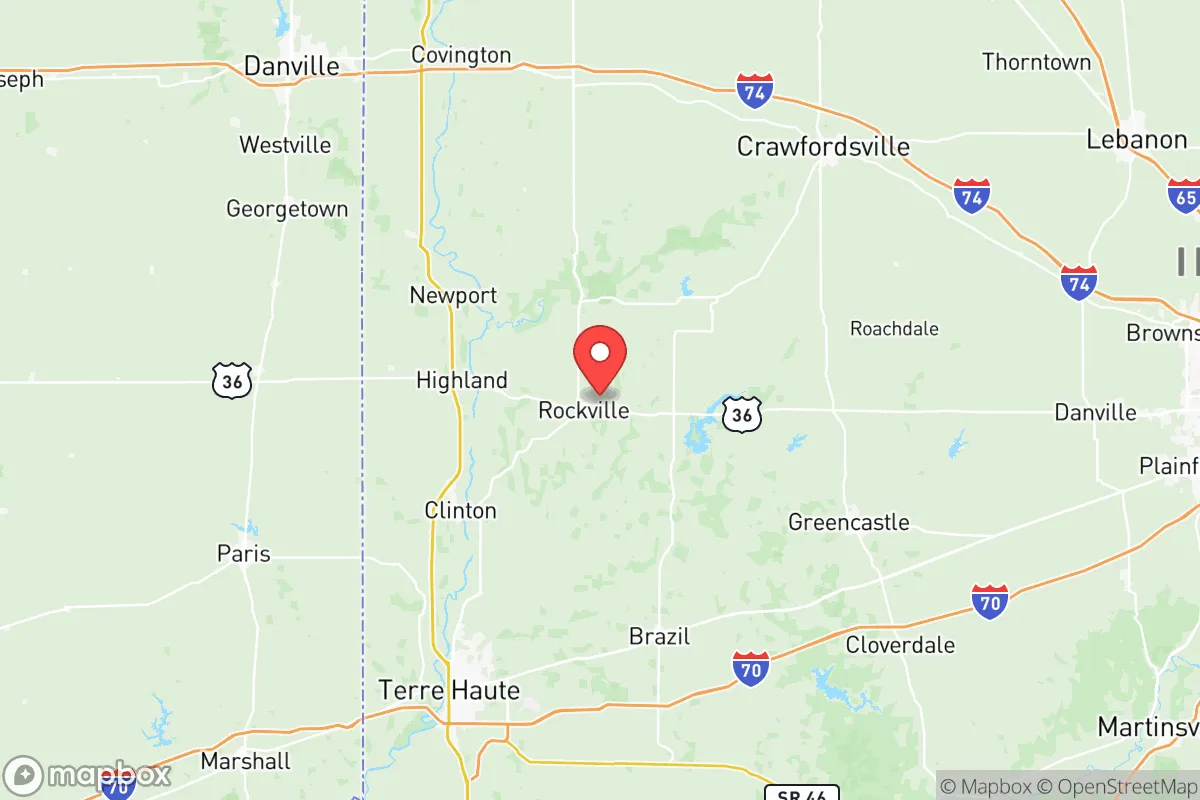
To understand Parke County’s politics, you have to look at the internal geography. The county seat, Rockville, is the closest thing to a political battleground — it’s the largest town and home to most of the county’s government workers, teachers, and a smattering of retirees who lean Democratic. In the 2020 and 2022 cycles, Rockville’s precincts ran about 55-45 Republican, making it the only place in the county where a Democrat could realistically crack 40 percent. The smaller towns of Montezuma and Marshall, both along the Wabash River, are more mixed — Montezuma has a working-class, union-adjacent history that occasionally produces Democratic votes in local races, but it still votes red in presidential years. The real Republican strongholds are the rural townships around Bloomingdale, Rosedale, and Bridgeton, where precincts routinely go 75-80 percent Republican. The swing precincts, if you can call them that, are the semi-rural areas just outside Rockville’s city limits — places where new subdivisions have brought in commuters who work in Terre Haute or Indianapolis and tend to vote more moderately.
What this means for residents
For conservative residents, the R+18 lean means their votes carry real weight in primaries — the Republican primary is effectively the general election for most county offices, from sheriff to county commissioner. It also means the county’s delegation in the Indiana General Assembly is solidly Republican, which shapes everything from road funding to how the county handles its famous covered bridges. For liberal residents, the reality is more about finding your niche than winning elections. Rockville is the most welcoming space for progressive voices, and the county’s Democratic Party chair still fields candidates for local offices, though they rarely break 40 percent. The practical effect of the lean is that property tax policy, zoning, and school funding decisions are made with a conservative lens — the county has resisted regional planning efforts and keeps its tax rates among the lowest in the state. That’s a point of pride for many locals, but it also means public services like mental health funding and broadband expansion lag behind more urban counties.
Culturally, Parke County is defined by its covered bridges — the annual Covered Bridge Festival in October draws hundreds of thousands of visitors and is a rare moment of bipartisan civic pride. The county’s politics are also shaped by its small-town, agricultural base; there’s a strong libertarian streak here, with many residents voting Republican but holding skeptical views of both parties on issues like gun rights and federal land management. The near-term outlook is for the county to stay R+18 or drift slightly redder, as the population ages and younger residents move to Terre Haute or Indianapolis for work. But the one wildcard is the growing number of remote workers buying cheap land in the county — if that trend accelerates, Rockville’s precincts could become genuinely competitive within a decade, even if the county as a whole remains firmly Republican.

State Political ClimatePolitical Climate in Indiana
State Political AnalysisPolitical Environment in the State
Indiana is a reliably Republican state with a Cook PVI of R+9, meaning it votes about nine points more Republican than the national average in presidential elections. The state has shifted rightward over the past two decades, driven by the consolidation of rural and exurban voters, though the Indianapolis metro area has become a competitive Democratic stronghold that keeps the overall map from being a total blowout. For a conservative-leaning relocator, Indiana offers a solid red baseline with a pragmatic, business-friendly policy environment, though the urban-rural split means you’ll find very different political realities depending on whether you settle in Carmel or in a small town like Jasper.
Urban vs. rural divide
The political geography of Indiana is a textbook study in the urban-rural chasm. The Indianapolis metropolitan area—Marion County and its surrounding suburbs—is the state’s Democratic engine. Marion County itself has voted Democratic in every presidential election since 2008, and the inner-ring suburbs like Carmel and Fishers have shifted from reliably red to purple, with Carmel’s Hamilton County now a key swing county that Republicans must win by a comfortable margin to carry the state. Bloomington, home to Indiana University, is another deep-blue island, while Lake County in the northwest (part of the Chicago metro) delivers large Democratic margins. Outside these pockets, the state is overwhelmingly red. Rural counties like Dubois County (home to Jasper) and Wabash County routinely vote 70-80% Republican. The Fort Wayne metro (Allen County) leans Republican but is less conservative than the surrounding farmland, while Evansville in the southwest is a reliably red mid-sized city. The South Bend area (St. Joseph County) has trended Democratic in recent cycles, but the surrounding counties remain deeply Republican. In practice, this means a conservative moving to rural Indiana will find a deeply red environment, while a liberal moving to Indianapolis or Bloomington will find a functional Democratic ecosystem with competitive local elections.
Policy environment
Indiana’s policy environment is consistently conservative, with a strong emphasis on low taxes, limited regulation, and traditional social values. The state has a flat income tax rate of 3.05% as of 2025, with a scheduled phase-down to 2.9% by 2027, and property taxes are capped at 1% of assessed value for owner-occupied homes. There is no estate tax or inheritance tax. The regulatory posture is business-friendly, with a right-to-work law (enacted 2012) and a relatively low minimum wage that follows the federal floor of $7.25. On education, Indiana has a robust school choice program, including the Choice Scholarship voucher program that allows state funds to follow students to private schools, and a growing charter school sector. The state also passed a law in 2022 requiring schools to post curriculum materials online and notify parents of any changes to their child’s health or well-being (often called a “parental rights” law). Healthcare policy is market-driven, with no state-level individual mandate and limited Medicaid expansion (the state’s Healthy Indiana Plan is a hybrid program with work requirements). Election laws are moderately restrictive: voter ID is required, early voting is available but not as expansive as in some states, and the state purges inactive voters from rolls regularly. There is no state-level data privacy law comparable to California’s, though a 2024 law created a limited consumer data protection framework. On social issues, Indiana is a “Dillon Rule” state, meaning local governments have only the powers explicitly granted by the state legislature, which has been used to preempt local ordinances on issues like plastic bag bans and minimum wage increases.
Recent policy direction
Indiana’s recent legislative trajectory has been firmly conservative, with a focus on expanding gun rights, restricting abortion, and limiting local autonomy. In 2022, the state passed a near-total abortion ban (Senate Enrolled Act 1) with exceptions only for rape, incest, and lethal fetal anomalies, though enforcement was temporarily blocked by the courts before being upheld by the Indiana Supreme Court in 2023. On gun policy, Indiana enacted permitless carry (constitutional carry) in 2022, allowing any adult who can legally possess a firearm to carry it without a license. The state also has a “stand your ground” law and preempts local gun ordinances. On education, the 2023 “Parents’ Bill of Rights” (House Enrolled Act 1608) requires schools to notify parents of any changes to a student’s health or well-being and prohibits instruction on human sexuality in grades K-3. On property rights, Indiana has a strong eminent domain law that requires “public use” and just compensation, but the state has also been active in limiting local zoning authority, particularly around housing development. On voting, the state passed a law in 2023 requiring all absentee ballots to be returned by Election Day (eliminating the three-day grace period for mail-in ballots) and tightened voter ID requirements for absentee voting. On privacy and surveillance, Indiana has no comprehensive state data privacy law, though a 2024 law created a limited framework for consumer data rights. The state has also been active in restricting transgender medical care for minors, passing a ban in 2023 that was upheld by a federal appeals court. For a relocator weighing liberties, Indiana offers strong gun rights and school choice, but limited abortion access and relatively weak privacy protections.
Civil unrest & political movements
Indiana has seen its share of political activism, though large-scale civil unrest has been relatively rare compared to coastal states. The most visible flashpoint in recent years was the 2022 abortion ban protests, which drew thousands to the Statehouse in Indianapolis and to the steps of the federal courthouse in South Bend. These were largely peaceful, with occasional arrests for civil disobedience. On the right, the state has a well-organized conservative activist network, including the Indiana Family Institute and local chapters of Moms for Liberty, which have been active in school board meetings and curriculum debates. Immigration politics have been relatively low-key compared to border states, though the state passed a law in 2023 requiring law enforcement to cooperate with federal immigration authorities (a “sanctuary city” ban). There has been no serious secession or nullification rhetoric in Indiana. Election integrity controversies flared after the 2020 election, with some Republican activists questioning the security of mail-in voting, but the state’s Republican secretary of state has consistently defended the integrity of Indiana’s elections. The most visible political movement a new resident would notice is the proliferation of yard signs and bumper stickers during election season, which in rural areas are overwhelmingly Republican, while in Bloomington and parts of Indianapolis you’ll see a mix of Democratic and progressive messaging. The state also has a small but active libertarian presence, particularly around Fort Wayne and Lafayette.
Projection
Over the next 5-10 years, Indiana is likely to remain a solidly Republican state, but the margins may narrow slightly as the Indianapolis metro continues to grow and diversify. The suburbs of Carmel and Fishers are attracting younger, more educated residents who tend to be more moderate or even Democratic-leaning, which could make Hamilton County a true swing county by 2030. At the same time, rural counties are aging and losing population, which could reduce their electoral weight. The state’s in-migration patterns are mixed: Indiana attracts some conservative-leaning migrants from Illinois and California seeking lower taxes and less regulation, but also draws younger professionals to Indianapolis for jobs in tech, healthcare, and logistics. The Republican legislature is likely to continue its conservative policy trajectory, with potential further tax cuts, expanded school choice, and additional restrictions on local government autonomy. Abortion policy is unlikely to change significantly unless federal law shifts. Gun rights will remain expansive. The biggest wild card is the growth of the Indianapolis metro: if it continues to trend blue, the state could become more competitive at the statewide level, but it’s unlikely to flip blue in the next decade. A conservative moving to rural Indiana can expect the political environment to remain deeply red, while a liberal moving to Indianapolis will find a growing Democratic coalition but still a Republican-controlled state government.
For a new resident, the bottom line is this: Indiana offers a stable, predictable conservative policy environment with low taxes, strong gun rights, and school choice, but the political experience varies dramatically by location. If you’re conservative, you’ll feel at home almost anywhere outside of Bloomington and central Indianapolis. If you’re liberal, you’ll find a functional Democratic community in the capital or in a college town, but you’ll be living under a Republican state government that is unlikely to change course anytime soon. The state’s trajectory is one of gradual suburbanization and moderation in the metro areas, but the rural and exurban base remains deeply red, and the legislature shows no signs of moderating. It’s a place where your day-to-day political reality is shaped more by your county than by your state—and that’s a feature, not a bug, for many relocators.
* Values derived from national, state, county, city and local statistics and may differ in a specific area. Last updated: 2026-10-21T00:42:40.000Z
Narrative content on this page is AI-generated and may contain mistakes. Verify any details that matter before acting on them.
ReloMaps may earn a commission from affiliate links at no extra cost to you.

