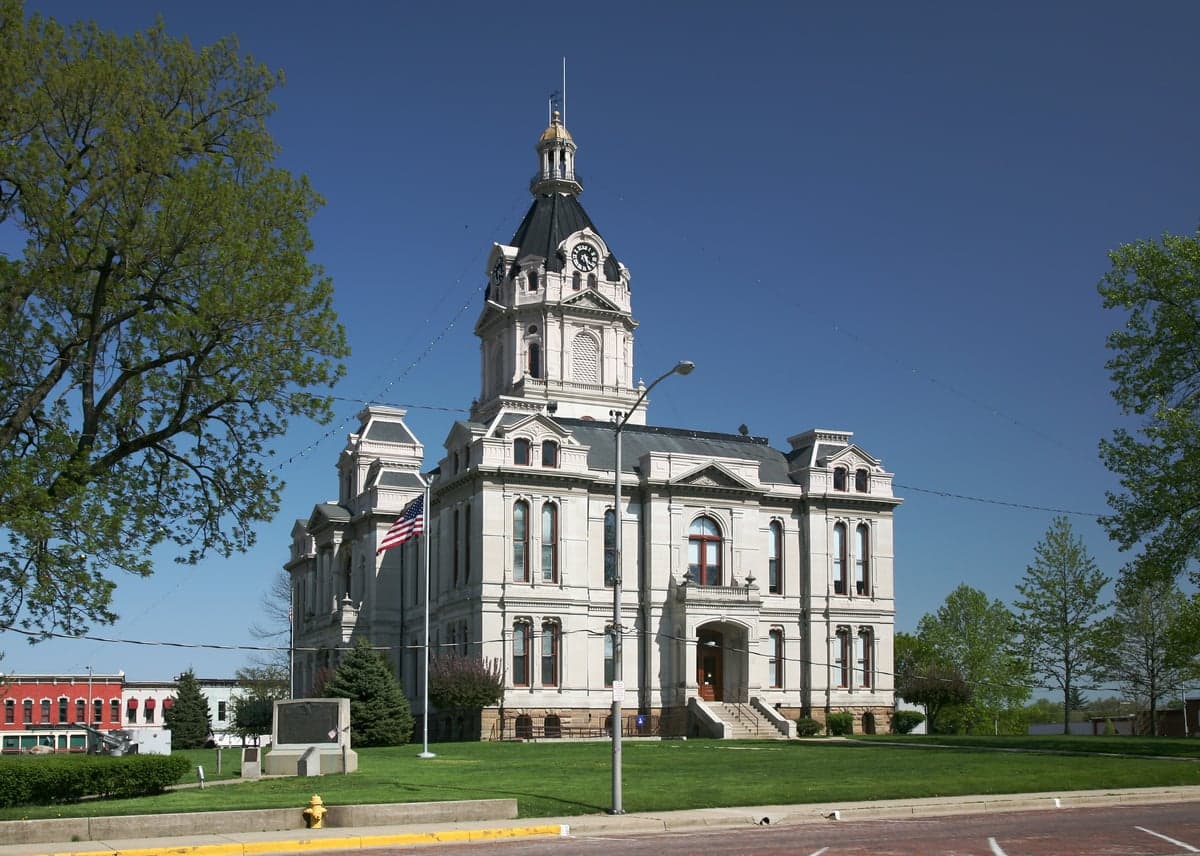
Photo: Wikipedia
Demographics of Parke County
Affluence Level in Parke County
A middle-class area roughly in line with national averages across income, home values, education, and employment.
People of Parke County
Parke County, Indiana, is home to roughly 16,300 people, making it one of the state's smaller rural counties, with a population density of about 36 residents per square mile. The county is overwhelmingly white (94.4%), with a foreign-born population of just 0.3%, and a distinctive cultural identity rooted in covered bridges, small farming towns, and a deep Scots-Irish and German heritage. The people here are predominantly native-born Hoosiers, with a college attainment rate of 14.2%, reflecting a working-class, agricultural, and manufacturing-oriented community that values self-reliance and local tradition.
Settlement & growth (pre-1960)
Before American settlement, the land that is now Parke County was home to the Miami and Wea peoples, who used the Wabash River and its tributaries—including Sugar Creek and Big Raccoon Creek—for fishing, trade, and seasonal camps. The area was part of the broader Wabash River Valley, a contested borderland between French traders from Vincennes and British-aligned tribes. The Treaty of St. Mary's in 1818 forced the Miami and Wea to cede most of their lands in west-central Indiana, opening the region to American squatters and land speculators.
The first permanent American settlers arrived in the early 1820s, primarily Scots-Irish and English yeoman farmers moving west from Kentucky, Ohio, and Virginia. They followed the Wabash River north and settled along the fertile bottomlands near what would become Rockville, the county seat, and Montezuma, a river town that grew into a shipping point for grain and pork. These early settlers were drawn by cheap federal land—often $1.25 per acre under the 1820 Land Act—and by the promise of timber, game, and water power. By the 1830s, the county's population had grown to just over 7,000, and small hamlets like Marshall and Bloomingdale emerged as trading posts and mill sites along Sugar Creek.
The next major wave came in the 1840s and 1850s with German immigrants, who arrived via the Ohio River and the National Road, settling in the northern and eastern parts of the county. These families—many from the Rhineland and Bavaria—established farms and small businesses in Rosedale and Bridgeton, where they built the first of the county's now-famous covered bridges. German influence is still visible in the county's Lutheran churches and in family surnames common in the northern townships. A smaller wave of Irish laborers arrived in the 1850s, working on the Terre Haute & Indianapolis Railroad, which cut through the county and connected Rockville and Marshall to larger markets.
After the Civil War, the county's population plateaued. The 1880 census recorded about 17,000 residents, a figure that would remain roughly stable for the next century. Coal mining became a significant employer in the 1890s and early 1900s, drawing a small influx of Italian and Polish miners to the southern part of the county near Mecca and Coxville. These mining camps were short-lived, however, and most of those families left by the 1920s as the mines played out. The county's African American population, which stands at 2.2% today, has deep roots in the post-Civil War era, when a small number of freed families moved north from Kentucky to farm and work on the railroads, settling primarily in Rockville and Montezuma.
By 1960, Parke County was a mature rural community. The population had dipped to about 15,500, and the economy had shifted from coal and river trade to agriculture, small manufacturing, and the beginnings of tourism centered on the county's 31 covered bridges. The people were overwhelmingly native-born, Protestant, and politically conservative—a character that has persisted into the present.
Modern era (post-1965)
The 1965 Hart-Cellar Act, which abolished national-origin quotas, had virtually no direct effect on Parke County. With a foreign-born population of just 0.3%—roughly 50 people—the county has remained one of the least immigrant-affected areas in Indiana. Unlike urban centers or even mid-sized cities like Terre Haute, Parke County did not experience the post-1965 waves of Asian, Latin American, or Middle Eastern immigration. The county's Hispanic population, at 1.6%, is the only measurable minority growth, and it consists largely of a small number of Mexican-heritage families working in agriculture and meat processing in the broader Wabash Valley, with a few households in Rockville and Montezuma.
The more significant demographic shift since 1965 has been domestic out-migration. Parke County's population peaked at about 17,400 in 1970 and has declined steadily since, reaching 16,346 in the most recent estimates. Young adults have left for college and jobs in Indianapolis (about 65 miles east) or Terre Haute (about 25 miles south), and the county has not attracted significant in-migration from the Rust Belt or coastal states. The East/Southeast Asian population is effectively zero, and the Indian-subcontinent population is also zero, making Parke County one of the least diverse counties in Indiana.
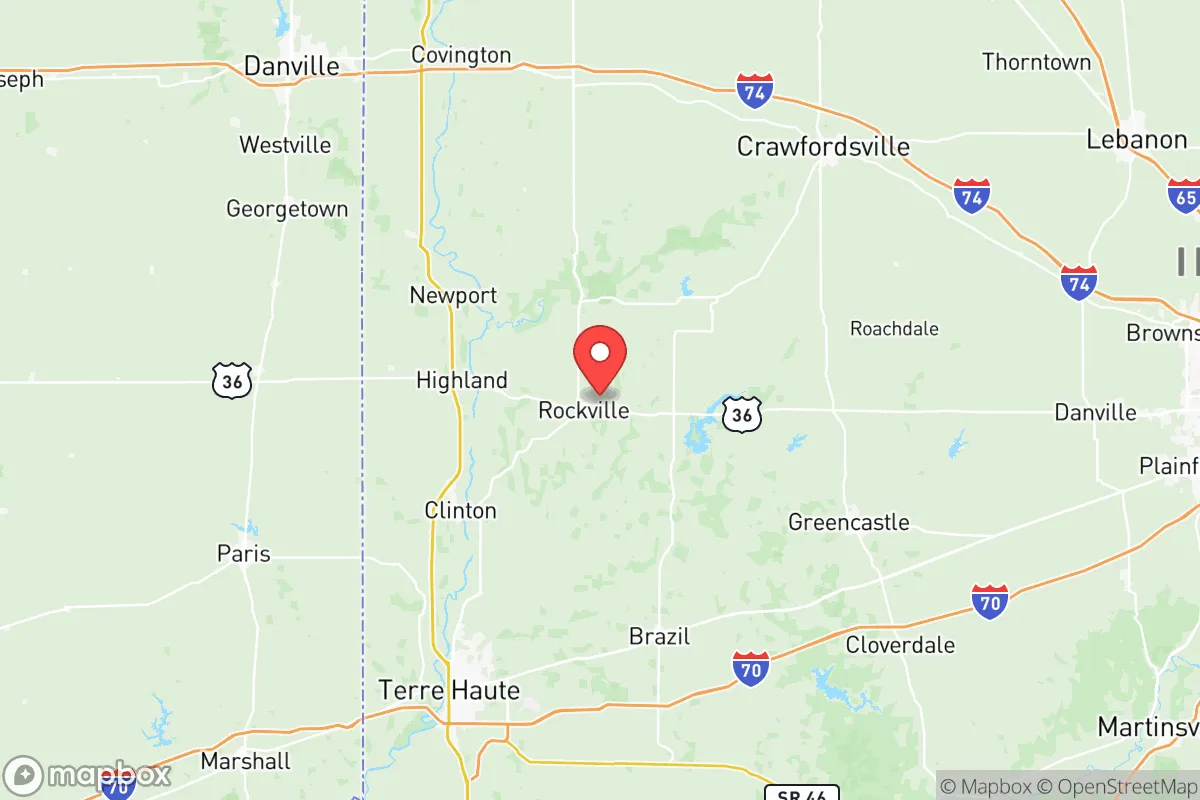
Suburbanization has been minimal. There are no interstate highways in the county; U.S. 41 and U.S. 36 are the main corridors, and they have not spurred the kind of bedroom-community development seen in counties closer to Indianapolis. The one notable exception is the southern edge of the county near Rosedale, where a handful of commuters to Terre Haute have built new homes on former farmland. The county's African American population, which was historically concentrated in Rockville and Montezuma, has declined slightly as older families have passed away and younger members have moved to larger cities.
The future
Parke County's population is projected to continue a slow decline over the next 10-20 years, with the county aging faster than the state average. The median age is already above 43, and the under-18 population has shrunk by roughly 10% since 2010. The county is not becoming more diverse in any meaningful way; the Hispanic share may inch up from 1.6% to 2-3% as agricultural labor demand persists, but the white share will remain above 90% for the foreseeable future. The East/Southeast Asian and Indian-subcontinent populations are expected to remain near zero, as there are no employers, universities, or housing patterns that would attract these groups.
The cultural identity of the county is likely to remain rooted in its covered-bridge heritage, its annual Covered Bridge Festival (which draws over a million visitors each October), and its small-town civic life. The people who remain are increasingly older, and the county faces a challenge in retaining young families. However, there are countervailing trends: the rise of remote work has allowed a small number of professionals to move to Marshall and Bloomingdale, drawn by low housing costs and rural quiet. The county's schools, while small, are stable, and the Amish population—while not counted separately in the data—has grown modestly in the northern townships near Bridgeton, adding a new, culturally conservative element to the county's character.
For the next two decades, Parke County will likely remain a white, native-born, aging rural community with a strong sense of place and tradition. It will not become a diverse suburb or an immigrant gateway. Its population will hover around 15,000-16,000, with growth only if remote work or retirement migration accelerates.
For someone moving to Parke County today, the bottom line is this: you are joining a small, stable, culturally homogeneous community where neighbors know each other, property is affordable, and the pace of life is slow. The county offers a genuine rural Indiana experience—covered bridges, county fairs, and church suppers—but it comes with limited job opportunities, a thin healthcare network, and a population that is not changing much. If you are seeking diversity, urban amenities, or a rapidly growing area, this is not the place. If you want a quiet, traditional, low-cost community with deep roots and a strong sense of local identity, Parke County remains one of the most authentic examples in the Midwest.

* Values derived from national, state, county, city and local statistics and may differ in a specific area. Last updated: 2026-10-21T00:42:40.000Z
Narrative content on this page is AI-generated and may contain mistakes. Verify any details that matter before acting on them.
ReloMaps may earn a commission from affiliate links at no extra cost to you.

