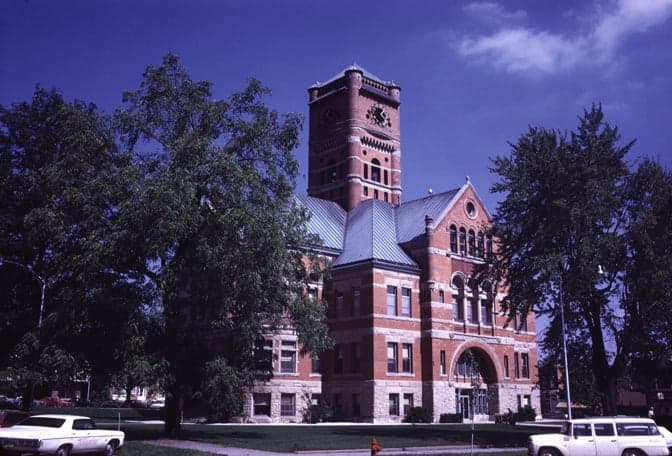
Photo: Wikipedia
Personal Sovereignty in Noble County
Viable for self-reliance. Generally workable, though some barriers may limit total independence.
What does Personal Sovereignty tell us?
Personal Sovereignty measures your capacity for self-reliance and independence with minimal government friction. Higher scores mean fewer barriers between you and the way you want to live... but it assumes you have the space you need and good neighbors.
What does this tell us?
Personal Sovereignty measures your capacity for self-reliance and independence with minimal government friction. Higher scores mean fewer barriers between you and the way you want to live... but it assumes you have the space you need and good neighbors.
State Policy
Energy independence: Importer (35% of energy produced in-state)
Personal Liberty
Homesteading

Personal Liberty Analysis
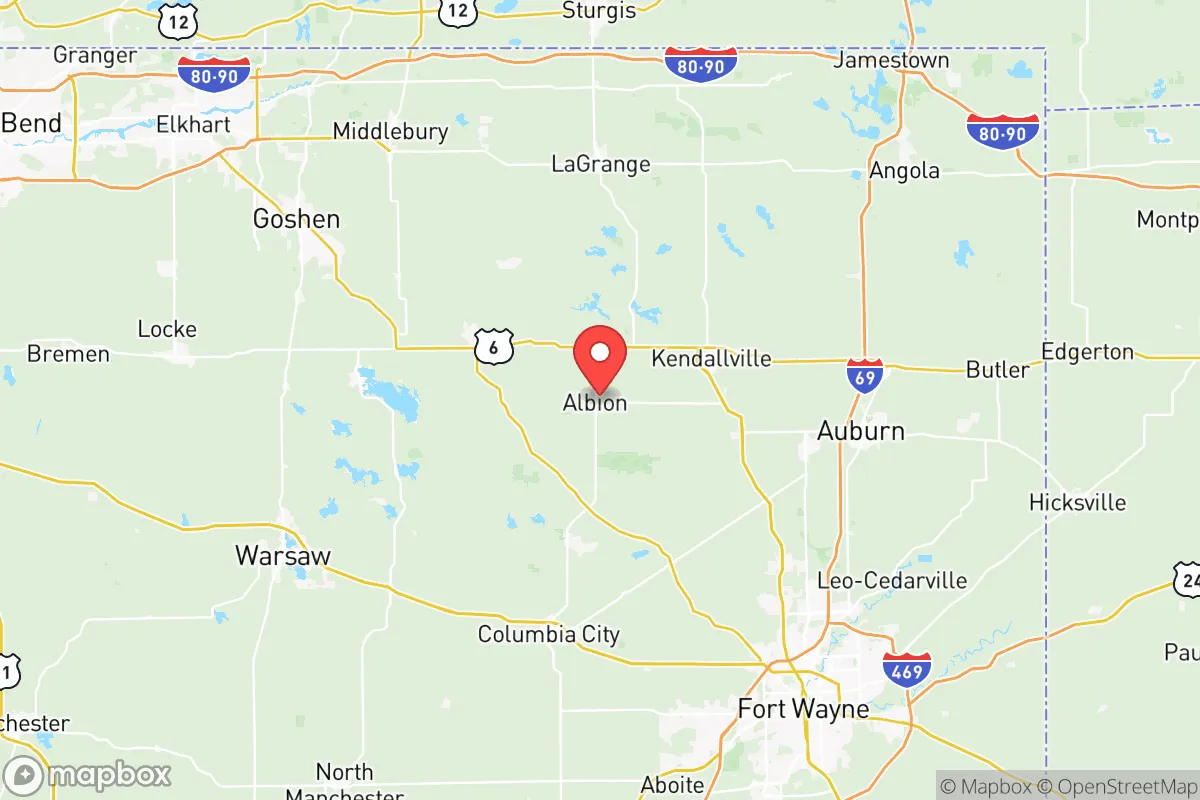
Noble County, Indiana, offers a personal sovereignty environment that leans heavily toward individual autonomy, shaped by state-level preemption laws, a low tax burden, and a culture of self-reliance that is more pronounced than in many Midwestern counties. Located in the northeastern part of the state, the county’s regulatory posture is generally light-touch, with local governance in towns like Albion, Kendallville, and Ligonier tending to favor minimal interference in daily life. For a relocation reader prioritizing personal freedom—whether in financial decisions, self-defense, or homesteading—Noble County presents a landscape where state law often overrides local restrictions, creating a consistent baseline of liberty across the area.
Tax burden and regulatory posture: How Noble County compares to surrounding areas
Noble County’s tax environment is a standout for those seeking to keep more of their earnings. The combined state and local income tax rate in Indiana is a flat 3.15% as of 2026, with no county-level income tax surcharge in Noble County itself—unlike neighboring counties such as DeKalb or Whitley, which may impose additional local option taxes. Property taxes are also relatively low: the county’s average effective property tax rate hovers around 0.85% of assessed value, well below the national average of roughly 1.1%. For a $200,000 home, that translates to about $1,700 annually. Regulatory posture is similarly restrained. Indiana’s “right-to-work” status and lack of statewide zoning mandates mean that in unincorporated areas of Noble County—such as the rural stretches around Brimfield or Wawaka—land use is governed primarily by county ordinances that are generally permissive. The county does not impose a local business license requirement for most small operations, and building permits are typically only required for new construction or major renovations, not for minor improvements like sheds or fences. This contrasts with more regulated counties in central Indiana, where environmental and subdivision rules can add months to projects.
Self-defense and gun law specifics: What the Second Amendment looks like in Noble County
Indiana is a “constitutional carry” state, meaning no permit is required to carry a handgun openly or concealed for anyone legally allowed to possess a firearm. Noble County fully aligns with this, and local law enforcement in Kendallville and Albion generally does not enforce additional restrictions beyond state law. The county has no local ordinances banning firearms in parks or public buildings (beyond those required by state statute), and there are no waiting periods or magazine capacity limits. Stand-your-ground laws apply statewide, with no duty to retreat in any place where a person has a legal right to be. For those interested in training, the Noble County Sheriff’s Office in Albion offers voluntary firearms safety classes, but there is no requirement for a license or registration. The gun culture is robust: shooting ranges are available in the area, including the Noble County Conservation Club near Rome City, and private land use for target practice is common and generally unrestricted by county noise ordinances, provided it’s done safely. This makes Noble County a practical choice for those who view firearm ownership as a core personal liberty, with fewer bureaucratic hurdles than in states like Illinois or even parts of southern Indiana.
Self-reliance and homesteading viability: Lot sizes, zoning, and off-grid feasibility
Homesteading and off-grid living are highly viable in Noble County, particularly outside its incorporated towns. In unincorporated areas, minimum lot sizes for residential use are typically 1 acre, but many parcels in the county’s agricultural zones—especially around Wawaka and Brimfield—are sold in 5- to 40-acre tracts, allowing for substantial self-sufficiency. Zoning is minimal: the county’s comprehensive plan does not prohibit keeping livestock like chickens, goats, or even a small number of cattle on residential lots of 2 acres or more, and there are no county-level bans on beekeeping or home gardens. Off-grid feasibility is strong. Indiana has no statewide prohibition on rainwater collection, and Noble County does not restrict it. Solar panel installation is permitted without special permits in most areas, though grid-tied systems may require utility approval. Composting toilets and alternative waste systems are allowed under the county’s health department rules, provided they meet basic septic standards—a process that is straightforward compared to more regulated counties. However, within town limits—Kendallville and Ligonier have stricter ordinances on livestock and building setbacks—so those seeking maximum autonomy should target rural parcels. The county’s agricultural extension office in Albion provides resources for soil testing and crop planning, supporting a self-reliant lifestyle without heavy-handed oversight.
Personal liberties: Parental rights, medical autonomy, speech, and property
Noble County reflects Indiana’s broader tilt toward personal liberties in several key areas. Parental rights are strongly protected: the state’s “Parents’ Bill of Rights” law, enacted in 2023, ensures that parents have the right to direct their child’s education, medical care, and religious upbringing, and Noble County schools—such as East Noble School Corporation in Kendallville and Central Noble Community Schools in Albion—generally defer to parental decisions on curriculum opt-outs and health matters. Medical autonomy is similarly robust. Indiana does not require COVID-19 or other routine vaccinations for adults, and there are no county-level health mandates beyond state law. The county has no local mask or business closure ordinances, and healthcare decisions—including the use of alternative treatments—are largely left to individuals and their providers. Free speech is protected under state law, with no local hate speech or “critical race theory” bans that would restrict expression; public meetings in the Noble County Courthouse in Albion are open and generally civil. Property rights are a cornerstone: Indiana’s “right to farm” law shields agricultural operations from nuisance lawsuits, and Noble County does not impose rent control or short-term rental bans in unincorporated areas, though Kendallville has a modest registration requirement for Airbnb-style rentals. Eminent domain is rarely used for private development, and property tax caps (1% of assessed value for homesteads) provide a ceiling that protects against sudden spikes.
Overall, Noble County ranks among the more sovereignty-friendly counties in Indiana, especially when compared to urbanized areas like Allen County (Fort Wayne) or Marion County (Indianapolis), where local ordinances on noise, firearms, and land use are more restrictive. The combination of constitutional carry, low taxes, permissive zoning in rural areas, and strong parental rights creates an environment where individuals and families can exercise a high degree of personal autonomy without constant regulatory friction. For a reader who values self-reliance and minimal government interference, Noble County—particularly the unincorporated areas around Rome City and Wawaka—offers a practical, low-hassle base for that lifestyle.

* Values derived from national, state, county, city and local statistics and may differ in a specific area. Last updated: 2026-10-22T15:34:04.000Z
Narrative content on this page is AI-generated and may contain mistakes. Verify any details that matter before acting on them.
ReloMaps may earn a commission from affiliate links at no extra cost to you.

