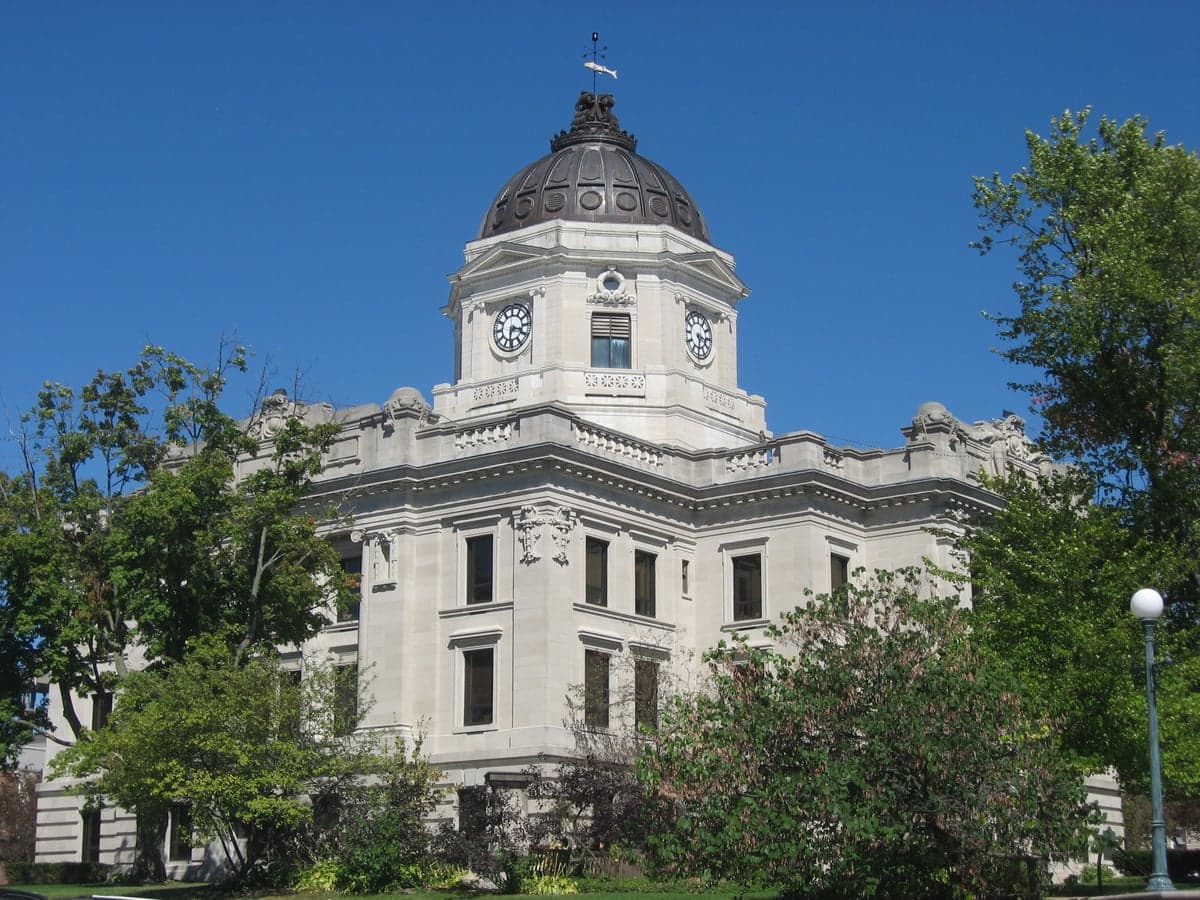
Photo: Wikipedia
Quality of Life in Monroe County
A livable area that tracks near national norms for affordability, walkability, and neighborhood health.
What does Quality of Life tell us?
Quality of Life measures an area by evaluating factors like cost of living, nearby amenities, country club access, airport proximity, socioeconomic signals and neighborhood character. For large states, this is a general average — quality of life can vary dramatically between metro areas, suburbs, and rural communities within the same state.
What does this tell us?
Quality of Life measures an area by evaluating factors like cost of living, nearby amenities, country club access, airport proximity, socioeconomic signals and neighborhood character. For large states, this is a general average — quality of life can vary dramatically between metro areas, suburbs, and rural communities within the same state.
Cost of Living
3% below national average
85%
The Real Cost of Living in Monroe County for 2026
| Tier | Individual | Family (4) |
|---|---|---|
| Survival | $18k | $35k |
| Comfortable | $51k | $75k |
| Luxury | $114k+ | $177k+ |
| Elite (Top 5%) | $145k+ | $225k+ |
Quality-of-Life Analysis
Monroe County, Indiana offers a broad quality-of-life spectrum that ranges from the bustling college town of Bloomington to quiet, unincorporated crossroads and working farms. The county’s character is shaped by Indiana University, which anchors a dense, walkable urban core, while the surrounding townships and small communities attract residents seeking lower housing costs, larger lots, and a slower pace. With a cost-of-living index of 97 (just below the national average), a median home value of $261,700, and a median rent of $1,151, the county provides distinct lifestyle options for students, professionals, families, and retirees.
Largest town(s) & population centers
Bloomington is the county seat and by far the largest population center, home to roughly 80,000 residents and the main campus of Indiana University. Daily life here is defined by a mix of academic energy, cultural amenities, and a walkable downtown centered around the Courthouse Square and Kirkwood Avenue. The city offers a robust network of bike lanes, the Bloomington Transit bus system, and over 50 parks, including the 1,200-acre Griffy Lake Nature Preserve. Housing in Bloomington is the county’s most expensive, with median home values near $300,000 in established neighborhoods like Elm Heights and the Near West Side, though more affordable options exist in the south and west sides near State Road 37. The average commute in the county is just under 20 minutes, and Bloomington residents typically enjoy some of the shortest drives in the region.
Smaller towns & rural pockets
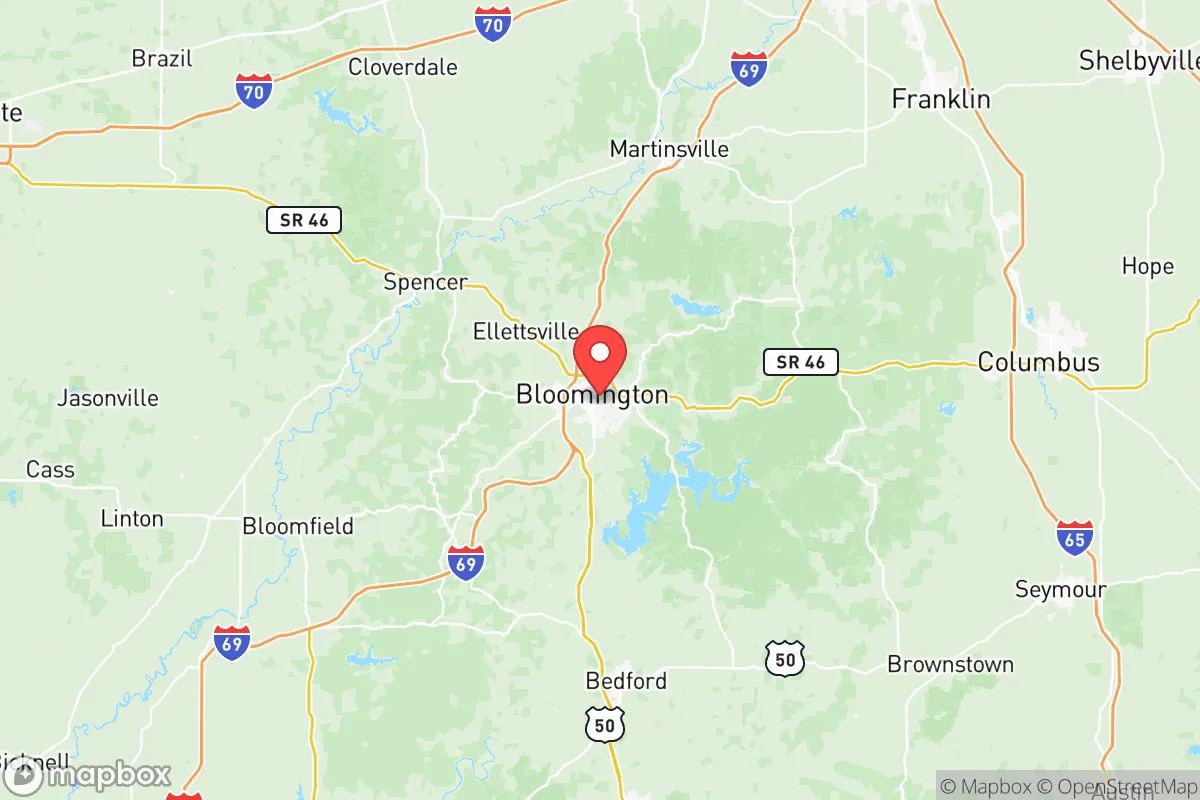
Ellettsville, roughly 8 miles northwest of Bloomington, is the county’s second-largest incorporated town with about 6,500 residents. It offers a more suburban feel with lower home prices — median values often fall 10–15% below Bloomington’s — and direct access to State Road 46 for commuting. Stinesville, a tiny incorporated town of roughly 200 people, sits further northwest and retains a historic limestone-quarrying character with few commercial services. Unincorporated communities such as Smithville (southeast), Clear Creek (southwest), and Harrodsburg (south) are rural crossroads with scattered homes, volunteer fire departments, and no municipal utilities. These areas are zoned for larger lots — often 1 to 5 acres — and rely on well water and septic systems. Unionville, east of Bloomington along State Road 45, is a census-designated place with a small general store and a mix of hobby farms and commuter homes, popular with residents who want forested privacy within a 15-minute drive of downtown Bloomington.
Cost & lifestyle range
The cost spread across Monroe County is significant. At the high end, Bloomington’s near-campus neighborhoods and the Lake Lemon area (northeast county) command home prices above $400,000 for lakefront or historic properties. At the low end, rural properties in Indian Creek Township (southwest county) and Benton Township (northwest) can be found for under $200,000, often on acreage with older homes needing renovation. Renters see a similar spread: a one-bedroom apartment in Bloomington’s downtown averages $1,200–$1,400, while a similar unit in Ellettsville or a rural duplex in Polk Township may rent for $850–$1,000. Amenities vary accordingly — Bloomington offers multiple grocery chains, a public library system, the IU Auditorium, and a farmers’ market; Ellettsville has a smaller grocery, a hardware store, and a few restaurants; rural areas have no retail and require a 15- to 25-minute drive for basic shopping. Property taxes in Monroe County are moderate, with effective rates around 0.9% of assessed value, though rural properties with agricultural exemptions can see lower bills.
Monroe County works best for people who value access to a vibrant university town but want the option to live on a larger lot or at a lower cost just a short drive away. Families who prioritize good schools often settle in Bloomington’s Richland-Bean Blossom or Monroe County Community School Corporation districts, while retirees and remote workers gravitate toward the quieter townships around Lake Monroe or the wooded hills east of Bloomington. The county’s mix of urban, suburban, and rural settings — all within a 20-minute average commute — makes it one of Indiana’s most versatile places to live.

Crime in Monroe County
Generally safer than 59% of comparable U.S. locations.
Violent CrimeViolent Crime Analysis
Property CrimeProperty Crime Analysis
Crime Analysis
Monroe County, Indiana, reports a violent crime rate of 263 incidents per 100,000 residents and a property crime rate of 1,093.6 per 100,000, placing it above both state and national averages for property offenses. The county, anchored by the city of Bloomington and home to Indiana University, presents a mixed safety picture where the university's presence and progressive local governance influence crime patterns and justice outcomes. While some neighborhoods remain relatively safe, the overall risk is elevated compared to surrounding rural counties like Greene or Lawrence.
Crime in context
Monroe County's violent crime rate of 263 per 100,000 is roughly 25% higher than the national average of about 200 per 100,000 and significantly above the Indiana state average of approximately 220 per 100,000. Property crime in the county, at 1,093.6 per 100,000, is nearly double the national rate of roughly 600 per 100,000 and well above Indiana's state average of about 750 per 100,000. The city of Bloomington accounts for the vast majority of these incidents, with smaller communities like Ellettsville and Stinesville reporting lower but still elevated rates. The county's crime statistics are heavily influenced by Bloomington's status as a college town, where thefts from vehicles, bicycle thefts, and alcohol-related offenses are common. However, the presence of a progressive district attorney's office in Monroe County has drawn criticism for policies that prioritize diversion programs over incarceration, which critics argue has contributed to repeat property offenses and a perception of leniency among offenders.
What residents experience
Residents of Monroe County most frequently encounter property crimes such as theft, burglary, and motor vehicle theft, with Bloomington's downtown and campus-adjacent neighborhoods seeing the highest concentration of incidents. Violent crime, while less common, includes aggravated assault and robbery, with incidents concentrated in areas near the city's commercial corridors and student housing districts. The progressive judicial philosophy in Monroe County, which emphasizes restorative justice and reduced sentencing for nonviolent offenders, has been a point of contention. Critics argue that this approach has led to higher recidivism rates for property crimes and a sense among residents that the justice system does not adequately deter criminal behavior. In contrast, the town of Ellettsville, with its smaller population and more conservative local government, reports lower crime rates and faster police response times. Residents in rural parts of the county, such as the communities around Lake Monroe and the unincorporated areas near Harrodsburg, experience fewer incidents overall but face longer emergency response times due to distance from law enforcement hubs.
Neighborhood-level variation
Safety in Monroe County varies dramatically by location. The most crime-prone areas include Bloomington's Near West Side, the area around the Indiana University campus, and the commercial strips along East Third Street and College Avenue. These neighborhoods see frequent thefts, vandalism, and alcohol-related disturbances. Safer areas include the suburban developments in southern Bloomington near the Monroe County Airport, the town of Ellettsville, and the rural communities around Unionville and Smithville. Homeowners in these areas report lower property crime rates and stronger neighborhood watch programs. However, the progressive policies of the Monroe County prosecutor's office apply countywide, meaning that even in safer neighborhoods, residents express concern that offenders arrested in Bloomington may be released quickly and reoffend in surrounding areas. For those considering relocation, the safest options within Monroe County are the outlying towns and rural subdivisions, while the city of Bloomington itself requires vigilance, particularly near the university and downtown zones.
* Values derived from national, state, county, city and local statistics and may differ in a specific area. Last updated: 2026-06-17T18:22:13.000Z
Narrative content on this page is AI-generated and may contain mistakes. Verify any details that matter before acting on them.
ReloMaps may earn a commission from affiliate links at no extra cost to you.

