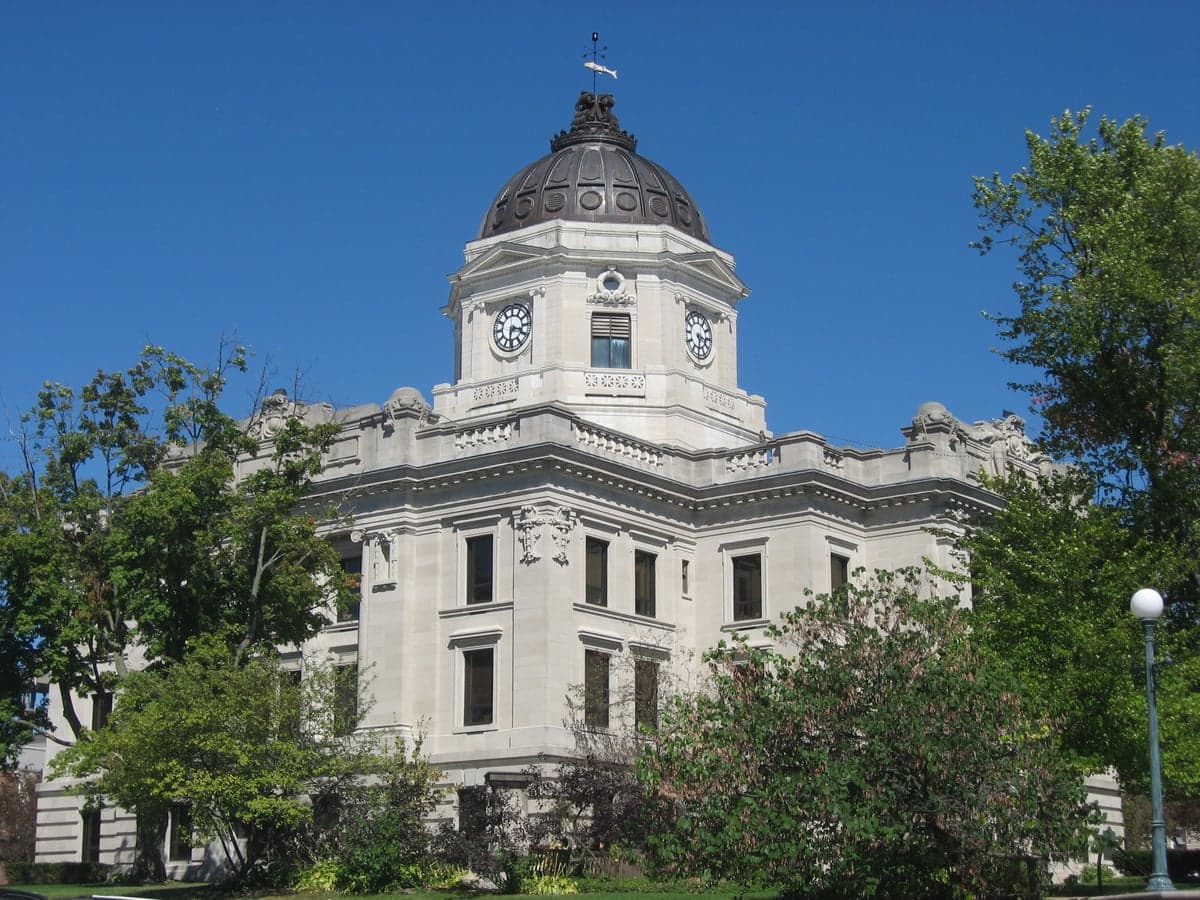
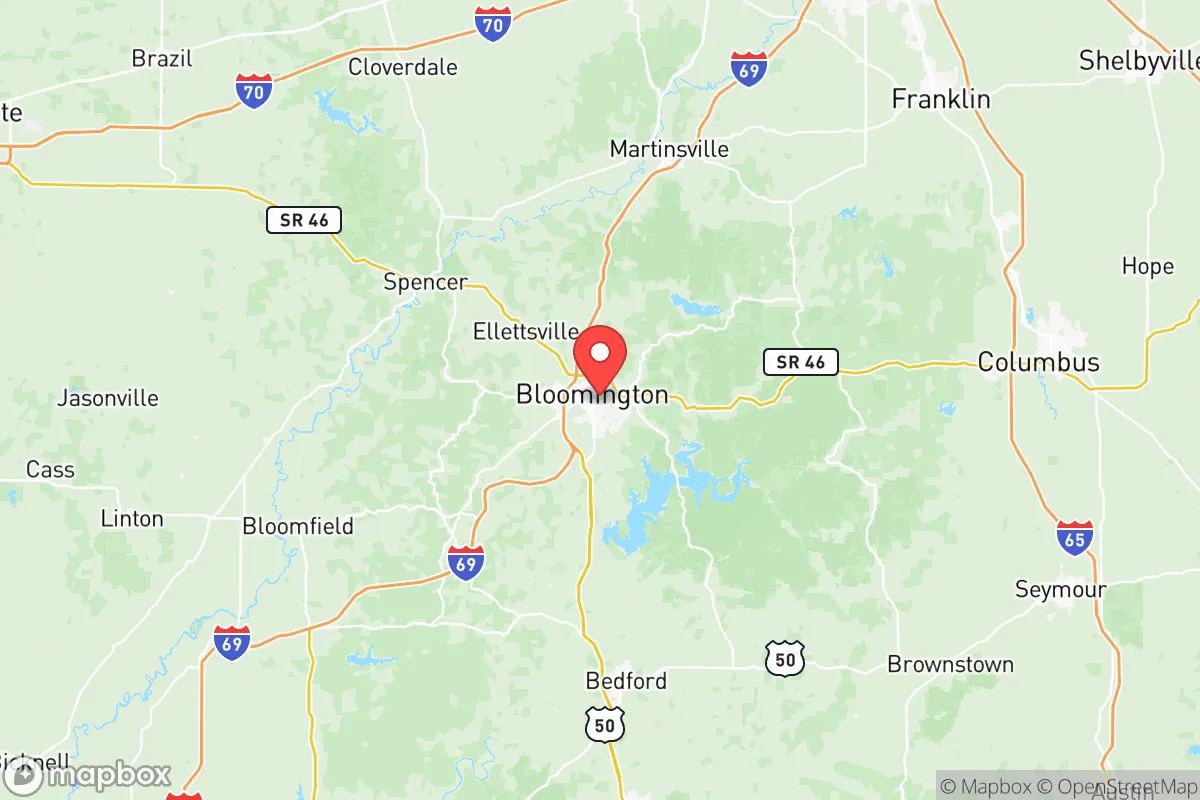
Photo: Wikipedia
Personal Sovereignty in Monroe County
Viable for self-reliance. Generally workable, though some barriers may limit total independence.
What does Personal Sovereignty tell us?
Personal Sovereignty measures your capacity for self-reliance and independence with minimal government friction. Higher scores mean fewer barriers between you and the way you want to live... but it assumes you have the space you need and good neighbors.
What does this tell us?
Personal Sovereignty measures your capacity for self-reliance and independence with minimal government friction. Higher scores mean fewer barriers between you and the way you want to live... but it assumes you have the space you need and good neighbors.
State Policy
Energy independence: Importer (35% of energy produced in-state)
Personal Liberty
Homesteading

Personal Liberty Analysis
Monroe County, Indiana, offers a notably high degree of personal sovereignty compared to many Midwestern counties, particularly those in the urbanized Indianapolis or Chicago spheres. The county's regulatory environment is generally light-touch, with a strong tradition of self-reliance rooted in its rural and small-town character, though the presence of Indiana University in Bloomington introduces a more progressive, sometimes conflicting, cultural undercurrent. For individuals and families prioritizing autonomy, the key is understanding the sharp contrasts between the city of Bloomington and the outlying towns like Ellettsville, Stinesville, Harrodsburg, Clear Creek, and Unionville, where local governance and community norms differ significantly.
Tax burden and regulatory posture across Monroe County
Indiana's state-level tax structure is favorable for those seeking lower fiscal burdens. The state has a flat income tax rate of 3.15% (as of 2024) and a sales tax of 7%, which is moderate nationally. Property taxes in Monroe County are assessed at roughly 0.8% to 1.2% of a home's assessed value, which is below the national average. However, the local regulatory posture varies by jurisdiction. Bloomington has a more active municipal code, including rental registration, short-term rental restrictions, and a citywide plastic bag ban, which some residents view as overreach. In contrast, Ellettsville and Stinesville maintain far fewer local ordinances, with minimal business licensing requirements and no city-level bans on common items. The unincorporated areas of the county, such as Clear Creek and Unionville, are governed primarily by county code, which is generally permissive regarding land use and home-based businesses. For a resident seeking the lowest regulatory footprint, the rural townships offer a clear advantage over the Bloomington city limits.
Self-defense rights and gun law specifics in Monroe County
Indiana is a "constitutional carry" state, meaning no permit is required to carry a handgun openly or concealed for any law-abiding adult 18 or older. Monroe County does not impose any additional local gun ordinances beyond state law, so the legal framework is uniform across the county. This means that in Ellettsville or Harrodsburg, the same self-defense rights apply as in Bloomington. The county sheriff's office is generally supportive of Second Amendment rights, and there are no local "red flag" laws beyond the state's own extreme risk protection order statute, which requires a court order based on specific evidence. For practical self-defense, the county has several gun ranges and retailers, particularly in the more rural areas near Unionville and Clear Creek. The primary difference is cultural: in Bloomington, open carry may draw more attention from the public, whereas in the outlying towns it is unremarkable. For a family prioritizing self-defense autonomy, Monroe County offers a solid legal foundation with no local restrictions to worry about.
Self-reliance and homesteading viability: lot sizes, zoning, and off-grid feasibility
The viability of a self-reliant lifestyle in Monroe County depends heavily on location. Within the Bloomington city limits, residential lots are typically small (0.1 to 0.3 acres), and zoning restricts keeping livestock, building secondary dwellings, or installing alternative energy systems without permits. However, once you move to the unincorporated areas or smaller towns, the picture changes dramatically. Unionville and Clear Creek are prime areas for homesteading, with many properties on 1 to 10 acres, and county zoning allows for chickens, goats, and even small-scale farming as a matter of right. Stinesville and Harrodsburg are similarly permissive, with many residents maintaining large gardens, rainwater collection systems, and wood-burning stoves. Off-grid living is legally feasible in the unincorporated townships, though the county does require a septic system permit and a building permit for any permanent structure. Solar panels and wind turbines are allowed without special county-level restrictions, though homeowners associations (HOAs) in some subdivisions may impose limits. For a family seeking to build a self-sufficient homestead, the rural townships of Monroe County offer a realistic and legally straightforward path, far more so than the urbanized areas of the county.
Personal liberties: parental rights, medical autonomy, speech, and property
Indiana law provides strong protections for parental rights, including a state statute affirming parents' fundamental right to direct the upbringing, education, and healthcare of their children. Monroe County school districts, including the Monroe County Community School Corporation (MCCSC) and the Richland-Bean Blossom Community School Corporation (serving Ellettsville and Stinesville), generally respect these rights, though the MCCSC in Bloomington has faced debates over curriculum transparency and library materials. Medical autonomy is similarly robust at the state level, with Indiana not mandating COVID-19 vaccines for employment or school attendance, and with broad exemptions for religious and philosophical objections to medical procedures. Free speech is protected under both the U.S. and Indiana constitutions, and Monroe County has no local ordinances restricting political speech or assembly, though the Bloomington city council has passed resolutions on national issues that some residents find performative. Property rights are well-protected, with Indiana's "right to farm" law shielding agricultural operations from nuisance lawsuits, which benefits homesteaders in Unionville and Clear Creek. The county's eminent domain process is standard, with no local expansions of government taking power. Overall, personal liberties in Monroe County are strong, with the primary friction point being the cultural and policy divide between Bloomington and the rest of the county.
In comparison to other Indiana counties, Monroe County offers a balanced sovereignty environment: the state provides a solid foundation of low taxes, constitutional carry, and parental rights, while the county's rural areas allow for genuine self-reliance and minimal local regulation. The trade-off is that Bloomington itself is a more regulated, progressive enclave, so the degree of personal freedom a resident experiences depends almost entirely on whether they choose to live within the city limits or in the surrounding townships. For a conservative-leaning individual or family seeking maximum autonomy, the clear recommendation is to settle in Ellettsville, Stinesville, Harrodsburg, Clear Creek, or Unionville, where the regulatory touch is lightest and the culture of self-reliance is strongest.

* Values derived from national, state, county, city and local statistics and may differ in a specific area. Last updated: 2026-06-17T18:22:13.000Z
Narrative content on this page is AI-generated and may contain mistakes. Verify any details that matter before acting on them.
ReloMaps may earn a commission from affiliate links at no extra cost to you.

