
Photo: Wikipedia
Personal Sovereignty in Madison County
Viable for self-reliance. Generally workable, though some barriers may limit total independence.
What does Personal Sovereignty tell us?
Personal Sovereignty measures your capacity for self-reliance and independence with minimal government friction. Higher scores mean fewer barriers between you and the way you want to live... but it assumes you have the space you need and good neighbors.
What does this tell us?
Personal Sovereignty measures your capacity for self-reliance and independence with minimal government friction. Higher scores mean fewer barriers between you and the way you want to live... but it assumes you have the space you need and good neighbors.
State Policy
Energy independence: Importer (35% of energy produced in-state)
Personal Liberty
Homesteading

Personal Liberty Analysis
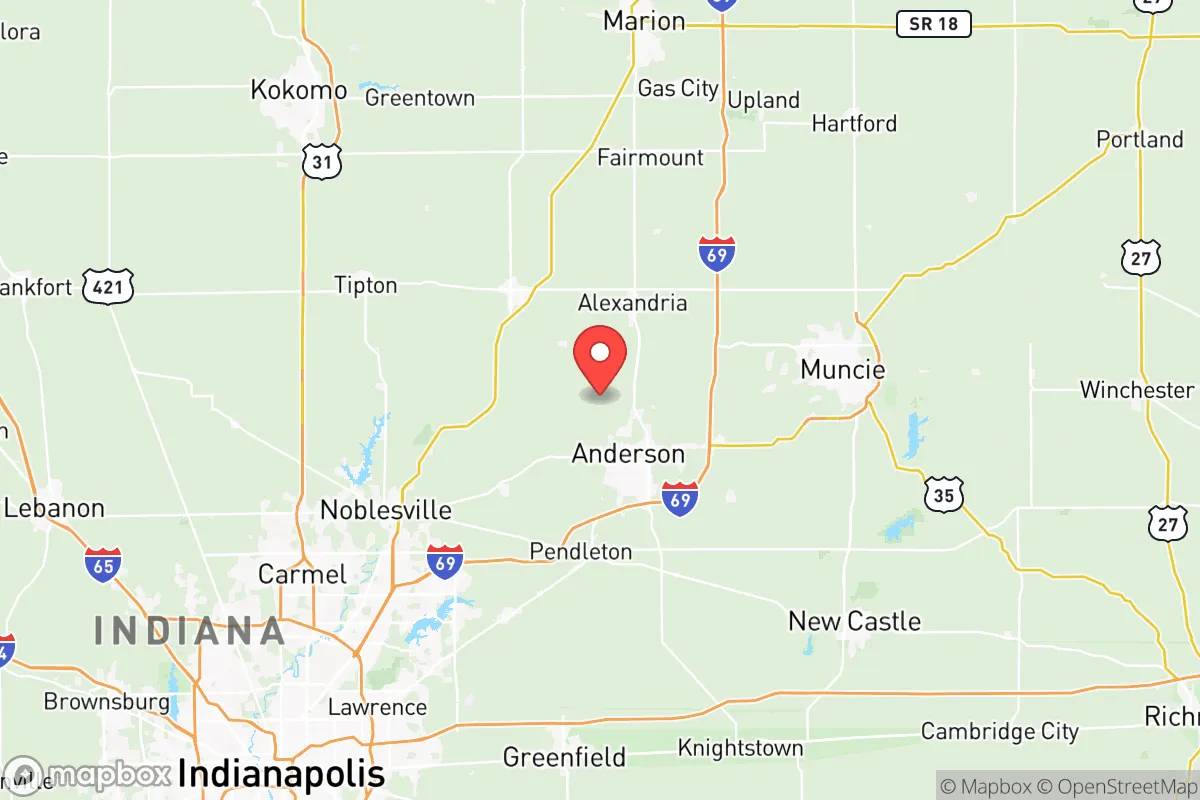
Madison County, Indiana, offers a notably high degree of personal sovereignty, anchored in a state-level legal framework that prioritizes individual autonomy over expansive government intervention. Residents in cities like Anderson, Elwood, and Pendleton operate within a regulatory environment that is generally light-touch, particularly when compared to neighboring states like Illinois or Michigan. The county’s mix of small industrial cities and expansive rural farmland creates a landscape where self-reliance is not just a cultural value but a practical necessity, with local governance typically deferring to state preemption on key issues like firearms and property rights.
Tax burden and regulatory posture: How Madison County compares to surrounding areas
Indiana’s tax structure is among the most favorable in the Midwest for those seeking to minimize government overhead. The state imposes a flat income tax rate of 3.15% as of 2025, and Madison County’s combined property tax rate averages roughly 1.1% of assessed home value, which is below the national average. Local government in cities like Anderson and Alexandria maintains a relatively hands-off approach to business regulation, with no county-level occupational licensing beyond state mandates. The regulatory posture is particularly light in unincorporated areas of the county, such as the rural stretches near Frankton and Orestes, where zoning restrictions are minimal and building permits are straightforward. This contrasts with the more stringent codes found in larger Indiana counties like Marion or Hamilton, making Madison County a practical choice for those who value low administrative friction in their daily lives.
Self-defense and gun law specifics: What Indiana’s permitless carry means for Madison County
Indiana is a permitless carry state, meaning any law-abiding adult 18 or older can carry a handgun openly or concealed without a license. This law, effective since July 2022, is fully operative in Madison County, and local law enforcement in Anderson, Elwood, and Pendleton generally respect this right without imposing additional local restrictions. The county has no standalone firearm ordinances that exceed state law, and the sheriff’s office in Madison County is known for issuing permits for those who still wish to obtain one for reciprocity purposes. Stand-your-ground and castle doctrine protections are codified in state statute, providing strong legal cover for defensive use of force. For residents in rural areas like Summitville or the outskirts of Lapel, the ability to defend one’s property without bureaucratic hurdles is a tangible benefit of living in this jurisdiction.
Self-reliance and homesteading viability: Lot sizes, zoning, and off-grid feasibility across the county
Madison County offers substantial opportunities for self-reliant living, particularly in its unincorporated townships. Minimum lot sizes in agricultural zones are typically one to two acres, and many parcels in areas near Frankton, Orestes, and the northern reaches of the county are available at prices well below the national median. Zoning regulations in these rural pockets are permissive regarding accessory structures, livestock, and small-scale farming. Off-grid feasibility is moderate: while Indiana does not mandate grid connection for new homes, the county requires a septic system permit and well water testing, which are straightforward to obtain. Solar panel installation is unrestricted at the county level, though net metering policies are dictated by the state’s investor-owned utilities. For those seeking maximum autonomy, the rural townships around Ingalls and the farmland between Pendleton and Markleville offer the most flexibility, while the city limits of Anderson impose stricter building codes and utility hookup requirements.
Personal liberties: Parental rights, medical autonomy, speech, and property protections
Indiana law provides strong protections for parental rights, including a statutory presumption that parents act in their child’s best interest and a requirement that schools obtain parental consent before administering surveys or medical services. Madison County school districts, including Anderson Community Schools and South Madison Community Schools, generally adhere to these state mandates without local overreach. Medical autonomy is shaped by Indiana’s broad conscientious objection laws, which allow healthcare providers and individuals to refuse participation in procedures they find objectionable. Free speech protections are robust, with no county-level ordinances restricting expressive activity beyond state nuisance laws. Property rights are reinforced by Indiana’s right-to-farm law, which shields agricultural operations from nuisance lawsuits in rural areas of the county. These legal frameworks collectively create an environment where personal decision-making is largely respected, with local government intervention kept to a minimum.
Overall, Madison County ranks among the more sovereignty-friendly areas in Indiana, offering a balance of low taxes, permissive gun laws, and viable homesteading options that appeal to those prioritizing personal freedom. While it does not match the extreme libertarian posture of some rural western counties, it provides a practical, middle-ground autonomy that is increasingly rare in the Midwest. For single individuals and families who value self-reliance without complete isolation, the county’s mix of small-city amenities and rural flexibility makes it a compelling choice in the region.

* Values derived from national, state, county, city and local statistics and may differ in a specific area. Last updated: 2026-07-03T23:54:40.000Z
Narrative content on this page is AI-generated and may contain mistakes. Verify any details that matter before acting on them.
ReloMaps may earn a commission from affiliate links at no extra cost to you.

