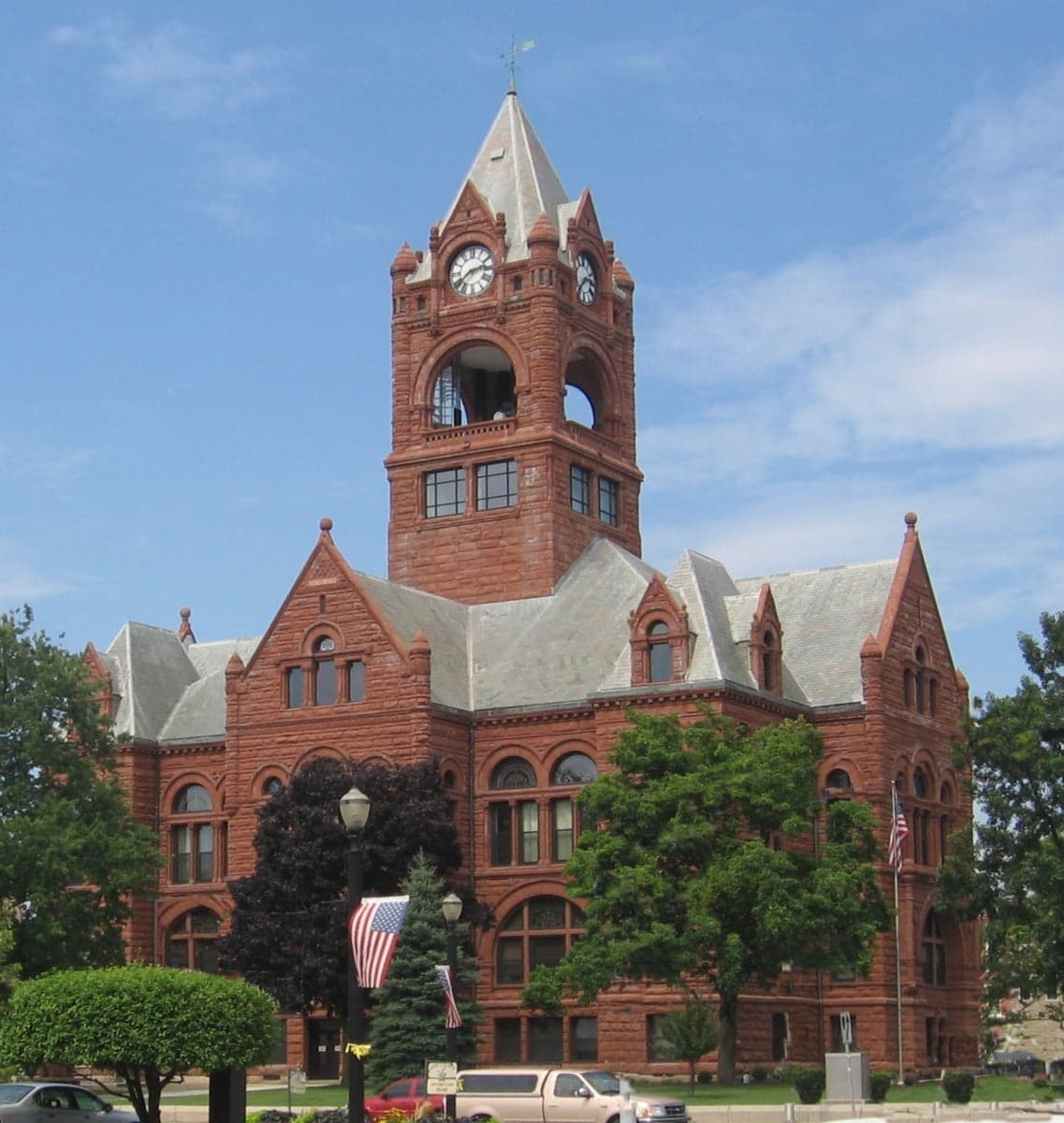
Photo: Wikipedia
Personal Sovereignty in Laporte County
Viable for self-reliance. Generally workable, though some barriers may limit total independence.
What does Personal Sovereignty tell us?
Personal Sovereignty measures your capacity for self-reliance and independence with minimal government friction. Higher scores mean fewer barriers between you and the way you want to live... but it assumes you have the space you need and good neighbors.
What does this tell us?
Personal Sovereignty measures your capacity for self-reliance and independence with minimal government friction. Higher scores mean fewer barriers between you and the way you want to live... but it assumes you have the space you need and good neighbors.
State Policy
Energy independence: Importer (35% of energy produced in-state)
Personal Liberty
Homesteading

Personal Liberty Analysis
LaPorte County, Indiana, offers a notably high degree of personal sovereignty compared to many Midwestern counties, driven by a combination of Indiana’s strong preemption laws, a relatively light local regulatory touch, and a culture that values self-reliance. For individuals and families who prioritize autonomy over government oversight—particularly in areas like taxation, self-defense, and property use—this corner of Northwest Indiana presents a compelling, freedom-friendly environment that stands in contrast to the more restrictive policies found just across the state line in Illinois. The county’s small cities like Michigan City and La Porte offer distinct microclimates of regulation, while rural towns such as Wanatah, Kingsbury, and Rolling Prairie provide even greater latitude for self-directed living.
Tax burden and local regulatory posture in LaPorte County
Indiana’s state-level fiscal conservatism extends into LaPorte County, keeping the overall tax burden moderate. The state’s property tax cap—limiting levies to 1% of assessed value for owner-occupied homes, 2% for rental properties, and 3% for businesses—provides a hard ceiling that county officials cannot exceed. LaPorte County’s effective property tax rate typically falls between 1.0% and 1.2%, which is competitive nationally but slightly higher than Indiana’s rural average due to the county’s mix of municipal services and school funding. The state income tax is a flat 3.23%, with no county-level surtax in LaPorte. Sales tax is 7% statewide, with no local option to raise it. Regulatory posture is generally light touch: zoning is primarily administered at the township level, meaning the unincorporated areas like Door Village and Springville face fewer restrictions than properties inside Michigan City’s city limits. Business licensing is straightforward, and there are no county-level mandates beyond state health and safety codes. The key distinction is that Michigan City enforces stricter building and rental codes than rural townships, so autonomy-minded buyers should target the unincorporated areas or smaller towns to minimize regulatory friction.
Self-defense rights and gun law specifics in the county
Indiana is a constitutional carry state, and LaPorte County fully reflects that. No permit is required to carry a handgun openly or concealed for any law-abiding adult 18 or older (federal age restrictions for handgun purchases apply at 21). The county sheriff’s office issues standard and lifetime licenses-to-carry for reciprocity purposes, with approval rates that are effectively 100% for applicants with no disqualifying criminal history. Indiana preempts local firearm ordinances, so Michigan City and La Porte cannot impose their own bans on weapons in public parks, restrictions on magazine capacity, or waiting periods. The legal framework also strongly supports self-defense in the home: Indiana’s “castle doctrine” carries no duty to retreat, and the expanded stand-your-ground law applies anywhere a person is lawfully present. On the ground, gun culture is robust and visible: gun shops and ranges are common in rural areas and around the outskirts of Michigan City, and private firearms sales between individuals require no background check or paperwork. The practical upshot is that LaPorte County ranks among the most gun-permissive areas in the Midwest, with daily life reflecting that reality—lawful carry is common, and local law enforcement is supportive of the Second Amendment.
Self-reliance and homesteading viability: lot sizes, zoning, and off-grid feasibility
For those seeking to live off-grid or practice homesteading, LaPorte County is highly accommodating, though viability varies by location. In unincorporated areas and townships like Wills Township and Hanna Township, minimum lot sizes are typically 1 to 5 acres for residential use, and agricultural exemptions allow for larger parcels without additional permitting. Raising livestock (chickens, goats, pigs) is generally unrestricted outside city limits, though Michigan City and La Porte enforce limits on fowl and swine within their boundaries. Off-grid living is legally feasible: there are no county ordinances requiring connection to municipal water or sewer in unincorporated areas, so wells and septic systems are the norm. Solar panels, rainwater collection, and composting toilets are not prohibited, though building permits are still required for primary dwellings under state codes. For readers looking to minimize building restrictions, a property in Center Township or Jackson Township offers the maximum latitude—no HOA overlays, minimal setbacks, and no aesthetic controls. The main caveat is that Michigan City’s extraterritorial zoning can extend up to two miles beyond its city limits, so buyers should verify whether a rural parcel falls within that zone before purchasing. Overall, LaPorte County is one of the most homestead-friendly counties in the Chicago commuter belt, offering a genuine self-reliance alternative without the zoning hostility of nearby Lake County or the stricter codes of Porter County.
Personal liberties: parental rights, medical autonomy, speech, and property
Indiana’s legal framework provides strong protection for personal liberties, and LaPorte County local governance generally respects these boundaries. Parental rights are reinforced by state law: there is no COVID-era vaccine mandate for children attending public schools, and parental consent is required for most medical procedures on minors. The county’s public school districts—including Michigan City Area Schools and La Porte Community School Corporation—operate under state law that prohibits mask mandates and grants parents broad opt-out rights from curricular materials. Medical autonomy is similarly robust: there are no local ordinances restricting the purchase of raw milk, nutritional supplements, or herbal remedies, and Indiana’s religious exemption for immunizations is widely honored. Free speech protections are standard for Indiana, with no unusual local speech codes or assembly restrictions. Property rights are the strongest pillar: Indiana’s property laws include strong eminent domain protections, requiring a heightened public-use standard and full market-value compensation. The county does not enforce rent control or landlord licensing beyond state registration. The only notable limitation is that Michigan City’s noise and nuisance ordinances are enforced more aggressively than in rural areas, so individuals who run vehicle repair businesses or host large gatherings should locate outside the city’s jurisdiction.
In the broader context of the Great Lakes region, LaPorte County offers an above-average sovereignty profile that balances tax affordability with real freedom of action. While it is not as deregulated as some counties in deeply rural Indiana or the Dakotas, it far exceeds the autonomy available in Illinois, Southwest Michigan, or the greater Chicago area. For a conservative-leaning individual or family weighing relocation, LaPorte County’s combination of constitutional carry, low property tax caps, off-grid viability, and robust parental rights places it among the top 20% of Midwest counties for personal sovereignty. The trade-offs are minimal: slightly higher property taxes than the Indiana state average, and a need to avoid Michigan City’s city limits if maximum autonomy is the goal. For those who choose townships like Springfield or Union, the county delivers on its promise of independence without the ideological friction often encountered in more populated areas.

* Values derived from national, state, county, city and local statistics and may differ in a specific area. Last updated: 2026-06-29T01:09:44.000Z
Narrative content on this page is AI-generated and may contain mistakes. Verify any details that matter before acting on them.
ReloMaps may earn a commission from affiliate links at no extra cost to you.

