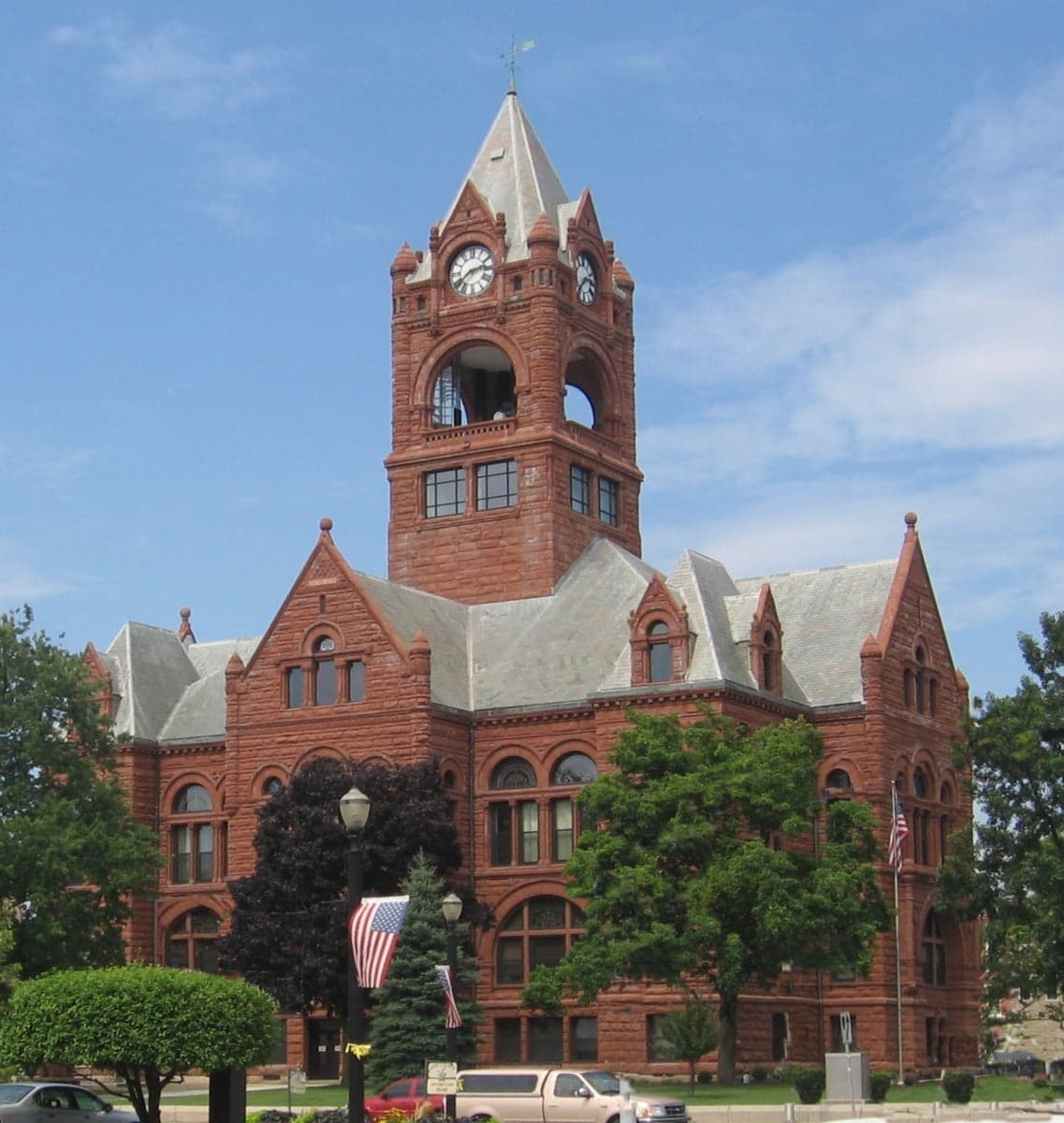
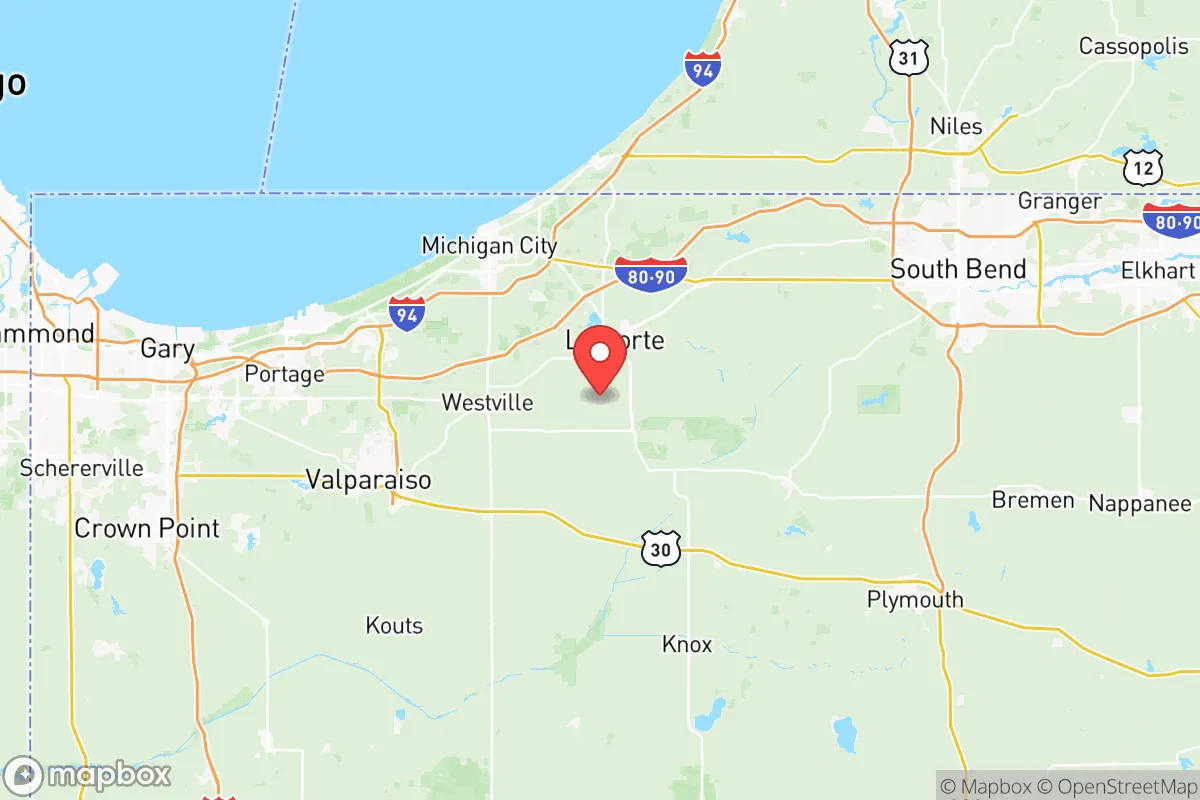
Photo: Wikipedia
Demographics of Laporte County
Affluence Level in Laporte County
A middle-class area roughly in line with national averages across income, home values, education, and employment.
People of Laporte County
LaPorte County, Indiana, is a region of 112,141 residents defined by its small-town manufacturing roots and a gradually diversifying population that remains more than three-quarters white. The county’s character is shaped by its position between the industrial legacy of Michigan City and the agricultural calm of its southern townships, producing a community that values practicality, tradition, and self-reliance. With just 1.7% foreign-born residents and a college attainment rate of 21.7%, LaPorte County is a place where generational families still anchor the social fabric, even as modest demographic shifts begin to reshape the landscape.
Settlement & growth (pre-1960)
Before European settlement, the land that is now LaPorte County was part of the ancestral territory of the Miami and Potawatomi nations, who lived along the Kankakee and Trail Creek watersheds. The Potawatomi maintained seasonal villages near what would later become Michigan City and La Porte, relying on fishing, hunting, and trade. The 1830s Indian Removal Act forcibly displaced these communities, opening the region to American settlers under the 1832 Treaty of Tippecanoe.
The first major wave of Anglo-American settlers arrived between 1832 and 1850, chiefly from New England, New York, and Ohio. These families—many of Yankee Protestant stock—established the county's foundational towns: La Porte (the county seat, founded 1832), Michigan City (1830), and Kingsbury (1840s). They cleared forests, built sawmills, and laid out farms along the fertile moraine soils. The completion of the Michigan Southern Railroad through Michigan City in the 1850s transformed the port town into a manufacturing and transportation hub, drawing a second wave of immigrants.
From the 1850s through the 1890s, German and Irish immigrants arrived in substantial numbers to work in the railroad yards, sawmills, and factories of Michigan City. German families settled heavily in the Linn Grove and Wanatah areas, where they established Lutheran churches and tight-knit farming communities. Irish laborers concentrated in Michigan City’s east side, particularly around the waterfront and rail corridors. A smaller but notable Polish community formed in Rolling Prairie and parts of southern La Porte, drawn by agricultural opportunities and factory work in the early 1900s.
The early 20th century brought Italian and Hungarian immigrants to Michigan City’s expanding steel-related industries at the Pullman-Standard plant and the Hoosier Steel Foundry. By the 1920s, the county’s population had grown to roughly 60,000, and the industrial corridor along the Lake Michigan shoreline became a national destination for workers. The Great Depression stalled migration, but World War II revived the region’s economy, prompting a small influx of Appalachian whites from Kentucky and Tennessee into La Porte and Westville for defense plant jobs. By 1960, the population stood at about 95,000, with a manufacturing-based identity firmly established.
Modern era (post-1965)
The 1965 Hart-Cellar Act had a limited effect on LaPorte County compared to major urban centers, but it did produce slow, measurable change. The county’s foreign-born share remains low at 1.7%, but the composition shifted. A small Hispanic population—many of Mexican and Central American background—began arriving in the 1970s and 1980s, drawn initially to agricultural work in the onion and mint fields of Kingsbury and Union Mills. Today, Hispanics make up 7.4% of the county’s population, with growing concentrations in Michigan City’s west side and in the unincorporated areas west of Trail Creek.
The Black population, currently 10.2%, has deeper roots. Michigan City developed a modest Black community during the Great Migration (1940–1970), as African American families moved from the Deep South to work at the Pullman-Standard plant and later at the NIPSCO power plant. This community remains centered in Michigan City’s Eastport neighborhood and parts of La Porte’s south side. Unlike many Indiana counties where Black populations have declined since 2000, LaPorte County’s Black share has been relatively stable, sustained by families who have been in the area for two or three generations.
East/Southeast Asian communities (0.5%) and Indian subcontinent residents (0.1%) remain minimal, largely consisting of professionals working at Franciscan Health hospitals in Michigan City and La Porte, along with a handful of engineers at the Alpha Resources facility in Kingsbury Industrial Park. The Asian population is not concentrated in a single enclave but is dispersed across the county’s larger towns. Arab residents, representing less than 0.2% of the population, are almost entirely families operating convenience stores and gas stations in Michigan City.
Domestic migration since 2000 has been modest. The county has seen a small but steady outflow of younger adults to Indianapolis and Chicago suburbs, offset by an influx of retirees from northern Indiana and southern Michigan seeking lower property taxes and a slower pace of life. Suburbanization has been minimal; unlike Lake County to the west, LaPorte County has not experienced dense new subdivisions. Growth is mostly occurring along the U.S. 20 corridor between Michigan City and Westville, where new single-family homes cater to commuters working in Porter County’s industrial corridor.
The future
LaPorte County is projected to see slow population growth over the next 10–20 years, likely reaching 115,000–120,000 by 2040. The Hispanic share will probably increase to 10–12%, driven by younger families settling in Michigan City and the southern agricultural townships. The Black population share is expected to remain near current levels, as outmigration to larger cities is balanced by some return migration from Chicago. No large-scale Asian or Indian growth is forecast; the county lacks the professional job base that typically attracts those groups.
The most significant cultural change may come from an aging white population and a slowly diversifying younger cohort. As manufacturing employment continues to shrink, the county’s identity is shifting from a blue-collar industrial base to one more reliant on healthcare, logistics, and tourism (related to the Indiana Dunes). This transition will likely create cultural friction between long-established white working-class families and newer Hispanic arrivals, but the small population scale means these changes will unfold gradually rather than disruptively. The county is unlikely to become a majority-minority area within the next 20 years.
For a family or individual moving in now, LaPorte County remains a place where community ties are strong, costs are low, and demographic change happens slowly enough to be absorbed without dramatic social upheaval. The region’s character—practical, rooted, and independent—will persist, but newcomers should expect a more varied cultural landscape in Michigan City and along the U.S. 20 corridor than in the more homogenous rural townships to the south.

* Values derived from national, state, county, city and local statistics and may differ in a specific area. Last updated: 2026-06-29T01:09:44.000Z
Narrative content on this page is AI-generated and may contain mistakes. Verify any details that matter before acting on them.
ReloMaps may earn a commission from affiliate links at no extra cost to you.

