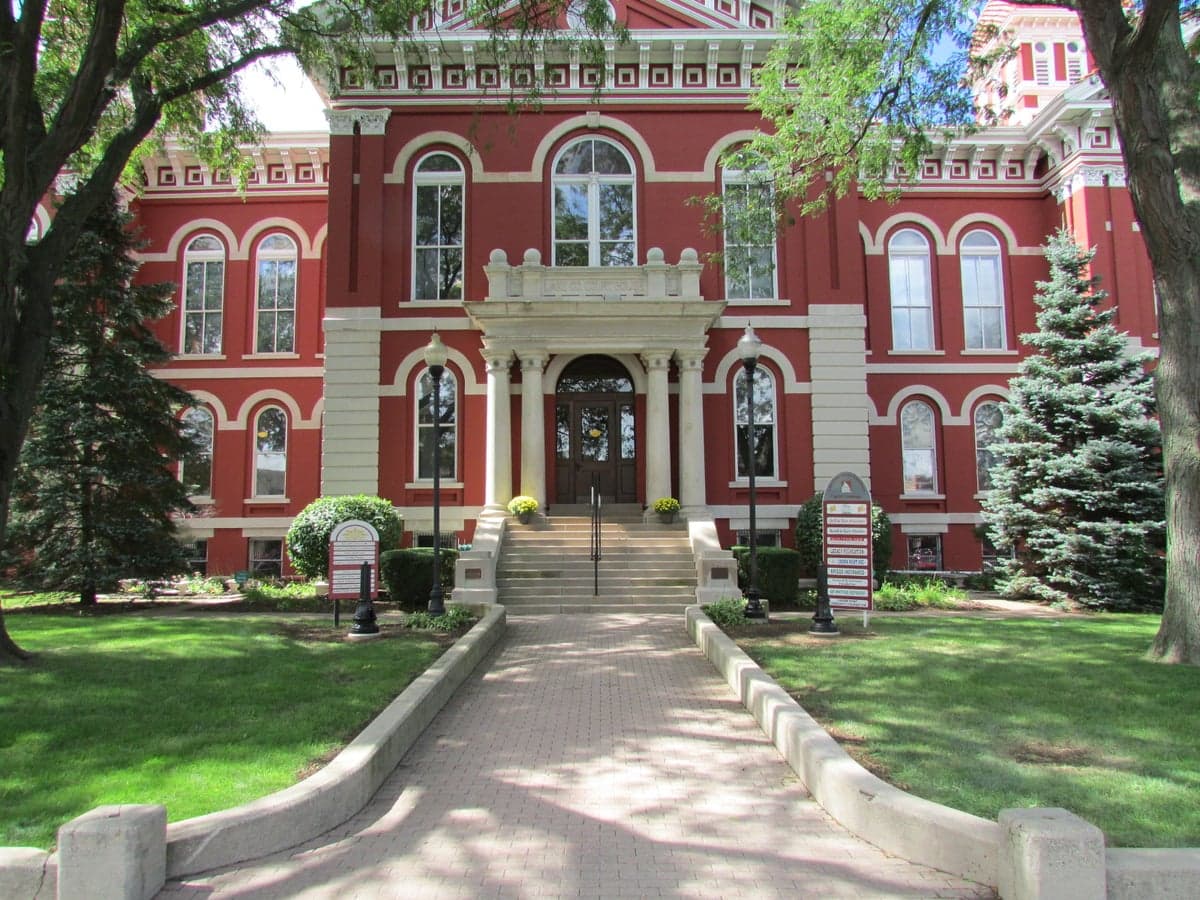
Photo: Wikipedia
Quality of Life in Lake County
A livable area that tracks near national norms for affordability, walkability, and neighborhood health.
What does Quality of Life tell us?
Quality of Life measures an area by evaluating factors like cost of living, nearby amenities, country club access, airport proximity, socioeconomic signals and neighborhood character. For large states, this is a general average — quality of life can vary dramatically between metro areas, suburbs, and rural communities within the same state.
What does this tell us?
Quality of Life measures an area by evaluating factors like cost of living, nearby amenities, country club access, airport proximity, socioeconomic signals and neighborhood character. For large states, this is a general average — quality of life can vary dramatically between metro areas, suburbs, and rural communities within the same state.
Cost of Living
13% below national average
113%
The Real Cost of Living in Lake County for 2026
| Tier | Individual | Family (4) |
|---|---|---|
| Survival | $17k | $33k |
| Comfortable | $42k | $61k |
| Luxury | $120k+ | $186k+ |
| Elite (Top 5%) | $141k+ | $219k+ |
Quality-of-Life Analysis
Lake County, Indiana, offers a broad quality-of-life spectrum that ranges from dense, amenity-rich urban centers to quiet, unincorporated rural hamlets, all within commuting distance of Chicago. The county’s character shifts noticeably from the industrial lakefront communities in the north to the farmland and conservation areas in the south, attracting everyone from young professionals seeking nightlife and transit access to families and retirees looking for space and lower taxes. With a cost of living index of 87 (100 = U.S. average), a median home value of $214,700, and a median rent of $1,094, the county provides tangible affordability advantages over neighboring Cook County, Illinois, while still offering distinct lifestyle choices within its own borders.
Largest town(s) & population centers
Gary remains the county’s largest city by population, though its daily life is defined by ongoing urban revitalization efforts, a shrinking population, and a heavy industrial legacy tied to U.S. Steel’s Gary Works. Residents here experience a lower cost of living than the county average, but also face higher crime rates and fewer retail amenities. Hammond and East Chicago form the core of the “North Lake” industrial corridor, offering dense, walkable neighborhoods near the Lake Michigan shoreline, with direct South Shore Line train access to downtown Chicago. Merrillville serves as the county’s commercial and retail hub, anchored by the Southlake Mall and a dense concentration of big-box stores, restaurants, and medical offices — making it the go-to destination for shopping and services for much of the county. Crown Point, the county seat, offers a more suburban, family-oriented lifestyle with a historic downtown square, strong public schools (Crown Point Community School Corporation), and newer subdivisions that attract commuters. Schererville and St. John are fast-growing, upper-middle-class suburbs with excellent schools (Lake Central School Corporation) and abundant new housing developments, drawing families from both Illinois and other parts of the county.
Smaller towns & rural pockets
South of the U.S. 30 corridor, the county transitions into genuine rural and small-town living. Lowell (population ~10,000) anchors the southern part of the county with a walkable historic downtown, the annual Lake County Fair, and access to the Cedar Lake and Kankakee River conservation areas. Cedar Lake itself is a small town built around a 770-acre natural lake, offering a resort-like summer lifestyle with fishing, boating, and lakefront homes that command premium prices relative to the county average. Dyer and Munster are smaller, affluent villages along the Illinois border that feel like extensions of Chicago’s south suburbs, with excellent parks, low crime, and high property values. Unincorporated areas such as Shelby, Sumava Resorts, and Lake Village in southern Lake County consist of scattered homes, mobile home parks, and farmland, where residents trade convenience for privacy and lower land costs. The Kankakee River State Park and LaSalle Fish & Wildlife Area provide outdoor recreation for these rural pockets, with canoeing, hiking, and hunting opportunities that are absent in the northern part of the county.
Cost & lifestyle range
The cost and lifestyle spread across Lake County is wide. At the low end, Gary and East Chicago offer median home values well below the county’s $214,700 average — often under $100,000 — but with higher property taxes relative to home value and fewer retail or dining options. At the high end, St. John and Munster see median home values exceeding $350,000, with top-rated schools, low crime, and easy access to Chicago via the South Shore Line or I-80/94. The average commute of 28.8 minutes reflects the county’s dual role: many residents drive to jobs in Lake County’s industrial and healthcare sectors (Methodist Hospitals, Franciscan Health, ArcelorMittal), while others commute 45–60 minutes to Chicago. Renters find the best value in Hammond and Merrillville, where median rents hover near the county’s $1,094 average, while Crown Point and Schererville command higher rents for newer apartment complexes near shopping and highways. Property taxes in Lake County are among the highest in Indiana (often 2.0–2.5% of assessed value), which partially offsets the low home prices for buyers.
Lake County suits a wide range of residents, but it works best for those who value proximity to Chicago without paying Illinois income taxes or housing costs. Families thrive in the southern suburbs like Crown Point and St. John, where schools and safety are priorities. Commuters and urbanists find their niche in Hammond or Munster, where train access and walkable downtowns reduce car dependence. Outdoor enthusiasts and those seeking land gravitate to the rural south around Lowell and Cedar Lake. The county’s diversity of settings — from post-industrial lakefront to cornfield quiet — means that the key to thriving here is matching your lifestyle expectations to the specific town, as the experience varies dramatically from one end of the county to the other.

Crime in Lake County
Generally safer than 59% of comparable U.S. locations.
Violent CrimeViolent Crime Analysis
Property CrimeProperty Crime Analysis
Crime Analysis
Lake County, Indiana, reports a violent crime rate of 263 incidents per 100,000 residents and a property crime rate of 1,093.6 per 100,000, figures that place it above both the state and national averages and signal a need for careful neighborhood selection. While the county as a whole carries a higher risk profile than many of its peers, safety conditions vary dramatically from one municipality to the next, with some communities experiencing significant public safety challenges driven in part by local prosecutorial policies and others maintaining much lower crime rates. The presence of a large urban core and progressive judicial leadership in certain jurisdictions has raised concerns about recidivism and the practical impact on law-abiding residents.
Crime in context
Lake County's violent crime rate of 263 per 100,000 is substantially higher than the Indiana state average of roughly 210 per 100,000 and exceeds the national rate of approximately 245 per 100,000. Property crime in the county, at 1,093.6 per 100,000, also runs well above both the Indiana average (around 870 per 100,000) and the national median (about 780 per 100,000). The Lake County Prosecutor's Office, which has been led in recent cycles by progressives who emphasize diversion programs and reduced sentencing for nonviolent offenders, has faced criticism from law enforcement groups who argue that lenient charging policies contribute to repeat offending and a diminished deterrent effect. In nearby counties like Porter and LaPorte, where district attorneys take a more traditional approach to prosecution, violent crime rates are markedly lower — Porter County, for example, reports a violent crime rate roughly half of Lake County's.
What residents experience
Community safety perceptions in Lake County are heavily shaped by which municipality a person lives in. Gary remains the county's most dangerous city, with a violent crime rate exceeding 800 per 100,000 driven by persistent gang violence and property crime. Hammond and East Chicago also report elevated rates, with vehicle thefts and burglaries being frequent complaints among residents. In these cities, many residents report feeling unsafe walking alone after dark and rely on constant security measures like alarm systems and surveillance cameras. In contrast, Crown Point, Munster, and St. John consistently log violent crime rates below 100 per 100,000, comparable to safe suburban communities across the Midwest. Residents of these towns describe a very different reality — low fear of property theft, open use of parks and trails, and minimal concern about violent encounters. The Lake County Sheriff's Department provides patrol coverage to unincorporated areas, but response times vary significantly depending on distance from district stations.
Prosecutorial policies and neighborhood-level variation
A critical factor shaping safety outcomes in Lake County is the ideological orientation of the judiciary and prosecutor's office. The Lake County Prosecutor's Office has implemented policies under recent leadership that prioritize restorative justice and reduced incarceration for drug-related offenses. While these policies are framed as reforms to address mass incarceration, critics — including the Indiana Prosecuting Attorneys Council — argue they lead to shorter sentences and quicker release for repeat offenders, which erodes public confidence and encourages property criminals to operate with impunity. In specific neighborhoods like Glen Park in Gary and Robertsdale in Hammond, residents report frequent car break-ins and home burglaries, with suspects often rearrested soon after release. Meanwhile, in Schererville and Dyer, where local police maintain aggressive patrols and code enforcement, property crime rates remain roughly one-third of the county average. Readers considering a move to Lake County are advised to research not only the municipality's crime statistics but also the current criminal justice leadership in each city's court district, as this has a direct and observable effect on day-to-day safety.
* Values derived from national, state, county, city and local statistics and may differ in a specific area. Last updated: 2026-06-29T00:14:21.000Z
Narrative content on this page is AI-generated and may contain mistakes. Verify any details that matter before acting on them.
ReloMaps may earn a commission from affiliate links at no extra cost to you.

