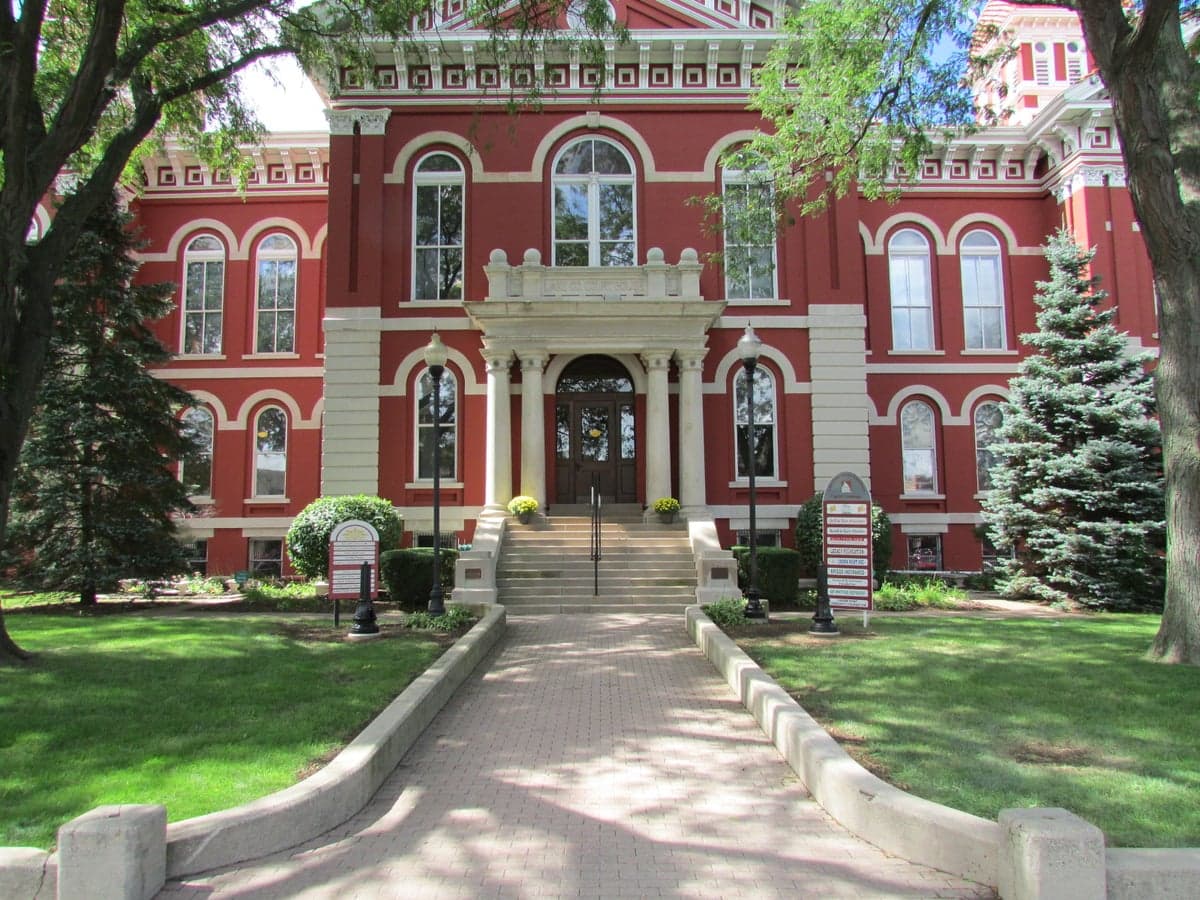
Photo: Wikipedia
Political ClimatePolitical Climate in Lake County
Showing district-level results — no local-only data available.
Local Political AnalysisPolitical Analysis of Lake County
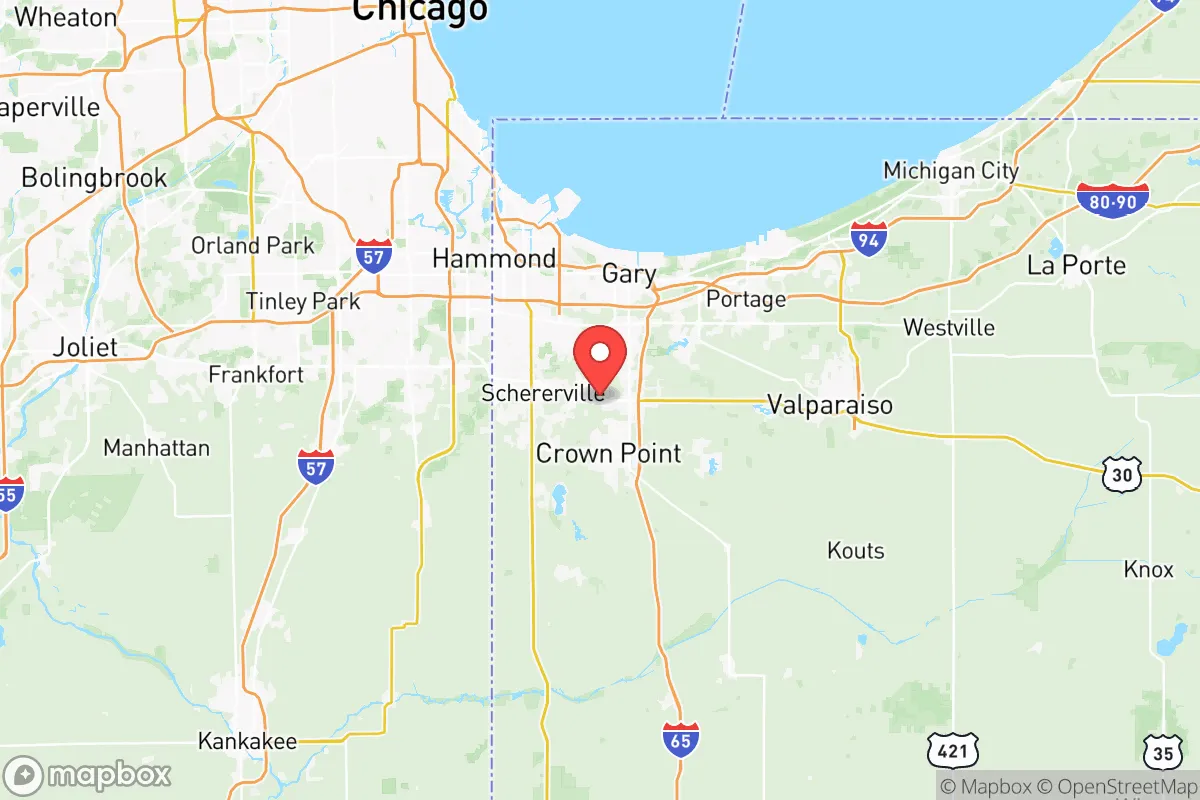
Lake County, Indiana, is the state’s most reliably Democratic stronghold, carrying a Cook PVI of D+1, which stands in stark contrast to the rest of Indiana’s R+9 rating. This isn’t a recent shift—the county has voted blue in every presidential election since 2008, and its Democratic tilt is deeply rooted in the industrial legacy of cities like Gary, Hammond, and East Chicago. However, the political landscape is far from monolithic; the county’s southern and eastern suburbs, including Crown Point, St. John, and parts of Schererville, have been trending redder over the past decade, creating a genuine urban-rural and north-south split that makes Lake County a fascinating microcosm of broader national divides.
How it compares
The gap between Lake County and the rest of Indiana is one of the widest in the state. While Indiana as a whole votes Republican by a comfortable 9-point margin, Lake County’s D+1 lean means it’s essentially a swing county in a deep-red state. This creates a unique dynamic: local elections in Lake County are often competitive, with Democrats holding most countywide offices but Republicans making steady gains in the suburban townships. For example, in the 2024 presidential race, Gary and East Chicago delivered margins of 70%+ for the Democratic candidate, while St. John and Cedar Lake flipped to the GOP by similar margins. The swing precincts are concentrated in the unincorporated areas around Schererville and Dyer, where independent and moderate voters often decide the outcome. This internal polarization means that a conservative living in St. John feels politically aligned with the state, while a liberal in Gary feels like an outlier in Indiana but at home in their own county.
What this means for residents
For conservative residents, especially in towns like Crown Point and St. John, the local political climate can feel frustratingly out of step with the state’s overall direction. County-level policies—such as zoning, public health mandates, and school board decisions—tend to reflect the Democratic majority, which can lead to friction over issues like property taxes or development regulations. Conversely, liberal residents in Gary, Hammond, and East Chicago benefit from a local government that aligns with their priorities, but they face a state legislature that consistently overrides county-level initiatives, particularly on labor rights, environmental regulations, and social policies. This tension means that both sides experience a sense of being “out of power” at different levels of government, which fuels a pragmatic, often transactional local politics where candidates focus on potholes and public safety rather than national culture wars.
Cultural and policy distinctions
Lake County’s political identity is also shaped by its unique cultural and economic history. The county is home to the largest concentration of Black and Hispanic residents in Indiana, concentrated in the northern industrial cities, which drives its Democratic lean. This diversity is reflected in local policy priorities: Lake County has been a leader in the state on issues like environmental remediation of former steel mill sites and expanding public transit connections to Chicago. At the same time, the southern suburbs are predominantly white and more conservative, with a strong emphasis on low taxes and school choice. The result is a county where a Democratic commissioner from Gary and a Republican councilman from St. John can find common ground on infrastructure projects but clash on social spending. Looking ahead, the continued suburbanization of the county’s southern half suggests the Republican trend will persist, but the Democratic base in the north remains solid enough to keep Lake County as Indiana’s most politically competitive and diverse region for the foreseeable future.

State Political ClimatePolitical Climate in Indiana
State Political AnalysisPolitical Environment in the State
Indiana is a solidly Republican state with a Cook PVI of R+9, meaning it typically votes about nine points more Republican than the national average. Over the past 20 years, the state has shifted rightward, driven by the suburbanization of Indianapolis’s outer ring and the continued dominance of rural and small-town voters, though the core of Indianapolis itself has become a reliable Democratic stronghold. The GOP holds a supermajority in the state legislature and has controlled the governor’s office for all but four of the last 20 years, making it one of the most consistently conservative state governments in the Midwest.
Urban vs. rural divide
The political map of Indiana is a classic study in contrast. Marion County (Indianapolis) is the state’s Democratic anchor, delivering margins of 60-65% for Democratic candidates in recent presidential cycles. The city’s growth, fueled by a booming life sciences sector anchored by Eli Lilly and a growing tech scene, has attracted a younger, more diverse population that leans left. Surrounding it, the "donut counties" — Hamilton, Hendricks, Johnson, and Boone — are the engine of the state’s Republican majority. Hamilton County (Carmel, Fishers, Noblesville) is one of the wealthiest and fastest-growing counties in the Midwest and routinely votes 60-65% Republican, though its suburbs are slowly trending toward the center as they densify. Lake County (Gary, Hammond) in the northwest corner is the other Democratic stronghold, a legacy of industrial unionism and a large Black population, but its influence is waning as population declines. The rest of the state — from the Fort Wayne metro (Allen County, R+15) to the Evansville area (Vanderburgh County, R+18) and the vast rural stretches of Kosciusko, Dubois, and Ripley counties — is deeply red. The 2024 presidential race saw Trump win Indiana by 19 points, with only Marion and Lake counties going for Harris.
Policy environment
Indiana’s policy environment is defined by low taxes, limited regulation, and a strong tilt toward conservative social policy. The state has a flat income tax rate of 3.05%, which is scheduled to drop to 2.9% by 2027, and a sales tax of 7% on most goods. Property taxes are capped at 1% of assessed value for owner-occupied homes, making it one of the more affordable states for homeowners. The state is a right-to-work state (enacted in 2012), which has weakened union influence, particularly in manufacturing. Education policy is dominated by a robust school choice system: Indiana has one of the nation’s largest voucher programs, and charter schools are widely available. The state also passed a law in 2022 requiring schools to post curriculum materials online and notify parents of any "human sexuality" instruction, a move that energized conservative parents. Healthcare is a mixed bag: Indiana expanded Medicaid under the Affordable Care Act in 2015 via a conservative waiver (HIP 2.0), but the state has not pursued a state-based exchange, and abortion is heavily restricted — banned after 6 weeks with narrow exceptions for rape, incest, and life of the mother, following a 2022 trigger law. Election laws are moderately restrictive: voter ID is required, early voting is available for 28 days, and no-excuse absentee voting was eliminated in 2023.
Recent policy direction
The last five years have seen Indiana’s legislature move aggressively on a range of liberty-related issues. On gun rights, Indiana became a constitutional carry state in 2022, allowing permitless carry of handguns for adults 18 and older. On parental rights and education, the 2022 "Parents’ Bill of Rights" (HB 1134) requires schools to notify parents of any changes to a student’s mental or physical health, and a 2023 law (SB 17) restricts instruction on sexual orientation and gender identity in K-3 classrooms. On medical and bodily autonomy, the near-total abortion ban (SB 1, 2022) is the most restrictive in the Midwest, with no exceptions for rape or incest until a 2023 amendment added narrow ones. On property rights, the state has a strong eminent domain law, but a 2023 law (HB 1195) limited local governments’ ability to regulate short-term rentals like Airbnb. On taxation, the flat income tax is being phased down, and the state eliminated the business personal property tax for many small businesses in 2022. On voting and ballot access, the 2023 law (SB 480) tightened absentee ballot rules, requiring a notary or two witnesses for mail-in ballots, and banned private funding of election administration. On privacy and surveillance, Indiana has no comprehensive data privacy law, but a 2023 law (HB 1006) restricted the use of facial recognition technology by police without a warrant. On speech, the state has no specific anti-SLAPP law, but a 2023 law (HB 1466) made it easier to sue for defamation in cases involving "false light" claims.
Civil unrest & political movements
Indiana has seen its share of political flashpoints, though they tend to be localized. The 2020 George Floyd protests in Indianapolis were significant, with several nights of property damage and a state of emergency declared, but the movement fizzled quickly compared to larger cities. The Indiana Black Legislative Caucus remains active, pushing for criminal justice reform, but has little legislative power. On the right, the Indiana Firearms Coalition is a powerful lobbying force, and the Indiana Family Institute drives the social conservative agenda. Immigration politics are relatively low-key: Indiana is not a border state, and there are no sanctuary cities; a 2011 law (SB 590) requires local law enforcement to cooperate with federal immigration authorities, but enforcement is uneven. Election integrity controversies flared after 2020, with the GOP-controlled legislature passing the 2023 voting restrictions, but there have been no major fraud cases or recounts that changed outcomes. A notable flashpoint was the 2023 walkout by House Democrats over the abortion ban, which delayed the session but ultimately failed to stop the bill. New residents in Bloomington (home to Indiana University) will notice a more activist, left-leaning environment, while those in Kokomo or Terre Haute will find a quieter, more conservative civic culture.
Projection
Over the next 5-10 years, Indiana is likely to remain solidly Republican, but the margins may narrow slightly. The Indianapolis metro is growing faster than the rest of the state, and its suburbs are slowly becoming more competitive — Hamilton County voted 58% for Trump in 2024, down from 62% in 2020. In-migration is modest, with most new residents coming from neighboring Midwest states like Illinois and Ohio, and they tend to be slightly more moderate than native Hoosiers. The life sciences and tech sectors in Indianapolis and West Lafayette (Purdue) are attracting younger, college-educated workers who lean left, but the rural and small-town population is aging and shrinking, which could eventually shift the balance. The state’s flat tax and right-to-work status are likely to remain, but the abortion ban could become a political liability if it drives suburban women to the polls. Expect the legislature to continue pushing on school choice and parental rights, and possibly to consider a school voucher expansion to include homeschooling expenses. The biggest wildcard is the 2028 gubernatorial race, which could see a more moderate Republican or a competitive Democrat if the national environment shifts.
For a new resident, the bottom line is this: Indiana offers a stable, low-tax, and socially conservative environment that is unlikely to change dramatically in the next decade. If you’re a conservative, you’ll find a state government that largely aligns with your values on guns, taxes, education, and abortion. If you’re a liberal, you’ll find a stronghold in Indianapolis and Bloomington, but you’ll be living under a state government that is actively hostile to many of your priorities. The practical takeaway is that your experience will depend heavily on where you live — a family in Carmel will have excellent schools and a conservative-friendly policy environment, while a single professional in Broad Ripple (Indianapolis) will find a more progressive social scene but still face state-level restrictions on abortion and voting. The state is affordable, safe in most areas, and politically predictable — for better or worse.
* Values derived from national, state, county, city and local statistics and may differ in a specific area. Last updated: 2026-06-29T00:14:21.000Z
Narrative content on this page is AI-generated and may contain mistakes. Verify any details that matter before acting on them.
ReloMaps may earn a commission from affiliate links at no extra cost to you.

