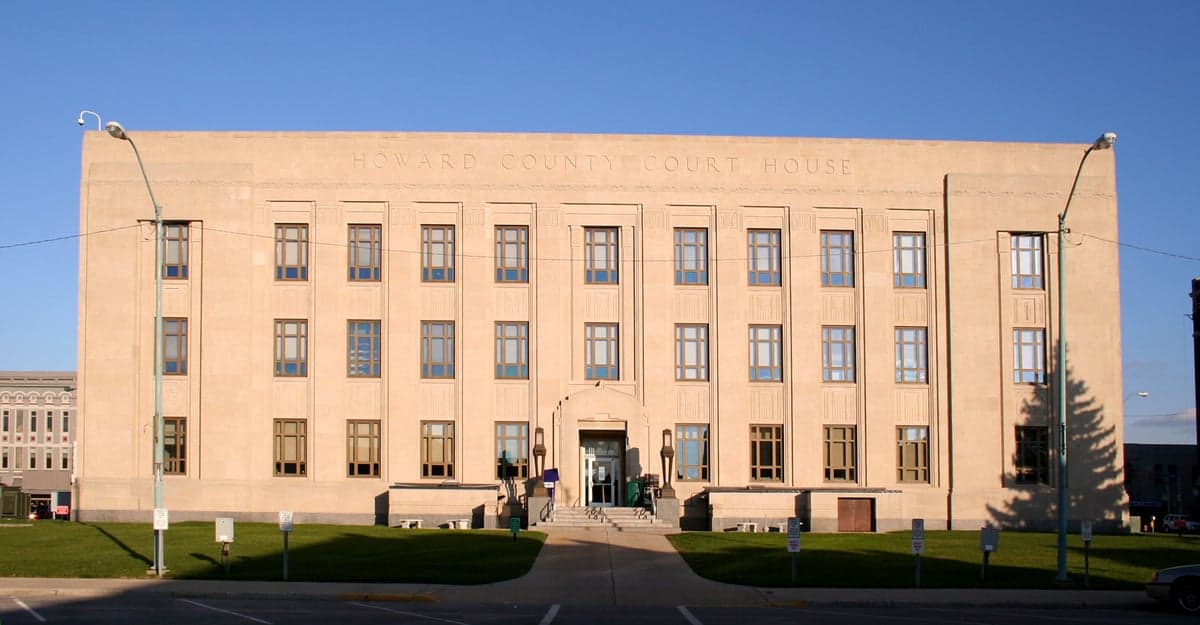
Photo: Wikipedia
Personal Sovereignty in Howard County
Viable for self-reliance. Generally workable, though some barriers may limit total independence.
What does Personal Sovereignty tell us?
Personal Sovereignty measures your capacity for self-reliance and independence with minimal government friction. Higher scores mean fewer barriers between you and the way you want to live... but it assumes you have the space you need and good neighbors.
What does this tell us?
Personal Sovereignty measures your capacity for self-reliance and independence with minimal government friction. Higher scores mean fewer barriers between you and the way you want to live... but it assumes you have the space you need and good neighbors.
State Policy
Energy independence: Importer (35% of energy produced in-state)
Personal Liberty
Homesteading

Personal Liberty Analysis
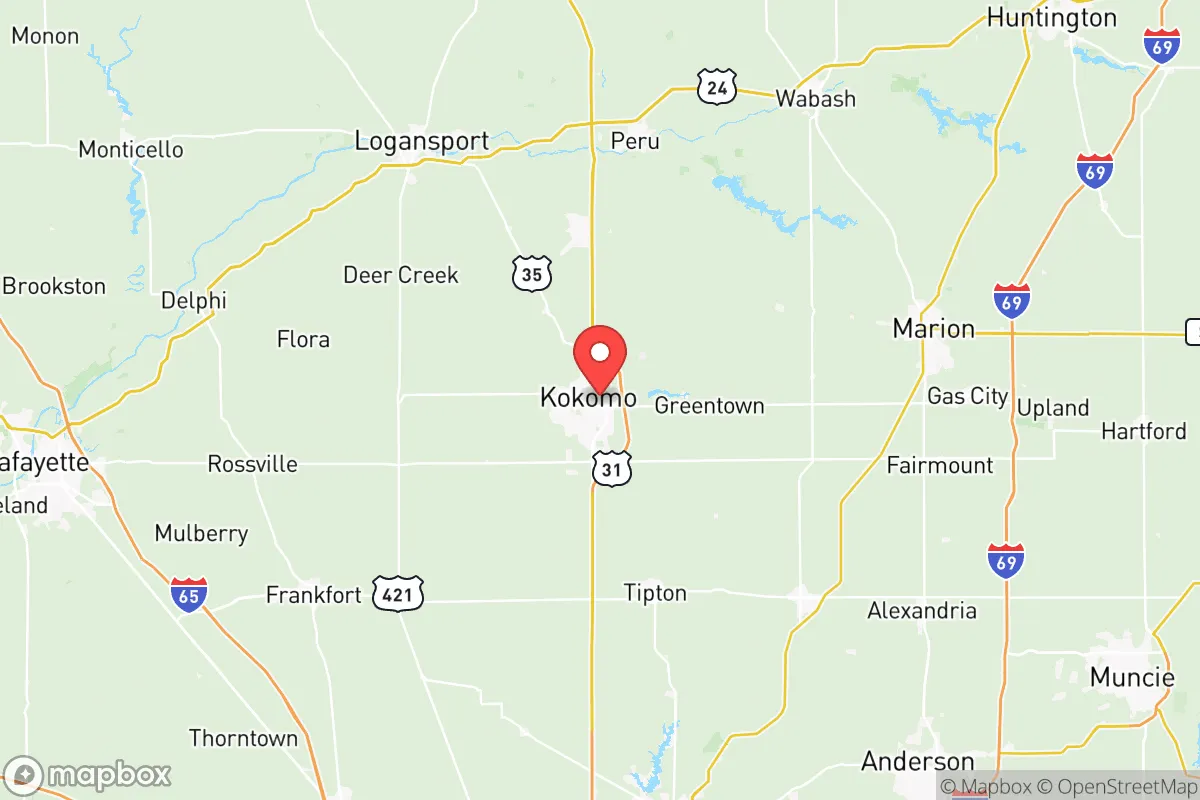
Howard County, Indiana, offers a notably high degree of personal sovereignty, particularly for those seeking a balance between rural independence and access to a small-city economy. The county seat of Kokomo anchors the area, while surrounding communities like Russiaville, Greentown, and Sharpsville provide distinctly different environments for autonomy-minded residents. The overall regulatory climate is light-touch compared to Indiana's urbanized counties like Marion or Lake, with local governance generally deferring to state-level preemptions on firearms, property rights, and taxation.
Tax burden and regulatory posture: How Howard County compares to Indiana's urban centers
Howard County's tax burden is moderate by Indiana standards, with a combined state and local sales tax rate of 7% (the state's 7% rate, with no local add-ons) and property tax rates that are among the lower half of Indiana counties. The average effective property tax rate in Howard County hovers around 0.85% of assessed home value, compared to roughly 1.1% in Marion County (Indianapolis). This translates to about $1,700 annually on a $200,000 home versus $2,200 in Indianapolis. The county operates under Indiana's property tax caps—1% of assessed value for owner-occupied homes, 2% for rental properties, and 3% for commercial—which are constitutionally locked. Regulatory posture is business-friendly: Kokomo has a streamlined permitting process for small-scale construction and home-based businesses, while unincorporated areas like those near Hemlock or West Middleton have minimal zoning oversight. The county does not impose a local income tax beyond the state's flat 3.15% rate, and there are no county-level business license fees for most sole proprietorships. For a conservative-leaning reader, the key takeaway is that Howard County avoids the layered local regulations common in larger Indiana cities, though it is not a zero-regulation environment—building permits are required for structural changes, and septic system approvals are enforced by the county health department.
Self-defense and gun law specifics: What Indiana's permitless carry means in Howard County
Indiana is a permitless carry state as of July 2022, meaning any law-abiding adult 18 or older can carry a handgun openly or concealed without a license. Howard County fully aligns with this state preemption, and local law enforcement in Kokomo, Russiaville, and Greentown does not impose additional restrictions. The county has no local ordinances banning firearms in parks or public buildings beyond what state law requires (e.g., courthouses, schools). Stand-your-ground protections apply statewide, with no duty to retreat in any place where a person is lawfully present. For those interested in training, the Kokomo Gun Club and several private ranges in the area offer courses, though no license is needed to purchase a firearm from a private seller. The sheriff's office issues licenses to carry for reciprocity purposes (for travel to states that require a permit) with a typical turnaround of 30-60 days. Magazine capacity is unrestricted, and there is no state-level registry. The practical reality in Howard County is that gun ownership is culturally normalized—you will see "Gun Free Zone" signs on some businesses, but they are the exception, not the rule. For a family moving from a restrictive state like California or New York, the shift is dramatic: no waiting periods, no background checks for private transfers, and no local authority to create gun-free zones beyond what state law allows.
Self-reliance and homesteading viability: Lot sizes, zoning, and off-grid feasibility in Howard County
Homesteading and self-reliance are highly viable in Howard County, particularly outside Kokomo's city limits. In unincorporated areas, minimum lot sizes for residential use are typically 1 acre in agricultural zoning districts, though some subdivisions in the Greentown area allow half-acre lots with well and septic approvals. The county's zoning code permits accessory dwelling units, backyard chickens, and small-scale livestock (goats, sheep, up to 4 hives of bees) on parcels of 2 acres or more without a special exception. Off-grid feasibility is mixed: Indiana law requires connection to a septic system (no composting toilets without a variance), but solar panels are permitted by right in all zoning districts, and rainwater collection for non-potable use is unrestricted. The county does not require grid-tied electrical connections for new homes, though mortgage lenders typically do. In Sharpsville and Russiaville, residents commonly run small farms on 5-10 acre parcels, selling eggs, produce, and meat directly to neighbors without business licensing beyond a basic agricultural exemption. The county health department inspects wells and septic systems, but the process is straightforward—permits cost around $200 and are issued within two weeks. For those seeking true off-grid living, the northern part of the county near the Cass County line has the most rural character, with large tracts of agricultural land and minimal traffic. The main constraint is water: the county's aquifer is reliable, but drilling a well costs $5,000-$8,000 depending on depth. Overall, Howard County offers a practical middle ground—not as lax as some western states, but far more accommodating than suburban Indiana counties like Hamilton or Boone.
Personal liberties: Parental rights, medical autonomy, speech, and property in Howard County
Indiana's legal framework provides strong protections for personal liberties that directly affect daily life in Howard County. Parental rights in education are robust: Indiana's "Parental Bill of Rights" (IC 20-33-2) requires schools to obtain parental consent before administering any mental health or medical survey, and parents can opt their children out of any curriculum they find objectionable. Kokomo School Corporation and the Northwestern School Corporation (serving Russiaville and parts of the county) both post curriculum materials online and allow in-person review. Medical autonomy is more limited: Indiana has a near-total abortion ban (with exceptions for rape, incest, and life of the mother), and the state requires parental consent for minors seeking any medical care beyond basic treatment. Vaccine mandates are not enforced at the county level—no local health department in Howard County requires COVID-19 or other vaccines for employment or public access. Free speech protections are strong, with no local noise ordinances that restrict political signage or public assembly beyond standard time-place-manner rules. Property rights are protected by Indiana's "right to farm" law, which shields agricultural operations from nuisance lawsuits if they predate a nearby residential development. In practice, this means a hog farm near Greentown can operate without fear of being sued by new subdivisions. The county does not have a rental registry or landlord licensing scheme, and short-term rentals (Airbnb) are permitted in all zoning districts without a special permit, though Kokomo requires a $50 annual registration. For a conservative-leaning family, the key liberty trade-off is medical autonomy versus parental rights: Indiana leans heavily toward parental control but restricts certain healthcare choices for adults.
Overall, Howard County ranks as a high-sovereignty area within the Midwest, comparable to rural counties in Ohio or Michigan but with lower property taxes and fewer zoning hurdles. It is not a libertarian enclave—the state still requires vehicle inspections (safety and emissions in some counties, though Howard County is exempt from emissions), and the county enforces building codes for new construction. However, for a family or individual moving from a high-regulation state, the combination of permitless carry, low taxes, minimal zoning outside city limits, and strong parental rights creates an environment where personal autonomy is the default, not the exception. The county's proximity to Indianapolis (about 60 miles south) means you can access urban amenities without sacrificing the regulatory freedom of a rural setting. For those prioritizing self-reliance, the areas around Russiaville and Sharpsville offer the best balance of affordable land, permissive zoning, and a like-minded community.

* Values derived from national, state, county, city and local statistics and may differ in a specific area. Last updated: 2026-07-10T05:47:51.000Z
Narrative content on this page is AI-generated and may contain mistakes. Verify any details that matter before acting on them.
ReloMaps may earn a commission from affiliate links at no extra cost to you.

