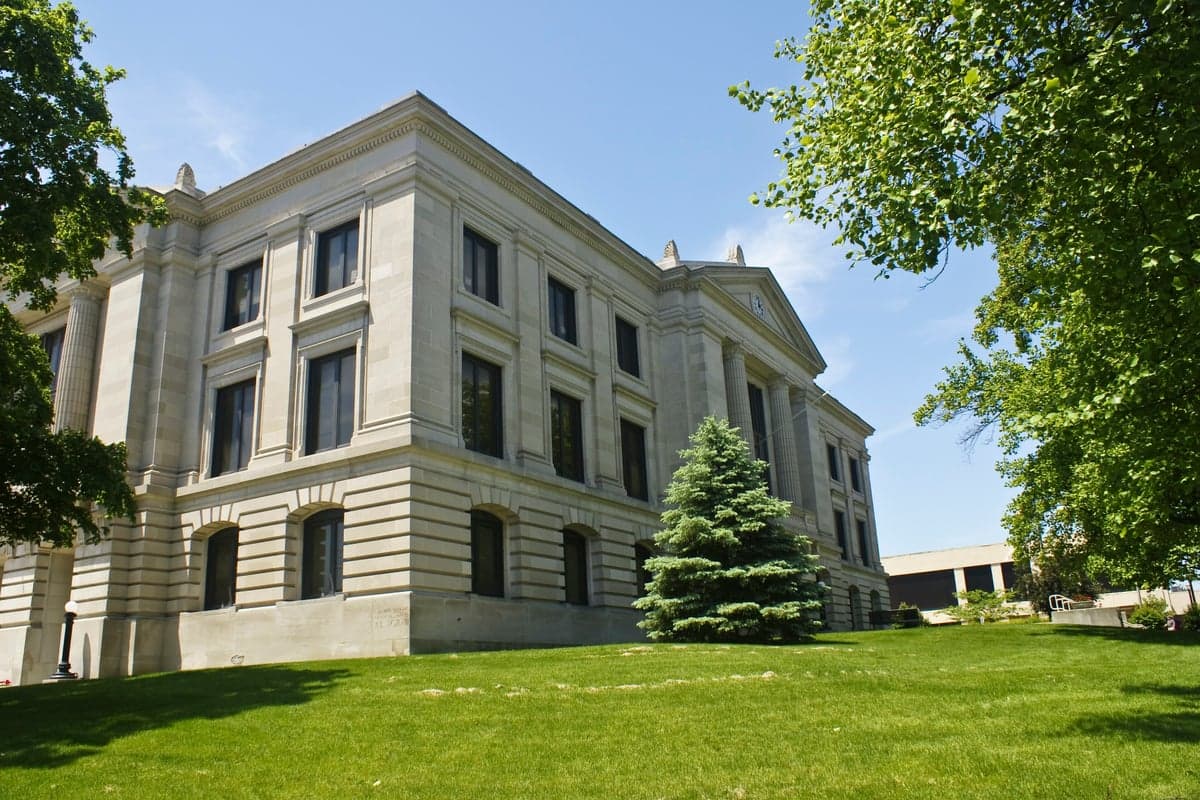
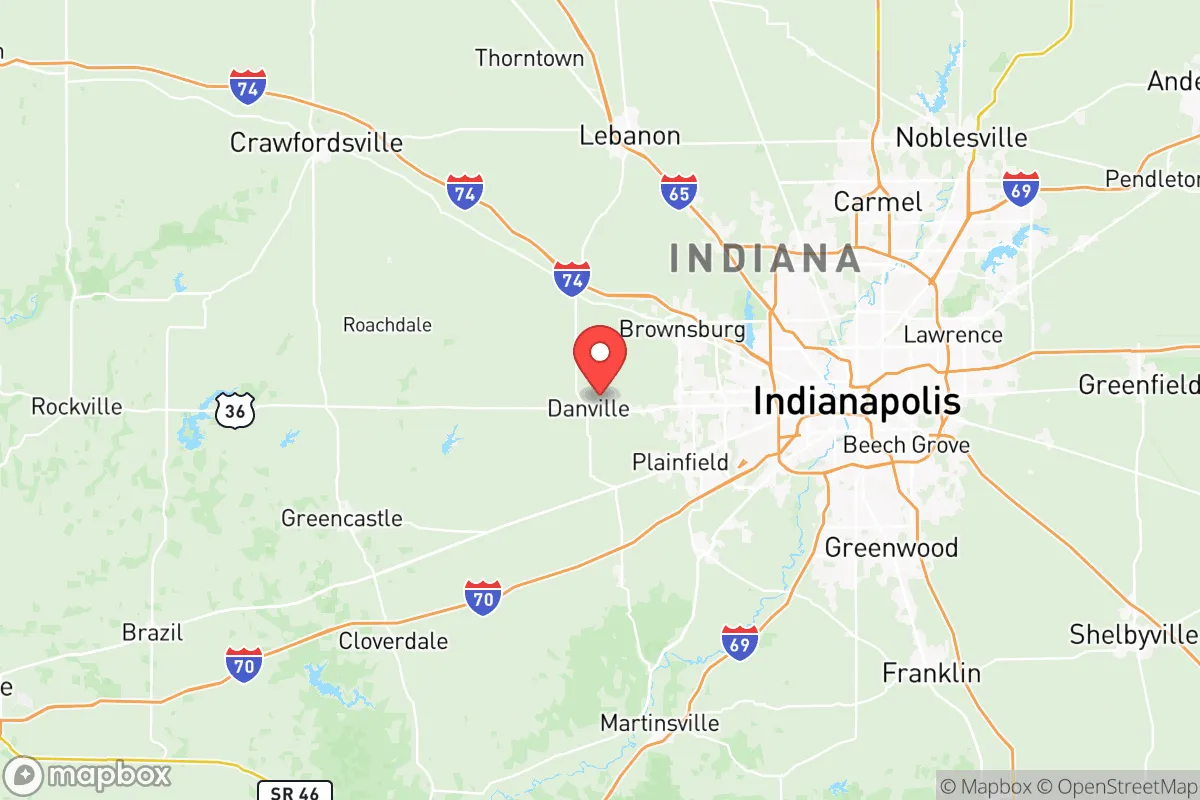
Photo: Wikipedia
Political ClimatePolitical Climate in Hendricks County
Showing district-level results — no local-only data available.
Local Political AnalysisPolitical Analysis of Hendricks County
Hendricks County has been a reliably Republican stronghold for decades, and that hasn't changed. The Cook Partisan Voting Index (PVI) sits at R+15, meaning the county votes about 15 points more Republican than the national average. That's a solid six points redder than the state of Indiana as a whole, which sits at R+9. The county's trajectory has actually been shifting slightly rightward even as some suburban areas around the country have trended blue, driven by a growing population of conservative-leaning families moving out from Marion County and other parts of the state.
How it compares
Indiana's R+9 PVI already marks it as a reliably red state, but Hendricks County is in a different league entirely. In the 2024 presidential election, Donald Trump carried the county by roughly 35 points, while he won the state by about 19 points. That gap has widened over the last decade. The county's Republican tilt is most pronounced in the smaller towns and unincorporated areas. Brownsburg, Avon, and Plainfield all lean heavily Republican, with precincts routinely delivering 65-70% of the vote for GOP candidates. Danville, the county seat, is even redder, often pushing past 70%. The only real exceptions are a handful of precincts in Avon and Plainfield near the Marion County line, where younger families and some transplants from Indianapolis have created pockets that are more competitive — these are the swing precincts, though they still tend to break Republican by a smaller margin. Lizton and Pittsboro are reliably red, while Clayton and Stilesville are among the most conservative areas in the county.
What this means for residents
For conservative residents, the political climate is comfortable and affirming. Local offices — from county commissioners to school boards — are almost entirely held by Republicans, and policy decisions generally reflect conservative priorities on taxes, development, and education. For liberal residents, the reality is more about finding community within a dominant conservative culture. There is no organized progressive political infrastructure in the county, though some residents commute to Indianapolis for work and social life. School board meetings in Brownsburg and Avon have become flashpoints in recent years, with debates over curriculum and library books drawing large, passionate crowds — a microcosm of national culture wars playing out locally. The county's rapid growth — it's one of the fastest-growing in Indiana — has brought new residents from both coasts and from within the state, which has introduced some ideological diversity, but not enough to shift the overall balance.
Culturally, Hendricks County is a place where church attendance is high, hunting and fishing are popular, and the 4-H fair is a major annual event. The county's policy distinctions are subtle but real: it has a strong right-to-work ethos, low property tax rates relative to neighboring Marion County, and a general resistance to zoning regulations that would slow development. For a conservative family looking for good schools, low crime, and a community that shares their values, Hendricks County is close to ideal. For a liberal family, it can feel isolating, but the proximity to Indianapolis means you're never far from a more diverse political environment. The near-term future looks like more of the same — continued growth, continued Republican dominance, and a slow but steady increase in the number of competitive precincts near the county line.

State Political ClimatePolitical Climate in Indiana
State Political AnalysisPolitical Environment in the State
Indiana has been a reliably Republican state for decades, with a Cook Partisan Voting Index of R+9, meaning it votes about nine points more Republican than the nation as a whole. The state hasn't voted for a Democratic presidential candidate since 2008, when Barack Obama narrowly won it, and that now looks like a fluke driven by the financial crisis and a strong ground game in the industrial northwest. Over the last 10-20 years, the GOP has solidified its grip on the state legislature and governor's office, while Democrats have been squeezed into a few urban strongholds and college towns. For a conservative-leaning relocator, this means a state where Republican policies are the baseline, but the political reality is more nuanced than a simple red-state label.
Urban vs. rural divide
The political map of Indiana is a textbook case of the urban-rural split. The state's two biggest cities, Indianapolis and Fort Wayne, are the main Democratic anchors, but even they aren't uniformly blue. Indianapolis (Marion County) votes reliably Democratic in statewide races, but the surrounding suburban counties like Hamilton and Hendricks are among the most Republican in the state. Fort Wayne (Allen County) is a swing county that has trended redder in recent cycles, while the state's third-largest city, Evansville (Vanderburgh County), has moved from purple to solidly Republican. The real GOP firepower comes from the vast rural and small-town areas: the entire eastern border along Ohio, the Wabash River valley, and the southern half of the state from Bloomington's outskirts down to the Ohio River. Bloomington itself, home to Indiana University, is a blue island in a sea of red, with a progressive city council and a strong local activist scene. The northwest corner, around Gary and Hammond (Lake County), is the state's most reliably Democratic region, a legacy of industrial unionism and a large Black population, but its population has been declining for decades, reducing its statewide influence. The key takeaway: if you live in a suburb like Carmel or Fishers, you're in a deep-red bubble; if you live in downtown Indianapolis or Bloomington, you're in a blue one; everywhere else is varying shades of Republican.
Policy environment
Indiana's policy environment is consistently conservative, with a few notable exceptions. The state has a flat income tax rate of 3.15% as of 2025, down from 3.23% in 2023, with a scheduled phase-down to 2.9% by 2029. Property taxes are relatively low, capped at 1% of assessed value for owner-occupied homes, 2% for rental properties, and 3% for commercial. There is no estate tax. The regulatory posture is business-friendly, with a right-to-work law on the books since 2012 and a low corporate income tax rate of 4.9%. On education, Indiana has a robust school choice program, including vouchers that can be used at private and religious schools, and a growing charter school sector. The state's education policy has been a national model for conservatives, with strong parental rights provisions and a ban on teaching certain concepts related to race and gender in K-12 classrooms. Healthcare policy is more mixed: Indiana expanded Medicaid under the Affordable Care Act in 2015 via a conservative waiver (the Healthy Indiana Plan), but the state also has some of the most restrictive abortion laws in the country, banning the procedure at conception with narrow exceptions. Election laws are moderately restrictive: voter ID is required, early voting is available but not as expansive as in some states, and there are no same-day voter registration or automatic voter registration systems.
Recent policy direction
The last few years have seen Indiana move decisively to the right on several fronts. In 2022, the state passed a near-total abortion ban, Senate Enrolled Act 1, which prohibits abortion at conception with exceptions for rape, incest, and the life of the mother. This law has been upheld by the state supreme court and is currently in effect. On gun rights, Indiana became a permitless carry state in 2022 with House Enrolled Act 1296, allowing any law-abiding adult to carry a handgun without a license. The state also has a "stand your ground" law and preempts local gun ordinances. On education and parental rights, the state passed House Enrolled Act 1608 in 2022, which requires schools to notify parents of any changes to a student's health or well-being and prohibits instruction on human sexuality in K-3. In 2023, the state banned gender-affirming care for minors with Senate Enrolled Act 480. On property rights, Indiana has a relatively strong eminent domain framework, but there have been recent controversies over carbon pipeline projects using eminent domain for private gain, which have sparked bipartisan opposition in rural areas. On voting, the state passed a law in 2021 that tightened absentee ballot rules and limited the use of drop boxes. On privacy and surveillance, Indiana has no comprehensive data privacy law, though a bill was introduced in 2025. The overall direction is clear: the state is reinforcing conservative positions on social issues, gun rights, and education, while maintaining a pro-business tax and regulatory environment.
Civil unrest & political movements
Indiana is not a hotbed of civil unrest, but there have been notable flashpoints. The 2020 George Floyd protests in Indianapolis were large and occasionally violent, leading to property damage and a heavy police response. The city has a long history of racial tensions, and the Black Lives Matter movement remains active there, though less visible than in 2020. On the right, the state has a strong gun rights movement, with the Indiana Gun Owners group being a powerful lobbying force. There have been periodic protests at the statehouse over abortion, both for and against, and the 2022 abortion ban drew large crowds to the capitol. Immigration politics are less heated than in border states, but there have been controversies over sanctuary city policies. In 2023, the state passed a law requiring local law enforcement to cooperate with federal immigration authorities, effectively banning sanctuary policies. There have been no serious secession or nullification movements, though some rural counties have passed resolutions opposing federal gun control or vaccine mandates. Election integrity controversies have been relatively muted compared to other states, though the 2020 election did see some local disputes over absentee ballot procedures. A new resident would likely find the political atmosphere less confrontational than in states like Ohio or Michigan, but the divisions are real and visible in the contrast between urban and rural areas.
Projection
Over the next 5-10 years, Indiana is likely to remain solidly Republican, but the margins may narrow slightly as the Indianapolis suburbs continue to grow and diversify. The state's population is aging and slowly growing, driven by migration from other Midwestern states and some international immigration to urban areas. The Democratic stronghold in Lake County will continue to shrink in relative influence, while the fast-growing suburbs of Indianapolis, like Noblesville and Greenwood, will remain deeply Republican. The wild card is the state's growing Hispanic population, concentrated in Indianapolis and some rural agricultural areas, which could shift the political calculus over a longer timeframe. For now, the state's political trajectory is stable: expect continued conservative governance on social issues, tax cuts, and school choice, with occasional battles over property rights and local control. A relocator moving in now should expect to find a state where conservative values are the norm, but where the urban centers offer a counterbalance for those who prefer a more liberal environment. The practical takeaway is that Indiana offers a predictable, low-tax, business-friendly environment with a strong conservative cultural bent, but with enough diversity in its cities to accommodate a range of political views.
For a new resident, the bottom line is straightforward: if you're conservative, you'll feel at home in most of the state, especially in the suburbs and rural areas. If you're liberal, you'll find your community in Indianapolis, Bloomington, or a few other urban pockets, but you'll be living in a state where your vote has limited impact on statewide policy. The state's political climate is stable and predictable, with no major upheavals on the horizon. The key practical consideration is that your local experience will vary dramatically depending on where you live: a move to Carmel is a move to a deep-red suburb with excellent schools and low taxes, while a move to Gary is a move to a struggling blue city with high taxes and crime. Choose your location carefully, and you'll find Indiana to be a state that largely delivers on its political promises, for better or worse.
* Values derived from national, state, county, city and local statistics and may differ in a specific area. Last updated: 2026-07-04T18:41:13.000Z
Narrative content on this page is AI-generated and may contain mistakes. Verify any details that matter before acting on them.
ReloMaps may earn a commission from affiliate links at no extra cost to you.

