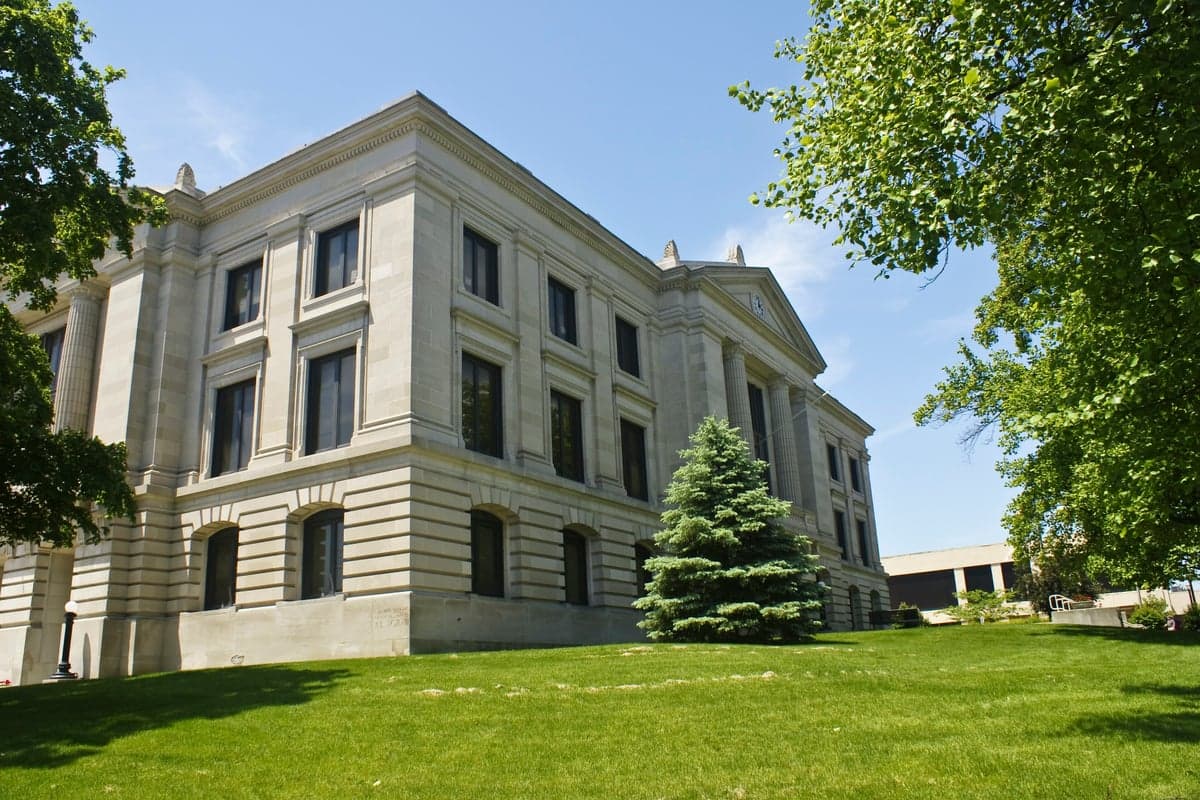
Photo: Wikipedia
Personal Sovereignty in Hendricks County
Viable for self-reliance. Generally workable, though some barriers may limit total independence.
What does Personal Sovereignty tell us?
Personal Sovereignty measures your capacity for self-reliance and independence with minimal government friction. Higher scores mean fewer barriers between you and the way you want to live... but it assumes you have the space you need and good neighbors.
What does this tell us?
Personal Sovereignty measures your capacity for self-reliance and independence with minimal government friction. Higher scores mean fewer barriers between you and the way you want to live... but it assumes you have the space you need and good neighbors.
State Policy
Energy independence: Importer (35% of energy produced in-state)
Personal Liberty
Homesteading

Personal Liberty Analysis
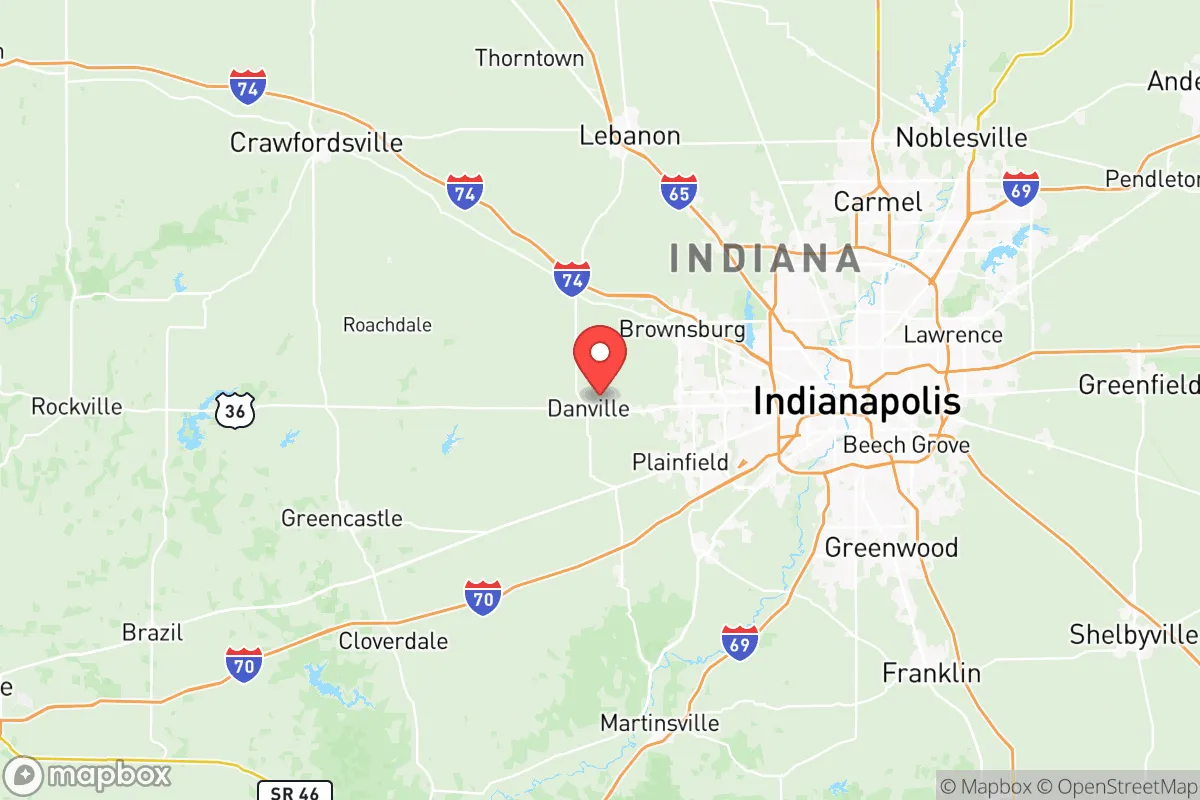
Hendricks County, Indiana, offers a notably high degree of personal sovereignty compared to many suburban rings around major Midwestern cities, driven by Indiana’s generally light-touch state governance and the county’s own rural-to-suburban character. Residents in towns like Danville, Plainfield, and Avon experience a regulatory environment that prioritizes individual choice in areas from taxation to self-defense, while the more rural reaches near North Salem and Coatesville provide even greater latitude for self-reliant living. The balance between suburban convenience and personal autonomy is a defining feature of the area, making it a deliberate choice for those who value independence over the tighter controls found in neighboring Marion County (Indianapolis) or in states like Illinois.
Tax burden and regulatory posture: How Hendricks County compares to surrounding areas
Indiana’s state-level tax structure is among the most favorable in the nation for personal sovereignty, and Hendricks County benefits directly. The state imposes a flat income tax rate of 3.05% (as of 2025), with a scheduled reduction to 2.9% by 2027, and there is no inheritance or estate tax. Property taxes in Hendricks County are capped at 1% of assessed value for owner-occupied homes under the state’s constitutional circuit breaker, a binding limit that prevents the kind of tax creep seen in states without such caps. The county’s combined property tax rate typically falls between 0.8% and 1.2% of market value, depending on the specific township and school district. For example, a home in Brownsburg or Avon with strong school systems will carry a slightly higher effective rate than a comparable property in rural Clay Township, but the cap ensures predictability. Sales tax is a flat 7% statewide, with no local add-ons. Regulatory posture at the county level is consistently pro-business and pro-property-right. Hendricks County does not impose county-level zoning on agricultural land in unincorporated areas, and the planning departments in towns like Plainfield and Danville are known for streamlined permitting processes. There are no county-level rent control ordinances, no plastic bag bans, and no local energy or building codes that exceed the state’s already moderate standards. For a reader comparing this to the regulatory density of Cook County, Illinois, or even Marion County, the difference is substantial.
Self-defense and gun law specifics: What residents can and cannot do
Indiana is a constitutional carry state, meaning no permit is required to carry a handgun openly or concealed for any law-abiding adult 18 or older. Hendricks County fully aligns with this state preemption, and local law enforcement in Danville (the county seat) and Plainfield do not impose any additional restrictions beyond state law. The county sheriff’s office issues lifetime handgun permits for those who choose to obtain one for reciprocity purposes, with a typical processing time of under 60 days. Stand-your-ground law is in effect, with no duty to retreat in any place where a person has a legal right to be. Castle doctrine protections extend to occupied vehicles and places of business, not just residences. There are no county-level magazine capacity restrictions, no assault weapon bans, and no waiting periods beyond the federal background check. The practical effect for residents of Avon or Brownsburg is that self-defense decisions are governed by state statute, not local ordinance. The only notable limitation is that firearms are prohibited in school buildings and at school functions, consistent with federal law. For a family moving from a state with restrictive gun laws, the shift in legal posture is immediate and unambiguous: Hendricks County respects the right to keep and bear arms as a default, not a privilege.
Self-reliance and homesteading viability: Lot sizes, zoning, and off-grid feasibility
The feasibility of a self-reliant lifestyle varies significantly across Hendricks County’s geography. In the unincorporated townships — particularly Guilford Township (north of Danville) and Eel River Township (near North Salem) — minimum lot sizes in agricultural zones are typically 2 to 5 acres, and many parcels of 10 to 40 acres are available for purchase. Zoning in these areas explicitly permits livestock, poultry, and crop cultivation as of right, with no county-level restrictions on the number of animals per acre beyond basic animal welfare statutes. Off-grid feasibility is moderate: Indiana state law does not require grid connection for existing homes, but new construction must meet the state’s residential building code, which includes septic system requirements (per county health department) and well water testing. Solar panels are permitted without special county permits, and net metering is available through Duke Energy and other providers, though the compensation rate has declined in recent years. Rainwater collection is legal and unregulated at the state level. In contrast, the incorporated towns of Avon and Plainfield have suburban zoning that restricts livestock and imposes minimum square footage requirements on homes, making true homesteading impractical. For a family seeking a balance between proximity to Indianapolis employment and the ability to raise food, the rural townships around Coatesville and Stilesville offer the most viable path. The county does not enforce any kind of “right to farm” ordinance beyond the state’s existing protections, but nuisance complaints from new suburban neighbors are a real risk as development pushes outward.
Personal liberties: Parental rights, medical autonomy, speech, and property
Indiana law provides strong protections for parental rights, and Hendricks County school districts — including Danville Community Schools and Plainfield Community Schools — generally operate with a presumption of parental authority. The state’s “Parents’ Bill of Rights” (enacted 2022) requires schools to notify parents of any medical or mental health services offered to students and to obtain parental consent for most non-emergency care. Curriculum transparency laws allow parents to review instructional materials, and there is no county-level override of these statutes. Medical autonomy is more constrained: Indiana has a near-total abortion ban with limited exceptions, and the state does not allow physician-assisted suicide. Vaccine mandates are not enforced at the county level for adults, though school immunization requirements follow state law (which allows religious and medical exemptions). Free speech protections are robust, with no county-level hate speech ordinances or permit requirements for public gatherings beyond standard parade permits. Property rights are strongly protected by Indiana’s eminent domain laws, which require a public purpose and just compensation, and Hendricks County has not been aggressive in using eminent domain for private development. The county’s planning departments in Danville and Plainfield do not impose aesthetic or design review boards on residential properties, meaning homeowners can paint, landscape, and build accessory structures without architectural committee approval — a notable contrast to the HOA-heavy suburbs of the East Coast or West Coast.
Overall, Hendricks County ranks among the most sovereignty-friendly suburban counties in the Midwest for a conservative-leaning individual or family. The combination of constitutional carry, property tax caps, minimal county-level regulation, and strong parental rights creates an environment where personal autonomy is the baseline rather than an exception. The primary trade-off is that the county’s rapid growth — particularly in Avon and Plainfield — is gradually introducing suburban restrictions that do not yet exist in the rural townships. For a reader who prioritizes maximum independence, the areas around North Salem and Coatesville offer the closest approximation to a low-governance lifestyle within commuting distance of Indianapolis. For those who want suburban convenience with minimal regulatory friction, Danville and Brownsburg strike a practical balance. Compared to the regulatory density of Illinois, the tax burden of California, or the gun restrictions of New York, Hendricks County represents a deliberate, legally grounded choice for personal sovereignty.

* Values derived from national, state, county, city and local statistics and may differ in a specific area. Last updated: 2026-07-04T18:41:13.000Z
Narrative content on this page is AI-generated and may contain mistakes. Verify any details that matter before acting on them.
ReloMaps may earn a commission from affiliate links at no extra cost to you.

