Photo: Wikipedia
Demographics of Hendricks County
Affluence Level in Hendricks County
An upper-middle-class area. Household wealth, education levels, and homeownership run ahead of national benchmarks.
People of Hendricks County
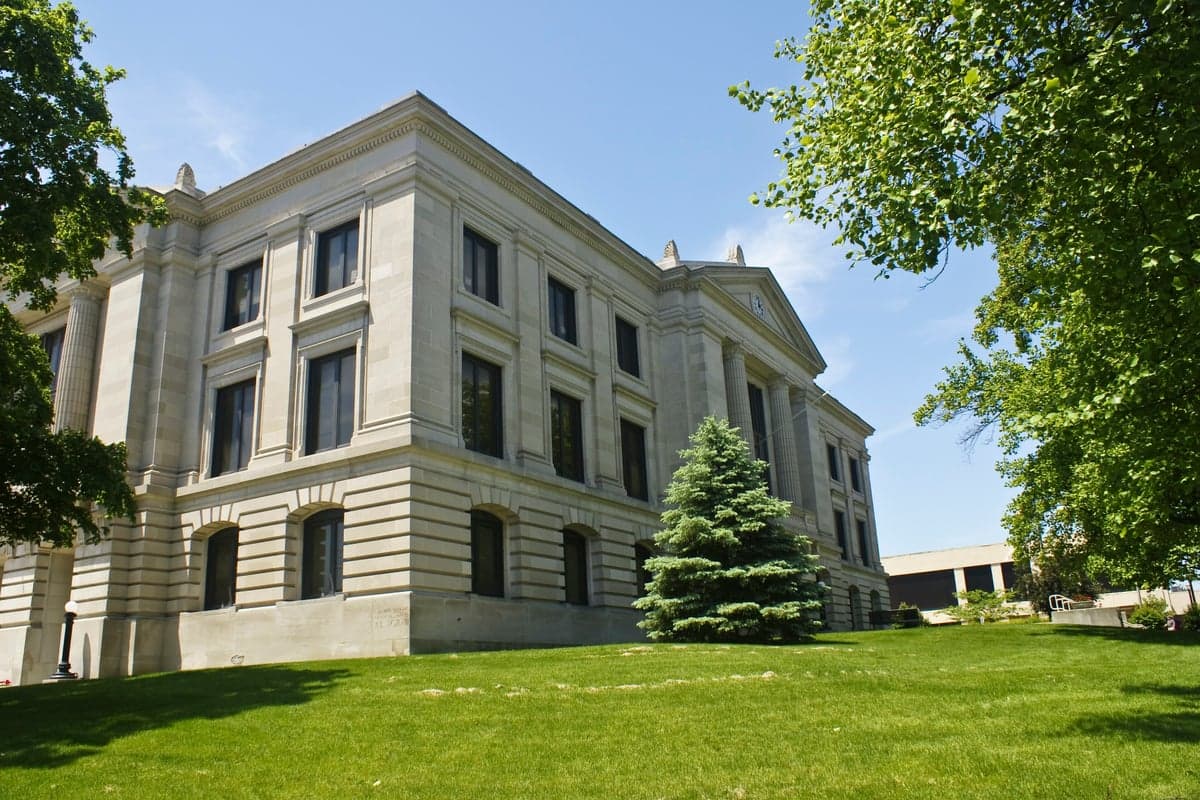
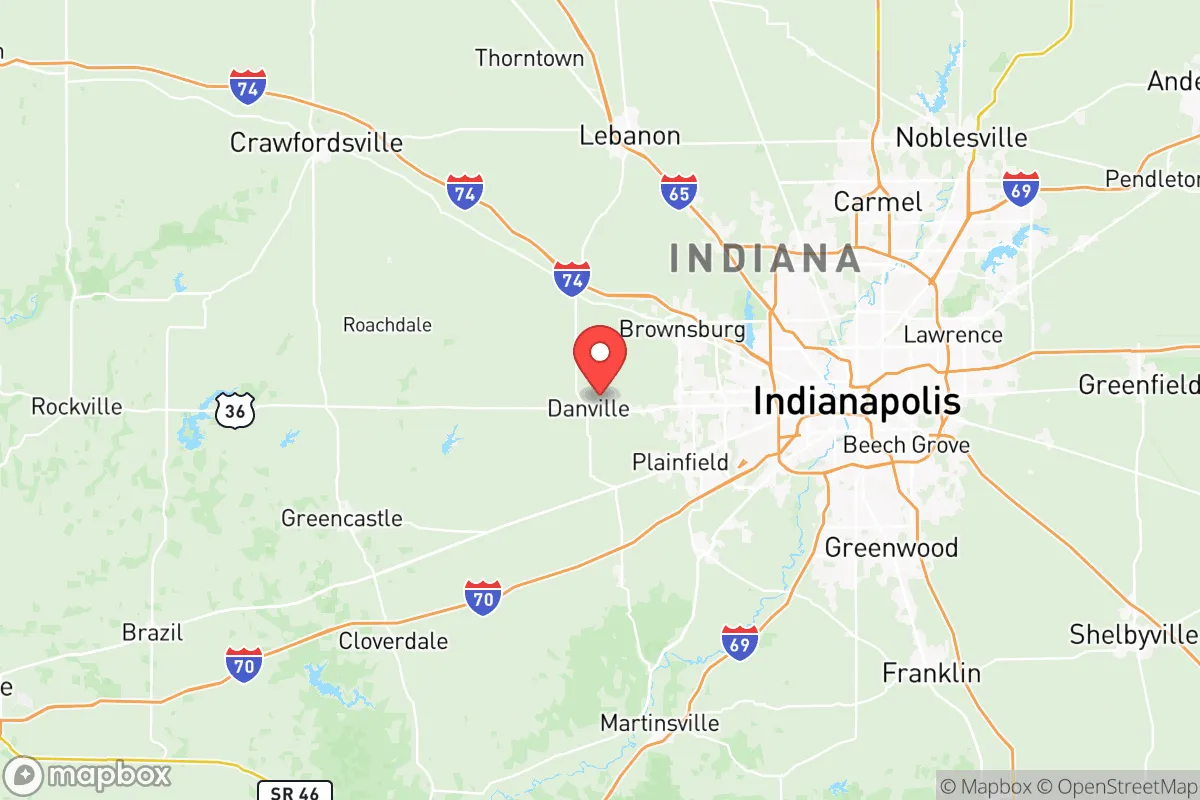
Hendricks County, Indiana, is a rapidly growing suburban stronghold of 179,379 residents, characterized by its predominantly white population (79.2%) and a notably higher-than-state-average college attainment rate of 39.6%. The county’s identity is shaped by its role as a western bedroom community of Indianapolis, blending historic small-town centers like Danville and Plainfield with newer master-planned subdivisions that attract families seeking good schools and lower crime rates. While still less diverse than Marion County to its east, Hendricks County is experiencing gradual demographic shifts, with growing Hispanic (4.9%), Black (9.0%), and Indian-subcontinent (1.9%) populations, though its foreign-born share remains low at just 2.3%.
Settlement & growth (pre-1960)
Before European settlement, the area now known as Hendricks County was primarily used as hunting grounds by the Miami and Delaware (Lenape) nations, who were displaced through a series of treaties in the early 19th century, most notably the 1818 Treaty of St. Mary’s. The county was formally organized in 1824, named for Indiana Governor William Hendricks, and the first wave of settlers were overwhelmingly of Scots-Irish and English ancestry, migrating from Kentucky, Ohio, and the Upland South via the National Road (U.S. 40). These early pioneers were drawn by the availability of cheap, fertile land in the White River watershed, and they established the county seat of Danville (1824) and the towns of Plainfield (1839) and Brownsburg (1835) as agricultural service centers.
A second, smaller wave of German immigrants arrived in the 1840s and 1850s, many of them Catholic and Lutheran families who settled in the northern part of the county, particularly around Lizton and Pittsboro. These German settlers established farms, churches, and schools that retained their ethnic character well into the 20th century. Unlike the industrial cities of northern Indiana, Hendricks County saw very little immigration from Southern or Eastern Europe; its population remained overwhelmingly native-born white Protestant through the 1960 census.
The county’s economy remained almost entirely agricultural until the mid-20th century, with corn, soybeans, and livestock as the mainstays. The arrival of Interstate 70 in the 1960s, slicing east-west through the county just north of Plainfield, was the single most transformative event for the population. It opened the county to commuters working in Indianapolis and to logistics and warehousing employers who built along the corridor. The population, which had hovered around 30,000 for decades, began to climb steadily as Plainfield and Avon became the first towns to see significant suburban subdivision development in the 1960s and 1970s.
Modern era (post-1965)
The post-1965 demographic story of Hendricks County is less about international immigration and more about domestic suburban flight from Marion County. The 1965 Hart-Cellar Act had a muted effect here compared to coastal regions; the county’s foreign-born population remains just 2.3%, far below the national average. Instead, the primary driver of population change has been the steady relocation of white, middle-class families from Indianapolis and other parts of central Indiana, seeking larger homes, lower property taxes, and the highly regarded school districts of Avon, Brownsburg, and Plainfield.
This domestic migration accelerated sharply after 1990. The county’s population more than doubled between 1990 and 2020, from roughly 75,000 to over 170,000. Avon grew from a small crossroads into a sprawling suburban town of over 20,000, while Brownsburg and Plainfield each saw similar booms. The new subdivisions that spread across former cornfields attracted a population that is overwhelmingly native-born, married, and family-oriented, with a median age consistently below the state average.
Racial and ethnic diversification has been gradual but real. The Black population, which was negligible before 1990, now stands at 9.0%, concentrated in the newer subdivisions of Avon and Plainfield, as well as in the southern part of the county near the Marion County line. The Hispanic population, at 4.9%, is more dispersed but has visible clusters in Danville and Brownsburg, where service-industry and construction jobs have drawn families. The Indian-subcontinent population of 1.9% is a newer phenomenon, largely composed of professionals in technology, healthcare, and pharmaceuticals who work in Indianapolis or at the large logistics hubs along I-70 near Plainfield; they tend to settle in the higher-end subdivisions of Avon and western Plainfield. East and Southeast Asian residents (1.3%) follow a similar professional pattern, with a small but visible presence in Avon.
Notably, the county has seen very little growth in its Arab or broader Middle Eastern populations, and its overall foreign-born share remains among the lowest in the Indianapolis metropolitan area. The cultural character of Hendricks County remains distinctly Midwestern and suburban, with a strong evangelical Protestant church presence, high rates of homeownership, and a political orientation that leans reliably Republican in county-level elections.
The future
Demographic projections suggest Hendricks County will continue to grow, likely reaching 220,000–250,000 residents by 2040, driven by ongoing suburban expansion along the I-70 and I-74 corridors. The county is becoming modestly more diverse, but the pace of change will be slower than in Marion or Hamilton counties. The Black and Hispanic shares are expected to rise gradually, primarily through domestic migration from Indianapolis rather than international immigration, while the Indian-subcontinent population may grow faster if the logistics and tech sectors in Plainfield continue to expand.
The most significant cultural shift may be the continued urbanization of the county’s western towns. Plainfield is evolving from a small town into a mid-sized suburban city with its own employment base, while Avon and Brownsburg are filling in the remaining gaps between each other and the Marion County line. This infill development is likely to attract a somewhat more diverse and younger population than the first wave of 1990s subdivisions did. However, the county’s rural northern and western towns—Lizton, Pittsboro, North Salem, and Amo—are expected to remain small and predominantly white, preserving the agricultural character that defined the county for its first 150 years.
For someone moving in now, Hendricks County offers a stable, family-oriented suburban environment with strong schools and low crime, but with less ethnic diversity and fewer international cultural amenities than closer-in suburbs. The county is becoming more varied in its population, but it will remain, for the foreseeable future, a place where the dominant culture is native-born Midwestern and the primary growth story is domestic, not global.

* Values derived from national, state, county, city and local statistics and may differ in a specific area. Last updated: 2026-07-04T18:41:13.000Z
Narrative content on this page is AI-generated and may contain mistakes. Verify any details that matter before acting on them.
ReloMaps may earn a commission from affiliate links at no extra cost to you.

