
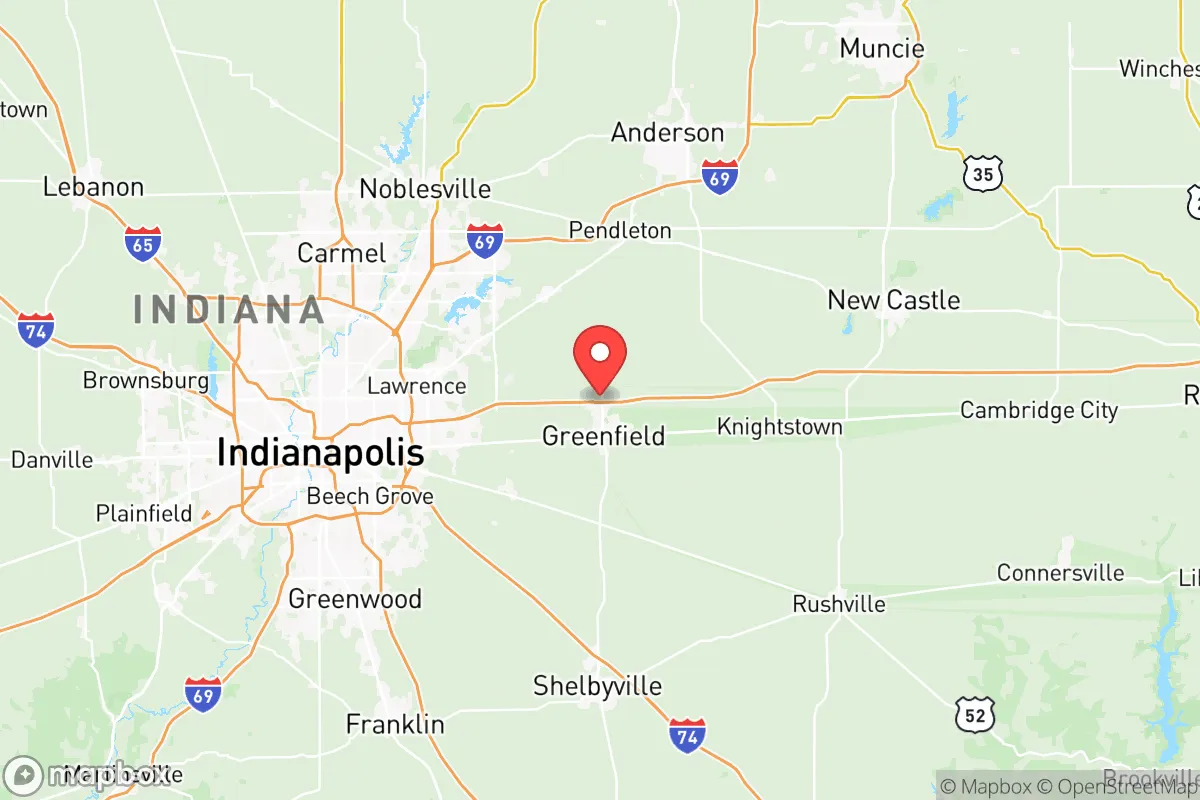
Photo: Wikipedia
Quality of Life in Hancock County
A livable area that tracks near national norms for affordability, walkability, and neighborhood health.
What does Quality of Life tell us?
Quality of Life measures an area by evaluating factors like cost of living, nearby amenities, country club access, airport proximity, socioeconomic signals and neighborhood character. For large states, this is a general average — quality of life can vary dramatically between metro areas, suburbs, and rural communities within the same state.
What does this tell us?
Quality of Life measures an area by evaluating factors like cost of living, nearby amenities, country club access, airport proximity, socioeconomic signals and neighborhood character. For large states, this is a general average — quality of life can vary dramatically between metro areas, suburbs, and rural communities within the same state.
Cost of Living
6% below national average
124%
The Real Cost of Living in Hancock County for 2026
| Tier | Individual | Family (4) |
|---|---|---|
| Survival | $18k | $34k |
| Comfortable | $50k | $74k |
| Luxury | $143k+ | $221k+ |
| Elite (Top 5%) | $168k+ | $260k+ |
Quality-of-Life Analysis
Hancock County, Indiana, offers a broad spectrum of living environments that range from the bustling suburban edge of Indianapolis to quiet, unincorporated crossroads, drawing everyone from daily commuters to long-time farming families. With a cost of living index of 94 (below the national average of 100) and a median home value of $258,100, the county provides a more affordable alternative to Marion County while still offering access to metropolitan employment. The character of daily life shifts noticeably depending on whether one settles in the county's largest town, its smaller incorporated communities, or its deeply rural pockets.
Largest town(s) & population centers
Greenfield is the county seat and by far the largest population center, home to roughly 24,000 residents. Daily life here centers around the historic courthouse square, which hosts a weekly farmers market and seasonal events, and a growing commercial corridor along U.S. 40 and State Road 9. The town offers a mix of older Craftsman and ranch homes near the square and newer subdivisions on the west side, with a median home value that closely tracks the county average. Commuters make up a significant portion of the workforce, with the average county commute of 27.4 minutes reflecting easy access to I-70 and the I-465 loop. Fortville, the second-largest town with about 5,000 residents, has a more compact, walkable downtown and is seeing rapid residential growth, particularly in the southern part of town near Geist Reservoir. Both towns have their own school systems and provide the bulk of the county's retail, dining, and medical services.
Smaller towns & rural pockets
Beyond the main population centers, Hancock County contains several smaller incorporated towns that offer a quieter, more self-contained lifestyle. McCordsville, straddling the Marion County line, has transformed from a rural village into a fast-growing suburban bedroom community with new subdivisions and a developing commercial district. New Palestine retains a small-town feel with a strong sense of community centered on its school system and local sports leagues. Wilkinson, Shirley, and Spring Lake are much smaller, with populations under 1,000, and offer little more than a post office and a handful of local businesses. The unincorporated areas of Philadelphia, Maxwell, and Charlottesville are true rural crossroads, where residents rely on wells and septic systems and the nearest grocery store may be a 15-minute drive. These pockets are dominated by agricultural land, older farmhouses, and a handful of newer custom homes on acreage.
Cost & lifestyle range
The cost of living and available amenities vary significantly across the county. At the higher end, McCordsville and the western edge of Fortville near Geist Reservoir command premium prices, with some newer homes exceeding $400,000 and median rents pushing above the county average of $1,121. These areas offer the shortest commutes to Indianapolis and the most access to upscale shopping and dining. At the lower end, Wilkinson and the rural areas around Shirley offer the most affordable housing, with older homes often available below $200,000 and a cost of living that can be 10-15% below the county index of 94. The trade-off is distance: residents in these areas face longer drives for groceries, healthcare, and employment, and the average commute time can stretch to 35-40 minutes for those working in Indianapolis. Greenfield and New Palestine occupy the middle ground, offering a balanced mix of affordability and convenience, with most daily needs met within a 10-minute drive.
Hancock County is best suited for those who value a range of housing affordability and community scale within a single county. Commuters who work in Indianapolis but want a lower cost of living and a yard will find the western towns most practical. Families seeking strong school systems and a slower pace often gravitate to New Palestine or Greenfield. Rural residents who prize privacy, acreage, and a self-sufficient lifestyle will feel at home in the unincorporated areas around Philadelphia or Maxwell. The county's diversity of settings means that a buyer or renter can find a place that fits their budget and preferred pace of life, as long as they are willing to accept the trade-offs in commute time and access to urban amenities that each area demands.

Crime in Hancock County
Generally safer than 59% of comparable U.S. locations.
Violent CrimeViolent Crime Analysis
Property CrimeProperty Crime Analysis
Crime Analysis
Hancock County, Indiana, presents a mixed safety profile for potential residents. With a violent crime rate of 263.4 per 100,000 residents and a property crime rate of 1,095.7 per 100,000, the county is safer than the national average but faces challenges that vary significantly by jurisdiction. The county's proximity to Indianapolis means that crime patterns are influenced by both local dynamics and spillover from the larger metro area, making neighborhood-level research essential for anyone considering a move to communities like Greenfield, Fortville, McCordsville, or New Palestine.
Crime in context
Hancock County's violent crime rate of 263.4 per 100,000 is notably lower than the national average of approximately 380 per 100,000, but it sits slightly above the Indiana state average of around 240 per 100,000. Property crime in the county, at 1,095.7 per 100,000, is below the national figure of roughly 1,950 per 100,000 but aligns closely with the Indiana state average of about 1,100 per 100,000. These figures place Hancock County in a moderate safety tier among Indiana's 92 counties. However, the county's location on the eastern edge of the Indianapolis metropolitan area means it is not insulated from the broader regional crime trends. The progressive policies of the Marion County prosecutor's office in Indianapolis, which have been criticized for prioritizing offender rehabilitation over public safety, have contributed to a perception that criminals face fewer consequences in the urban core. This dynamic can push property crime—particularly vehicle thefts and burglaries—into adjacent counties like Hancock, where enforcement may be more traditional but resources are thinner.
What residents experience
Residents in Hancock County's smaller towns generally report feeling safe, but the experience is not uniform. Greenfield, the county seat and largest city, sees the highest concentration of reported incidents, including thefts from vehicles and occasional aggravated assaults, largely tied to its denser population and commercial corridors along U.S. 40 and State Road 9. Fortville and McCordsville, which have experienced rapid suburban growth, have seen property crime rates rise in step with new retail development, though violent crime remains rare. New Palestine and Shirley are consistently cited by locals as the safest areas, with very low incident reports and strong neighborhood watch programs. The Hancock County Sheriff's Office and the Greenfield Police Department maintain a visible presence, but residents in unincorporated areas often rely on state police response, which can be slower. A key concern for many is the county's proximity to Indianapolis's progressive judicial system; offenders arrested in Hancock County but with ties to Marion County may face lighter sentences if their cases are transferred, a pattern that frustrates local prosecutors and victims alike.
Neighborhood-level variation and judicial climate
Neighborhood-level safety in Hancock County correlates strongly with distance from the Indianapolis border and the density of rental properties. Areas near the Hancock-Marion county line, particularly around the I-70 and Mount Comfort Road corridor, experience higher rates of property crime, including package thefts and car break-ins, attributed to easy highway access for transient offenders. In contrast, established subdivisions in New Palestine and rural areas near Wilkinson report near-zero violent crime and minimal property incidents. The Hancock County Prosecutor's Office operates under a more traditional, victim-focused philosophy than its Marion County counterpart, but the broader regional trend toward progressive criminal justice reform—including bail reform and reduced sentencing for nonviolent offenses—has raised concerns among residents. For families and retirees prioritizing safety, the data suggests that choosing a home in the county's eastern or southern townships, away from the Indianapolis influence, offers the most secure environment. However, even in the safest pockets, residents should invest in basic security measures, as property crime remains the most common threat across all of Hancock County.
* Values derived from national, state, county, city and local statistics and may differ in a specific area. Last updated: 2026-07-26T23:10:54.000Z
Narrative content on this page is AI-generated and may contain mistakes. Verify any details that matter before acting on them.
ReloMaps may earn a commission from affiliate links at no extra cost to you.

