Photo: Wikipedia
Demographics of Elkhart County
Affluence Level in Elkhart County
A middle-class area roughly in line with national averages across income, home values, education, and employment.
People of Elkhart County
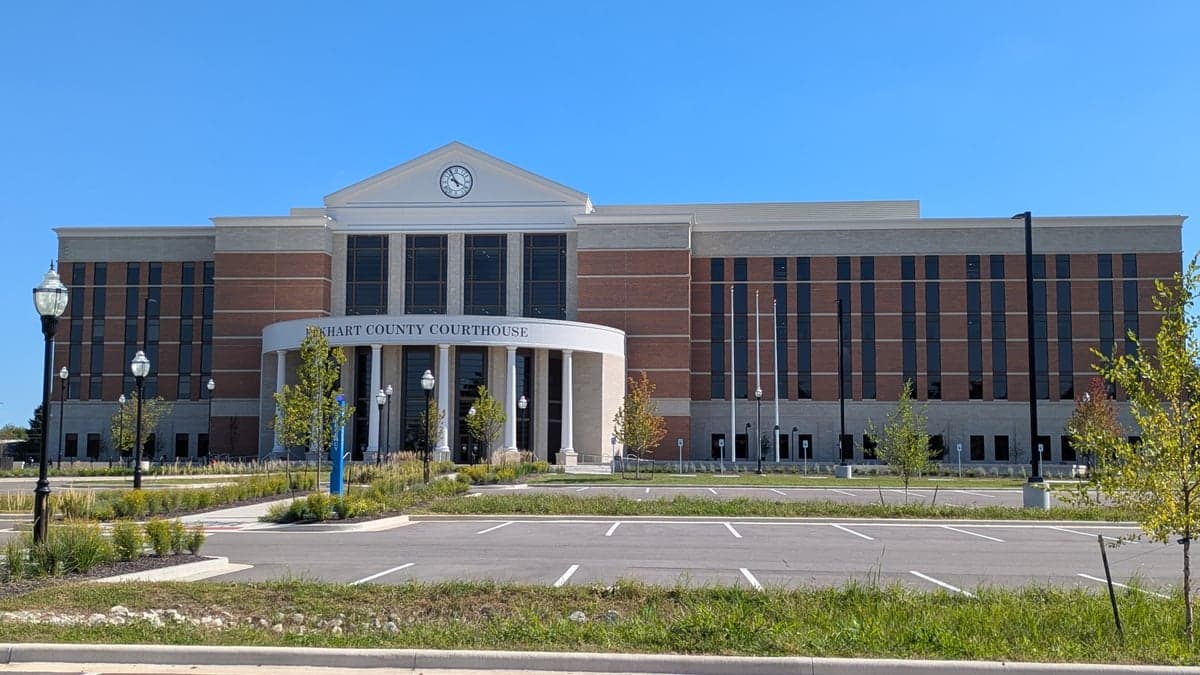
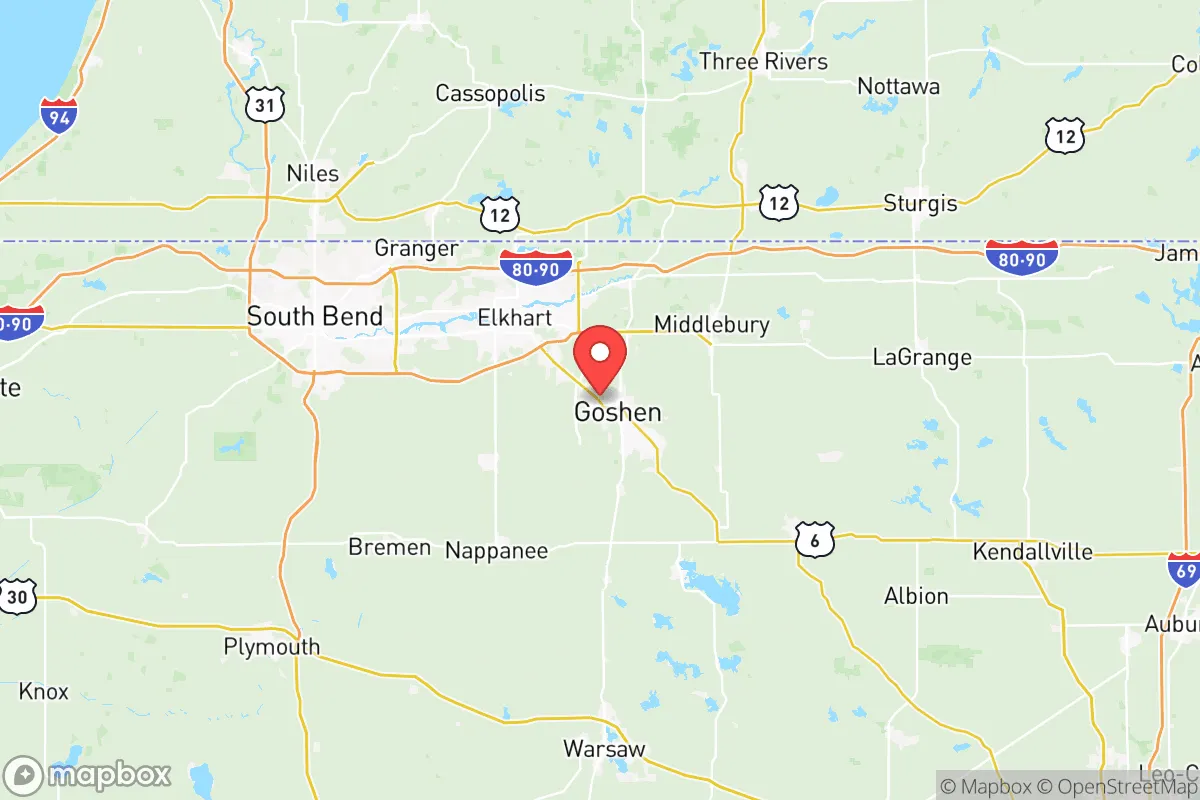
Elkhart County, Indiana, is home to 206,868 residents, a population shaped by a distinctive blend of Old Order Amish and Mennonite communities, a historically white working-class base, and a rapidly growing Hispanic population that now makes up nearly one in five residents. The county is defined by its manufacturing economy—particularly the recreational vehicle and manufactured housing industries—and a cultural identity that balances conservative religious traditions with a growing diversity. With a foreign-born population of 5.4% and a college attainment rate of 19.7%, Elkhart County remains a place where blue-collar work and family-oriented values dominate, though its demographic future is being reshaped by immigration and suburban expansion.
Settlement & growth (pre-1960)
Before European settlement, the area now known as Elkhart County was inhabited by the Miami and Potawatomi nations, who used the St. Joseph River and Elkhart River as travel and trade routes. The first permanent white settlers arrived in the 1820s and 1830s, primarily of Yankee stock from New England and New York, drawn by the fertile soil and the promise of land under the Indiana Territory's early land sales. These early settlers founded the county seat of Goshen in 1831 and the river town of Elkhart in 1832, naming the latter after the Elkhart River, itself a corruption of a Native American term.
The next major wave came from German-speaking regions of Europe, beginning in the 1840s and accelerating through the 1880s. These immigrants, many of them Lutherans and Catholics, settled heavily in Bristol, Middlebury, and Nappanee, where they established farms and small businesses. The German influence remains visible today in the county's Lutheran churches, family names, and the annual Nappanee Apple Festival. At the same time, a smaller but significant wave of Dutch immigrants arrived in the 1850s, settling in the Goshen area and contributing to the county's Reformed Church tradition.
The most distinctive settlement wave, however, was the arrival of Amish and Mennonite families from Pennsylvania and Ohio, beginning in the 1840s and continuing through the early 1900s. These groups, seeking affordable farmland and religious freedom, concentrated in the townships around Nappanee, Wakarusa, and Millersburg. Today, Elkhart County has one of the largest Amish populations in the United States, with an estimated 10,000 to 12,000 Old Order Amish residents, many of whom still use horse-and-buggy transportation and speak Pennsylvania Dutch as a first language. The Amish and Mennonite presence has shaped the county's economy through furniture-making, RV manufacturing, and small-scale agriculture.
By the early 20th century, the county's population was overwhelmingly white, native-born, and Protestant, with small pockets of German Catholics and a tiny African American community centered in Goshen. The post-World War II era brought a modest influx of Appalachian whites, drawn by factory jobs in the booming RV industry, but the county remained demographically homogeneous through the 1960s.
Modern era (post-1965)
The 1965 Hart-Cellar Act had a delayed but transformative effect on Elkhart County. The first significant non-white immigrant group to arrive was the Hispanic community, beginning in the 1970s and accelerating sharply after 1990. These immigrants came primarily from Mexico and Central America, drawn by jobs in the RV factories, mobile home plants, and agricultural operations around Goshen, Elkhart, and Bristol. By 2020, the Hispanic share of the county's population had reached 19.5%, making it the largest minority group by a wide margin. The Hispanic community is concentrated in the city of Elkhart, where it makes up roughly a third of the population, and in the southern parts of Goshen, where Mexican grocery stores, taquerias, and Spanish-language churches have become fixtures.
The Black population, at 4.8%, is smaller but has grown steadily since the 1990s, driven by domestic migration from Chicago and other Midwestern cities. Most Black residents live in Elkhart and Goshen, with a smaller presence in Nappanee. The East/Southeast Asian community, at 0.9%, is a recent arrival, with a small but visible Vietnamese and Filipino population working in manufacturing and healthcare. The Indian subcontinent population, at 0.2%, is tiny and concentrated among professionals in Goshen and Elkhart, often employed by the county's hospitals and RV industry headquarters.
Domestic migration patterns have also shifted. Since 2000, Elkhart County has seen a net inflow of white retirees and remote workers from the Chicago area and northern Indiana, drawn by lower housing costs and a slower pace of life. This has spurred suburban-style development in Bristol and Middlebury, where new subdivisions and strip malls have appeared. At the same time, the Amish population has continued to grow through high birth rates, expanding into previously undeveloped townships and putting pressure on farmland prices.
The future
Elkhart County is becoming more diverse, but the pace of change is uneven. The Hispanic population is projected to grow to roughly 25-30% of the county by 2040, driven by both immigration and higher birth rates, while the white non-Hispanic share will continue to decline. The Black and Asian populations are likely to grow slowly, primarily through domestic migration from larger Midwestern cities. The Amish population, meanwhile, is expected to double every 20-25 years due to high fertility, which will reinforce the county's conservative religious character even as the broader population diversifies.
Geographically, the Hispanic community is dispersing beyond Elkhart and Goshen into smaller towns like Wakarusa and Millersburg, where new Catholic parishes and bilingual services are emerging. The Amish are expanding into the county's eastern and northern townships, while white suburbanites are concentrating in Bristol and along the Indiana Toll Road corridor. The county's cultural identity is evolving into a three-way tension: the traditionalist Amish and Mennonite world, the increasingly Hispanic working class, and the white suburban commuters. For a newcomer, Elkhart County offers a low-cost, family-oriented environment with strong manufacturing employment, but the social landscape is increasingly segmented by language, religion, and lifestyle.
Elkhart County is becoming a place where conservative religious traditions and a growing Hispanic immigrant community coexist, often uneasily, within a manufacturing economy that still offers solid middle-class wages. For someone moving in now, the county offers affordable housing, strong community ties, and a slower pace of life, but also a cultural landscape that is more divided than its small-town image suggests. The next decade will test whether the county can integrate its growing diversity while preserving the values that have long defined it.

* Values derived from national, state, county, city and local statistics and may differ in a specific area. Last updated: 2026-07-17T00:37:15.000Z
Narrative content on this page is AI-generated and may contain mistakes. Verify any details that matter before acting on them.
ReloMaps may earn a commission from affiliate links at no extra cost to you.

