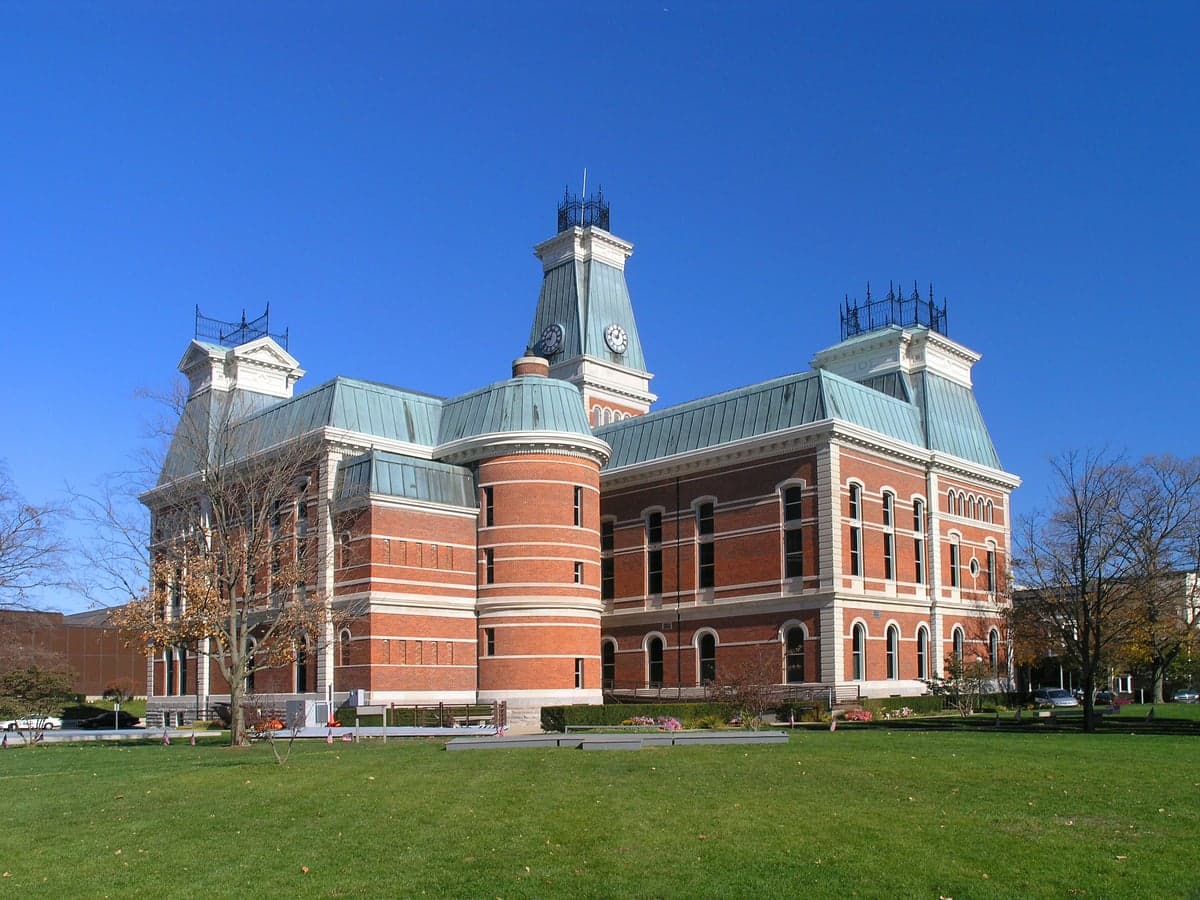
Photo: Wikipedia
Quality of Life in Bartholomew County
A livable area that tracks near national norms for affordability, walkability, and neighborhood health.
What does Quality of Life tell us?
Quality of Life measures an area by evaluating factors like cost of living, nearby amenities, country club access, airport proximity, socioeconomic signals and neighborhood character. For large states, this is a general average — quality of life can vary dramatically between metro areas, suburbs, and rural communities within the same state.
What does this tell us?
Quality of Life measures an area by evaluating factors like cost of living, nearby amenities, country club access, airport proximity, socioeconomic signals and neighborhood character. For large states, this is a general average — quality of life can vary dramatically between metro areas, suburbs, and rural communities within the same state.
Cost of Living
11% below national average
127%
The Real Cost of Living in Bartholomew County for 2026
| Tier | Individual | Family (4) |
|---|---|---|
| Survival | $18k | $33k |
| Comfortable | $43k | $63k |
| Luxury | $133k+ | $206k+ |
| Elite (Top 5%) | $156k+ | $242k+ |
Quality-of-Life Analysis
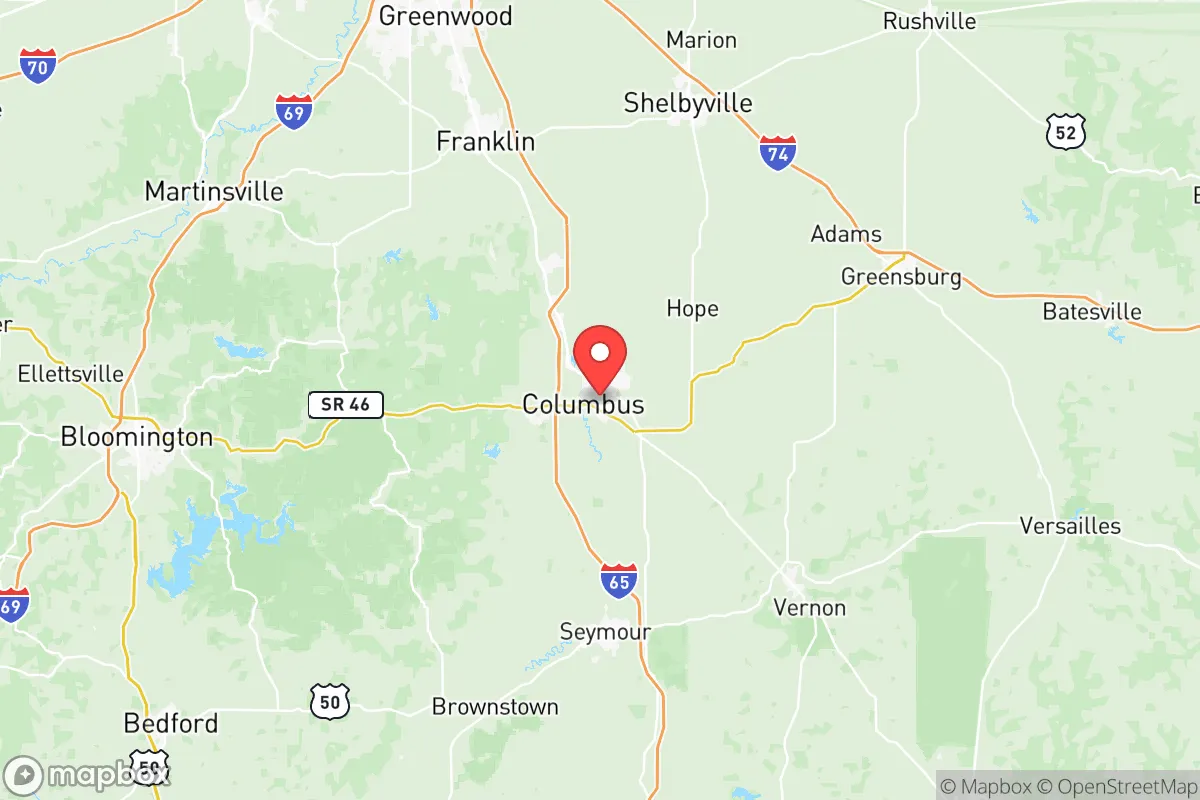
Bartholomew County, anchored by the manufacturing and logistics hub of Columbus, offers a quality-of-life spectrum that ranges from dense, amenity-rich urban neighborhoods to quiet, unincorporated crossroads and working farmland. The county’s overall cost of living index sits at 89 (well below the U.S. average of 100), with a median home value of $221,100 and median rent of $1,110, making it one of the more affordable counties in south-central Indiana. The average commute of just over 20 minutes means residents in even the most rural corners can reach Columbus or Interstate 65 quickly, a factor that shapes daily life across the entire county.
Largest town(s) & population centers
Columbus is the county seat and by far its largest population center, home to roughly 50,000 residents. Daily life here is defined by a rare combination: a globally significant architectural heritage (with works by I.M. Pei, Eero Saarinen, and others) and a blue-collar economy anchored by Cummins Inc., Toyota Industrial Equipment, and a growing logistics sector along the I-65 corridor. The city offers walkable downtown blocks, a robust parks system, and the Commons entertainment district. Housing options range from historic Craftsman bungalows near the Mill Race Center to newer subdivisions on the city’s north and west sides. For families, the Bartholomew Consolidated School Corporation is the largest district, with strong programs at Columbus East and Columbus North high schools. Hope, a town of about 2,200 located 12 miles east of Columbus, functions as a secondary population center. Its historic downtown, anchored by the Yellow Trail Museum and a popular farmers market, attracts residents seeking a small-town feel with easy access to Columbus employment.
Smaller towns & rural pockets
Beyond the main corridors, Bartholomew County contains several distinct smaller communities. Elizabethtown (pop. ~500) sits along State Road 7 in the county’s northern tier, offering a quiet, agricultural setting with a volunteer fire department and a general store. Clifford, an unincorporated hamlet near the Decatur County line, is essentially a crossroads with a handful of homes and farmland. Walesboro, just south of Columbus, has seen some suburban-style infill but retains a rural character. Hartsville, in the county’s far southeast corner, is a tiny town (pop. ~350) surrounded by corn and soybean fields, with residents typically commuting to Columbus or Greensburg. The county’s rural pockets are not uniformly remote; many are within a 10- to 15-minute drive of Columbus grocery stores and medical facilities, which is a key factor for retirees and remote workers choosing these areas.
Cost & lifestyle range
The cost and lifestyle spread across Bartholomew County is moderate but noticeable. At the higher end, newer subdivisions in Columbus’s north side (near the I-65 interchange at State Road 46) and the Lakeside neighborhood around the Otter Creek Golf Course feature homes in the $300,000–$500,000 range, with quick access to retail, restaurants, and the interstate. The median home value of $221,100 reflects a market where a solid three-bedroom ranch in Columbus can still be found for under $250,000. At the lower end, older homes in south Columbus (near the FairOaks Mall area) and in Hope can fall below $150,000, while rental units in smaller towns like Elizabethtown or Hartsville are scarce but often under the county median rent of $1,110. The lifestyle trade-off is clear: Columbus offers walkable amenities, cultural events, and the highest concentration of jobs, while the smaller towns and rural pockets provide more land, lower property taxes, and quieter surroundings—but require driving for most errands. Property taxes in unincorporated areas are typically lower than inside Columbus city limits, a factor that draws some buyers to the outskirts.
This county is best suited for people who want a genuine mix of urban and rural within a short commute. Manufacturing and logistics workers, families seeking affordable homeownership near a midsize city, and retirees who want access to Columbus’s medical facilities (including Columbus Regional Hospital) while living on acreage all find a fit here. The 20-minute average commute means that even a resident in a farmhouse near Clifford can be at a Cummins office in central Columbus faster than many suburban commuters in larger metros. Bartholomew County’s strength is its lack of extremes: no area is prohibitively expensive, and no area is truly isolated from jobs and services.

Crime in Bartholomew County
Generally safer than 58% of comparable U.S. locations.
Violent CrimeViolent Crime Analysis
Property CrimeProperty Crime Analysis
Crime Analysis
Bartholomew County, Indiana, presents a mixed safety profile that is heavily shaped by its largest city, Columbus, while smaller towns like Hope, Hartsville, and Clifford experience significantly lower crime volumes. The county’s overall violent crime rate of 264.1 per 100,000 residents and property crime rate of 1,100.9 per 100,000 place it in a middle tier compared to both state and national averages. However, the distribution of crime is not uniform, and the influence of progressive judicial policies in the county’s larger jurisdiction is a growing concern for residents seeking a secure environment.
Crime in context
Bartholomew County’s violent crime rate of 264.1 per 100,000 is notably lower than the national average of 380 per 100,000, but it sits slightly above the Indiana state average of approximately 250 per 100,000. Property crime in the county, at 1,100.9 per 100,000, is also below the national figure of 1,950 per 100,000 but aligns closely with Indiana’s statewide rate. When compared to neighboring counties, Bartholomew’s numbers are moderate: it is safer than Jackson County to the south but experiences higher violent crime rates than rural Jennings County to the east. The city of Columbus, which accounts for roughly 60% of the county’s population, drives the majority of reported incidents, particularly in its downtown and near-east-side neighborhoods. In contrast, the towns of Hope (population ~2,100) and Hartsville (~350) report near-zero violent crime in most years, making them statistically among the safest places in the county.
What residents experience
For daily life in Bartholomew County, the most common safety concerns are property-related: theft from vehicles, burglary, and vandalism, especially in Columbus’s commercial corridors along State Road 46 and U.S. 31. The county’s violent crime is largely concentrated in specific areas and often involves individuals who know each other, meaning random attacks on strangers are rare. However, a significant factor affecting public safety is the judicial philosophy of the Bartholomew County courts. The county’s elected prosecutor and judges have, in recent years, adopted progressive, offender-focused policies that prioritize diversion programs and reduced sentencing for non-violent and even some violent crimes. This approach, while intended to reduce recidivism, has led to a perception among residents that criminals face minimal consequences, particularly in Columbus. For example, repeat property offenders in the county often receive probation or short jail terms, contributing to a cycle of theft that frustrates business owners in the downtown area. Residents in the unincorporated communities of Clifford and Elizabethtown report feeling safer due to lower population density and stronger neighborhood watch networks, but they also express concern that lenient county-wide policies could eventually embolden criminals to target rural homes.
Neighborhood-level variation is pronounced. Within Columbus, the west side and areas near the Columbus Municipal Airport generally have the lowest crime rates, while the central core and east-side neighborhoods near 17th Street and Central Avenue see higher police activity. The county’s smaller towns—Hope, Hartsville, and Clifford—benefit from tight-knit communities where suspicious activity is quickly reported, and property crime rates are often a fraction of Columbus’s. For those considering a move, the safest strategy is to focus on the rural towns or the western suburbs of Columbus, while remaining aware that the county’s overall justice system leans toward rehabilitation over punishment, a factor that may influence long-term safety trends.
* Values derived from national, state, county, city and local statistics and may differ in a specific area. Last updated: 2026-11-14T07:02:44.000Z
Narrative content on this page is AI-generated and may contain mistakes. Verify any details that matter before acting on them.
ReloMaps may earn a commission from affiliate links at no extra cost to you.

