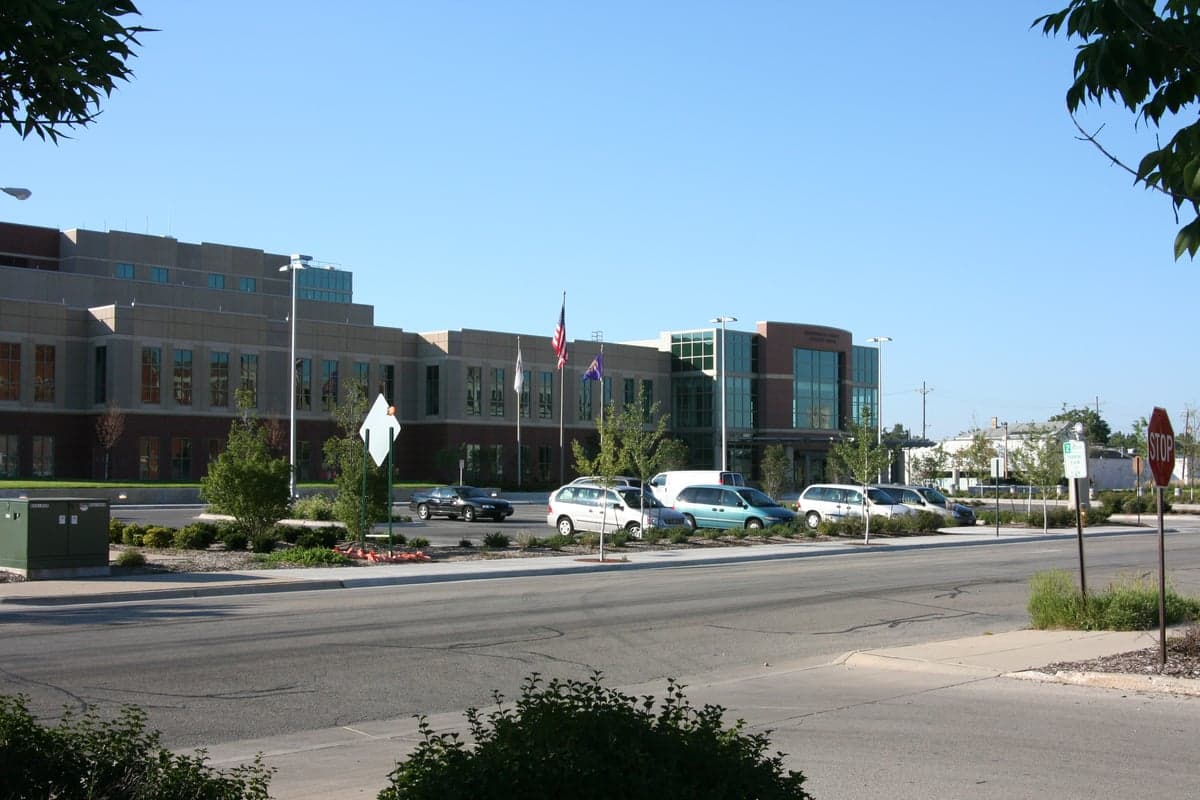
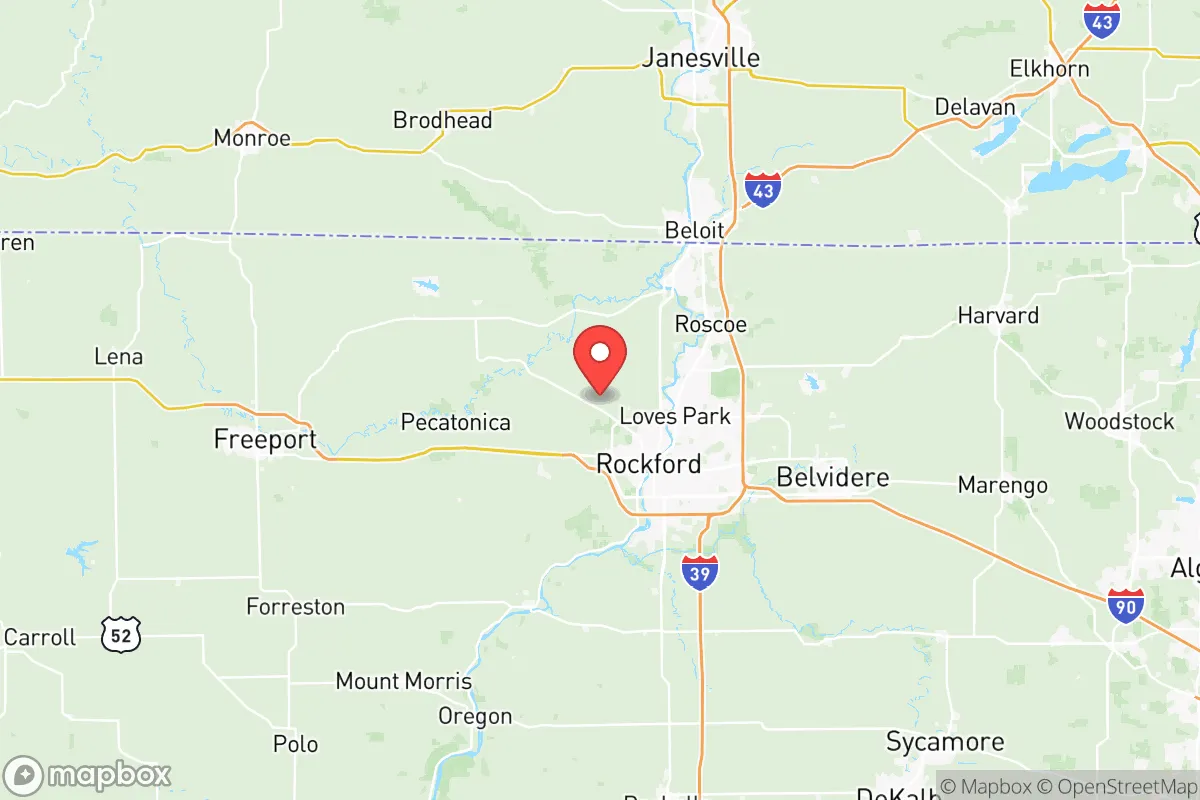
Photo: Wikipedia
Political ClimatePolitical Climate in Winnebago County
Showing district-level results — no local-only data available.
Local Political AnalysisPolitical Analysis of Winnebago County
Winnebago County, anchored by the city of Rockford, has a Cook Partisan Voting Index (PVI) of R+11, meaning it leans 11 points more Republican than the national average. This is a stark contrast to the state of Illinois as a whole, which sits at D+7, a 18-point gap that makes the county one of the most reliably red areas in a deeply blue state. While the county has voted for the Republican presidential candidate in every election since 2000, the margins have tightened slightly in recent cycles, with Donald Trump winning by 12 points in 2020 and 14 points in 2016, down from Mitt Romney's 18-point victory in 2012. This suggests a slow but steady drift toward the center, driven largely by the growing Democratic influence in Rockford itself.
How it compares
The political geography of Winnebago County is a tale of two worlds. Rockford, the county seat and largest city, is a Democratic stronghold, with precincts in the city's core routinely delivering 60-70% of the vote for Democratic candidates. In the 2020 presidential election, Rockford's 1st and 3rd wards voted for Joe Biden by margins of 35 and 28 points, respectively. Meanwhile, the suburban and rural townships surrounding Rockford—places like Roscoe, Machesney Park, and Loves Park—are deeply conservative. In the 2020 election, Roscoe Township voted for Trump by a 30-point margin, and the rural precincts in Durand and Pecatonica often exceed 40-point Republican leads. The swing precincts are concentrated in the middle-class neighborhoods of southeast Rockford and the unincorporated areas along the Rock River, where independent voters decide close races. This urban-rural divide mirrors the state-level split between Chicago and downstate Illinois, but Winnebago County's overall R+11 PVI places it firmly in the Republican column, unlike the D+7 state average.
What this means for residents
For conservative residents, the county's red lean means local governance is generally aligned with their values. The Winnebago County Board has a Republican majority, and the county's sheriff and state's attorney are both Republicans. This translates to a more cautious approach to spending and a focus on law-and-order policies. For liberal residents, the reality is more mixed. While they can reliably win city-level races in Rockford—the mayor and a majority of the city council are Democrats—they face an uphill battle in county-wide elections and in the state legislature, where the county's state house and senate seats are split between parties. Property taxes in Winnebago County are among the highest in Illinois, a point of contention that often breaks along partisan lines, with Republicans pushing for caps and Democrats arguing for maintaining services. The county's political climate also influences social issues: for example, the county board has debated resolutions on gun rights and abortion access, with outcomes typically reflecting the Republican majority.
Culturally, Winnebago County feels more like a Midwestern swing region than a deep-red or deep-blue enclave. The Rockford area has a strong blue-collar identity rooted in manufacturing—historically home to factories for Chrysler, Sundstrand, and Ingersoll—which gives the local Republican party a more populist, working-class flavor than the suburban country-club GOP found in Chicago's collar counties. At the same time, Rockford's growing immigrant community, particularly its Latino population, is slowly shifting the city's politics leftward. Policy-wise, the county stands out for its relatively high reliance on local sales tax revenue, which funds everything from road repairs to the Rockford Park District, a reflection of the state's property tax burden and the county's reluctance to raise income taxes. For anyone moving here, the key takeaway is that your experience of local politics will depend heavily on whether you live inside Rockford's city limits or in the surrounding townships—and that the county's R+11 PVI is a reliable but not immutable guide to its political future.

State Political ClimatePolitical Climate in Illinois
State Political AnalysisPolitical Environment in the State
Illinois is a solidly Democratic state with a Cook PVI of D+7, meaning it votes about seven points more Democratic than the national average in presidential elections. The state’s political trajectory over the last 20 years has been a steady march leftward, driven overwhelmingly by the Chicago metropolitan area, while the rest of the state has grown more Republican and more resentful of the capital. For a conservative relocator, the reality is a mixed bag: you’ll find deep-blue state-level governance on taxes, guns, and education, but also some of the most affordable land and strongest local conservative communities in the Midwest, especially if you avoid Cook County and the collar counties.
Urban vs. rural divide
The political map of Illinois is a textbook case of urban-rural polarization. Chicago and its immediate suburbs in Cook County are the Democratic engine, delivering margins of 70-80% in presidential elections. The collar counties — DuPage, Lake, Kane, McHenry, and Will — have been trending blue over the last decade, especially in suburban areas like Naperville and Schaumburg, as college-educated professionals move in. Downstate, the story is reversed: places like Effingham, Quincy, and Marion are deeply red, often voting 65-75% Republican. The divide is starkest in central Illinois, where the Democratic stronghold of Champaign-Urbana (home to the University of Illinois) is surrounded by rural counties that vote 2-to-1 Republican. The result is a state where the governor and legislature are firmly Democratic, but the majority of counties — by land area — are represented by Republicans in Congress and the statehouse.
Policy environment
Illinois has a progressive tax structure that is actually a flat-rate income tax (4.95% as of 2026), though a 2020 constitutional amendment to allow a graduated rate was voted down. Property taxes are among the highest in the nation, averaging about 2.1% of home value, which is a major shock for newcomers from low-tax states. The regulatory posture is business-friendly in some sectors (agriculture, logistics) but heavily regulated in others (energy, labor, firearms). Education policy is dominated by Chicago Public Schools and the teachers’ unions; the state has a school funding formula that heavily weights need, meaning rural districts often feel shortchanged. Healthcare is broadly accessible, with Medicaid expansion under the ACA and a state-run insurance marketplace. Election laws are among the most liberal in the country: same-day voter registration, no-excuse mail-in voting, and automatic voter registration at DMVs. For conservatives, the policy environment is a net negative on taxes and gun rights, but the state’s infrastructure and public services are generally reliable.
Recent policy direction
The last five years have seen a clear leftward shift on several fronts. On guns, Illinois passed the Protect Illinois Communities Act in 2023, which bans the sale and possession of many semi-automatic rifles and high-capacity magazines — a law that is currently being challenged in federal court. Self-defense law remains a Castle Doctrine state, but the new gun restrictions have made Illinois a flashpoint for Second Amendment advocates. On education, the state eliminated the requirement for standardized testing for graduation and expanded funding for early childhood programs. Parental rights in schools have become a battleground: the state passed a law requiring schools to allow transgender students to use facilities matching their gender identity, and it prohibits schools from notifying parents if a student changes their name or pronouns without the student’s consent. On privacy and surveillance, Illinois has one of the strongest biometric privacy laws in the country (BIPA), which has led to a wave of class-action lawsuits. Medical and bodily autonomy is fully protected: abortion is legal up to viability, and the state has positioned itself as a refuge for out-of-state patients. Property rights are generally respected, but the high property tax burden and a strong eminent domain framework for infrastructure projects can be a concern. Voting access has been expanded, with automatic voter registration and early voting periods of up to 40 days. The overall direction is toward a more regulated, higher-tax, but also more protective state on civil liberties and privacy.
Civil unrest & political movements
Illinois has a history of organized political activism on both sides. The 2020 George Floyd protests in Chicago were among the largest in the country, with significant property damage and a lasting impact on policing policy — the state passed a police reform bill in 2021 that bans chokeholds and requires body cameras. On the right, the Illinois Family Institute and local gun rights groups are active, and there have been periodic “Second Amendment sanctuary” resolutions passed by over 80 counties, though these are symbolic. Immigration politics are a major flashpoint: Chicago is a sanctuary city, and the state has a law (the TRUST Act) that limits local law enforcement cooperation with federal immigration authorities. This has led to tension with downstate communities that want stricter enforcement. Election integrity controversies have been relatively muted compared to other states, though some rural counties have passed resolutions calling for election audits. The most visible flashpoint for a new resident would likely be the gun law debate, which is ongoing and highly polarized between Chicago and the rest of the state.
Projection
Over the next 5-10 years, Illinois is likely to continue its slow demographic decline in population, with losses concentrated in rural areas and some inner-ring suburbs, while Chicago’s downtown and near suburbs see modest growth. The political balance will remain D+7 to D+8, as the collar counties continue to trend blue and downstate’s population shrinks. The state’s fiscal situation — a massive unfunded pension liability — will force either tax increases or service cuts, which will disproportionately affect downstate. For a conservative moving in now, expect to live in a state where your vote for president or Senate is effectively meaningless, but where local elections in your county and school board can still be highly competitive. The practical takeaway: if you can tolerate high property taxes and a blue state government on social issues, you’ll find a strong conservative community in most places outside of Cook County, with affordable land and good schools in many rural and suburban areas.
For a new resident, the bottom line is that Illinois offers a stark choice: live in or near Chicago and accept the full progressive policy package, or move to a downstate or collar-county suburb where you can find a conservative enclave with lower home prices and a strong sense of community, but still pay the state’s high taxes and abide by its gun laws. It’s not a state for someone who wants low taxes and minimal government, but it is a state where you can find your people — if you know where to look.
* Values derived from national, state, county, city and local statistics and may differ in a specific area. Last updated: 2026-07-04T05:42:17.000Z
Narrative content on this page is AI-generated and may contain mistakes. Verify any details that matter before acting on them.
ReloMaps may earn a commission from affiliate links at no extra cost to you.

