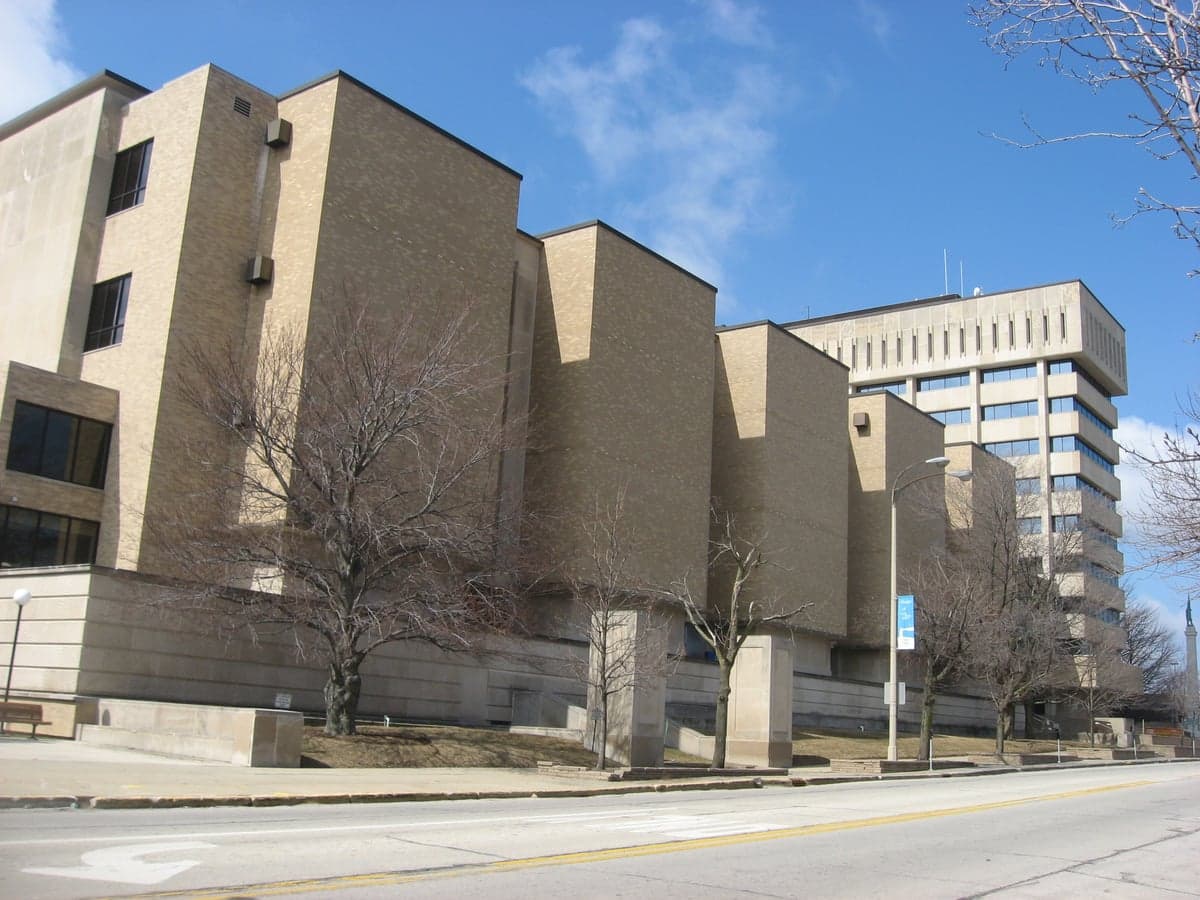
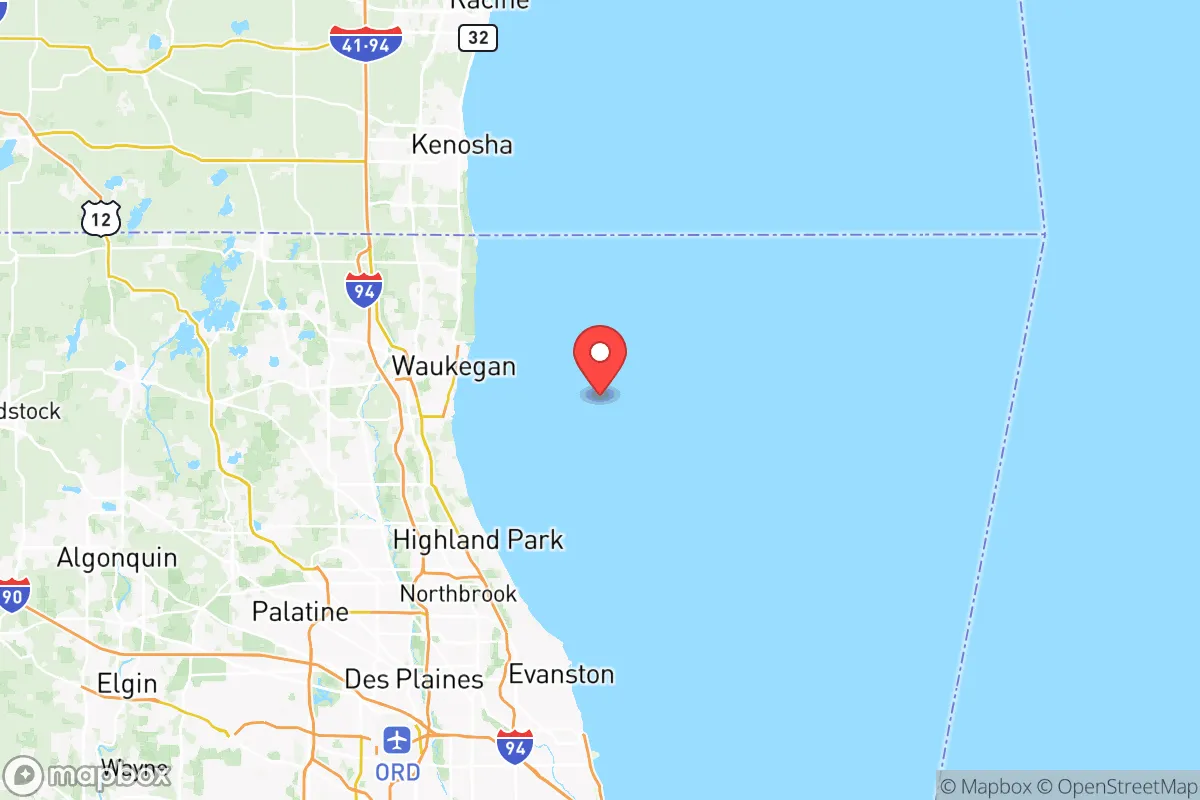
Photo: Wikipedia
Political ClimatePolitical Climate in Lake County
Showing state-level results — no local-only data available.
Local Political AnalysisPolitical Analysis of Lake County
Lake County has transformed from a reliably Republican suburban stronghold into a competitive, Democratic-leaning county over the past decade, a shift that mirrors the broader suburban realignment seen across the Chicago metro area. In the 2024 presidential election, Kamala Harris carried Lake County by roughly 11 points, a significant swing from 2016 when Hillary Clinton won it by about 9 points and a stark contrast to 2004 when George W. Bush narrowly won the county. This trajectory places Lake County to the left of the national average but still to the right of Cook County's D+7 Cook PVI, reflecting its status as a bellwether for the political tensions between the urban core and the exurban fringe.
How it compares
Lake County's political geography is a patchwork of distinct communities, not a monolith. The county's liberal anchor is the lakeshore corridor, including Highland Park, Lake Forest, and Deerfield, where Democratic margins often exceed 30 points. These affluent, highly educated suburbs have been trending blue since the 1990s and are now among the most reliably Democratic areas in the state outside of Cook County. In contrast, the county's western and northern exurbs—places like Lindenhurst, Antioch, and Fox Lake—remain solidly Republican, often voting for GOP candidates by 15-20 points. The true swing territory lies in the central and southern parts of the county, particularly around Vernon Hills, Mundelein, and Libertyville, where precincts can flip between parties depending on the candidate and turnout. This internal divide means Lake County is far less uniformly liberal than Cook County, but its overall trajectory is unmistakably Democratic, driven by the growing population and political weight of its lakeshore communities.
What this means for residents
For conservative residents, the political reality is one of diminishing local influence but not total marginalization. Republicans still hold several county board seats and can win local races in the western and northern towns, but they face an uphill battle in countywide and state-level contests. This means conservative voters in places like Antioch or Fox Lake often find their values reflected in their immediate municipal governments but feel out of step with the county's broader policy direction on issues like taxes, development, and social services. For liberal residents, especially those in Highland Park or Lake Forest, the county's lean aligns with their preferences, but they still contend with a more moderate, pragmatic Democratic establishment that must balance the interests of the liberal lakeshore with the more conservative exurbs. This dynamic produces a governance style that is generally progressive on social issues and environmental policy but cautious on tax increases and land-use regulation, a compromise that can frustrate activists on both sides.
One of the most tangible cultural and policy distinctions in Lake County is its approach to growth and preservation. The county has a strong tradition of open-space conservation, with the Lake County Forest Preserves system acquiring thousands of acres of land, a priority that enjoys broad bipartisan support. However, debates over housing density and school funding often cleave along the county's political fault lines, with liberal towns pushing for more affordable housing and transit-oriented development, while conservative exurbs resist what they see as overreach from the county government. This tension is most visible in the ongoing discussions around the Route 53 extension, a long-debated highway project that pits environmental concerns and local opposition against economic development and congestion relief, a classic suburban political battle that encapsulates the county's complex, evolving identity.

State Political ClimatePolitical Climate in Illinois
State Political AnalysisPolitical Environment in the State
Illinois is a solidly Democratic state with a Cook PVI of D+7, but that top-line number masks one of the most politically fractured landscapes in the Midwest. The state’s blue lean is almost entirely driven by Chicago and its immediate Cook County suburbs, while the rest of the state — from the Mississippi River towns to the southern tip — votes reliably Republican. Over the last 20 years, the Democratic majority has held steady at the statewide level, but the geographic and cultural gap between Chicago and everywhere else has widened dramatically, making Illinois a state where your experience of politics depends almost entirely on which zip code you land in.
Urban vs. rural divide
The political map of Illinois is a study in extremes. Chicago and its inner-ring suburbs — places like Evanston, Oak Park, and Naperville — are among the most reliably Democratic areas in the country, routinely delivering 70-80% of the vote for statewide Democratic candidates. Cook County alone accounts for roughly 40% of the state’s total vote, meaning its margins can outweigh the rest of the state combined. The collar counties (DuPage, Lake, Kane, Will, McHenry) have been trending bluer over the past decade, especially in affluent suburbs where college-educated voters have shifted left. Meanwhile, downstate Illinois — cities like Peoria, Springfield, Quincy, and the far-south metro of Carbondale — votes heavily Republican, with many rural counties routinely going 65-75% for GOP candidates. The divide is so stark that some downstate counties have explored secession rhetoric, though no serious movement has materialized. For a conservative relocator, the practical reality is that living in Chicago or its close suburbs means being in a deep-blue environment, while choosing a town like Edwardsville, Effingham, or Murphysboro means living in a red island surrounded by blue state policy.
Policy environment
Illinois has a progressive tax and regulatory structure that is a major consideration for any relocator. The state has a flat income tax rate of 4.95%, but a 2020 ballot measure to switch to a graduated income tax failed, meaning the flat rate remains for now. Property taxes are among the highest in the nation, averaging around 2.1% of home value, with Cook County and the collar counties seeing the highest rates. The state’s minimum wage is $15 per hour as of 2025, and it has a strong union presence, particularly in construction, education, and public sector work. On education, Illinois funds its public schools through a mix of state and local property taxes, leading to wide disparities between wealthy suburbs and poorer rural districts. The state also has a robust public university system, with the University of Illinois at Urbana-Champaign as a flagship. Healthcare policy is solidly blue: Illinois expanded Medicaid under the ACA, has strong protections for abortion access, and mandates insurance coverage for contraception and IVF. Election laws are among the most accessible in the country, with automatic voter registration, no-excuse mail-in voting, and early voting widely available. For a conservative resident, the policy environment can feel like a constant headwind, especially on taxes and regulation, but the state’s infrastructure and public services are generally well-funded.
Recent policy direction
Illinois has moved decisively left on a range of issues in the last five years. On gun and self-defense law, the state passed the Protect Illinois Communities Act in 2023, banning the sale of assault weapons and high-capacity magazines, and requiring universal background checks and a 72-hour waiting period for handgun purchases. This law is currently being challenged in court, but it remains in effect. On parental and education rights, Illinois has expanded LGBTQ+ inclusive curriculum requirements and passed laws protecting transgender students’ access to sports and facilities, which has been a flashpoint in conservative areas. Speech and privacy laws are generally protective, with the state having a strong shield law for journalists and a biometric privacy law that has led to major class-action lawsuits. Medical and bodily autonomy is heavily protected: Illinois has codified abortion rights into state law, and it has become a regional destination for patients from neighboring states with stricter bans. Property rights are relatively weak compared to states like Texas or Florida, with strong eminent domain powers and a statewide building code that can feel restrictive to developers. On voting and ballot access, Illinois has expanded mail-in voting and same-day registration, making it one of the easiest states to vote in. For a conservative relocator, the recent direction is unmistakably progressive, and the practical effect is that living in Illinois means accepting a state government that is actively moving left on most cultural and regulatory fronts.
Civil unrest & political movements
Illinois has seen its share of political flashpoints. The 2020 George Floyd protests in Chicago were among the largest in the country, leading to significant property damage and a lasting debate over policing and public safety. The city has also seen a rise in organized carjackings and retail theft rings, which have become a political issue, with Republicans blaming progressive prosecutors and Democrats pointing to poverty and lack of opportunity. On the right, there is an active and vocal conservative movement in downstate Illinois, with groups like the Illinois Family Institute and local county GOP organizations pushing back on state-level policies. Immigration politics are a major fault line: Illinois is a sanctuary state, with the Trust Act limiting local law enforcement cooperation with federal immigration authorities, and Chicago has seen an influx of migrants from the southern border since 2022, straining city resources and creating tension between the city and state governments. Election integrity has been a recurring theme, with Republican candidates routinely alleging fraud in Cook County, though no major irregularities have been proven. For a new resident, the most visible political flashpoint is likely to be the contrast between Chicago’s urban challenges and the relative calm of downstate communities, with the state government in Springfield often seen as out of touch with rural concerns.
Projection
Over the next 5-10 years, Illinois is likely to remain a solidly Democratic state at the statewide level, but the geographic divide will probably deepen. Chicago’s population has been slowly declining, while the collar counties continue to grow and trend bluer, meaning the Democratic base is shifting outward. Downstate Illinois is losing population, which will reduce its political influence over time. The state’s fiscal challenges — particularly the massive unfunded pension liability, which is over $140 billion — will force difficult choices on taxes and spending, and could lead to further out-migration of higher-income residents. For a conservative relocator, the long-term outlook is that Illinois will remain a blue state with high taxes and progressive policies, but the cost of living in downstate areas is significantly lower than in Chicago, and the cultural environment in those communities is likely to remain conservative. The state’s status as a regional hub for healthcare, education, and transportation means it will continue to attract people for economic reasons, but the political trajectory is unlikely to shift without a major demographic or economic shock.
For a new resident, the bottom line is that Illinois offers two very different political experiences depending on where you settle. If you choose Chicago or its close suburbs, you are living in a deep-blue environment with all the policy implications that entails — high taxes, strong public services, and progressive cultural norms. If you choose a downstate community like Edwardsville, Effingham, or Murphysboro, you will be in a conservative area governed by a blue state, meaning you will pay high property taxes and deal with state-level regulations that may not align with your values, but you will also find a like-minded community and a lower cost of living. The state’s political climate is not for everyone, but for those who can navigate the divide, Illinois offers a mix of urban opportunity and rural affordability that is hard to find elsewhere in the Midwest.
* Values derived from national, state, county, city and local statistics and may differ in a specific area. Last updated: 2026-06-16T14:29:21.000Z
Narrative content on this page is AI-generated and may contain mistakes. Verify any details that matter before acting on them.
ReloMaps may earn a commission from affiliate links at no extra cost to you.

